Lemon Pecorino crusted chicken comes out with a sharp, salty crust that turns deeply golden in the oven and cracks under the knife. The chicken stays juicy underneath because the coating bakes fast, setting into a thin, crisp shell instead of turning thick and pasty. That bright hit of lemon zest keeps the cheese from tasting heavy, and the whole dish lands somewhere between weeknight simple and dinner-party worthy.
The trick is using finely grated Pecorino Romano and a little panko together. Pecorino brings the salty, nutty punch, while panko gives the crust lift and keeps it from baking into a dense layer. Dijon mixed with olive oil does double duty here too: it helps the coating stick and adds just enough tang to echo the lemon without taking over. Pounding the chicken to even thickness matters just as much, because that keeps the crust from overbrowning before the meat is done.
Below, I’ll walk through the one step that keeps the crust clinging instead of sliding off, the ingredient choices that matter most, and a few smart swaps if you need to adjust the dish for what’s in your kitchen.
The crust turned out crackly instead of soggy, and the lemon zest came through without making it taste sour. I loved that the chicken was cooked through in right around 20 minutes and still stayed juicy.
Save this Lemon Pecorino Crusted Chicken for the nights when you want a crispy cheese crust, bright lemon, and almost no cleanup.
The Reason the Crust Stays Crisp Instead of Sliding Off
The biggest problem with crusted chicken is moisture. If the chicken is thick in one spot and thin in another, the coating cooks unevenly and the wet underside steams the crust from below. Pounding the breasts to an even thickness fixes that before the pan even gets involved, and the wire rack lets hot air circulate all the way around so the bottom doesn’t go soft.
Dijon is doing more than adding flavor. It gives the topping a tacky surface to grab onto, and the olive oil loosens it just enough that you can brush it on evenly without dragging the seasoning around. Once the chicken is coated, press the crust on with real pressure. A gentle pat won’t hold up in the oven.
What Each Ingredient Is Actually Doing in This Dish
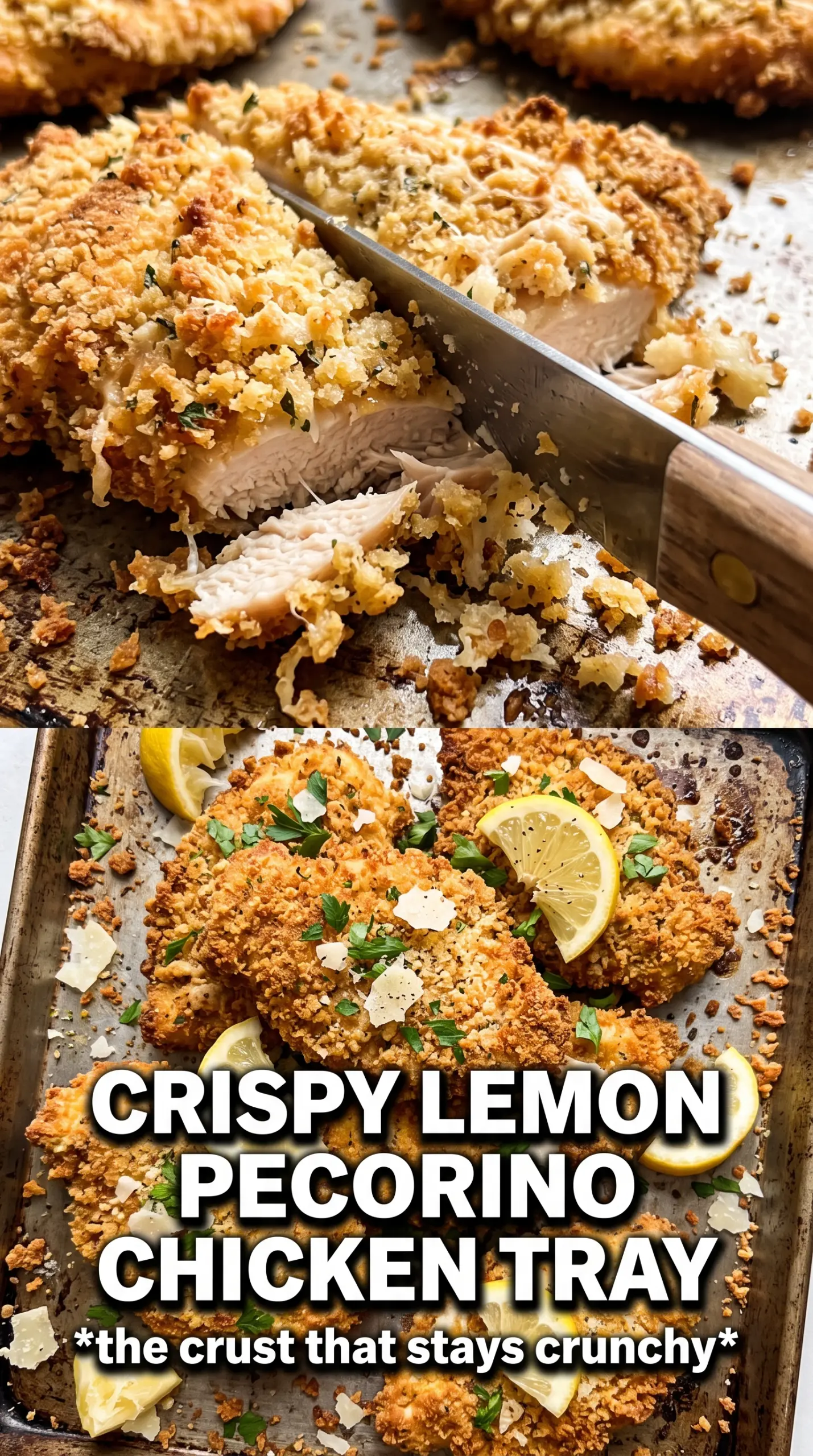
- Pecorino Romano — This is the backbone of the crust. It’s saltier and sharper than Parmesan, which is why the flavor reads loud enough after baking. Use the real cheese and grate it finely so it melts into the panko instead of clumping.
- Panko breadcrumbs — These keep the crust light and crunchy. Regular breadcrumbs work in a pinch, but they bake denser and won’t give you the same crackly finish. If you need gluten-free, use gluten-free panko and keep the rest of the method the same.
- Lemon zest — Zest gives you the bright citrus oil without extra liquid, which matters here. Lemon juice belongs on the plate, not in the coating, because too much moisture softens the crust before it has a chance to brown.
- Dijon mustard and olive oil — This mixture helps the crust adhere and adds a little tang under the cheese. Yellow mustard won’t give the same depth, and plain oil won’t stick as evenly. Brush it on thinly so the coating doesn’t slide.
- Parsley and garlic powder — Parsley keeps the crust from tasting one-note, and garlic powder rounds out the sharpness of the Pecorino. Fresh garlic is too wet for this topping and can burn before the chicken finishes.
Getting the Chicken to 165°F Without Burning the Cheese
Set up the chicken first
Line a baking sheet with a wire rack and preheat the oven fully to 425°F. That hot oven is what gives the crust its color before the chicken dries out, and the rack keeps the underside from sitting in its own steam. Season the chicken before adding the mustard mixture so the meat itself has flavor, not just the coating.
Build the coating and press it on firmly
Stir the Pecorino, panko, lemon zest, parsley, garlic powder, and pepper together until the lemon is evenly distributed. Brush the mustard mixture over both sides of each breast, then press the topping on with your palm so it really adheres. If the crust looks patchy, it’s usually because the chicken surface was too dry in some spots or the coating wasn’t pressed on firmly enough.
Bake until the edges are deep gold
Move the chicken to the rack and bake for 20 to 22 minutes, depending on thickness. You’re looking for a crust that’s deeply golden and fragrant, with the chicken at 165°F in the thickest part. If the top browns too fast, your oven runs hot; pull the pan out for a minute and tent loosely with foil only after the crust has set.
Rest briefly, then serve right away
Give the chicken a 3-minute rest so the juices settle, then finish with basil and lemon wedges. Don’t let it sit for long once it comes out of the oven, or the steam trapped under the crust will soften the crisp edges. A quick squeeze of lemon at the table wakes up the cheese and keeps each bite sharp and fresh.
How to Adapt This for Different Kitchens and Different Needs
Gluten-Free Crust
Swap in gluten-free panko and keep everything else the same. The texture stays crisp, though it may brown a little faster, so watch the last few minutes closely. Don’t use almond flour here; it can turn greasy and dull the crunch.
No Pecorino on Hand
Parmigiano-Reggiano works, but the crust will taste a little less sharp and salty. If you use Parmesan, add a small pinch more salt to the coating and grate it finely so it melts and browns properly. Pre-shredded cheese won’t clump and crisp the same way.
Dairy-Free Version
This one needs a different approach because Pecorino is the main flavor, not just a supporting ingredient. Use a dairy-free Parmesan-style alternative and add a pinch of nutritional yeast for a deeper savory note. The crust won’t be as sharp, but it will still bake up nicely if you press it on well.
For Thicker Chicken Breasts
If your chicken breasts are large, pound them to an even 3/4-inch thickness instead of leaving a thick center. That keeps the crust from overbaking while you wait for the middle to catch up. If you skip this, the coating may darken before the chicken reaches temperature.
Storage and Reheating
- Refrigerator: Store leftovers in an airtight container for up to 3 days. The crust will soften a bit, but the flavor holds up well.
- Freezer: It freezes, but the crust won’t stay as crisp. Freeze cooled chicken on a tray first, then wrap tightly and store for up to 2 months.
- Reheating: Reheat in a 375°F oven or air fryer until warmed through. Skip the microwave if you want any crunch back, because it steams the coating and makes the cheese layer rubbery.
Answers to the Questions Worth Asking
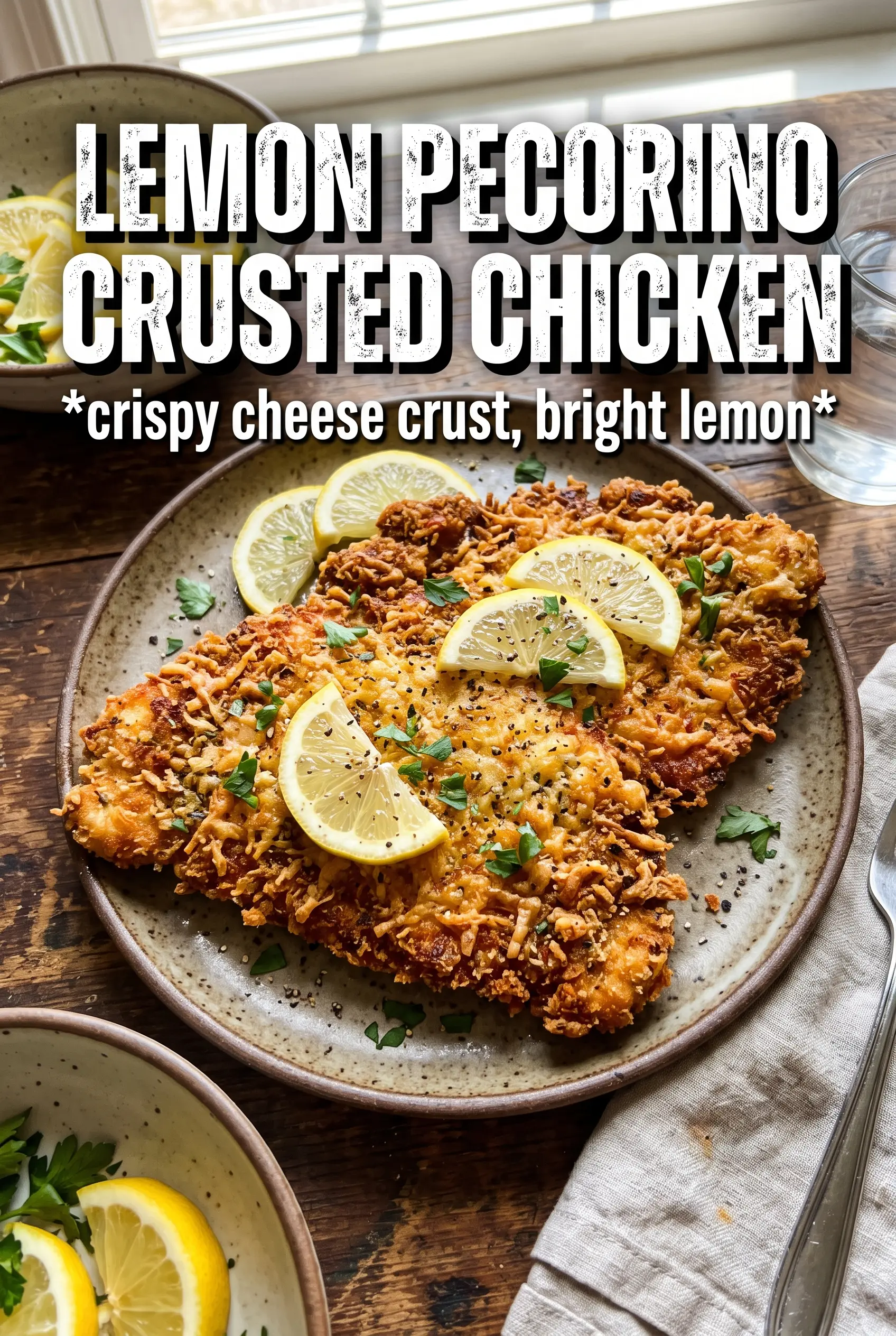
Lemon Pecorino Crusted Chicken
Ingredients
Equipment
Method
- Preheat the oven to 425°F and line a baking sheet with a wire rack so air can circulate for a crisp crust.
- Season the chicken breasts with salt, pepper, and garlic powder to taste.
- Mix the Dijon mustard with the olive oil, then brush the mixture over both sides of each chicken breast.
- Combine the Pecorino Romano, panko breadcrumbs, lemon zest, fresh parsley, garlic powder, and black pepper.
- Press the crust mixture firmly onto the mustard-coated chicken so it adheres evenly.
- Place the chicken on the prepared rack and bake at 425°F for 20-22 minutes, until the crust is golden and the internal temperature reaches 165°F.
- Rest the chicken for 3 minutes to set the crackly cheese crust before slicing or serving.
- Garnish with fresh basil and serve with lemon wedges for bright citrus flavor.