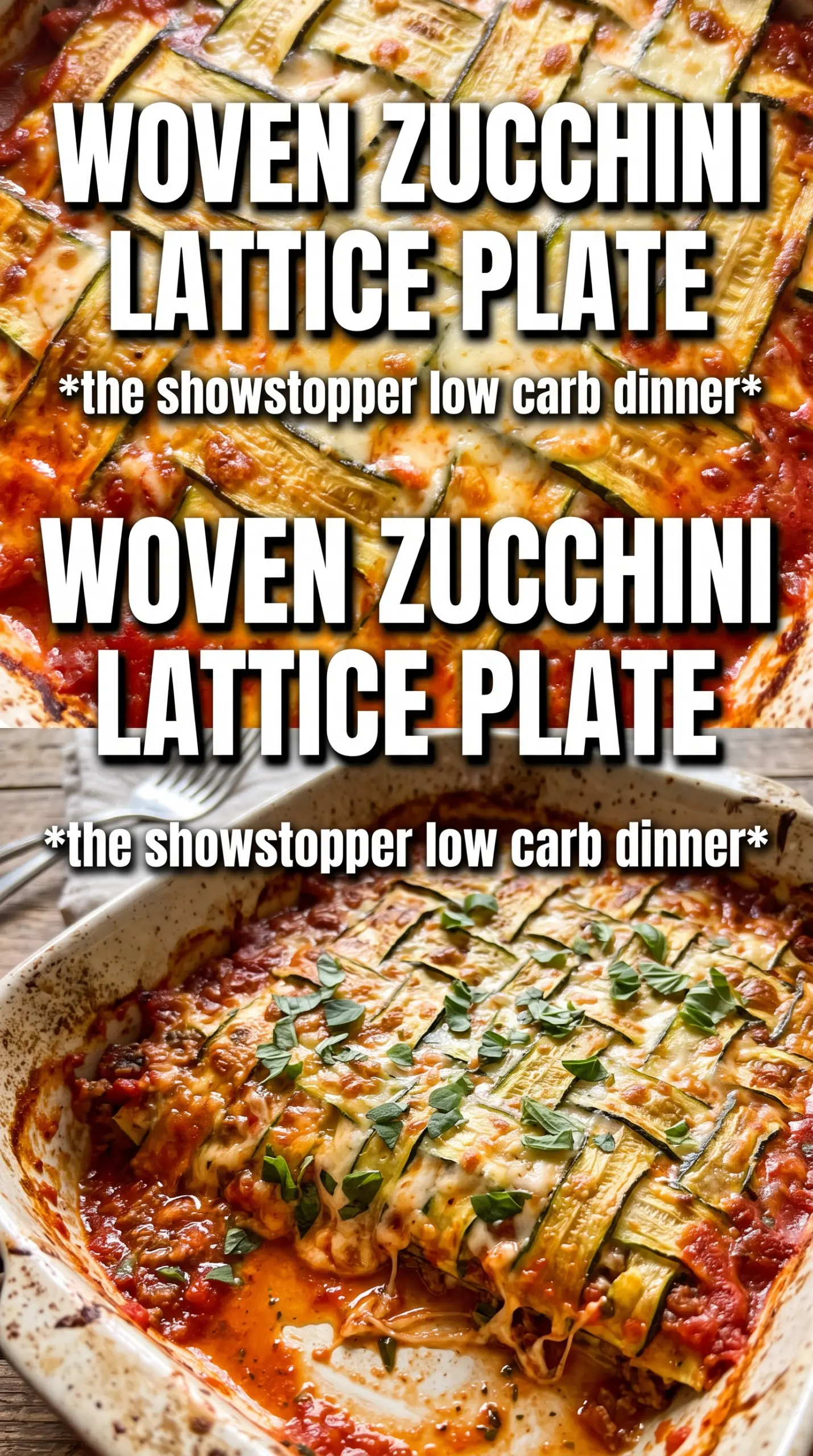
Golden zucchini on top changes the whole look of lasagna. Instead of a heavy layer of cheese covering everything, this version bakes up with a woven lattice that turns crisp at the edges, stays tender in the center, and gives every slice a little drama when it hits the table. The filling underneath stays rich and comforting, but the top keeps things lighter and cleaner than a traditional blanket of noodles and mozzarella.
The trick is treating the zucchini like a structural ingredient, not just a vegetable garnish. Thin, even planks are what let the lattice hold its shape, and a short simmer on the sauce keeps the lasagna from turning soupy in the oven. I also like using both green zucchini and yellow squash because the contrast makes the pattern easier to see, and the flavor stays mild enough that it doesn’t fight the ricotta and meat sauce.
Below, I’ve included the one step that keeps the lattice from sliding apart when you slice it, plus a few smart swaps if you need to make it ahead or lean it out a little.
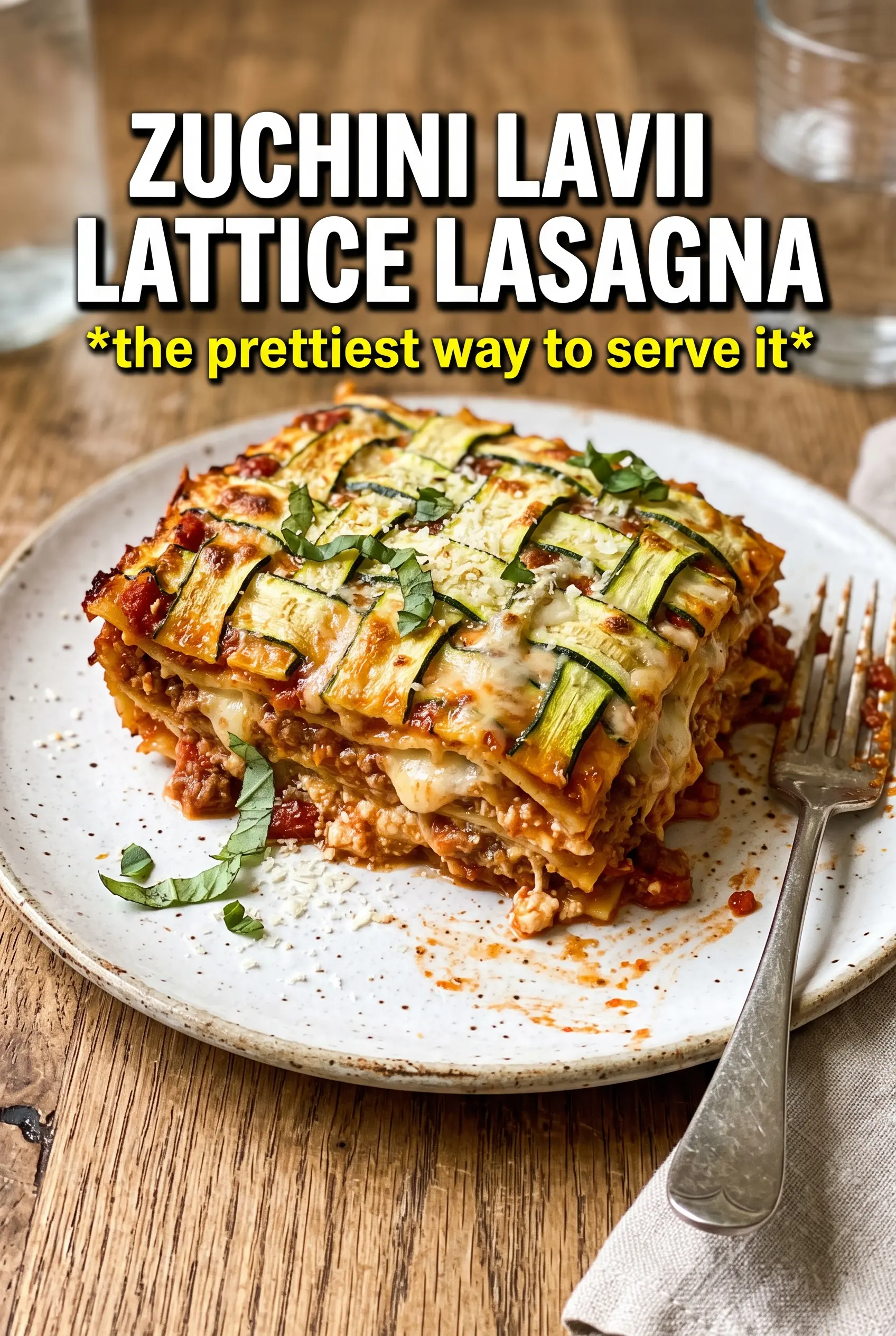
The zucchini lattice baked up neatly and held together when I sliced it after the rest time. The edges got a little caramelized, and the ricotta layer stayed creamy instead of watery.
Save this zucchini lattice lasagna for the night you want a gorgeous baked dinner with a crisp woven top and a clean slice.
The Part That Makes the Lattice Hold Its Shape
The difference between a neat woven top and a collapsed tangle is moisture. Zucchini and yellow squash both give off a lot of water as they bake, and if the slices are too thick or the sauce is too loose, the top can slide before it sets. Thin, even planks help the lattice stay flexible enough to weave, but sturdy enough to brown without dissolving into the filling.
The other thing that matters is the rest. Those 15 minutes after baking are not optional if you want clean squares instead of a bubbling mess. The cheese tightens, the sauce settles, and the zucchini finishes setting as the pan cools just enough to slice cleanly.
- Zucchini and yellow squash — Use the thinnest planks you can cut by hand or with a mandoline. If they’re too thick, they won’t bend into a tight lattice; if they’re paper-thin, they can tear when you weave them.
- Meat sauce — A thicker sauce works better here than a runny one. Simmering it for 10 minutes after adding the marinara lets excess liquid cook off so the lasagna layers stay defined.
- Ricotta — Whole-milk ricotta gives the filling a softer, richer texture. Part-skim works, but it sets a little firmer and can read drier once baked.
- Mozzarella and parmesan — Mozzarella melts the filling together, while parmesan helps the top brown and seasons the lattice. Don’t skip the parmesan on top if you want that golden finish.
Building the Pan So the Top Bakes, Not Sinks
- Ground beef or Italian sausage — Sausage gives you more built-in seasoning and a little extra richness. If you use beef, add enough Italian seasoning and salt to keep the sauce from tasting flat.
- Marinara sauce — A good jarred sauce is fine here because it’s cooked down with the meat and onion. Choose one that isn’t overly sweet or watery, since that shows up fast in baked dishes.
- Ricotta mixture — The egg is what helps the ricotta layer set into slices instead of oozing out. Parsley adds freshness, but the real job here is structure.
- Extra zucchini planks or pasta — This bottom layer gives the filling something to sit on and helps protect the ricotta from disappearing into the sauce. If you use zucchini instead of pasta, keep the slices thin and overlapping so they don’t turn flimsy.
The Order That Keeps Every Slice Intact
Brown the Meat Until It Actually Colors
Cook the onion with the meat until the meat loses its pink color and starts picking up some browned bits. That color is flavor, and it also keeps the sauce from tasting boiled. Drain off the excess fat if the pan looks greasy, then stir in the garlic just long enough for it to smell fragrant. Garlic burns fast, so it goes in after the meat, not before.
Mix the Ricotta Until It Can Set
Stir the ricotta, egg, parmesan, parsley, salt, and pepper until the mixture looks smooth and evenly speckled. You want it loose enough to spread, but not soupy. If it’s watery, the lasagna will slide when you cut it. A thick ricotta layer holds its own under the weight of the sauce and lattice.
Weave the Top and Press It Into Place
Lay the zucchini and yellow squash planks over the lasagna in alternating strips, then lift and fold every other strip back to create the weave. Work gently, because over-handling breaks the planks and makes the pattern messy. Once the lattice is complete, brush it with olive oil so it browns instead of drying out, then dust on parmesan for a salty crust.
Let the Pan Rest Before You Slice
The lasagna is done when the edges bubble and the lattice looks golden instead of pale. Pull it from the oven and leave it alone for 15 minutes. That pause is what gives you a slice that stands up instead of spreading across the plate. If the center still looks a little loose when it comes out, that usually means the rest of the heat will finish the job.
How to Adapt This for a Lighter Pan or a Different Pantry
Make it vegetarian
Swap the meat for a thick layer of sautéed mushrooms, spinach, and onion. Cook the vegetables until their moisture is gone before assembling, or the filling will turn loose and muddy the layers. You’ll lose some richness, but the zucchini lattice still gives the dish plenty of body.
Use all beef or all sausage
All sausage makes the lasagna more savory and slightly spicier. All beef gives a milder, cleaner meat sauce. Either one works; just season the beef a little more aggressively if you go that route.
Go gluten-free
This recipe is naturally gluten-free if you skip any pasta in the base layer and use a gluten-free marinara. The key is keeping the sauce thick enough to support the zucchini lattice, since gluten-free versions can vary a lot in texture.
Prep ahead for a faster bake
You can make the meat sauce and ricotta mixture a day ahead, then slice the squash right before assembling. I don’t recommend fully assembling too far in advance, because the zucchini releases moisture as it sits and the lattice can soften before it ever gets to the oven.
Storage and Reheating
- Refrigerator: Store covered for up to 4 days. The lattice softens a bit, but the flavor holds up well.
- Freezer: This freezes best in individual portions after baking. Wrap tightly and freeze for up to 2 months; the zucchini will be softer after thawing, but it still works.
- Reheating: Reheat covered in a 350°F oven until hot in the center. The common mistake is blasting it in the microwave, which makes the zucchini watery and the cheese rubbery.
Questions I Get Asked About This Recipe
Zucchini Lattice Lasagna
Ingredients
Equipment
Method
- Brown the ground beef or Italian sausage with the diced onion until no pink remains and the onions look translucent. Drain excess fat so the sauce doesn’t turn greasy.
- Add the minced garlic and cook until fragrant, about 30 seconds, keeping it from browning. Stir in the marinara sauce and Italian seasoning and bring to a simmer.
- Simmer the sauce at a gentle bubbling for 10 minutes, then remove from the heat while you prep the layers. The sauce should look thick enough to coat a spoon.
- In a bowl, mix ricotta cheese with the egg and grated parmesan until smooth and creamy. Fold in fresh parsley, salt, and black pepper so the mixture tastes well-seasoned.
- Preheat the oven to 375°F and grease a 9x13 baking dish. Set it up so you can assemble quickly and keep the lattice tight.
- Assemble the base by spreading a layer of meat sauce across the bottom, then add a layer of extra zucchini planks or pasta. Spread ricotta over the layer, add more meat sauce, and finish with mozzarella.
- Lay alternating green zucchini and yellow squash strips over the top, weaving them under and over each other to form a tight lattice pattern. Press lightly so the lattice contacts the filling.
- Brush the lattice with olive oil so the tops brown evenly, then sprinkle with parmesan. Aim for a light, even dusting across the entire pattern.
- Bake at 375°F for 40–50 minutes until the lattice is golden and the filling bubbles around the edges. If needed, bake a few extra minutes for deeper browning on the lattice.
- Rest the lasagna for 15 minutes before slicing to preserve the lattice pattern. The layers will set and the lattice will stay intact.