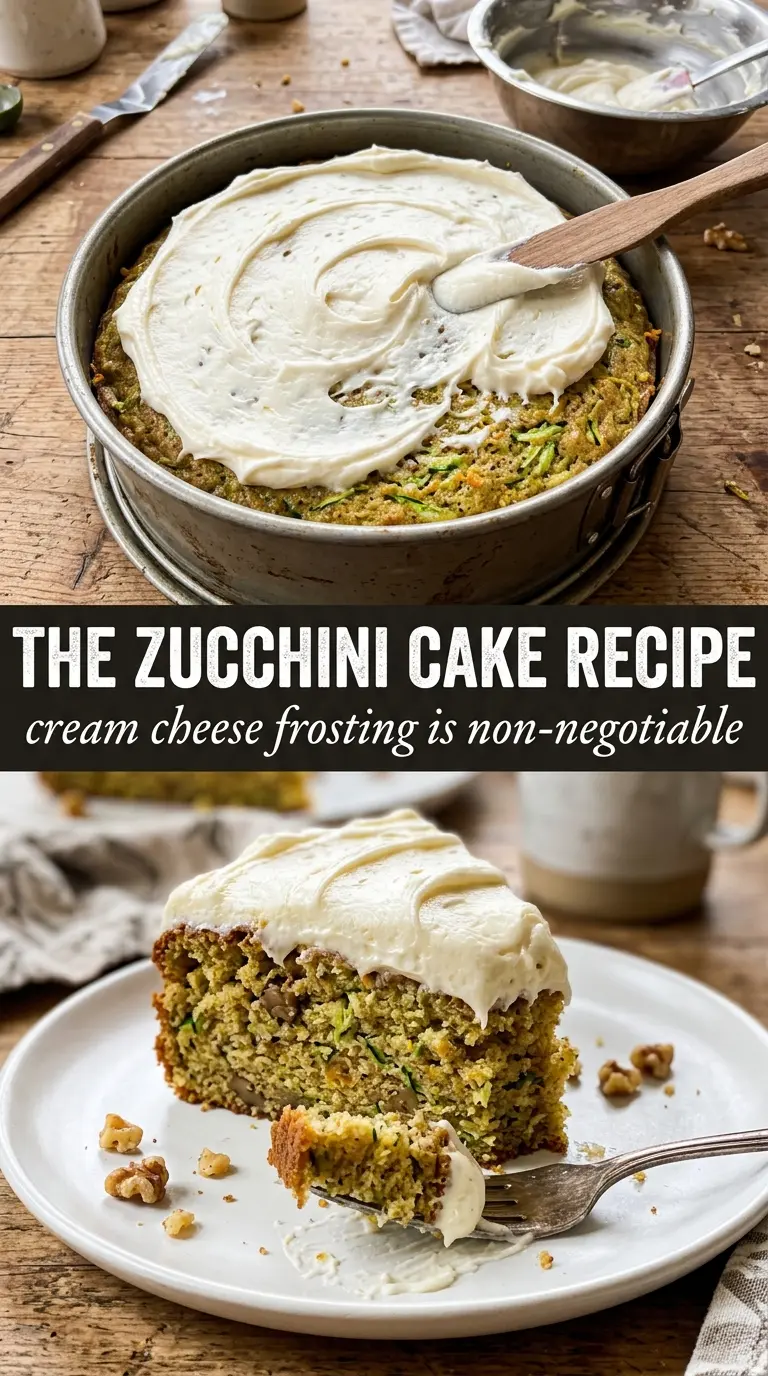
Tender zucchini cake has a way of disappearing faster than almost any other sheet cake on the table. The crumb stays soft and moist without turning heavy, the cinnamon and nutmeg give it that warm carrot-cake feel, and the cream cheese frosting adds the tangy finish that keeps each square from tasting plain or overly sweet.
The trick here is squeezing the zucchini dry before it goes into the batter. That step keeps the cake from turning gummy, while the oil-based batter locks in moisture all the way through baking. The frosting is built with enough cream cheese to taste unmistakably rich, but not so much butter that it turns greasy or loose.
Below you’ll find the small details that make this cake reliable, including how to keep the crumb tender, when to stop mixing, and how to handle the frosting so it spreads in thick, smooth swirls instead of sliding off the cake.
I was skeptical about squeezing the zucchini, but the cake baked up perfectly even and never went soggy. The frosting was thick enough to spread cleanly, and the spiced crumb tasted even better the next day.
Save this zucchini cake for the next time you want a soft spiced sheet cake with thick cream cheese frosting and a moist crumb.
The Part Most Zucchini Cakes Get Wrong: Too Much Moisture
Zucchini brings tenderness, but it also brings a lot of water. If that water stays in the batter, the cake can bake up dense in the middle, sink after baking, or turn into something that feels more steamed than baked. Squeezing the zucchini dry changes everything. You still get the soft crumb and the mild freshness, but the structure stays intact and the cake slices cleanly once it cools.
The other trap is overmixing after the flour goes in. This is a simple cake batter, and it only needs to be mixed until the dry streaks disappear. The batter will look thick but spreadable, and that is exactly what you want. If you beat it smooth at that stage, the cake loses some of its tenderness.
- Zucchini — Grate it finely and squeeze it well in a clean kitchen towel or several layers of paper towels. Packed zucchini straight from the grater adds too much liquid and weakens the crumb.
- Vegetable oil — Oil keeps this cake moist even after a day in the fridge, which butter-based batters don’t always do as well. A neutral oil works best here.
- Cinnamon and nutmeg — These give the cake its warm, carrot-cake-style backbone. Fresh nutmeg makes a difference, but the amount is small enough that jarred nutmeg still works fine.
- Walnuts — Optional, but they add a little texture and a toasty bite. Skip them for a smoother cake, or swap in pecans if that’s what you have.
- Cream cheese frosting — The frosting needs soft cream cheese and butter so it beats light instead of lumpy. If either one is too cold, the texture goes grainy before you even add the powdered sugar.
Building the Batter and Frosting It at the Right Temperature
- Flour — All-purpose flour gives the cake enough structure to hold the zucchini and frosting without becoming dry. Spoon and level it if you can, since packed flour can make the cake heavier than intended.
- Eggs — They bind the batter and help it rise evenly. Room-temperature eggs blend more smoothly with the oil and sugar, but cold eggs still work if that’s what you have.
- Sugar — Granulated sugar sweetens the cake and helps the crumb stay soft. It also contributes to the slight tenderness you want in a sheet cake like this.
- Cream cheese, butter, powdered sugar, and milk — This frosting is balanced to be spreadable, not runny. If it seems too stiff after beating, add the milk a teaspoon at a time; if it loosens too much, a little more powdered sugar pulls it back.
From Grating to Frosting: The 20 Minutes That Matter Most
Getting the zucchini ready
Grate the zucchini on the fine side of a box grater, then squeeze it hard until no more liquid drips out. You want damp shreds, not wet ones. If the zucchini is left loose and watery, the batter will look thin and the finished cake can bake up with a gummy strip near the center. This is the step that protects the texture.
Mixing the wet base
Beat the sugar, oil, eggs, and vanilla until the mixture looks smooth and glossy. The eggs should disappear into the oil instead of floating in streaks. Once the zucchini goes in, the batter may look a little uneven, and that’s fine. You’re building a cake that stays tender, not one that needs to be whipped airy.
Bringing the batter together
Fold in the dry ingredients just until you stop seeing flour. A few small streaks are better than a batter that’s been worked too long. If you’re using walnuts, add them at the end so they stay distributed instead of getting crushed. Spread the batter evenly in the pan so the center doesn’t dome much higher than the edges.
Baking and cooling before frosting
Bake until a toothpick comes out clean or with a few moist crumbs, not wet batter. The top should spring back lightly when touched, and the edges will pull just a little from the pan. Let the cake cool completely before frosting. If you frost it while it’s warm, the cream cheese layer softens and slides instead of sitting on top in thick swirls.
Make It Nut-Free Without Losing the Crumb
Leave out the walnuts and the cake still bakes up soft and complete. The nuts add crunch, not structure, so skipping them doesn’t change the batter or the baking time.
Dairy-Free Version
Swap the cream cheese frosting for a dairy-free frosting made with plant-based cream cheese and butter. The cake itself is already dairy-free, so this is an easy adaptation that keeps the texture close to the original.
Make It a Layer Cake Instead of a Sheet Cake
Bake the batter in two 9-inch round pans and start checking a little earlier, since thinner layers bake faster. You’ll get a taller presentation and more frosting in every bite, but the layers will need extra care when lifting and frosting.
For a Less Sweet Finish
Cut the powdered sugar back a little and add the milk slowly until the frosting is still thick enough to spread. The result is more tangy and less dessert-like, which works well if you want the zucchini and spice to stand out more.
Storage and Reheating
- Refrigerator: Store covered for up to 5 days. The frosting stays firm and the crumb actually tastes even more settled by day two.
- Freezer: The unfrosted cake freezes well for up to 2 months. Wrap slices tightly and thaw in the fridge before frosting, since cream cheese frosting can weep after freezing.
- Reheating: This cake is best served at cool room temperature, not warmed. If it has been chilled, let slices sit out for 20 to 30 minutes so the frosting softens and the cake regains its tender texture.
Questions I Get Asked About This Cake

Zucchini Cake
Ingredients
Equipment
Method
- Preheat oven to 350°F and grease a 9x13 baking pan.
- Whisk all-purpose flour, cinnamon, baking soda, baking powder, salt, and nutmeg together.
- Beat granulated sugar, vegetable oil, eggs, and vanilla extract until smooth.
- Stir in zucchini, grated and squeezed dry.
- Fold the dry ingredients into the wet ingredients until just combined, then fold in chopped walnuts (optional) if using.
- Pour the batter into the prepared pan and bake at 350°F for 30–35 minutes, until a toothpick comes out clean.
- Cool the cake completely before frosting, about 30 minutes.
- Beat cream cheese, butter, powdered sugar, vanilla, and milk until light and fluffy, then spread the frosting over the cooled cake.