Super moist zucchini banana bread has a tender crumb, a deep banana smell, and a golden crust that slices cleanly after it cools. The zucchini doesn’t make it taste like vegetables; it disappears into the loaf and leaves behind moisture that keeps the bread soft for days. The result sits right in the sweet spot between classic banana bread and a sturdy quick bread you can actually pack for breakfast.
The key is treating the zucchini like a source of water, not an ingredient to toss in and forget. Grate it finely, squeeze it dry, and let the bananas do the heavy lifting for flavor. That keeps the loaf from turning gummy in the center while still giving you that plush, bakery-style crumb. The cinnamon warms everything up without pushing it into spice-cake territory, and a little brown sugar adds a deeper note that plain white sugar can’t.
Below, I’ll walk through the part that matters most: how to keep the loaf moist without making it dense, plus the small prep habits that help the top bake up with a good rise instead of a soggy middle.
I squeezed the zucchini like you said and the loaf baked up perfectly moist, not wet. The banana flavor came through, and the walnuts added just the right crunch on top.
Save this zucchini banana bread for the days when you want a moist loaf with a golden crust and a soft, banana-forward crumb.
Why Squeezing the Zucchini Is the Difference Between Moist and Mushy
Zucchini bread fails when the batter gets too wet before it even hits the oven. Bananas already bring plenty of moisture, so the zucchini has to be treated like an add-in that supports the crumb, not a second liquid. Squeeze it dry after grating and you’ll get a loaf that bakes through evenly with a soft, springy middle instead of a heavy center that looks done on top and underbaked underneath.
The other trap is overmixing once the flour goes in. Quick bread batter should look a little rough when you stop stirring. If you chase a completely smooth batter, the loaf turns tight and loses that tender, cake-like crumb that makes banana bread worth slicing warm from the pan.
- Wet zucchini is the biggest problem here. Even a tablespoon or two of extra moisture can slow the bake and make the center gummy.
- Very ripe bananas matter more than the zucchini. They bring the sweetness and the deep banana flavor that carries the loaf.
- The leaveners work best in a batter that hasn’t been beaten hard. Gentle mixing keeps the bread from getting tough.
- A 9×5 loaf pan gives the batter the right depth. A smaller pan can leave the middle underbaked before the top over-browns.
What the Bananas, Zucchini, and Sugars Are Each Doing Here
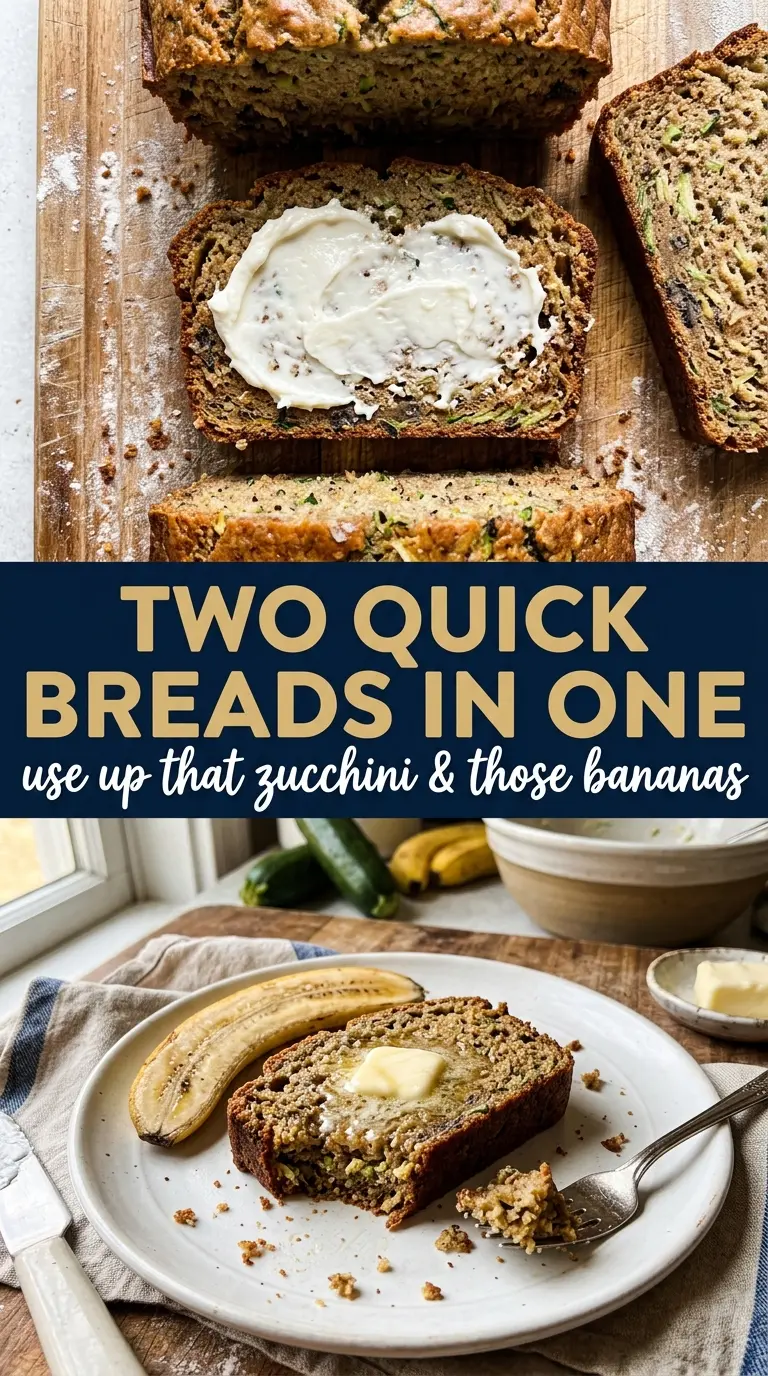
The bananas do more than sweeten the loaf. They bring the soft, dense texture and the flavor you expect from banana bread, especially when they’re deeply speckled and fragrant. If your bananas are still firm, the bread will taste flatter and need extra sugar to compensate.
Zucchini is there for moisture and structure, not taste. Fresh zucchini is fine, but grate it on the fine side of a box grater so it melts into the batter instead of leaving visible strands. After squeezing, you want it damp, not dripping. That’s the line between a tender loaf and one that collapses in the middle.
- All-purpose flour — Gives the loaf enough body to hold the banana and zucchini without becoming heavy. A 1:1 gluten-free baking blend can work, but the crumb will be a little more fragile.
- Brown sugar — Adds moisture and a deeper caramel note. You can use all granulated sugar in a pinch, but the loaf will taste lighter and less rich.
- Vegetable oil — Keeps the bread soft for days. Melted butter gives a stronger flavor, but it firms up more as it cools and makes the loaf less plush.
- Walnuts or chocolate chips — Both are optional, but they change the loaf in useful ways. Walnuts add crunch and contrast; chocolate chips push it toward dessert.
Mixing the Batter Without Losing the Tender Crumb
Start With the Wet Base
Mash the bananas until they’re mostly smooth, then stir in the sugars, eggs, oil, and vanilla. You’re looking for a thick, glossy mixture with no streaks of egg left behind. If the eggs aren’t fully blended now, you’ll end up overmixing later trying to fix it. The zucchini goes in next, after it’s been squeezed dry, so it can distribute evenly before the flour tightens everything up.
Add the Dry Ingredients Only Until They Disappear
Whisk the flour, baking soda, baking powder, salt, and cinnamon together first, then fold them into the wet mixture with a spatula. Stop the moment you no longer see dry flour pockets. A few streaks are better than a beaten, gluey batter. If you stir until the batter looks perfectly smooth, the loaf will bake up dense and a little chewy instead of light and soft.
Bake for Color, Then Judge the Center
Pour the batter into a greased 9×5 loaf pan and bake at 350°F until the top is deep golden and a toothpick in the center comes out clean or with just a few moist crumbs. The top may crack a little, and that’s a good sign. If the loaf is browning too quickly before the center is done, tent it loosely with foil for the last stretch of baking. Let it cool in the pan for 15 minutes before lifting it out, or it can fall apart while it’s still delicate.
Make It Chocolate Chip Instead of Nutty
Swap in chocolate chips for the walnuts if you want the loaf to lean sweeter and more dessert-like. Mini chips spread more evenly through the batter, while regular chips give you bigger pockets of melted chocolate. The loaf will still stay moist, but the chocolate makes the banana flavor read a little richer and less breakfast-only.
Make It Nut-Free Without Losing Texture
Leave out the walnuts completely and add the same amount of chocolate chips or nothing at all. The loaf still works because the bananas and oil already provide plenty of richness. You lose the crunch, so the slices will be softer and more uniform, but the crumb stays tender.
Make It Gluten-Free With a Baking Blend
Use a cup-for-cup gluten-free flour blend in place of the all-purpose flour. The loaf will still be moist, but it may crumble a little more when warm, so give it extra time to cool before slicing. Gluten-free quick breads often need that rest to set their structure fully.
Storage and Reheating
- Refrigerator: Store covered for up to 5 days. The loaf stays moist, but the texture gets a little firmer in the fridge.
- Freezer: Freezes well. Wrap individual slices or the whole cooled loaf tightly in plastic wrap, then foil, and freeze for up to 3 months.
- Reheating: Thaw at room temperature, then warm slices in the microwave for 10 to 15 seconds or in a low oven. Don’t overheat or the crumb dries out fast.
Answers to the Questions Worth Asking
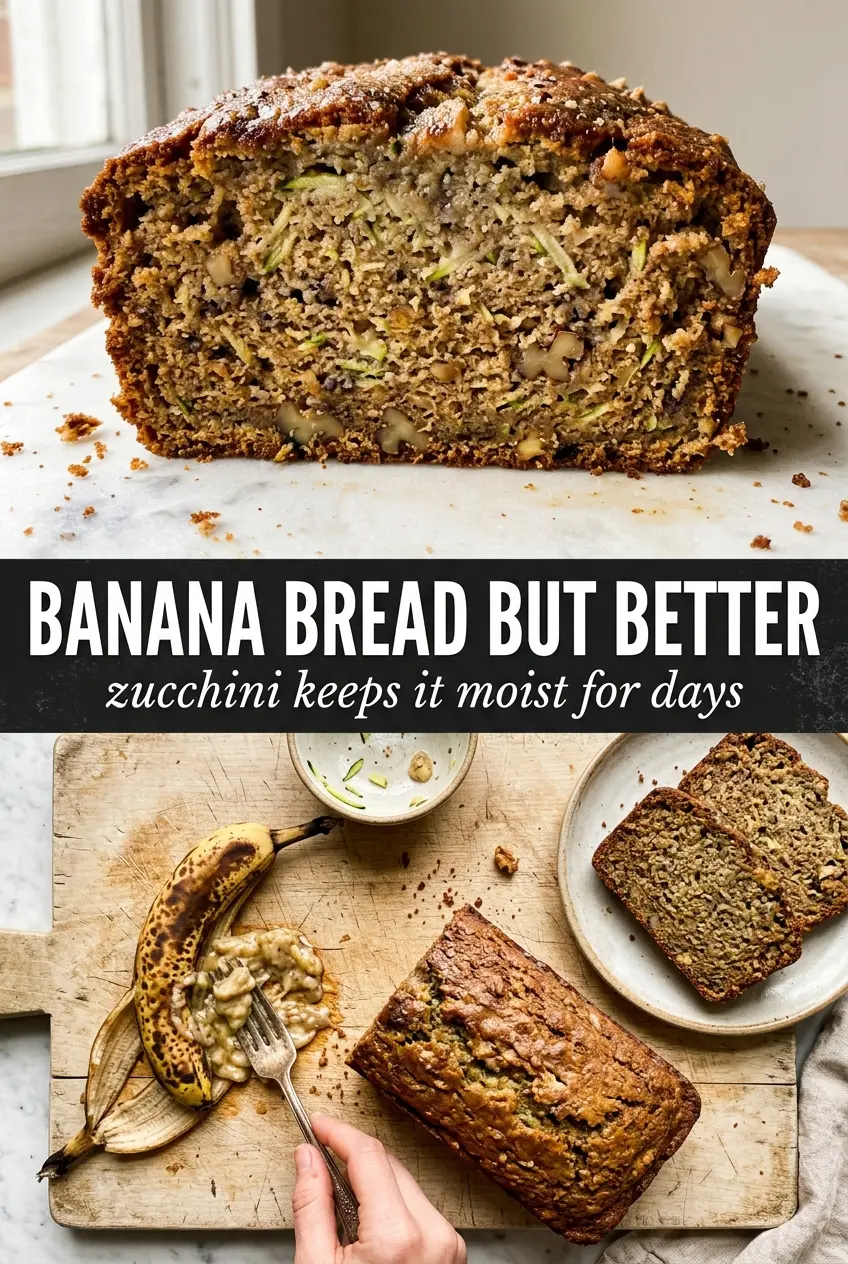
Zucchini Banana Bread
Ingredients
Equipment
Method
- Preheat the oven to 350°F and grease a 9x5 loaf pan, so the batter can go in immediately after mixing.
- Whisk together all-purpose flour, baking soda, baking powder, salt, and cinnamon until evenly combined.
- Mash the very ripe bananas in a large bowl, then stir in granulated sugar, brown sugar, eggs, vegetable oil, and vanilla extract until smooth and fully combined.
- Stir in the grated zucchini that has been squeezed dry so the loaf stays tender without excess moisture.
- Fold the dry ingredients into the wet ingredients until just combined, then fold in walnuts or chocolate chips if using.
- Pour the batter into the loaf pan and bake at 350°F for 55–65 minutes, until deep golden and a toothpick in the center comes out clean.
- Cool the zucchini banana bread in the pan for 15 minutes before slicing so the crumb sets and holds together.