Smashing cinnamon rolls on a hot Blackstone gives you the best parts of a bakery roll and a griddle cake in one bite: crisp, caramelized edges, a soft center, and icing that melts into every ridge. The heat changes the whole texture fast. Instead of a pale, doughy roll with one soft side, you get a golden crust that tastes toasted and buttery.
This works because the rolls are pressed flat into the butter, which increases the surface area and helps the sugar in the dough brown quickly. Medium-low heat matters here. Too hot, and the outside darkens before the center cooks through; too cool, and the rolls just warm up without developing those crisp edges that make this version worth making.
Below, I’m walking through the few details that keep them from sticking, burning, or turning greasy. I’ve also included a few smart variations for when you want to change up the icing or make them work with what you already have on hand.
I flattened them just like you said and the edges turned out caramelized and crisp while the middle stayed soft. The icing melted into the cracks and made them taste like something from a fair stand.
Smashed Blackstone Cinnamon Rolls with caramelized edges and drippy icing are the griddle treat worth saving for next weekend.
The Part Most People Get Wrong: Heat Before Pressure
The biggest mistake with griddle cinnamon rolls is smashing them before the surface has started to set. If the dough is too soft when you press hard, it can spread unevenly and stick, leaving you with torn edges instead of those neat, caramelized ridges. Let the butter warm the griddle first, then press with firm, even pressure so the roll flattens without tearing.
Medium-low heat is the sweet spot because cinnamon roll dough is already rich with sugar and fat. That means it browns faster than plain bread dough. If the griddle is running hot, the sugar can scorch before the center cooks through, and once that happens the icing won’t save it.
What Each Ingredient Is Actually Doing in This Dish
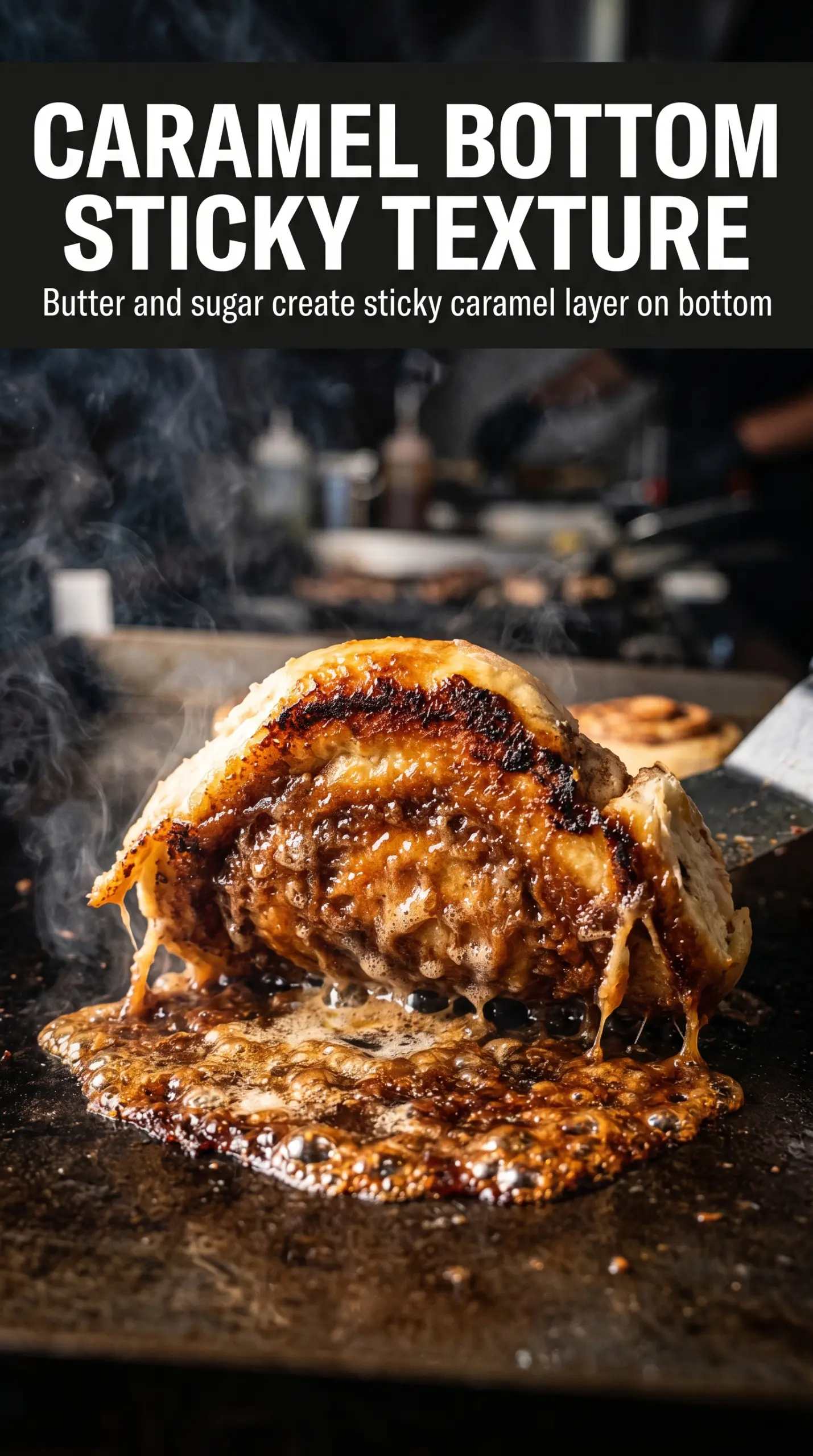
- Refrigerated cinnamon rolls — These give you the structure, the filling, and the soft interior without any dough work. The canned dough is the one place a shortcut makes complete sense here, because the whole point is fast griddle cooking and that classic cinnamon swirl.
- Butter — Butter is doing more than preventing sticking. It helps the flattened rolls fry instead of steam, and it carries the cinnamon-sugar flavor into the crust. If you skimp here, the bottoms come out dry and patchy instead of evenly bronzed.
- Included icing — The packet icing melts into the warm rolls and gives you that bakery-style finish. Warm it slightly in your hands or set it nearby while the rolls cook so it loosens up and drizzles instead of clumping.
- Cream cheese icing — This is the upgrade if you want a tangier, richer finish. It cuts the sweetness and works especially well if you like a thicker topping that sits on the ridges instead of disappearing into them.
- Cinnamon sugar — This is the little extra that makes the crust taste like the outside of a cinnamon toast pastry. Sprinkle it right after the rolls come off the griddle so it melts slightly into the buttered surface.
Getting the Smash, Flip, and Icing Right
Warming the Griddle and Melting the Butter
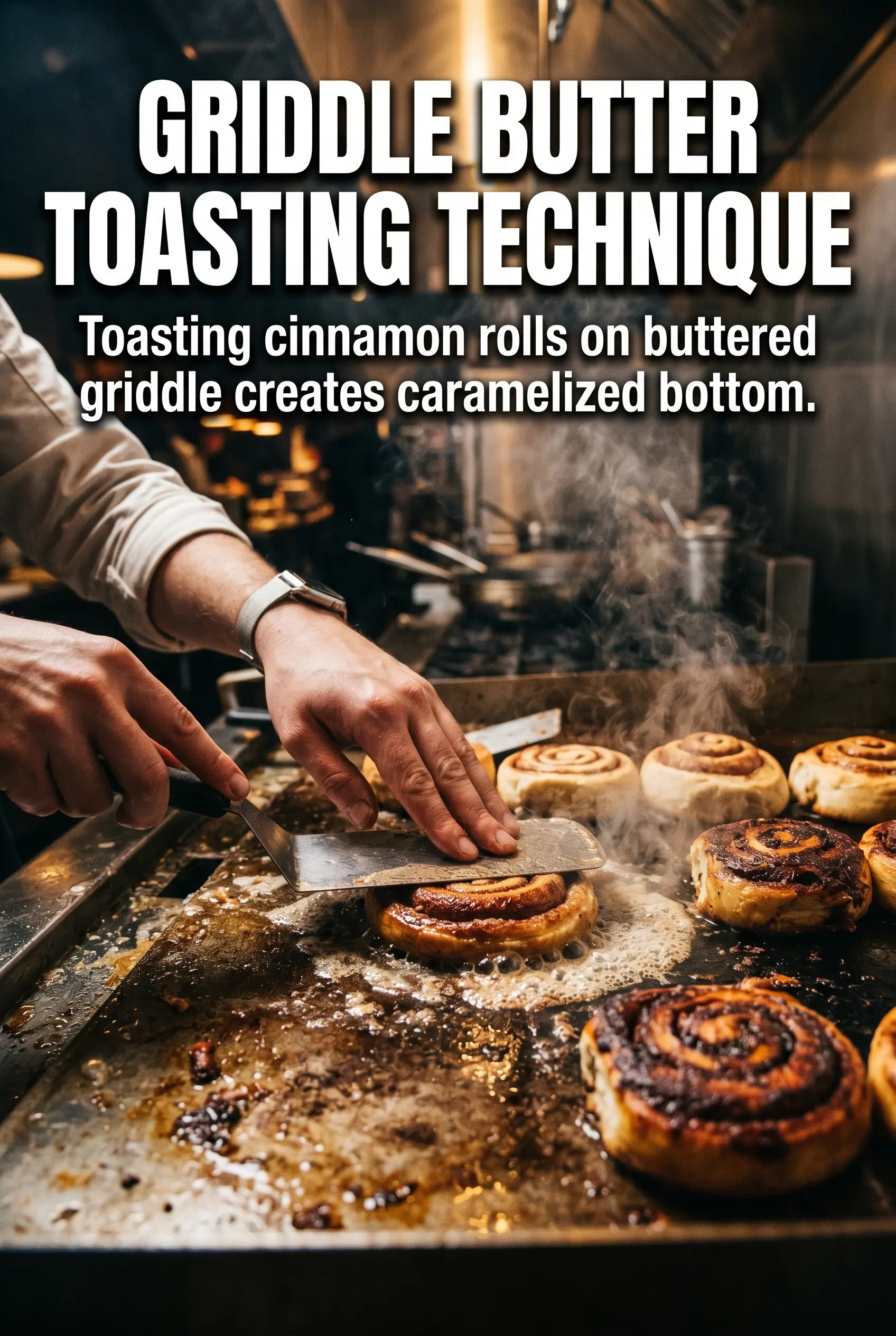
Heat the Blackstone to medium-low and let the butter melt into a thin, glossy layer. You want the surface hot enough that the dough sizzles the moment it lands, but not so hot that the butter browns before the rolls are down. If the butter starts smoking, pull the heat back before you add the cinnamon rolls.
Flattening Without Tearing the Dough
Place the rolls on the buttered griddle and press them flat with a heavy spatula. Use one confident press instead of repeated jabs; too much fussing can split the dough and push the filling out the sides. The goal is a thin round with even thickness so the center cooks at the same pace as the edges.
Building the Crust on the First Side
Leave the rolls alone for 4 to 5 minutes until the bottoms are deep golden and the edges look set. You should hear a steady sizzle, not a harsh crackle. If they stick when you try to lift them, give them another 30 seconds; they usually release once the sugar has caramelized enough to form a crust.
Finishing the Second Side and Dressing Them Warm
Flip and cook for another 3 to 4 minutes until both sides are crisp and the centers feel cooked through when gently pressed. Pull them off the griddle and ice them immediately while the surface is still hot. That’s what gives you the glossy drizzle and the melty pool underneath. Finish with cinnamon sugar while the icing is still soft so it clings instead of bouncing off.
How to Change These Up Without Losing the Crunch
Cream Cheese Icing Upgrade
Swap the packet icing for cream cheese icing if you want a tangier finish with more body. It stays a little thicker on the warm rolls, which works well if you like that bakery-style frosting look instead of a full melt.
Dairy-Free Version
Use a dairy-free cinnamon roll dough and swap the butter for a plant-based butter that browns well. The rolls will still crisp up, though the flavor will be a little less rich and the icing may need a touch of extra warm liquid to drizzle smoothly.
Extra Cinnamon Crunch
Add a light sprinkle of cinnamon sugar to the buttered griddle before the rolls go down. It caramelizes into the crust and gives you a more pronounced crackly edge, but don’t overdo it or the sugar can burn before the dough cooks.
Making a Bigger Batch
Cook in batches with plenty of space between the rolls so they can brown instead of steam. If the griddle gets crowded, the butter and sugar pool together and the bottoms turn greasy before they crisp.
Storage and Reheating
- Refrigerator: Store leftovers in an airtight container for up to 2 days. The crust softens a bit, but the rolls still reheat well.
- Freezer: Freeze after cooling completely, wrapped tightly, for up to 1 month. The texture is best after reheating in a skillet or air fryer rather than thawing at room temperature.
- Reheating: Warm on a low skillet or in a 300°F oven until heated through. Don’t microwave them if you want to keep the crisp edges; the steam turns that caramelized crust soft fast.
Answers to the Questions Worth Asking
Smashed Blackstone Cinnamon Rolls
Ingredients
Equipment
Method
- Heat the Blackstone griddle to medium-low heat and add the butter so it melts and foams slightly.
- Place the refrigerated cinnamon rolls with icing on the griddle and use a heavy spatula to smash them flat.
- Cook for 4-5 minutes until the bottom is golden and caramelized, watching for crisp edges.
- Flip the smashed rolls and cook another 3-4 minutes until both sides are crispy.
- Remove the smashed rolls from the griddle and immediately drizzle with the included icing or additional cream cheese icing.
- Sprinkle with cinnamon sugar and serve warm so it clings to the dripping icing.