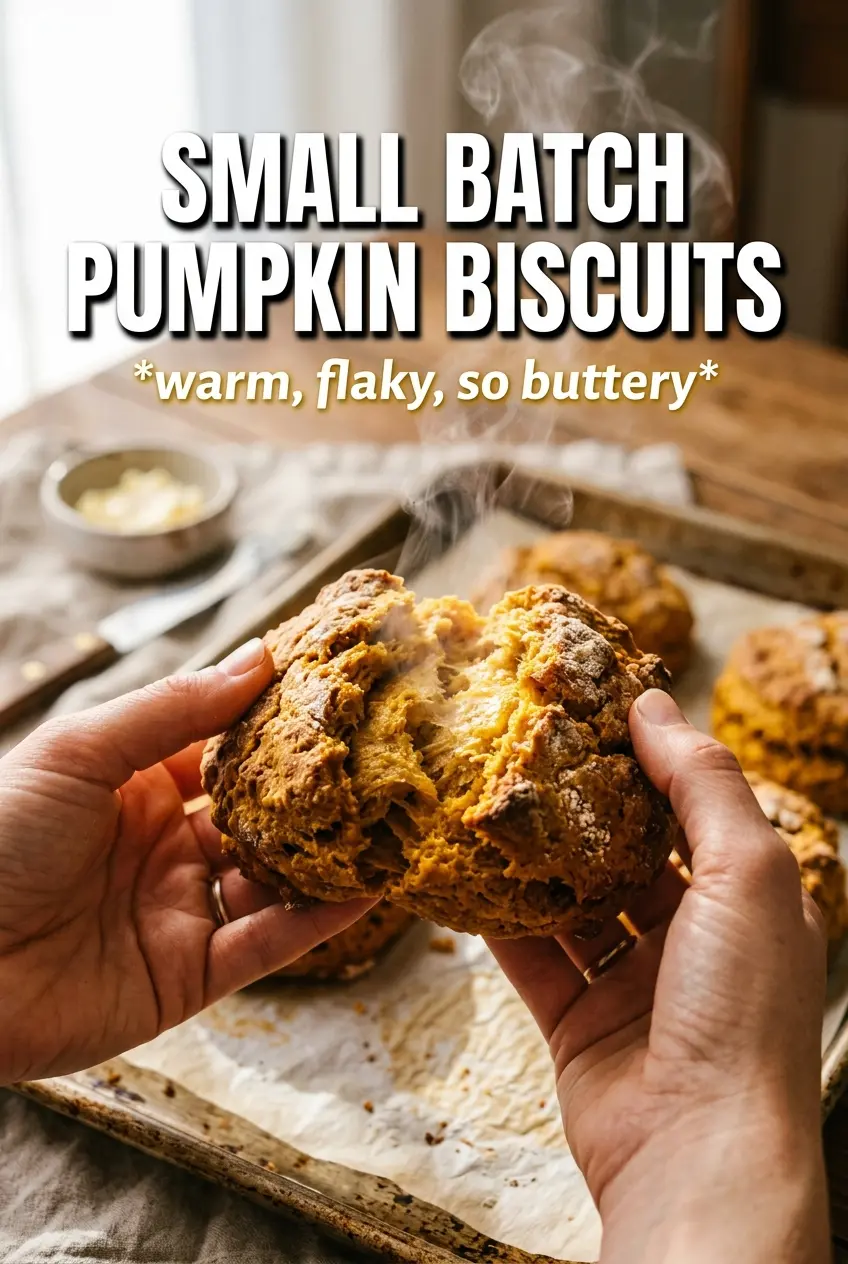
These small batch pumpkin biscuits bake up tall, tender, and flaky with crisp golden edges and a soft orange crumb that pulls apart in warm layers. The pumpkin brings gentle sweetness and color, but the real win is how it plays with cold butter and buttermilk to give you a biscuit that feels rich without turning heavy. They’re the kind of breakfast biscuit that disappears fast, especially split open and smeared with cinnamon honey butter while they’re still warm.
This version works because the pumpkin puree is paired with just enough buttermilk to keep the dough soft, not wet. Pumpkin adds moisture, so the butter has to stay cold and the dough has to stay barely mixed if you want those layers instead of a dense, cakey texture. A short fold-and-pat method gives the biscuits structure without overworking them, which is what separates a good pumpkin biscuit from one that bakes up flat.
Below, I’ve broken down the one detail that keeps them flaky, the ingredient choices that matter most, and the small adjustments that help if you want to scale them or swap in what you have on hand.
The biscuits rose beautifully and the layers came apart instead of crumbling. I loved that the pumpkin flavor was there without making them heavy, and the honey butter on top was perfect.
Save these small batch pumpkin biscuits for a quick breakfast with flaky layers and cinnamon honey butter.
The Trick to Tall Pumpkin Biscuits Without a Dense Crumb
Pumpkin biscuits go wrong when the dough gets treated like bread dough. The puree adds moisture, and if you keep stirring after the flour hydrates, the gluten tightens and the biscuits lose the soft, layered lift that makes them worth baking. The goal is a shaggy dough that just holds together, then a quick fold that stacks the layers without squeezing the air out.
The other thing that matters is temperature. Cold butter creates steam pockets in the oven, and those pockets are what open up the crumb. If the butter softens before baking, the biscuits spread instead of rise. That’s why the cutting and shaping should move quickly, and why a hot oven matters here.
- Cold butter — This is what creates the flaky layers. Cubes are better than grated butter here because they stay distinct longer while you work.
- Pumpkin puree — Use plain pumpkin puree, not pumpkin pie filling. Pie filling is already sweetened and spiced, which throws off both the texture and the flavor balance.
- Buttermilk — It gives tang and helps the biscuits stay tender. If you don’t have it, mix milk with a little lemon juice or vinegar and use it right away, but expect a slightly less rich finish.
- Pastry cutter or fingertips — Either works, but move fast. The less the butter smears, the better the layers.
What Each Ingredient Is Doing in the Dough
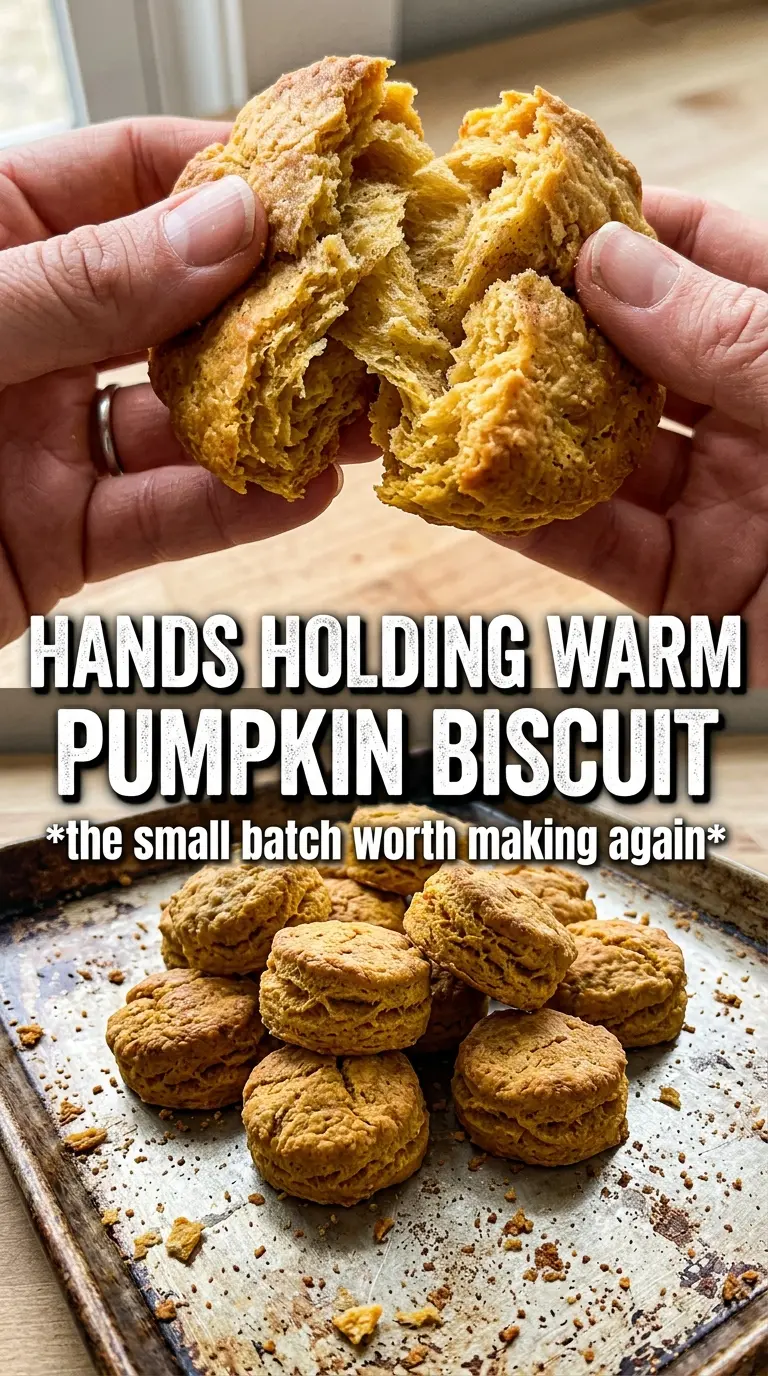
- All-purpose flour — This gives the biscuits enough structure to rise without turning bready. A low-protein flour would make them softer but less sturdy.
- Baking powder — This does the heavy lifting for lift. Fresh baking powder matters here; old baking powder leaves you with flatter biscuits and less defined layers.
- Sugar and spices — Just enough sugar sharpens the pumpkin flavor and helps the tops brown. Cinnamon and nutmeg should stay subtle, not dessert-cake heavy.
- Pumpkin puree and cold buttermilk — Together they make the dough workable while keeping the crumb tender. Stir them together first so the puree disperses evenly before it hits the flour.
- Cinnamon honey butter — The biscuits are good on their own, but this topping melts into the cracks and makes each bite taste finished. Soft butter is important here so the honey blends smoothly instead of staying grainy.
Building the Layers So They Rise Instead of Spread
Mix the Dry Ingredients First
Whisk the flour, baking powder, sugar, cinnamon, nutmeg, and salt together until the color looks even. That step matters more than it seems because the spices and leavening need to be distributed before the wet ingredients go in. If the baking powder clumps in one spot, part of the batch rises unevenly and the texture turns patchy.
Cut the Butter Until You See Pea-Sized Pieces
Work the cold butter into the flour until you have a mix of fine crumbs and a few visible butter bits about the size of peas. Those pieces are what create steam in the oven and give you layers. If you go past that point and the butter disappears into the flour, the biscuits bake up more like soft scones than flaky biscuits.
Bring the Dough Together with the Fewest Strokes
Stir the pumpkin and buttermilk together, then add them to the bowl and mix only until the flour is mostly moistened. The dough should look rough and slightly shaggy. If it looks smooth in the bowl, it’s already been overmixed, and the biscuits will bake up tighter than they should.
Fold, Pat, and Cut with Confidence
Turn the dough onto a floured surface, pat it to about 3/4-inch thick, fold it in thirds, then pat and fold once more if the dough holds together. That single extra fold gives the biscuits their stacked layers without making the dough tough. Use a sharp cutter and press straight down; twisting seals the edges and keeps them from rising as high.
How to Adapt These Biscuits Without Losing the Flaky Texture
Make Them Dairy-Free
Swap the butter for a solid plant-based baking butter and use an unsweetened non-dairy milk with 1 teaspoon lemon juice in place of the buttermilk. The biscuits will still rise and brown, but they’ll taste a little less rich and the crumb will be slightly softer.
Use Gluten-Free Flour
Use a cup-for-cup gluten-free flour blend that includes xanthan gum. The dough may need a lighter touch when shaping, and the biscuits won’t have quite the same elastic layer pull, but the pumpkin flavor still comes through cleanly.
Turn Them Savory
Cut the sugar down to 1 teaspoon and skip the cinnamon and nutmeg if you want a biscuit for eggs, ham, or gravy. You’ll lose the warm breakfast-sweet note, but the pumpkin still adds color and tenderness without making the dough taste dessert-like.
Storage and Reheating
- Refrigerator: Store baked biscuits in an airtight container for up to 3 days. They soften a little as they sit, especially because of the pumpkin.
- Freezer: Freeze baked biscuits for up to 2 months, wrapped well and tucked into a freezer bag. You can also freeze the unbaked cut rounds on a tray, then bake from frozen with a few extra minutes.
- Reheating: Warm in a 300F oven until heated through. The biggest mistake is microwaving too long, which makes the layers chewy instead of tender. A low oven keeps the outside from drying out while the center warms back up.