Slow cooker chicken breasts can be bland and dry when they’re cooked like an afterthought. When they’re seasoned well, kept in a shallow layer of broth, and pulled at the right moment, they turn into tender slices that stay juicy enough to eat plain or spoon under rice, potatoes, or vegetables. The broth concentrates into a light pan sauce that does most of the heavy lifting, so the chicken tastes finished instead of just cooked.
This version works because the seasoning goes on the meat before it ever touches liquid, and the butter melts into the broth instead of sitting on top in a greasy layer. A little garlic and smoked paprika give the chicken a fuller savory edge, while the lemon at the end keeps the whole thing from tasting flat. The slow cooker is doing the gentle work here, but the result still depends on timing and a few small choices.
Below, I’ve included the one timing mistake that ruins most slow cooker chicken breasts, plus the simplest way to turn the cooking juices into something worth drizzling over every slice.
The chicken stayed unbelievably tender on LOW, and the broth turned into a light sauce that was perfect over mashed potatoes. I usually struggle with dry breasts, but these sliced cleanly and still stayed juicy.
Like this juicy slow cooker chicken breasts recipe? Save it for the nights when you need tender sliced chicken and a built-in pan sauce with almost no hands-on time.
The Mistake That Makes Slow Cooker Chicken Breasts Turn Stringy
Chicken breasts don’t forgive long cooking the way thighs do. Once they pass tender, they go from juicy to chalky fast, especially in a covered cooker where the heat stays steady and there’s nowhere for the moisture to escape. That’s why the real skill here isn’t “cook until done.” It’s stop the moment the thickest part is opaque and slices with almost no resistance.
The broth keeps the environment moist, but it doesn’t protect the meat from overcooking. Low heat gives you a wider window than high, which is why I prefer LOW whenever I can spare the time. If the chicken shreds into dry fibers when you cut it, it stayed in too long; the fix next time is simply to check earlier and remove it as soon as it’s cooked through.
- LOW heat — This gives the breasts a gentler cook and a better texture. HIGH works in a pinch, but the margin between done and overdone is smaller.
- Chicken broth — You only need enough liquid to create steam and a sauce base. Too much broth dilutes the seasoning and leaves the chicken tasting boiled.
- Butter — It rounds out the broth and helps the juices taste more like a sauce. Olive oil won’t give you the same rich finish.
- Smoked paprika — This adds depth without making the dish taste smoky in a loud way. Regular paprika works, but you’ll lose some of that savory backbone.
What the Seasoning and Broth Are Actually Doing Here
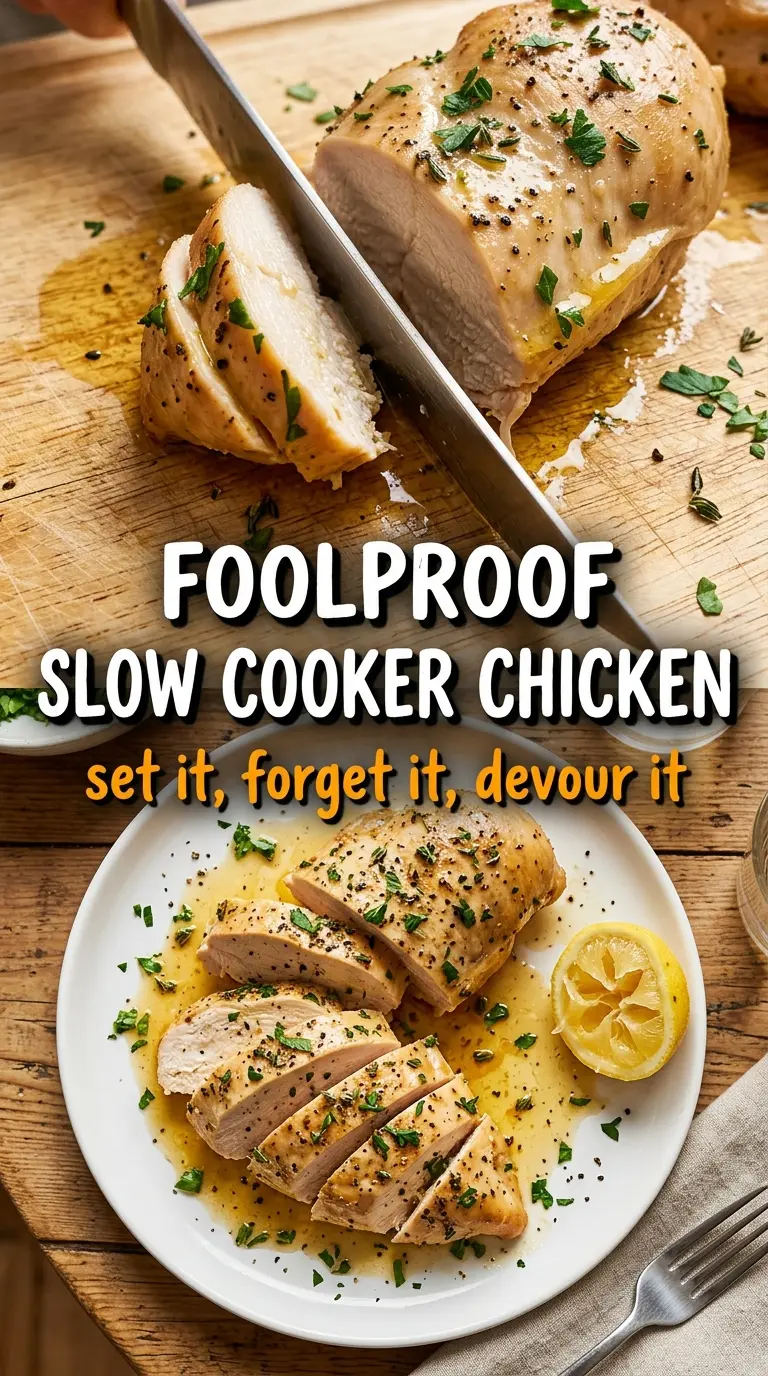
- Boneless skinless chicken breasts — This cut needs gentle heat and enough seasoning to carry it. Try to use breasts that are similar in size so they finish at the same time; a very thick breast will outlast a thin one.
- Garlic powder, onion powder, Italian seasoning, and smoked paprika — These build flavor directly on the meat, which matters because slow cooker broth can wash away a weak seasoning mix. Fresh garlic alone won’t give you the same all-over seasoning.
- Chicken broth — Use a broth you’d actually drink. Homemade or a good boxed broth makes the sauce taste clean and savory; watery stock turns the final juices flat.
- Butter and minced garlic — Add these on top so they melt into the cooking liquid and perfume the whole pot. If you stir the butter in at the start, it can separate and disappear into the broth instead of enriching it.
- Fresh parsley and lemon — These aren’t garnish for decoration. They wake up the finished chicken and keep the sauce from tasting heavy.
How to Keep the Chicken Tender From Start to Finish
Seasoning the Meat First
Rub the chicken with the seasoning mix before it goes into the slow cooker so every bite starts with flavor, not just the sauce around it. The breasts should look well coated, almost dusty with seasoning, and you’ll want that coverage on both sides. If the chicken goes in bare, the broth does the work alone and the result tastes thin.
Building the Cooking Base
Pour the broth around the chicken instead of over it so you don’t wash the seasoning right off the top. The liquid should sit in the bottom of the cooker, not bury the meat. That setup gives you moist heat and leaves the top of the chicken exposed enough to pick up flavor instead of boiling.
Knowing When to Stop the Cooker
Cook on LOW for 3 to 4 hours or HIGH for 2 to 2.5 hours, but start checking early. The chicken is done when the center is no longer pink and the meat gives slightly when pressed, not when it’s falling apart in the cooker. If it cooks until shreddable inside the slow cooker, it has usually gone a little too far for neat slices.
Resting and Turning the Juices Into Sauce
Let the chicken rest for 5 minutes before slicing so the juices settle instead of running all over the cutting board. Spoon the cooking liquid over the top and it becomes a simple pan sauce with built-in seasoning and butter. If the broth tastes too thin, simmer it in a small saucepan for a few minutes while the chicken rests.
How to Adapt This for Different Dinners
Dairy-Free Version
Swap the butter for olive oil or a dairy-free butter alternative. You’ll lose a little richness in the sauce, but the broth still picks up plenty of flavor from the seasoning and garlic.
Low-Sodium Version
Use low-sodium broth and season the chicken a little more boldly before cooking. This keeps the final sauce balanced instead of salty, which matters because the liquid reduces in flavor as it cooks.
For Shredded Chicken Instead of Slices
Cook the breasts until they’re just past the slicing stage and shred them directly in the juices. This gives you a softer texture for tacos, sandwiches, or rice bowls, but don’t leave them cooking long after they’re shreddable or the strands dry out.
Using Chicken Thighs Instead
Boneless skinless thighs can go longer and stay forgiving, so they’re the better choice if your schedule is unpredictable. The sauce works the same way, but the meat will taste richer and a little less clean and lean than breasts.
Storage and Reheating
- Refrigerator: Store in an airtight container for up to 4 days. The chicken stays moist, and the juices help keep it from drying out.
- Freezer: Freeze sliced chicken with some of the cooking liquid for up to 2 months. Without the sauce, the texture comes back a little drier after thawing.
- Reheating: Rewarm gently covered in the microwave or in a skillet with a splash of broth over low heat. High heat is the main reason leftover chicken turns tough.
Answers to the Questions Worth Asking

Slow Cooker Chicken Breasts
Ingredients
Equipment
Method
- Season the chicken breasts generously on both sides with garlic powder, onion powder, smoked paprika, Italian seasoning, salt, and cracked black pepper.
- Pat the seasoning in with your hands so it adheres to the chicken surface.
- Place the chicken breasts in the slow cooker and pour the chicken broth around the chicken.
- Add the butter and minced garlic to the slow cooker.
- Cover and cook on LOW for 3-4 hours or HIGH for 2-2.5 hours; do not overcook—look for tender chicken that easily flakes and stays juicy.
- Remove the chicken and let it rest 5 minutes before slicing.
- Pour the cooking juices over the sliced chicken as a pan sauce, letting the liquid soak in slightly so the meat looks glossy and moist.
- Garnish with fresh parsley and lemon wedges so the dish has a bright fresh finish.