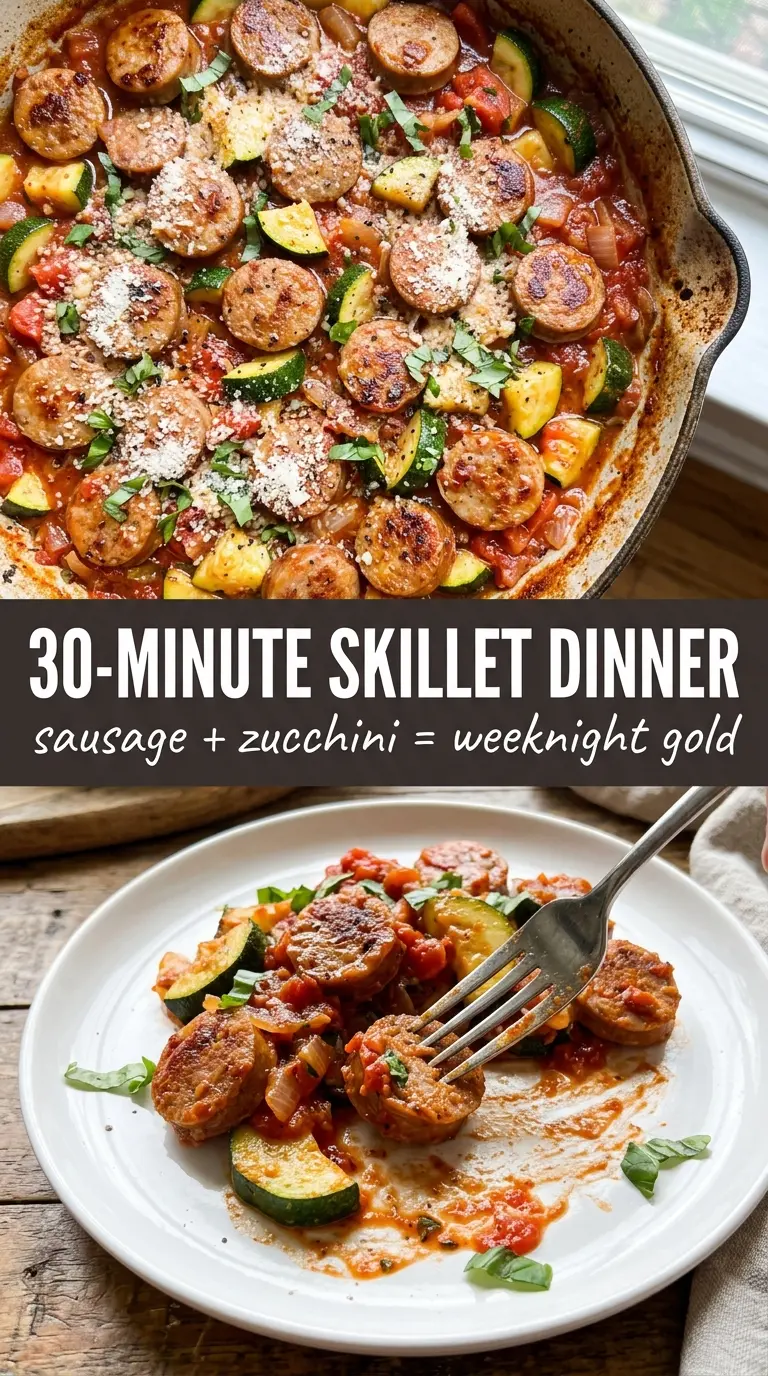
Golden zucchini, browned sausage, and burst tomatoes turn into a skillet dinner that tastes like a lot more work than it is. The trick is giving each ingredient enough contact with the pan to pick up color before they all go in together. That’s what turns a simple mix of vegetables and sausage into something you’d happily serve straight from the skillet.
This version leans on a hot cast iron pan, which helps the sausage develop crisp edges and keeps the zucchini from going soft and watery. The tomatoes go in near the end so they loosen just enough to make a light pan sauce without collapsing into mush. Parmesan and basil finish the dish with salt, freshness, and a little richness right where it’s needed.
Below, I’ve included the little timing details that matter most, plus a few smart swaps if you need to work with what’s already in your kitchen.
The sausage browned beautifully and the zucchini stayed tender with a little bite instead of turning soggy. I loved how the tomatoes burst into the pan sauce right at the end.
Save this sausage and zucchini skillet for the nights when you want browned sausage, tender zucchini, and a quick garlic tomato pan sauce in one pan.
The Pan Heat That Keeps the Zucchini from Going Soft
If the sausage and zucchini go into a lukewarm skillet, the vegetables start releasing water before they ever get a chance to brown. That’s where this kind of dinner usually turns limp. A cast iron skillet over medium-high heat gives the sausage a fast sear and leaves enough heat in the pan for the zucchini to pick up color on the cut sides instead of steaming in its own moisture.
The other thing that matters is sequence. Brown the sausage first, then cook the onion in the rendered fat, then add the zucchini once the pan is hot and uncovered. That order keeps the pan lively. If the zucchini starts to look glossy and pale too quickly, the heat is too low or the pan is overcrowded.
- Italian sausage — Hot or mild both work, but a well-seasoned sausage does most of the flavoring for you. Slice it into rounds so every piece gets a browned edge.
- Zucchini — Medium zucchini hold their shape better than oversized ones, which can turn watery and seedy fast. Cut them into even rounds so they cook at the same pace.
- Cherry tomatoes — These bring acidity and juiciness at the end. Halved tomatoes burst faster and create a light sauce without needing extra liquid.
- Parmesan — Freshly grated parmesan melts into the pan just enough to add salt and body. The pre-grated shelf-stable kind won’t give you the same finish.
What Each Ingredient Is Actually Doing in This Zucchini or Squash Dish
- Zucchini or squash (the star vegetable) — Fresh produce is best. Cut uniformly so pieces cook at the same rate.
- Oil or butter (the cooking medium) — This carries flavors and browses the vegetables. High-heat oil is essential.
- Seasonings (salt, pepper, spices, herbs) — Layer flavors boldly since zucchini is mild. Build depth gradually.
- Aromatics (garlic, onion, peppers) — Cook with fat to bloom flavors. They become the foundation of the dish.
- Cheese (if using) — This adds umami and richness. Fresh cheese melts better than pre-shredded.
- Optional protein (sausage, ground meat, or bacon) — This adds substance and richness. Cook until done before combining.
- Acid (vinegar, lemon, or tomato) — This brightens and prevents flat-tasting results.
- Fresh garnish (herbs, green onion, or cheese) — These add color and fresh flavor. Add right before serving.
Building the Browned Bits Before the Vegetables Go In
Getting Color on the Sausage
Heat the olive oil in a large cast iron skillet until it shimmers, then add the sausage in a single layer. Let it sit long enough to brown before you turn it; if you move it too soon, you’ll lose the crust that carries the whole dish. Cook until the pieces are deeply browned on both sides, then remove them to a plate. Those browned spots on the bottom of the pan are not a mess to clean up. They’re the start of the sauce.
Softening the Onion Without Losing the Pan Heat
Add the onion to the same skillet and cook just until it turns translucent and starts to pick up a little gold. You want it softened, not deeply browned, because the zucchini still needs the pan to be hot. If the pan looks dry, the sausage may have been leaner than expected; a small drizzle of oil is fine, but keep the heat up.
Coaxing the Zucchini into Color
Add the zucchini in an even layer and let it sit against the pan before stirring. The cut sides should turn golden and the edges should soften while the centers still hold their shape. If you stir constantly, the zucchini steams and turns bland. Two or three good stirs during this stage are enough.
Finishing with Tomatoes, Herbs, and Cheese
Garlic, Italian seasoning, and red pepper flakes only need about 30 seconds in the hot pan. Any longer and the garlic can scorch. Stir in the cherry tomatoes and wait for them to blister and burst; that’s when their juices loosen the browned bits underneath. Return the sausage, toss everything together, then finish with parmesan and basil right before serving so the cheese stays savory and the basil stays bright.
How to Make This Skillet Work in Your Kitchen
Use turkey sausage for a lighter skillet
Turkey sausage works, but it won’t leave as much flavorful fat in the pan. Add an extra teaspoon of olive oil if the skillet looks dry, and brown the sausage a little longer so it develops enough color before you remove it.
Make it dairy-free without losing the finish
Skip the parmesan and finish with a little extra salt plus a squeeze of lemon if you want more lift. You lose the salty, nutty edge from the cheese, but the sausage, tomatoes, and basil still give the skillet plenty of character.
Turn it into a gluten-free dinner
This skillet is naturally gluten-free as long as your sausage is certified gluten-free. Check the label on the sausage first, since that’s the one ingredient most likely to carry a hidden filler.
Add more vegetables without watering it down
Bell peppers or mushrooms fit in well, but they need their own browning time. Cook them after the sausage and before the zucchini so they don’t flood the pan and steal heat from the vegetables that need color most.
Storage and Reheating
- Refrigerator: Store leftovers in an airtight container for up to 4 days. The zucchini softens a bit as it sits, but the flavor stays good.
- Freezer: It freezes, but the zucchini changes texture after thawing. If you want to freeze it, cool it fully first and pack it tightly for up to 2 months.
- Reheating: Warm it in a skillet over medium heat so the sausage stays browned and the vegetables don’t turn watery in the microwave. Stir just until heated through; overcooking at this stage is what makes the zucchini go mushy.
Answers to the Questions Worth Asking
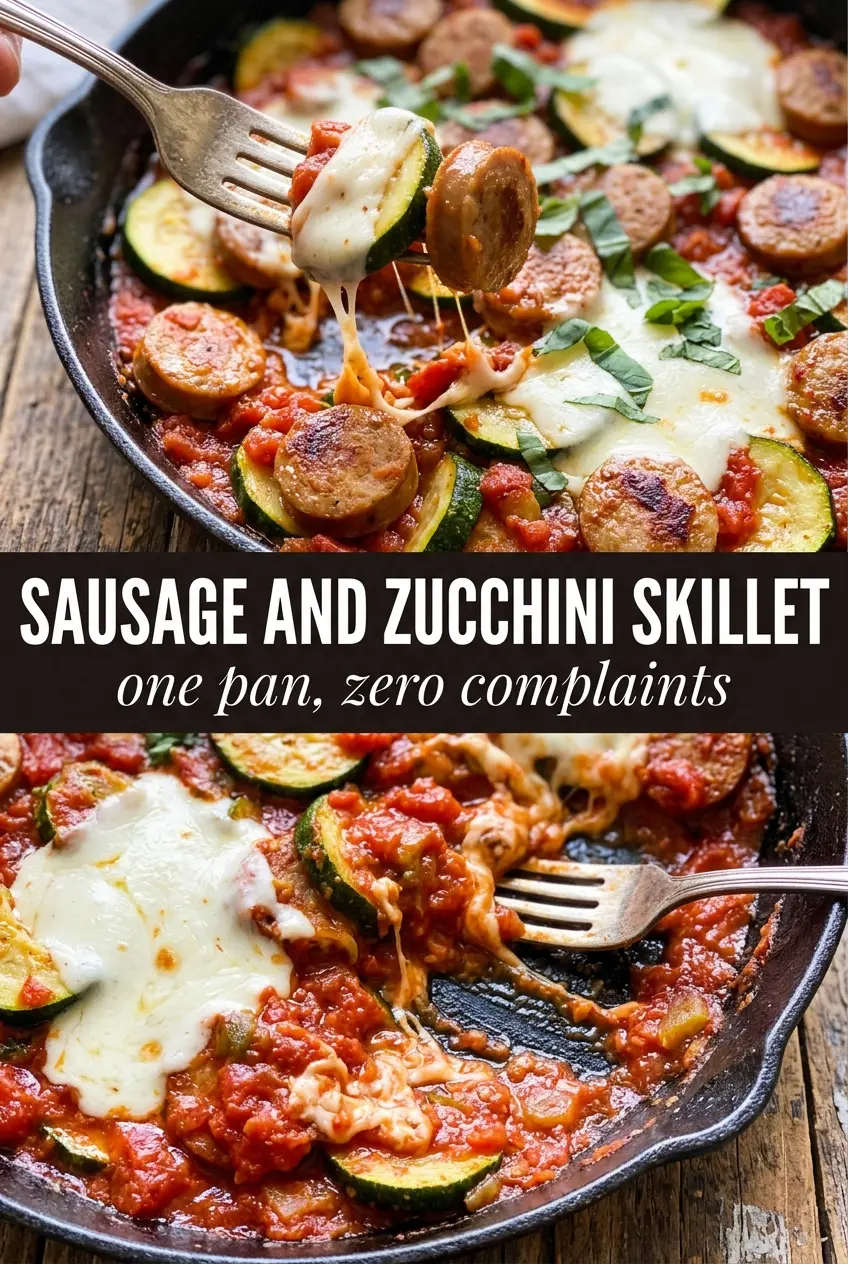
Sausage and Zucchini Skillet
Ingredients
Equipment
Method
- Heat 2 tablespoons olive oil in a large cast iron skillet over medium-high heat until shimmering. Add sausage rounds and cook 3–4 minutes per side until deeply browned, then remove and set aside.
- In the same skillet, cook diced onion for 2–3 minutes until softened. Add zucchini coins and cook 4–5 minutes until golden on the cut sides.
- Add minced garlic, Italian seasoning, and red pepper flakes to the skillet, cooking for 30 seconds while fragrant and slightly sizzling. Stir in halved cherry tomatoes and cook 2 minutes until they begin to burst.
- Return the browned sausage to the pan and toss everything together to coat in the pan sauce. Season with salt and black pepper to taste, top with grated parmesan and fresh basil, and serve directly from the skillet.