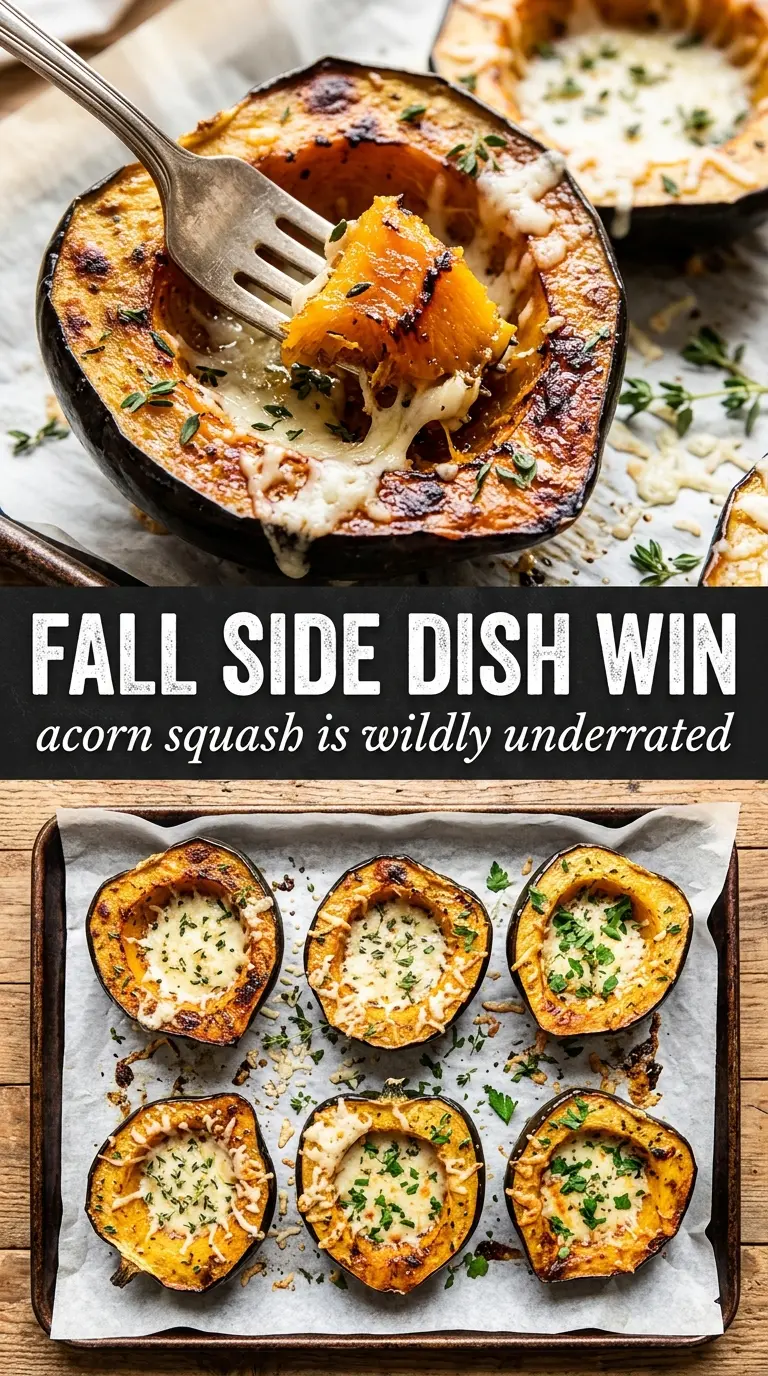
Roasted acorn squash turns from plain and earthy to deeply caramelized and almost candy-sweet when it hits a hot oven with a parmesan herb crust on top. The edges brown and crisp, the center stays tender, and every ring comes out with that mix of salty cheese, garlic, and squash sweetness that makes people reach for a second piece before the pan even cools.
What makes this version work is the way the topping is built into a paste instead of sprinkled on loose. The cheese melts into the garlic and herbs, then bonds to the squash as it roasts, which gives you a crust instead of a dusty layer that falls off the second you move the pan. Slicing the squash into rings also helps it cook evenly and gives you more caramelized surface area, which matters more than people think with a vegetable this mild.
Below, you’ll find the exact point where the squash turns fork-tender without going mushy, plus a few practical swaps if your herbs are a little different from mine.
The parmesan got golden and crisp around the edges, and the squash was tender all the way through without turning watery. I loved the mix of thyme and sage with just a little honey at the end.
Roasted acorn squash with parmesan and herbs is the kind of side dish that disappears fast, so keep this golden-crisp version handy for dinner nights when you want something special without extra work.
The Part That Keeps the Crust Crispy Instead of Steamy
The biggest mistake with roasted squash is crowding it or loading the topping on too early in a loose layer. Acorn squash gives off moisture as it roasts, and if the slices are stacked up or the pan is too small, that steam softens the parmesan before it can brown. A single layer on parchment, with space between the rings, lets the edges caramelize instead of going pale and soggy.
The other detail that matters is the paste-like topping. Parmesan, garlic, herbs, and oil need to cling to the surface of the squash so the heat can drive off moisture and leave behind a crisp, savory cap. If the topping looks dry and crumbly, it won’t melt into a crust; if it looks oily and loose, it tends to slide off. You want it thick enough to press on with your fingers or the back of a spoon.
- Acorn squash — Pick squash that feel heavy for their size and have matte, dark green skin. A ripe squash roasts up sweeter and softer, while very pale ones can stay a little bland.
- Parmesan — Freshly grated parmesan melts and browns better than the pre-shredded kind, which often has anti-caking agents that keep it from forming that crisp shell. If pre-grated is all you have, it still works, but the crust won’t be quite as lacy.
- Fresh thyme and sage — These herbs bring the flavor that makes the squash taste finished, not just salted. Dried thyme can stand in for fresh in a pinch, but sage is worth keeping fresh here because dried sage can read dusty fast.
- Garlic — Mince it fine so it softens in the oven instead of burning on the surface. Large pieces can taste harsh by the time the squash is done.
- Honey — This is optional, but a tiny drizzle at the end pulls the squash sweetness forward and balances the salty cheese. Use it lightly; too much makes the crust lose its edge.
What Each Ingredient Is Actually Doing in This Zucchini or Squash Dish
- Zucchini or squash (the star vegetable) — Fresh produce is best. Cut uniformly so pieces cook at the same rate.
- Oil or butter (the cooking medium) — This carries flavors and browses the vegetables. High-heat oil is essential.
- Seasonings (salt, pepper, spices, herbs) — Layer flavors boldly since zucchini is mild. Build depth gradually.
- Aromatics (garlic, onion, peppers) — Cook with fat to bloom flavors. They become the foundation of the dish.
- Cheese (if using) — This adds umami and richness. Fresh cheese melts better than pre-shredded.
- Optional protein (sausage, ground meat, or bacon) — This adds substance and richness. Cook until done before combining.
- Acid (vinegar, lemon, or tomato) — This brightens and prevents flat-tasting results.
- Fresh garnish (herbs, green onion, or cheese) — These add color and fresh flavor. Add right before serving.
Roasting the Squash So the Center Stays Tender and the Top Turns Gold
Getting the Pan Ready
Heat the oven to 400°F and line the pan with parchment so the cheese doesn’t weld itself to the metal. Brush both sides of the squash rings with oil and season them before they go down, because the flesh needs a little protection while it roasts. Lay each ring flat in a single layer. If they overlap, the lower edges soften before they can brown.
Pressing on the Parmesan Herb Paste
Mix the parmesan, garlic, thyme, sage, rosemary, and the remaining oil into a thick paste. It should look spreadable, not wet. Press it onto the top surface of each ring, covering as much of the exposed flesh as you can without mounding it up in a pile. The topping needs contact with the squash to crisp; if it sits loose on top, it will dry out before it browns.
Roasting to the Right Finish
Roast for 35 to 40 minutes, until a fork slides into the squash with no resistance and the parmesan is deeply golden around the edges. If the topping browns too fast before the squash softens, lower the pan one rack or tent loosely with foil for the last few minutes. Let the rings sit on the pan for 2 to 3 minutes before moving them, which gives the cheese a chance to set so the crust lifts cleanly.
Make It Dairy-Free
Swap the parmesan for a dairy-free parmesan-style alternative with a fine, sandy texture. You won’t get quite the same savory crust, but you still get a flavorful browned top if the substitute melts well and isn’t too oily.
Use Different Herbs Without Losing the Balance
If you don’t have fresh thyme or sage, use 1 teaspoon dried Italian seasoning and a pinch of extra rosemary. The flavor will be a little less earthy and a little more blended, but the squash will still taste savory and rounded.
Skip the Honey for a More Savory Finish
Leave off the honey if you want the parmesan crust to stay sharper and more savory. The squash will still taste sweet from roasting, but the finish will lean more toward dinner side dish than glazed vegetable.
Storage and Reheating
- Refrigerator: Store leftovers in an airtight container for up to 4 days. The crust softens as it sits, but the flavor holds well.
- Freezer: I don’t recommend freezing this one. The squash turns watery and the parmesan topping loses its crisp texture after thawing.
- Reheating: Reheat on a baking sheet in a 375°F oven for 10 to 12 minutes until warmed through. The oven brings back some of the crust; the microwave makes the squash soft and the topping rubbery.
Questions I Get Asked About This Recipe

Roasted Acorn Squash with Parmesan Herb
Ingredients
Equipment
Method
- Preheat the oven to 400°F and line a large sheet pan with parchment to prevent sticking.
- Brush the acorn squash rings on both sides with olive oil and season with salt and black pepper.
- Arrange the rings in a single layer on the prepared sheet pan so they roast and brown evenly.
- Mix parmesan cheese, minced garlic, thyme leaves, chopped sage, dried rosemary, and the remaining olive oil into a paste.
- Press the parmesan herb paste generously onto the cut surface of each squash ring for a thick, golden crust.
- Roast at 400°F for 35–40 minutes until the squash is fork-tender and the parmesan crust is golden and crispy, with caramelized edges.
- Garnish with fresh parsley and drizzle with honey if desired for a sweet-savory finish.