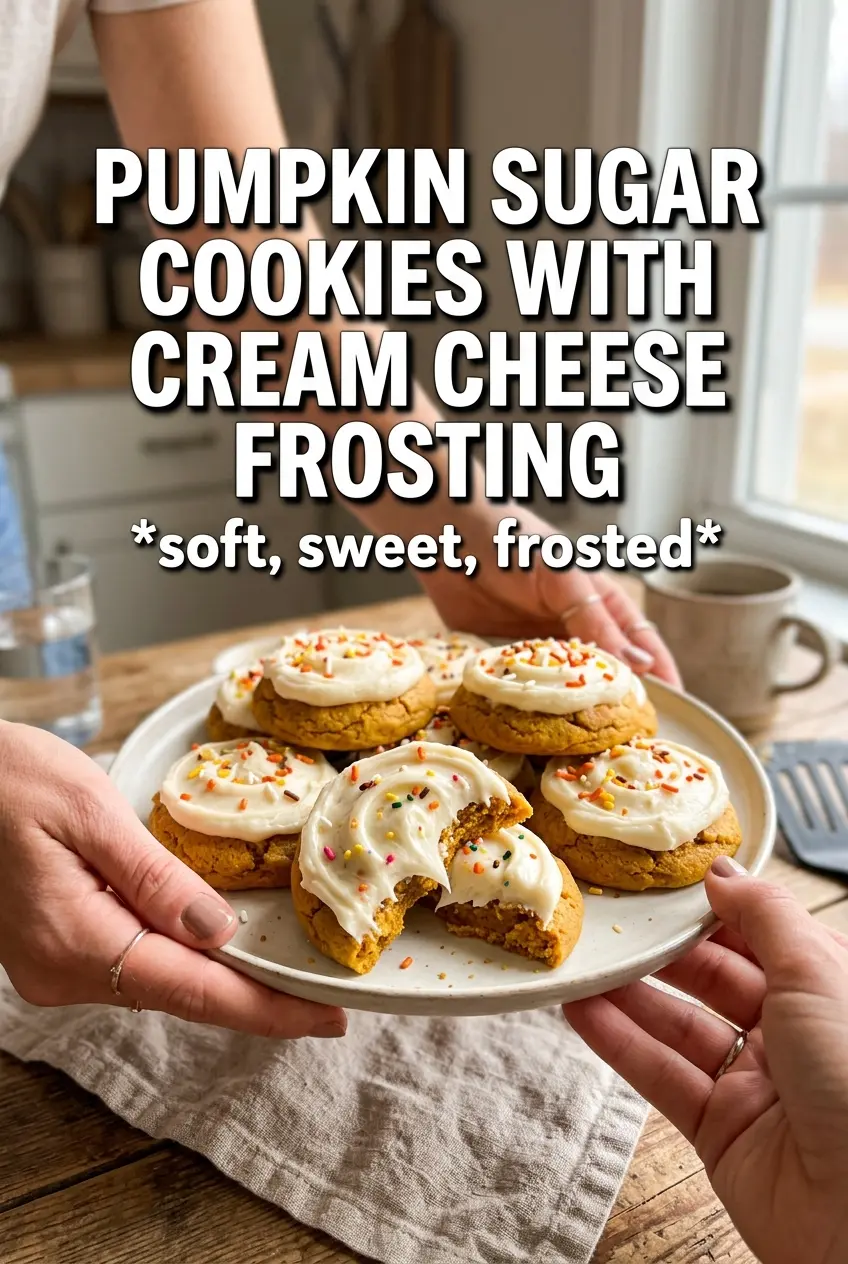
These pumpkin sugar cookies bake up soft in the center with crisp edges and a gentle spice that doesn’t overpower the cookie itself. The real payoff is the frosting: thick, tangy cream cheese frosting that settles into a smooth layer and finishes each cookie with just enough sweetness to balance the pumpkin and cinnamon. They look bakery-fancy, but they still eat like a cookie you want to stack on a plate and hand around the table.
What makes this version work is restraint. The pumpkin gets blotted dry before it goes into the dough, which keeps the cookies from turning cakey or spreading too much in the oven. The dough also gets chilled, and that rest matters because it firms the butter back up and gives the flour time to hydrate, which means cleaner cut-outs and a better texture after baking.
Below, I’ve included the small details that make these worth repeating: how to keep the dough easy to roll, how to tell when the cookies are done without overbaking them, and the frosting texture that pipes neatly without sliding off the cookies.
The cookies held their shape beautifully after chilling, and the cream cheese frosting was thick enough to swirl without running. I loved the cinnamon sugar on top — it gave the edges a little sparkle and extra crunch.
Save these pumpkin sugar cookies with cream cheese frosting for the days when you want a soft, spiced cookie with a thick cinnamon cream cheese topping.
The Part That Keeps Pumpkin Cookies Soft Instead of Puffy
Pumpkin is the ingredient that makes these cookies tricky. It adds moisture, and if you use it straight from the can without drying it first, the dough picks up too much water and bakes up soft in the wrong way — more like cake than a sugar cookie. Blotting the pumpkin gives you the flavor and color without the gummy center.
Chilling the dough is just as important. Warm dough spreads before the edges can set, which means blurry shapes and thin cookies that dry out fast. After an hour in the fridge, the dough rolls more cleanly, holds a cut edge better, and bakes into cookies that stay tender in the middle.
What Each Ingredient Is Doing in These Frosted Pumpkin Cookies
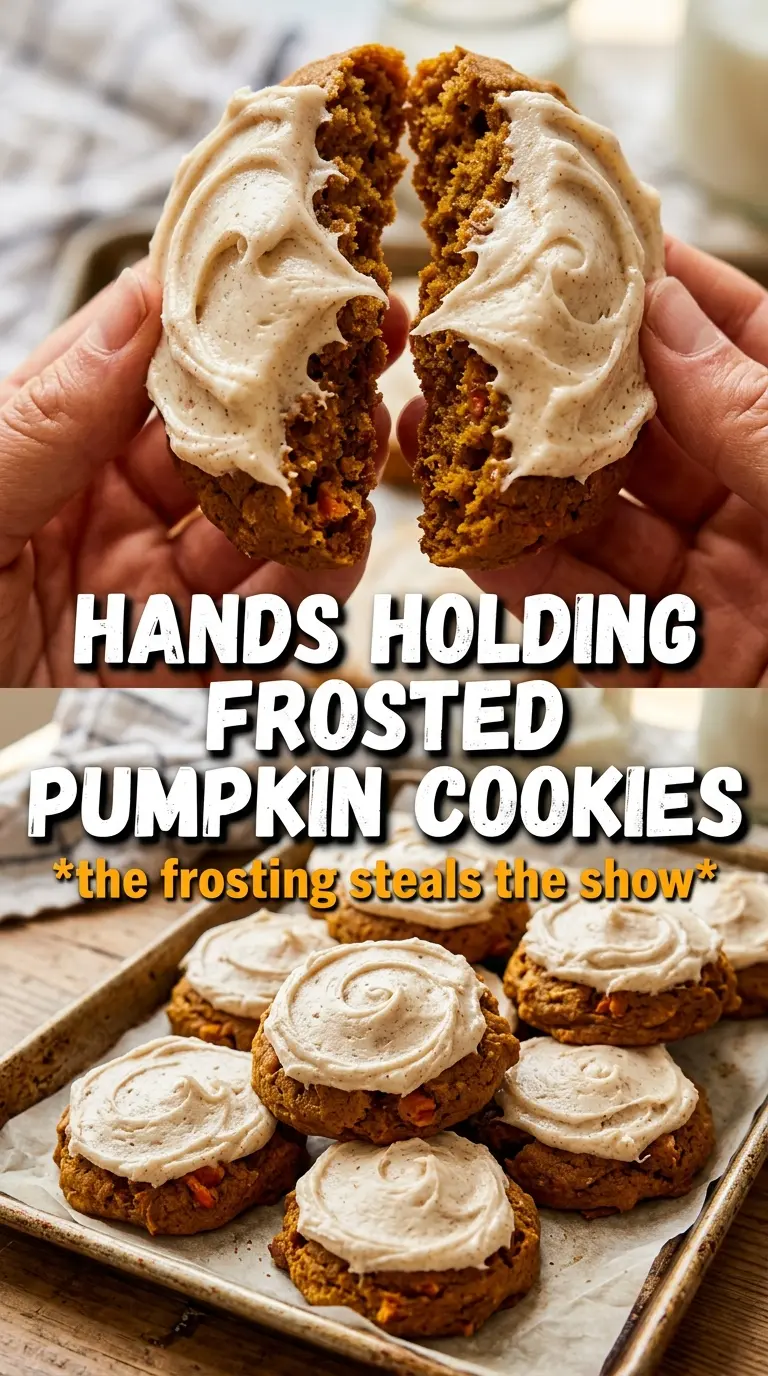
- Blotted pumpkin — This gives the cookies their pumpkin flavor and soft orange color without flooding the dough with extra moisture. A little canned pumpkin goes a long way here, but blotting it dry is what keeps the texture cookie-like.
- Butter and sugar — Creaming these together adds air and gives the cookies their tender bite. Use real butter here; margarine will soften the structure and change how the cookies spread.
- Pumpkin pie spice plus cinnamon — Pumpkin pie spice gives the familiar warm base, while extra cinnamon sharpens the flavor so the cookies don’t taste flat under the frosting. If you only have pumpkin pie spice, you can use a little more of it, but the cinnamon keeps this version brighter.
- Egg and vanilla — The egg binds the dough and helps it bake into a soft, stable cookie. Vanilla rounds out the spice so the cookies taste full instead of one-note.
- Cream cheese frosting — Full-fat cream cheese gives the frosting the tang that cuts through the sweetness. Reduced-fat cream cheese is too loose for this job and can make the frosting run.
- Powdered sugar and milk — Powdered sugar thickens the frosting into something you can pipe or spread, and the milk helps it loosen just enough for a smooth finish. Add the milk slowly; too much at once turns a pipeable frosting into glaze territory.
Rolling, Cutting, and Frosting Without Losing the Shape
Mix the dough just until it comes together
Beat the butter and sugar until pale and fluffy, then add the pumpkin, egg, and vanilla. The dough should look smooth and slightly soft, not sticky like batter. Once the flour goes in, stop mixing as soon as the streaks disappear; overmixing after that develops too much gluten and makes the cookies tougher.
Chill before you roll
Wrap the dough and chill it for a full hour. If it still feels sticky, let it rest a few more minutes before rolling instead of dumping in extra flour, which can make the cookies dry and dense. Cold dough is easier to cut cleanly, and it bakes with sharper edges.
Bake only until the centers set
Roll the dough to 1/4-inch thickness and bake just until the edges look set and the centers no longer look wet. These cookies finish setting as they cool, so if they look fully browned in the oven, they’re already past where you want them. Pull them when they’re lightly golden underneath and still soft on top.
Frost after the cookies are completely cool
Beat the frosting until smooth and thick enough to hold a swirl. If the cookies are even slightly warm, the frosting will slide, thin out, and lose that thick bakery look. Pipe or spread it on once the cookies are room temperature, then finish with cinnamon sugar while the frosting is still tacky.
How to Adapt These Cookies for Different Kitchens and Cravings
Make them dairy-free
Use a plant-based butter in the dough and a dairy-free cream cheese for the frosting. The cookies will still bake up tender, but the frosting may be a little softer, so chill it for 15 to 20 minutes before piping.
Turn them into sandwich cookies
Bake the cookies a touch smaller and spread frosting between two completely cooled cookies instead of on top. You get a richer bite and less frosting per cookie, which helps if you want the spice in the dough to stay in front.
Skip the frosting and finish with cinnamon sugar
If you want a simpler cookie, brush the baked cookies lightly with melted butter and toss or sprinkle them with cinnamon sugar while still warm. They’ll be less rich, but you’ll get a crisp-sparkly finish and a stronger sugar-cookie texture.
Storage and Reheating
- Refrigerator: Store frosted cookies in a single layer or with parchment between layers for up to 4 days. The cookies stay soft, but the frosting will firm up in the fridge.
- Freezer: Freeze the unfrosted cookies for up to 2 months. Frosting doesn’t thaw as cleanly, so freeze the baked cookies plain and add the frosting after thawing.
- Reheating: Bring refrigerated cookies to room temperature before serving. Warming frosted cookies in the microwave melts the cream cheese frosting and makes the cinnamon sugar disappear into the top.