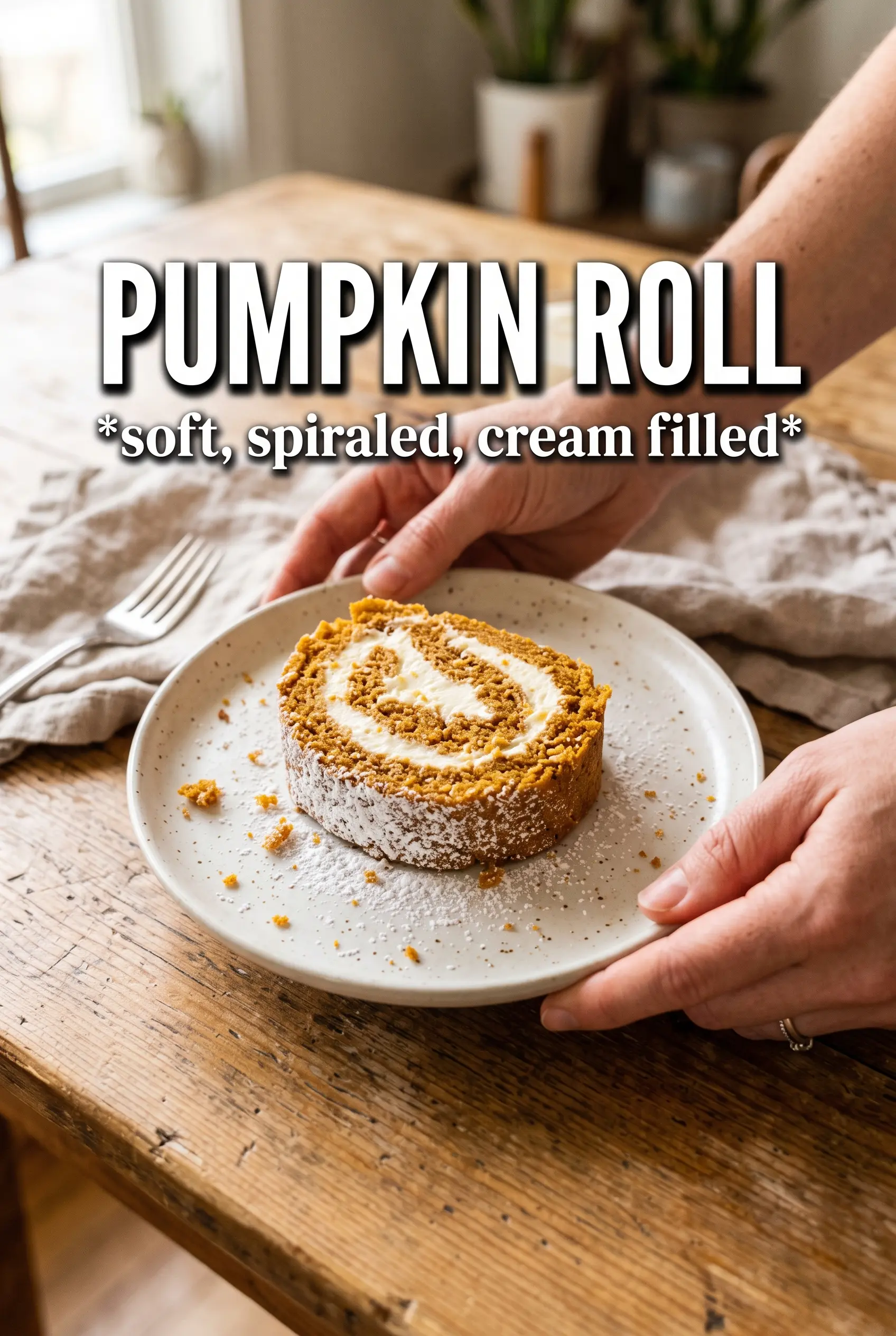
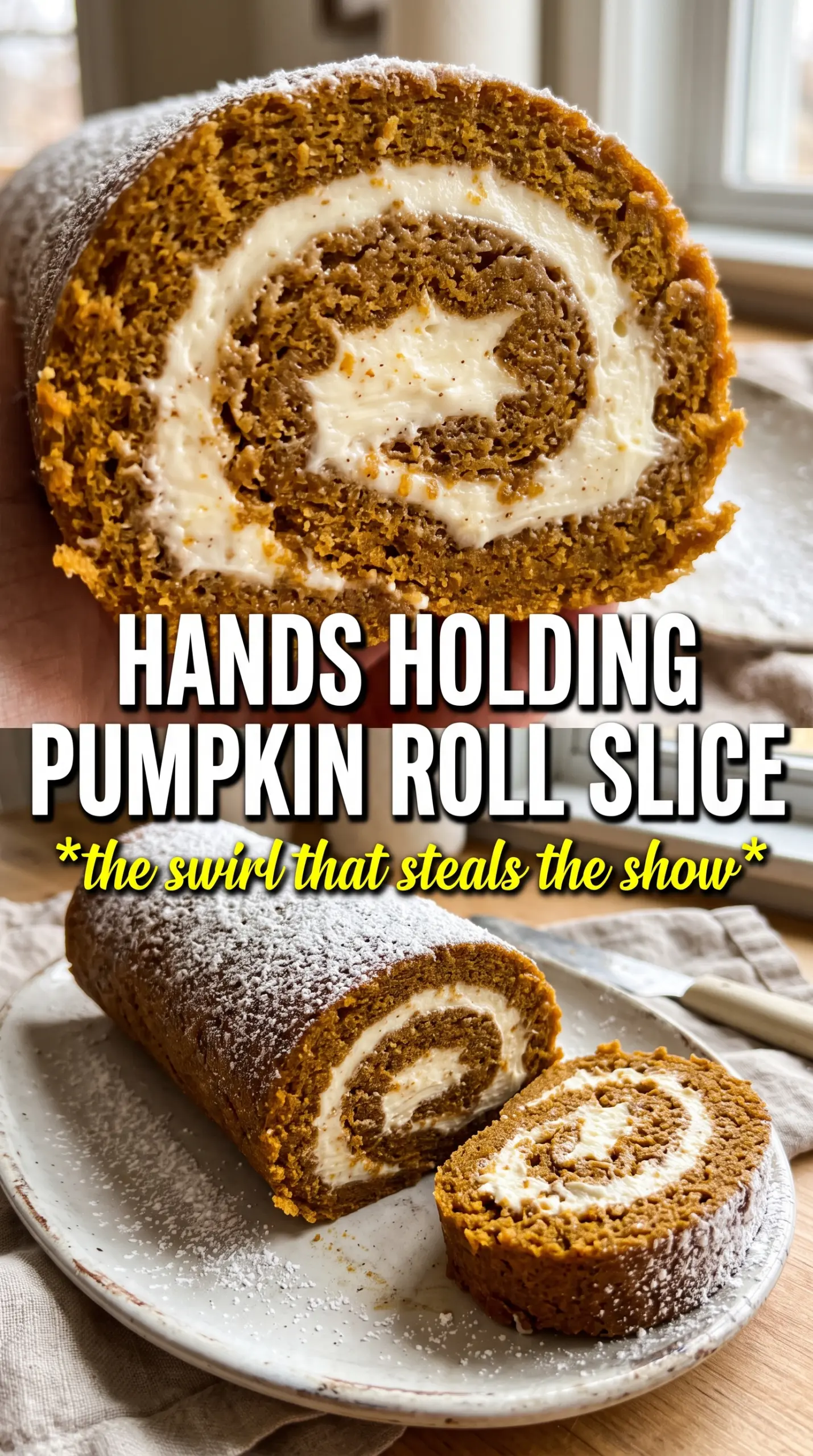
Pumpkin roll lands on the table looking fancier than the effort it asks for, and that’s part of why it keeps making a comeback in my kitchen. The cake stays soft and flexible enough to curl around a thick cream cheese filling, and the finished spiral slices cleanly without cracking when it’s chilled properly. One slice looks neat, but the flavor is the part people remember: warm spice, pumpkin, tangy filling, and a snowfall of powdered sugar on top.
The trick is treating the cake like a sponge cake, not a regular sheet cake. Eggs and sugar need enough whipping to build structure, because that’s what lets the thin layer of batter bake into a cake that can roll while it’s still warm. The parchment and powdered sugar towel do more than keep things tidy; they help the cake release and cool in the rolled shape so it doesn’t split later.
Below, I’ve included the part that matters most if you’ve had pumpkin roll crack on you before, plus the filling texture that gives you a clean spiral instead of a squishy middle. A few small details change the whole result here.
The cake rolled without a single crack, and the filling set up just enough after chilling that every slice held its swirl. I’ve tried pumpkin rolls before, but this was the first one that looked as good as it tasted.
Save this pumpkin roll for a soft, crack-free spiral cake with tangy cream cheese filling and a powdered sugar finish.
The Step That Keeps the Cake from Splitting
Pumpkin roll cracks when the cake cools flat and dry before it ever gets a chance to learn its shape. This recipe avoids that by rolling the cake while it’s still warm, then letting it cool completely inside the towel. That first roll matters more than the final one, because it sets the bend into the cake while the crumb is still flexible.
The other failure point is overbaking. A pumpkin roll cake should spring back when you touch the center lightly, but it should not feel dry at the edges. Give it one more minute than you think you need and you’ll pay for it when the cake breaks at the first turn.
- Eggs — These build the structure that lets such a thin cake roll cleanly. Whip them with the sugar until the mixture is thick and pale; that’s the lift in the cake.
- Pumpkin puree — Canned puree gives the most consistent moisture. Pumpkin pie filling won’t work here because the sugar and spices throw off the batter balance.
- Pumpkin pie spice and cinnamon — The blend gives depth, while the extra cinnamon keeps the flavor from tasting flat once the cake is chilled.
- Cream cheese — Full-fat cream cheese gives the filling enough body to slice neatly. Low-fat versions can turn loose and watery after chilling.
What Each Part Is Doing in the Spiral
- All-purpose flour — Just enough flour to hold the cake together without making it stiff. Too much flour is the fastest route to a dense roll that fights you.
- Powdered sugar — You need it twice: once on the towel to keep the hot cake from sticking, and again on top for the classic finish. It’s also part of the filling, where it helps the cream cheese set.
- Butter — Softened butter gives the filling a smoother, lighter texture than cream cheese alone. If it’s cold, the filling stays lumpy no matter how long you beat it.
- Vanilla — It rounds out both the cake and the filling. Since the recipe is spice-forward, vanilla keeps the flavor from reading sharp.
Rolling, Filling, and Chilling Without the Tears
Whipping the Batter Base
Beat the eggs and sugar until the mixture turns thick, pale, and falls from the beaters in a ribbon. That step builds the structure the cake needs, so don’t rush straight to the dry ingredients. Once the pumpkin and vanilla go in, the batter will loosen, which is normal. Fold in the flour mixture gently so the batter stays airy instead of deflating into a heavy sheet.
Baking the Thin Cake Layer
Spread the batter evenly in the parchment-lined jelly roll pan and bake just until the center springs back when touched. The cake should look set and matte across the top, with no wet shine in the middle. If the edges start pulling away hard from the pan, it’s already edging toward dry. Thin cakes punish overbaking, so pull it as soon as it’s done.
The Warm Roll
Invert the cake onto a towel dusted with powdered sugar, peel off the parchment, and roll it up from the short end while it’s still warm. The towel keeps the layers from sticking to themselves, and the warm crumb learns the rolled shape instead of fighting it later. If you wait until it cools flat, the first unroll almost always brings cracks. Let it cool completely in the towel before you add the filling.
Filling and Final Chill
Beat the cream cheese, butter, powdered sugar, vanilla, and cinnamon until the filling is smooth and spreadable. Unroll the cooled cake gently, spread the filling edge to edge in an even layer, then roll it back up without the towel. Refrigerate for at least an hour so the filling firms and the spiral slices cleanly. Dust with powdered sugar right before serving so it looks fresh instead of damp.
How to Adapt This Pumpkin Roll for Different Kitchens
Dairy-Free Filling
Use a dairy-free cream cheese and plant-based butter with a firm texture. The filling will be a little softer and less tangy than the original, so chill it well before spreading and give the finished roll extra time in the fridge to set.
Gluten-Free Version
A 1:1 gluten-free baking blend can work here if it includes xanthan gum. The cake may be a touch more delicate when warm, so invert and roll it carefully without stretching the crumb.
Less Sweet Filling
Cut the powdered sugar slightly if you prefer a sharper cream cheese flavor, but don’t remove too much or the filling will loosen. The sugar helps the filling hold its shape inside the roll.
Storage and Reheating
- Refrigerator: Store covered for up to 4 days. The cake stays moist, and the filling firms slightly as it chills.
- Freezer: Freezes well. Wrap the whole roll tightly in plastic, then foil, and freeze for up to 2 months. Thaw overnight in the refrigerator before slicing.
- Reheating: Don’t reheat pumpkin roll; it’s meant to be served cold or cool. Warming it softens the filling too much and can blur the spiral.