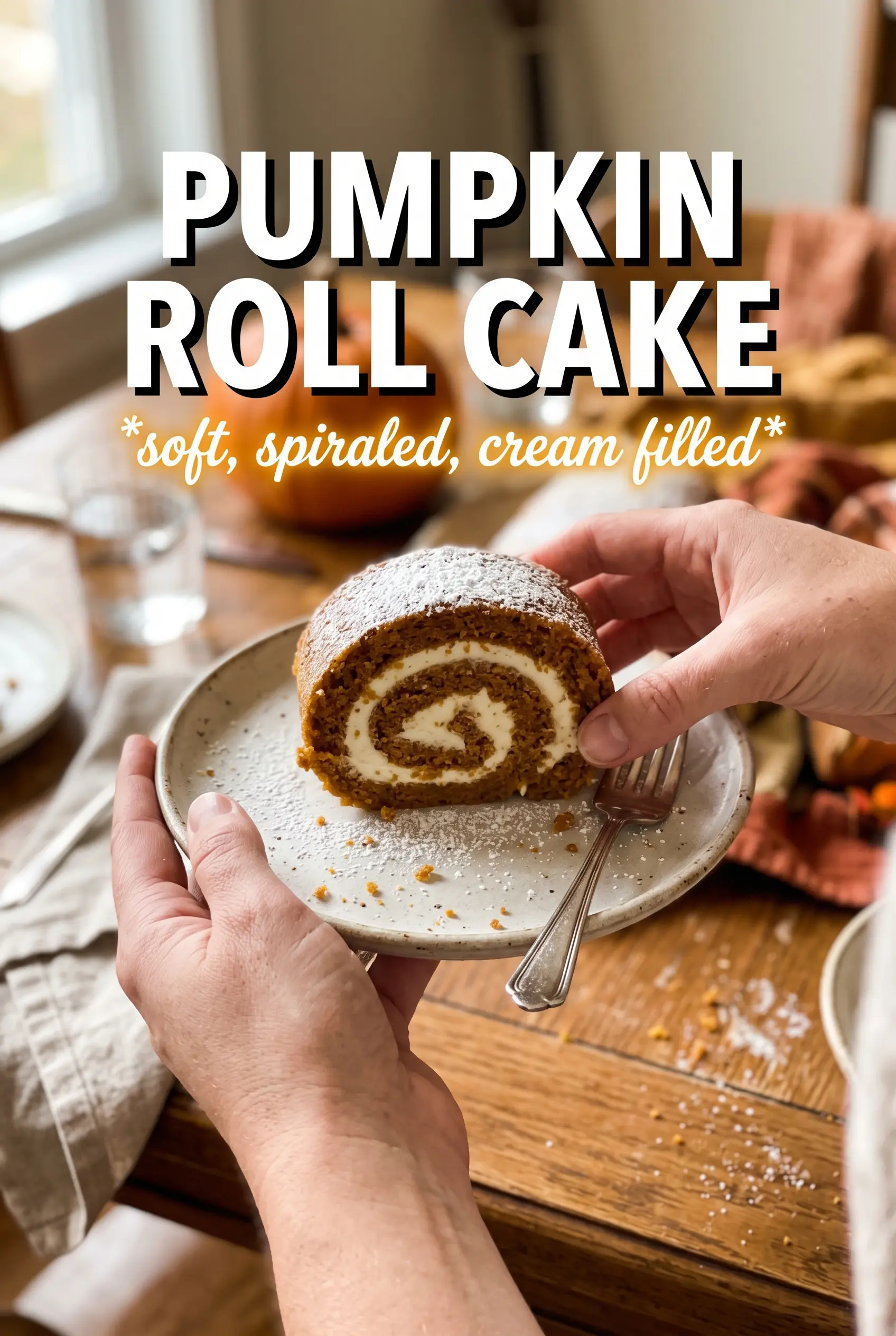
Pumpkin roll cake delivers the kind of slice that makes people pause for a second before taking a bite: tender spiced cake, a thick cream cheese filling, and that clean spiral that looks harder to make than it is. The cake stays soft enough to roll without cracking, while the filling firms up in the fridge so each slice holds its shape instead of slumping on the plate.
What makes this version work is the balance between structure and flexibility. Eggs are beaten with sugar until the mixture turns thick and pale, which gives the cake lift without needing a heavy batter. The pumpkin puree brings moisture, but the flour amount stays low so the cake stays pliable instead of dry and bready. The trick is rolling it while warm in a powdered sugar-dusted towel, then letting it cool completely before filling it.
Below, I’ll walk through the part that matters most: how to keep the cake from sticking, how to roll it without tearing, and how to get that filling smooth enough to spread cleanly from edge to edge.
I was nervous about the roll, but the towel method worked perfectly and the cake didn’t crack at all. The filling set up beautifully after chilling, and the spiral looked just like the photo when I sliced it.
Save this pumpkin roll cake for the dessert table when you want a neat spiral, a fluffy crumb, and cream cheese filling that slices cleanly.
The Roll That Cracks When the Cake Cools Too Long
The biggest mistake with pumpkin roll cake is waiting until the cake is cold before shaping it. Once that sponge cools in a flat sheet, it loses the flexibility it needs and starts to split at the first turn. Rolling it in a towel while it’s still warm trains the cake into shape before the structure sets, which is why the finished roll looks smooth instead of wrinkled and broken.
The other thing that matters is speed, but not panic. As soon as the cake comes out, turn it onto a powdered sugar-dusted towel, peel off the parchment, and roll from the short end while it’s still hot enough to bend. That first roll is the one that counts. If you skip the towel or let the cake sit too long in the pan, the edges dry out and the spiral fights you the whole way.
Why These Ingredients Matter More Than They Look
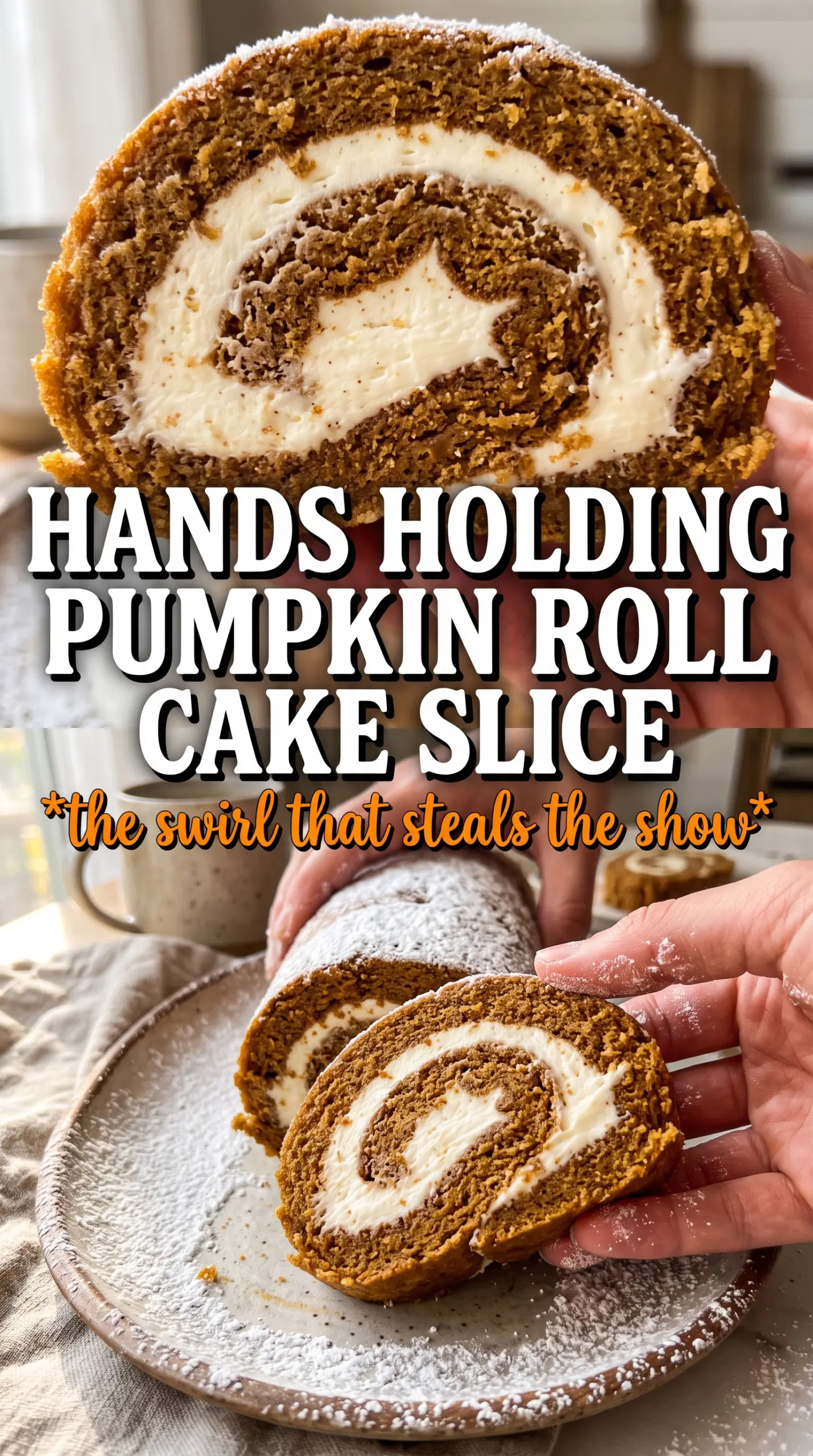
- Pumpkin puree — Use plain pumpkin puree, not pumpkin pie filling. The puree adds moisture and that dense pumpkin flavor without extra sugar or spice throwing off the batter balance. If your puree looks watery, blot it lightly with paper towel so the cake doesn’t bake up gummy.
- Eggs and sugar — This is the lift in the recipe. Beating them until thick and pale traps air into the batter, which keeps the cake flexible enough to roll. If you rush this stage, the cake comes out flatter and more likely to crack.
- Pumpkin pie spice plus cinnamon — The blend gives depth, while the extra cinnamon sharpens the warmth so the filling doesn’t taste one-note. If you only have pumpkin pie spice, use that and keep the cinnamon leaner; if your spice is old, the cake will taste dull no matter how good the filling is.
- Cream cheese and butter — Softened cream cheese and butter whip into a smooth filling that spreads without tearing the cake. Cold dairy leaves little lumps, and over-softened dairy turns greasy. Set both out until they press easily but still hold their shape.
Building the Spiral Without Breaking the Cake
Whipping the Base Until It Falls in Ribbons
Beat the eggs and sugar until the mixture turns thick, pale, and slightly ribbon-like when the beaters lift. That step is doing a lot of work here, because it gives the cake enough air to bake up light without depending on a big rise from the oven. Add the pumpkin and vanilla after the eggs are aerated, then fold in the dry ingredients just until the flour disappears. If you overmix, the batter tightens and the finished cake loses its bend.
Baking Just Until the Surface Springs Back
Spread the batter evenly into the prepared jelly roll pan and bake only until the center springs back when touched, usually 11 to 13 minutes. The edges should look set, but not dry or dark. If the cake bakes too long, it becomes fragile instead of flexible, and that’s where most cracks begin. You want a cake that feels soft and elastic when you press it lightly, not a dry sheet that snaps.
Rolling Warm and Cooling Fully
Turn the baked cake onto a powdered sugar-dusted towel right away and peel off the parchment while the cake is still steaming a little. Roll it from the short end with the towel inside the spiral, then let it cool completely in that shape. This step sets the memory of the roll without the filling in the way. If you wait until the cake is cool, it won’t cooperate; if you skip the powdered sugar, the towel can stick.
Filling, Re-Rolling, and Chilling for Clean Slices
Beat the filling until completely smooth, then unroll the cooled cake carefully and spread the cream cheese mixture in an even layer almost to the edges. Re-roll without the towel, moving slowly so the cake doesn’t split along the seam. Chill the finished roll for at least an hour before slicing. That rest time firms the filling and gives you those sharp, bakery-style slices instead of a soft spiral that smears on the knife.
Three Ways to Adapt Pumpkin Roll Cake Without Losing the Spiral
Dairy-Free Filling
Use dairy-free cream cheese and a plant-based butter that’s meant for baking. The texture will be a little softer and less tangy than the original, but it still spreads well and chills into a sliceable filling. Let it beat until smooth before using, since cold dairy-free cream cheese can stay stubbornly lumpy.
Gluten-Free Version
Swap in a 1:1 gluten-free baking flour that already includes xanthan gum. The cake will still roll, but it may be slightly more delicate, so keep the bake time tight and don’t overbake it. Let it cool fully in the towel before filling so the structure has time to set.
Extra-Spiced Holiday Version
Add a small pinch of cloves or nutmeg to the batter if you want a deeper spice note. Go lightly, because too much extra spice can make the cake taste dusty instead of warm. The filling stays the same, which keeps the final dessert balanced.
Storage and Reheating
- Refrigerator: Store covered for up to 4 days. The cake actually slices better after a full chill, but after a few days the edges start to dry out.
- Freezer: It freezes well. Wrap the whole roll or individual slices tightly in plastic, then foil, and thaw overnight in the refrigerator.
- Reheating: Don’t reheat this cake. Serve it cold or slightly cool from the fridge so the filling stays set and the spiral stays neat.