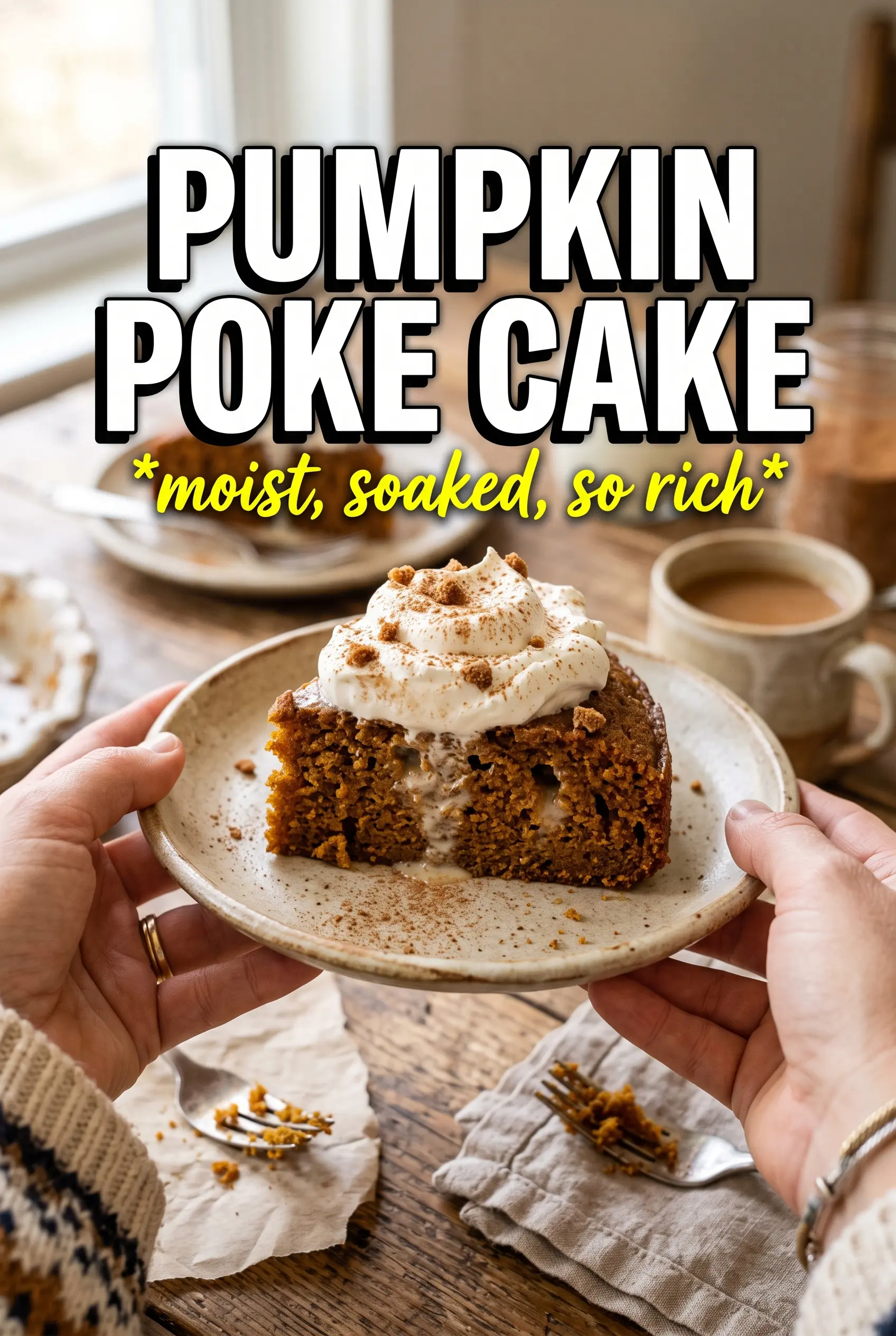
Pumpkin poke cake lands in that sweet spot between low-effort and crowd-pleasing. The spice cake bakes up soft and tender, then the caramel sinks into every little hole so each slice stays moist all the way through. With the whipped topping and toffee bits on top, you get a cold, creamy finish against the warm spice and buttery caramel underneath.
What makes this version work is timing. The cake needs to be hot when you poke it and pour on the caramel, or the sauce won’t spread and soak in the same way. Adding pumpkin puree and pumpkin pie spice to a boxed mix gives the cake more body and a deeper pumpkin flavor without turning it heavy. The chill time matters too; that’s what lets the caramel settle and the topping stay neat when you cut it.
Below, I’m walking through the one part people usually rush, plus the ingredient swaps that still keep the texture right. If you’ve ever had a poke cake that felt soggy on top but dry underneath, this version fixes that.
The caramel soaked all the way through and the cake stayed moist for days. I used the spoon handle like you said, and every slice had that perfect sweet center without falling apart.
Save this pumpkin poke cake for the kind of dessert that needs to be cold, caramel-soaked, and topped with a little crunch.
The Part People Get Wrong: Poking Too Early or Too Shallow
The whole cake depends on the holes staying open long enough to catch the caramel. If you poke it after it has started cooling, the crumb tightens up and the sauce just sits on top instead of moving through the cake. Poke deeply and evenly across the whole surface, not just in one area, so every slice gets that caramel layer all the way through.
Another common mistake is using a thin drizzle instead of a full pour. The caramel needs to move while the cake is still hot, and the heat helps it thin out just enough to seep down through the holes. If the cake looks dry on top after pouring, keep going slowly; the goal is visible caramel pooling briefly before it disappears into the cake.
What Each Ingredient Is Doing Under the Whipped Topping
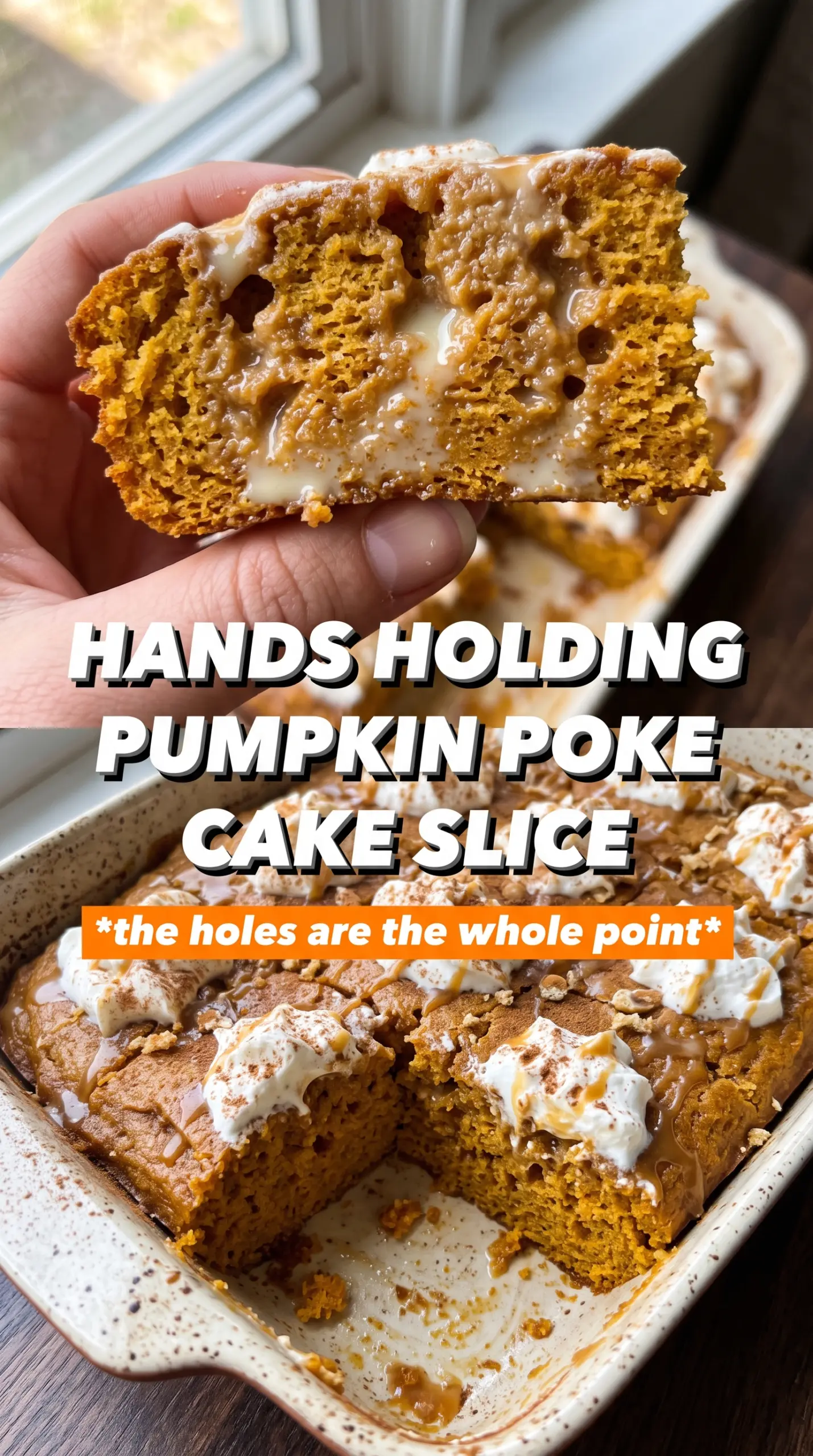
- Spice cake mix — This gives you a sturdy, tender base with built-in warmth from the spices. A from-scratch cake can work, but the mix holds up especially well once the caramel is added and chilled.
- Pumpkin puree — This adds moisture and a denser, more pumpkin-forward crumb. Use plain pumpkin puree, not pumpkin pie filling, or the cake can turn overly sweet and loose.
- Pumpkin pie spice — The extra spice pushes the pumpkin flavor past “boxed cake with a little pumpkin” and into something that tastes intentional. If you only have cinnamon, the cake will still work, but it won’t have the same depth.
- Caramel sauce — This is the part that soaks into the cake and keeps every bite soft. Thicker caramel sauce is better than a runny syrup here because it clings long enough to settle into the holes instead of sliding straight to the edges.
- Whipped topping — Cool Whip stays fluffy and stable after chilling, which matters on a poke cake that gets served cold. Homemade whipped cream will taste lovely, but it can soften faster and weep after a day in the fridge.
- Toffee bits — These bring crunch and a buttery candy note that cuts through the soft cake and cream. Add them right before serving if you want the strongest crunch.
Building the Cake So the Caramel Actually Absorbs
Baking the Pumpkin-Spice Base
Mix the cake according to the box directions, then stir in the pumpkin puree and pumpkin pie spice before baking in a 9×13-inch pan. The batter will look a little thicker than standard boxed cake batter, and that’s exactly what you want. Bake until the center springs back and a tester comes out clean or with just a few moist crumbs. If you pull it too early, the cake can collapse when you poke it; too late, and it dries out before the caramel ever reaches it.
Poking While the Cake Is Still Hot
Use the handle of a wooden spoon to make holes all over the cake while it’s still warm from the oven. Work in a grid pattern so the caramel has a path through every section of the pan. If the holes are too small or too shallow, the caramel won’t soak in evenly and you’ll end up with a glaze on top instead of a true poke cake.
Pouring and Chilling in the Right Order
Pour the caramel slowly over the surface and give it a minute to disappear before adding more. The cake should be hot enough to help the caramel spread, but not so fragile that it tears apart under the spoon handle. Chill it until the caramel has settled into the crumb and the cake feels fully cool, or the topping will slide when you spread it.
Finishing with Topping and Crunch
Spread the thawed whipped topping over the chilled cake in an even layer, then add the toffee bits and drizzle with extra caramel. Don’t add the topping before the cake is cool or it will melt into the surface and lose that clean, billowy layer. A cold cake slices best with a sharp knife wiped clean between cuts.
Three Ways to Change the Cake Without Losing the Texture
Dairy-Free Version
Use a dairy-free spice cake mix if your brand calls for butter instead of oil, and swap in a non-dairy whipped topping. The caramel can stay if you use a dairy-free caramel sauce. The final cake still chills and slices the same way, but the topping will taste a little less rich and a little more light.
Gluten-Free Version
Start with a gluten-free spice cake mix and keep the rest of the recipe the same. Gluten-free cakes can be a touch more delicate, so let the cake cool just enough to hold together before you poke it, then chill it fully before cutting. The texture stays soft, but the crumb may be a little more tender than the original.
Extra Crunch on Top
If you like a stronger contrast against the soft cake, add the toffee bits right before serving instead of right after frosting. You can also fold a handful into the whipped topping for more texture in every bite, though they’ll soften a bit as the cake chills.
Storage and Reheating
- Refrigerator: Store covered for up to 4 days. The cake stays moist, and the caramel flavor deepens by day two.
- Freezer: Freeze the cake without the whipped topping and toffee bits for up to 1 month. Thaw overnight in the refrigerator, then add the topping before serving.
- Reheating: This cake is meant to be served cold, so don’t reheat the assembled dessert. If you want the cake base warm, warm an unfrosted piece very briefly and add the topping after it cools again.