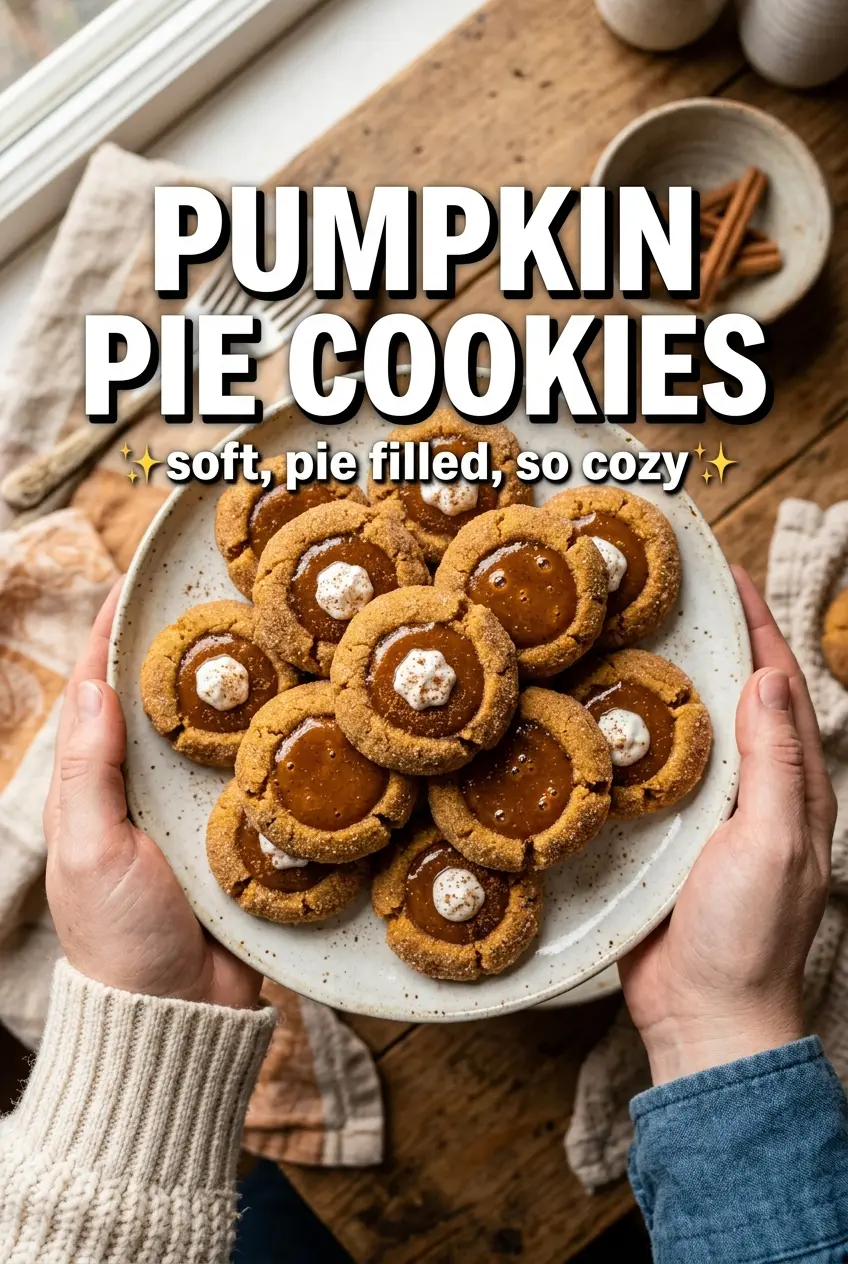
Pumpkin pie cookies bring the best part of pie into a bite-sized shell: crisp, buttery pastry on the outside and smooth pumpkin custard in the center. They hold their shape like a tiny tart, but they eat like a cookie you can pick up with one hand, which is exactly why they disappear fast on a dessert tray.
What makes this version work is the contrast between the tender pastry cup and the filling. The dough starts with cold butter, not softened, so the shells bake up flaky instead of bready. The pumpkin filling uses sweetened condensed milk for a custard that sets cleanly without turning watery, and the pre-bake on the cups keeps the bottoms from going soggy under the filling.
Below you’ll find the little details that matter most: how thin to roll the dough, how to keep the filling from puffing and cracking, and the best way to top them so they still look neat after chilling.
The crust stayed crisp after chilling and the pumpkin filling set into that silky pie texture instead of getting gummy. I topped them right before serving and everyone kept asking how I got such neat little pie cups.
Save these pumpkin pie cookies for when you want flaky pastry cups filled with creamy pumpkin custard and finished with whipped cream.
The small pastry cups need a colder hand than most cookies
The part that trips people up here isn’t the filling. It’s the shell. If the butter softens too much while you’re mixing or rolling, the dough bakes up dense instead of flaky and the cups slump in the tin before they set. Keep the butter cold, stop mixing as soon as the dough holds together, and chill it long enough for the fat to firm back up.
Rolling the dough to about 1/8 inch matters because these are meant to bake like a tender tart shell, not a thick cookie. Too thick and the crust overpowers the filling. Too thin and the cups turn fragile and can tear when you press them into the muffin tin.
What the pumpkin filling is doing inside that crust

- Pumpkin puree — Use plain pumpkin puree, not pumpkin pie filling. Pumpkin pie filling is already sweetened and seasoned, which throws off the balance and can make the custard too loose.
- Sweetened condensed milk — This is what gives the filling its smooth, pie-like finish. It thickens as it bakes and adds sweetness at the same time, so you don’t need to pile on extra sugar.
- Egg yolk — The yolk helps the filling set with a soft custard texture. A whole egg would make it firmer and a little more bouncy than these cookies need.
- Pumpkin pie spice and cinnamon — The spice blend brings the pumpkin forward without making the filling taste flat. If you only have pumpkin pie spice, you can use the full teaspoon in place of both seasonings and keep the flavor balanced.
- Cold unsalted butter — For the crust, this is the ingredient that creates the flaky layers. Salted butter works in a pinch, but the crust will taste a little less clean and the salt level gets harder to control.
Press, pre-bake, fill, and finish without a soggy bottom
Mixing the dough just until it comes together
Start with the flour, powdered sugar, and salt, then cut in the cold butter until the mixture looks like coarse crumbs with a few pea-sized bits still visible. Those bigger butter pieces are what create the flaky texture in the oven. Add the ice water one tablespoon at a time and stop the second the dough holds together when you press it. If you add too much water, the dough turns tough and needs extra flour when rolling.
Shaping the cups before they bake
Chill the dough for 30 minutes, then roll it to about 1/8 inch and cut 3-inch circles. Press each round into a greased mini muffin tin, easing the dough down the sides without stretching it, because stretched dough shrinks as it bakes. If the dough springs back or feels sticky, it needs a few more minutes in the fridge. The pre-bake is what keeps the shells crisp, so don’t skip it even if the cups look pale at first.
Setting the pumpkin custard at the right point
Whisk the filling until smooth, then spoon it into the warm pre-baked cups. Fill them close to the top but leave a little space so the custard doesn’t spill as it bakes. They’re done when the edges look set and the centers still have the faintest jiggle. If you bake until the tops are completely firm, the filling can turn grainy after cooling.
Cooling before the whipped cream goes on
Let the cookies cool all the way in the pan before lifting them out. The filling firms as it cools, and trying to move them early can crack the shells or make the custard slump. Add the whipped cream only after they’re fully cool so it holds its shape. A tiny dusting of pumpkin pie spice at the end gives you that finished pie look without covering the top in powder.
How to adapt these pumpkin pie cookies for different needs
Make them dairy-free
Swap the butter in the crust for a good vegan butter block, not a soft tub spread. The crust will still bake up flaky if the butter stays cold, though the flavor is a little less rich. For the topping, use coconut whipped cream or another non-dairy whipped topping that holds well.
Gluten-free version
Use a 1:1 gluten-free baking flour with xanthan gum already included. The dough may feel a little more delicate, so chill it well and handle it with a light touch when pressing it into the tin. The filling doesn’t need any changes.
Want a stronger spice note?
Add a small pinch of ginger or cloves to the filling if you like a bolder pie flavor. Keep it restrained, because the custard is small and the spices can take over fast. The goal is warmth, not a spice cake flavor.
Storage and Reheating
- Refrigerator: Store in an airtight container for up to 3 days. The shells soften a little from the filling, but they still taste best within the first day or two.
- Freezer: Freeze the baked, cooled cups without whipped cream for up to 1 month. Thaw in the fridge overnight and add the topping after they come back to temperature.
- Reheating: These are best served chilled or at cool room temperature, not reheated. If you want to refresh the crust, let them sit out for 15 to 20 minutes after refrigeration so the pastry loses the fridge chill without warming the filling too much.