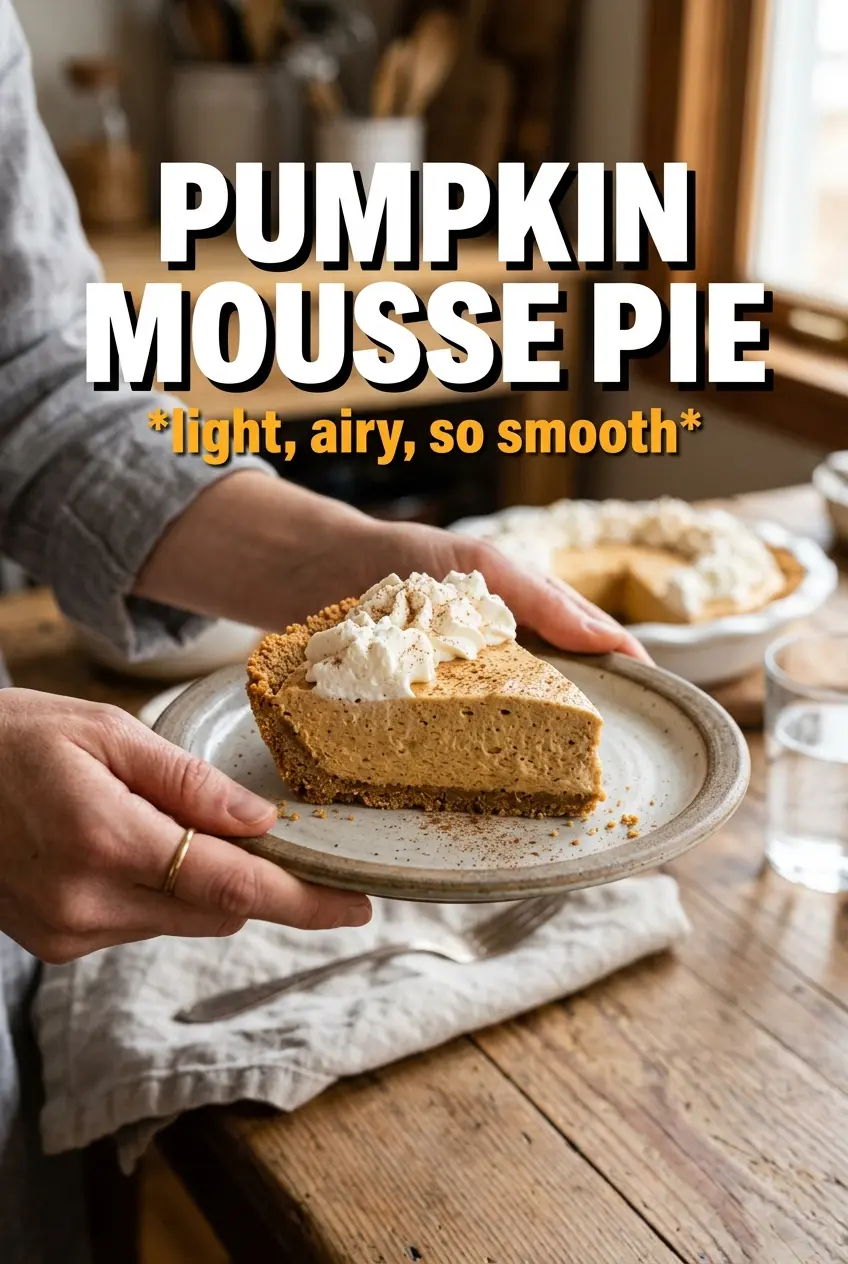
Pumpkin mousse pie lands somewhere between a classic holiday pie and a chilled cheesecake, with a filling that slices cleanly but still tastes light on the tongue. The gingersnap crust gives you a dark, spiced crunch under the soft pumpkin layer, and the whole dessert feels a little more elegant than a standard pumpkin pie without asking for much more work.
What makes this version hold together is the combination of softened cream cheese and instant pudding mix. The cream cheese gives the mousse enough body to set up in the fridge, while the pudding helps it thicken without baking. Folding in the whipped cream at the end keeps the filling airy instead of dense, and chilling it long enough is what turns it from spoonable fluff into neat, tidy slices.
Below, you’ll find the small details that matter most: how to keep the crust from crumbling, how to fold the mousse without deflating it, and the best swaps if you want to adjust the spice level or the crust.
The filling set up beautifully after chilling overnight, and the gingersnap crust stayed crisp instead of getting soggy. My guests kept asking what gave it that extra spice.
Love the light, creamy texture of this Pumpkin Mousse Pie? Save it to Pinterest for the nights when you want a make-ahead dessert with a crisp gingersnap crust.
The Part That Makes Pumpkin Mousse Pie Slice Cleanly
The texture in this pie comes down to balance. Too much pumpkin and the filling turns heavy; too little cream cheese and it won’t hold its shape after chilling. This recipe lands in the sweet spot because the instant pudding mix thickens the base before the whipped cream goes in, so you get a mousse that feels airy but still cuts into proper slices.
The other place people go wrong is the fold. If you beat the whipped cream in, you’ll knock out the air and end up with something closer to pumpkin filling than mousse. Add it in three additions and use a wide spatula, scraping from the bottom and lifting up through the center, until the color is even and no white streaks remain.
What Each Ingredient Is Actually Doing in the Filling
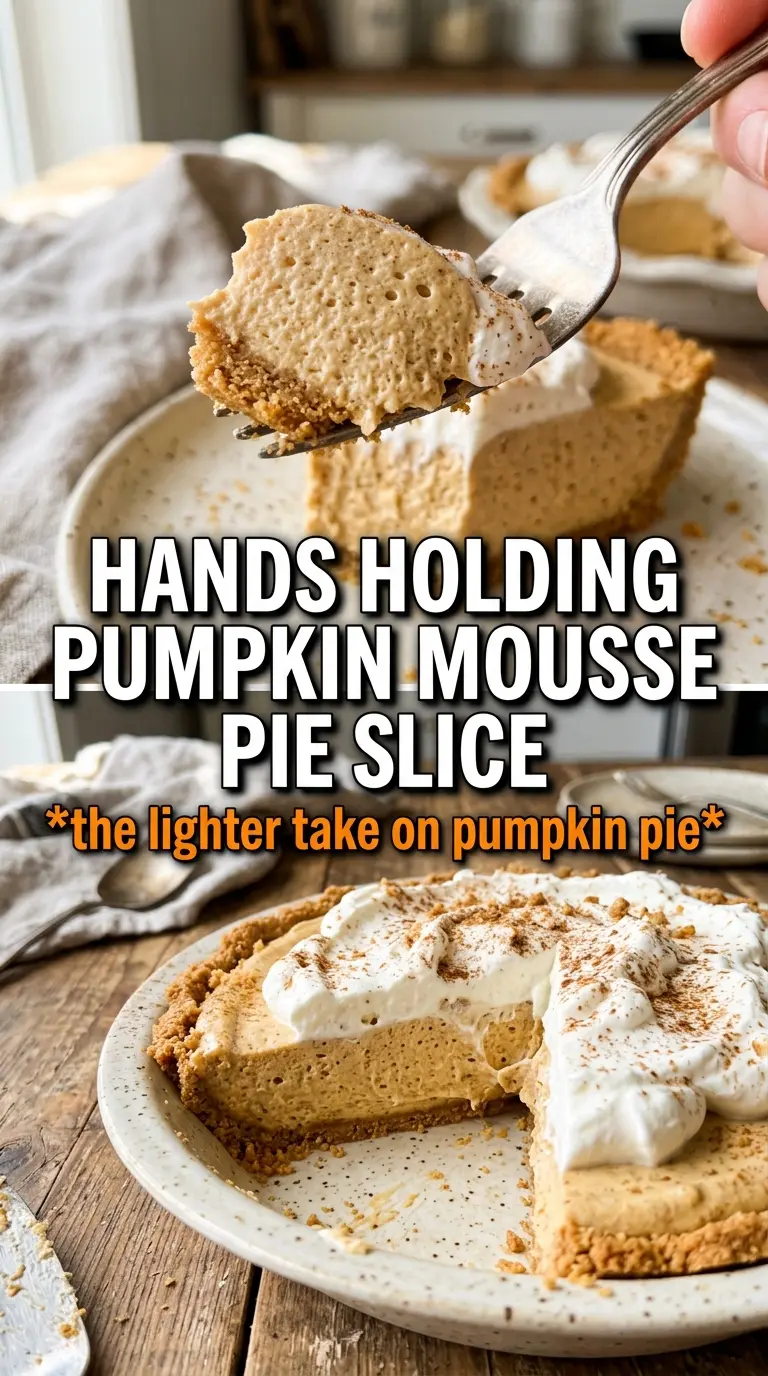
- Gingersnap crumbs — These bring the pie’s best contrast: sharp spice and a crisp bite against the mousse. Graham crackers work in a pinch, but they give a flatter, sweeter crust that doesn’t stand up to the pumpkin as well.
- Cream cheese — This is the backbone of the filling. It gives the mousse enough structure to hold a slice, and it needs to be softened all the way so you don’t end up with tiny lumps that never fully smooth out.
- Instant vanilla pudding mix — This thickens the filling fast and helps it set without baking. Cook-and-serve pudding won’t work the same way here; it needs heat, and this pie depends on a no-cook set.
- Pumpkin puree — Use plain pumpkin puree, not pumpkin pie filling. Pie filling already has sugar and spices mixed in, which throws off the balance and can make the mousse taste muddled.
- Heavy cream — Whip it to stiff peaks before folding it in. Underwhipped cream makes the filling loose, and overwhipped cream gets grainy, so stop when the peaks stand up and hold their shape.
The Chill Time That Turns This Into a Real Pie
Building the Crust First
Mix the gingersnap crumbs, sugar, and melted butter until the texture looks like damp sand and clumps when you press it between your fingers. Pack it firmly into the pie dish, especially up the sides, because a loose crust will crumble when you slice the pie. The 20-minute chill is enough to let the butter reset, which keeps the crust from sliding when you add the filling.
Making the Pumpkin Base Smooth
Beat the cream cheese until it looks completely satiny before anything else goes in. If it still has little cold bits, they’ll stay there and show up in the finished mousse. Once the pumpkin, pudding mix, spices, milk, and powdered sugar are in, beat only until the mixture is smooth and thickened; overmixing after the pudding goes in can make the base tighter than you want.
Folding in the Air
Add the whipped cream in three additions, folding gently after each one. The goal is to keep the filling light without leaving streaks, so stop as soon as the color is uniform. If the mixture looks a little loose at first, that’s normal; the fridge does the real setting work.
Letting the Pie Set
Pour the filling into the chilled crust and smooth the top with an offset spatula or the back of a spoon. Refrigerate it for at least 4 hours, but overnight gives you the cleanest slices. If you cut it too early, the center will slump and the crust may crack at the edges instead of releasing in one neat piece.
Three Ways to Adjust Pumpkin Mousse Pie Without Losing the Texture
Dairy-Free Version
Use dairy-free cream cheese and a plant-based whipping cream with enough fat to whip properly. The texture will still be light, but it may set a little softer, so give it the full overnight chill before slicing.
Gluten-Free Crust Swap
Use certified gluten-free gingersnap cookies or swap in a gluten-free ginger cookie crumb. Keep the butter amount the same, but check the crumb texture before pressing it into the pan; some gluten-free cookies need a spoonful more butter to hold together.
Extra-Spiced Filling
Add another 1/4 teaspoon each of cinnamon and pumpkin pie spice if you want the pumpkin to read louder against the sweet cream. Don’t push the spices much farther than that, or they start to overshadow the mousse and make the filling taste dusty instead of rounded.
Make-Ahead for a Crowd
This pie can be made a full day ahead with no problem, and the texture actually improves after a longer chill. Add the whipped cream topping right before serving so it stays fluffy and doesn’t weep onto the mousse.
Storage and Reheating
- Refrigerator: Cover and keep for up to 4 days. The crust softens a little by day 3, but the filling stays stable.
- Freezer: It freezes better than a baked custard pie. Wrap slices tightly and freeze for up to 1 month, then thaw in the fridge so the mousse doesn’t separate.
- Reheating: Don’t reheat this pie. Serve it cold straight from the fridge for the best texture; warming it will loosen the mousse and make the crust soggy.