Pumpkin cornbread bakes up with crisp edges, a tender crumb, and that deep cornmeal bite that keeps it from eating like cake. The pumpkin brings color and moisture, but it doesn’t take over. What you get is a sturdy, warm loaf with just enough sweetness to pair with butter, soup, chili, or a swipe of maple butter melting into the top.
The trick is keeping the batter on the thicker side and stopping as soon as the dry spots disappear. Cornmeal needs enough liquid to soften in the oven, but too much mixing turns the crumb tight and heavy. Melted butter and buttermilk give this version a rich, balanced texture, while brown sugar and maple syrup round out the pumpkin pie spice without making the whole pan taste like dessert.
Below, you’ll find the one detail that keeps cornbread from drying out, plus a few smart swaps if you’re baking without buttermilk or want to turn this into a skillet version with extra crust.
The crumb stayed moist for days, and the pumpkin flavor was there without taking over. I baked it in cast iron, and the edges came out perfectly crisp.
Save this pumpkin cornbread for the days when you want a golden, maple-kissed side with crisp edges and a tender center.
The One Thing That Keeps Pumpkin Cornbread Tender Instead of Dense
Pumpkin cornbread goes wrong when the batter gets overmixed or when the pan is underheated. Cornmeal needs a little time to hydrate, but it doesn’t want to be beaten into submission. Stir just until the dry streaks disappear, then get it into the oven while the leavening is still active.
The other trap is using too much pumpkin. Pumpkin puree adds moisture, but it doesn’t behave like a liquid. If the batter looks thick and scoopable, that’s right. If it pours like cake batter, the cornbread will bake up soft in the middle and lose the crisp edges that make this dish worth serving.
- Hot oven, fast bake — 400°F gives you lift and color before the crumb has a chance to dry out.
- Brown sugar and maple syrup — enough sweetness to round out the pumpkin, not enough to turn this into dessert.
- Buttermilk — adds tang and tenderness. Regular milk works in a pinch, but the crumb won’t be quite as soft.
What Each Ingredient Is Doing in the Pan
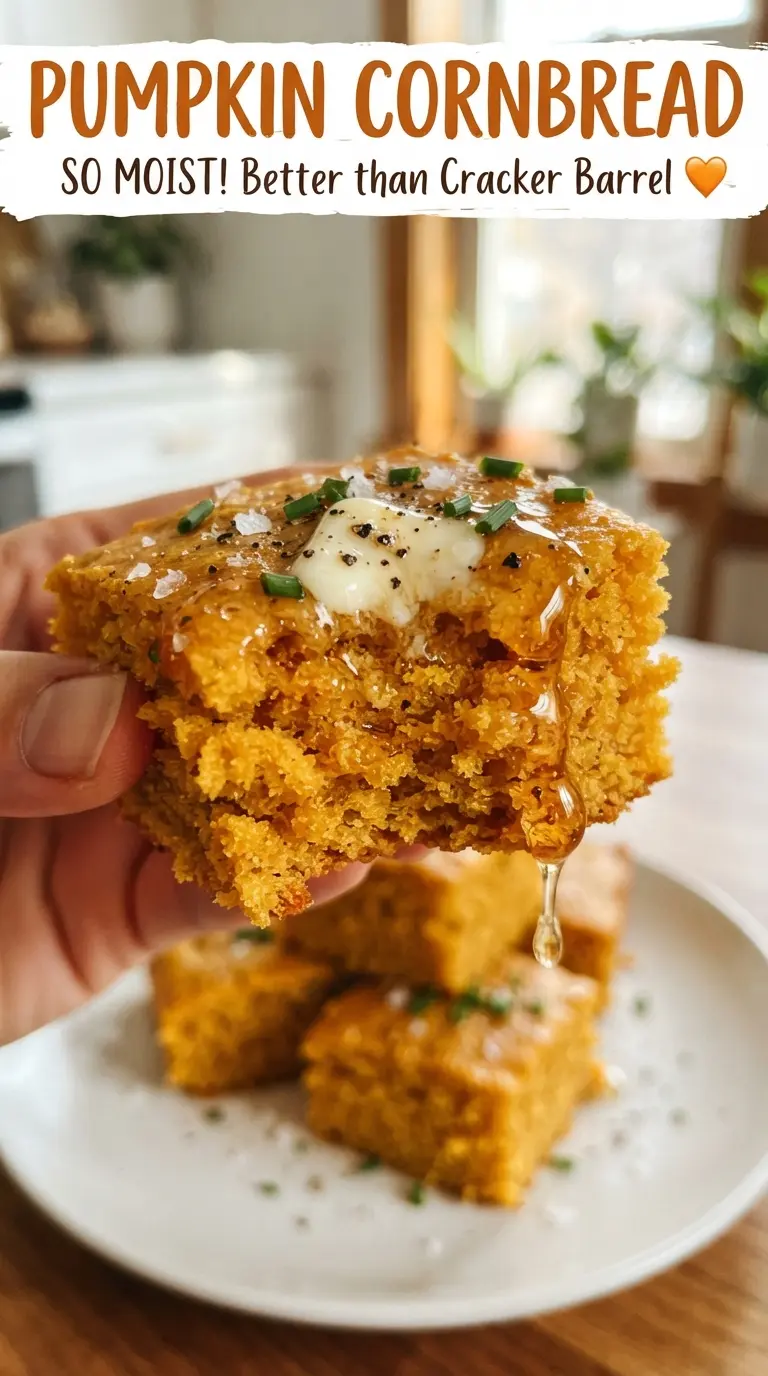
The ingredients here pull in different directions in a good way: cornmeal brings structure, flour keeps the crumb from falling apart, and pumpkin fills in the gaps with moisture and color. That balance is why this version slices cleanly instead of crumbling into the pan.
- Yellow cornmeal — this gives the cornbread its grainy, true cornbread texture. Fine or medium-ground both work; coarse cornmeal makes it more rustic and a little more toothsome.
- All-purpose flour — softens the texture so the bread holds together. Replacing all of it with cornmeal makes the result too fragile.
- Pumpkin puree — use pure pumpkin, not pumpkin pie filling. The puree adds moisture and that earthy pumpkin flavor without extra spices or sugar already built in.
- Buttermilk — this reacts with the baking powder and keeps the crumb tender. If you don’t have it, stir 2 teaspoons of lemon juice or vinegar into 3/4 cup milk and let it sit for 5 minutes.
- Melted butter — gives richness and helps the edges brown. Use unsalted butter if that’s what you keep on hand; just don’t let it be hot enough to scramble the eggs when you mix it in.
- Maple syrup — this adds a cleaner, rounder sweetness than more sugar alone. Honey can stand in, but it will taste a little sharper and less autumny.
Mixing the Batter Without Losing the Crumb
Start with the Dry Bowl
Whisk the cornmeal, flour, brown sugar, baking powder, salt, and pumpkin pie spice until the mixture looks even from edge to edge. That first whisk matters because baking powder and spice like to clump in corners, and those little pockets show up later as uneven rise or spice-heavy bites. If your brown sugar has hard lumps, break them up with your fingertips before you move on.
Bring the Wet Ingredients Together
Whisk the pumpkin puree, eggs, buttermilk, melted butter, and maple syrup until the mixture looks smooth and glossy. The butter should be melted, not sizzling hot, or it can cook the eggs on contact and leave little streaks. A few tiny specks of pumpkin are fine, but the mixture should look fully emulsified before it hits the dry bowl.
Stop When the Flour Disappears
Pour the wet mixture into the dry ingredients and stir just until combined. The batter will look thick, and that’s what you want. A few small streaks of flour are better than an overworked batter, because the cornbread finishes mixing as it bakes. Spread it evenly into the pan, then bake right away so the leavening doesn’t lose momentum before it sets.
Bake for Color and a Clean Center
Slide the pan into the oven and bake until the top is golden and a toothpick comes out clean or with a few moist crumbs. In my kitchen, that usually lands in the 22 to 25 minute window. If the center still looks shiny when you jiggle the pan, give it a few more minutes; if the edges are already pulling from the pan and the top springs back lightly, it’s ready.
How to Adapt Pumpkin Cornbread for Different Pans and Diets
Cast Iron for Extra Crispy Edges
Bake it in a 10-inch cast iron skillet if you want a darker, crunchier edge. Warm the skillet in the oven while it preheats, then pour in the batter carefully. The bottom browns faster in cast iron, so start checking a minute or two early.
Dairy-Free Pumpkin Cornbread
Swap the buttermilk for unsweetened non-dairy milk mixed with 2 teaspoons of lemon juice, and use melted dairy-free butter or neutral oil in place of the butter. The texture will still be tender, but the flavor will be a little less rich and the crust a touch softer.
Less Sweet, More Savory
Cut the brown sugar to 2 tablespoons and leave the maple syrup in place, or skip the syrup and keep the brown sugar as written. This makes the cornbread land closer to a classic side dish for chili or soup, with the pumpkin acting as moisture instead of dessert-like sweetness.
Storage and Reheating
- Refrigerator: Store tightly covered for up to 4 days. The crumb stays moist, though the edges soften a little after the first day.
- Freezer: Freeze slices wrapped individually, then tucked into a freezer bag for up to 2 months. Thaw at room temperature or overnight in the fridge.
- Reheating: Warm slices in a 300°F oven for 8 to 10 minutes or toast them in a skillet with a little butter. The mistake to avoid is microwaving too long, which turns the crumb rubbery and mutes the crisp edges.
Questions I Get Asked About This Recipe
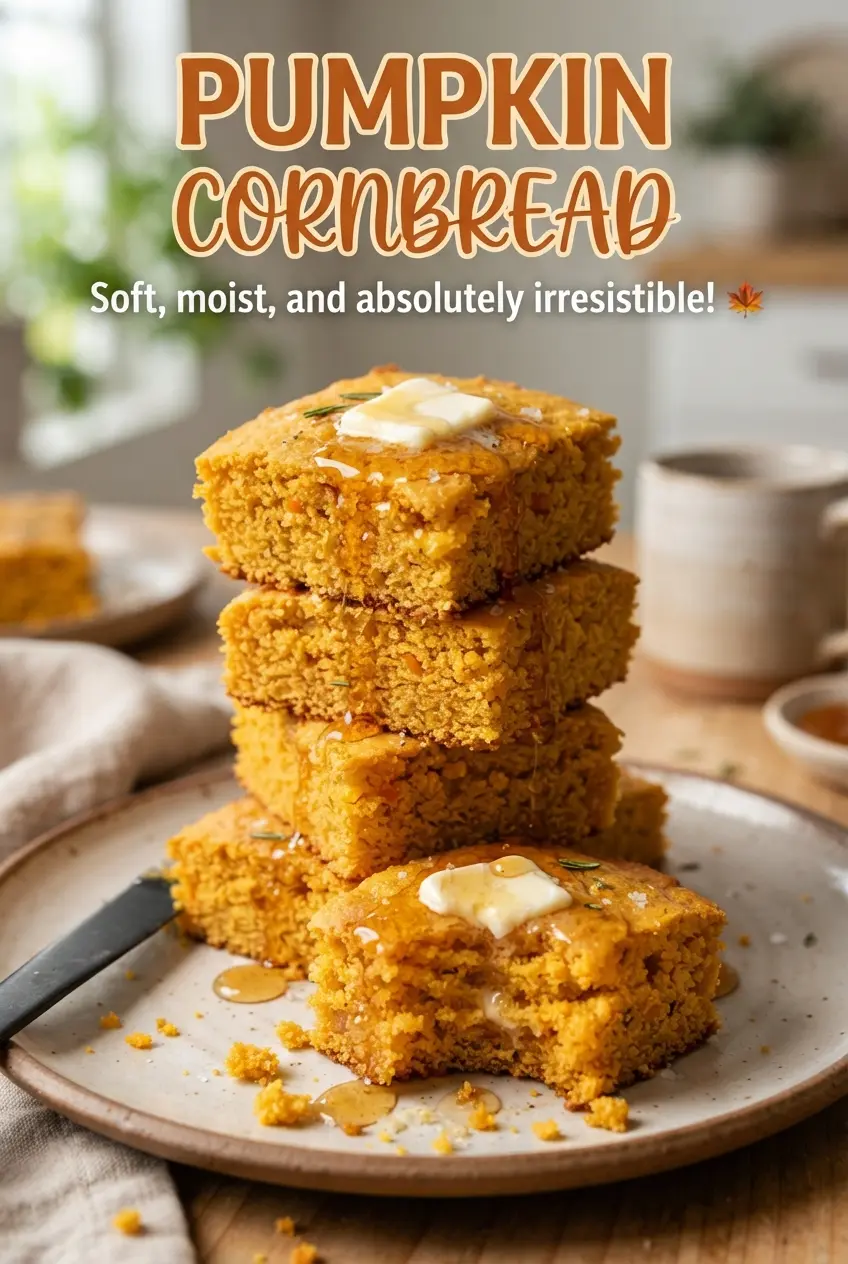
Pumpkin Cornbread
Ingredients
Equipment
Method
- Preheat the oven to 400F, then grease an 8x8-inch pan or 10-inch cast iron skillet so the cornbread releases easily.
- Whisk yellow cornmeal, all-purpose flour, brown sugar, baking powder, salt, and pumpkin pie spice in a bowl until evenly combined with no visible lumps of baking powder.
- Whisk pumpkin puree, large eggs, buttermilk, melted butter, and maple syrup until smooth and glossy.
- Stir the wet mixture into the dry ingredients just until combined, stopping as soon as no dry streaks remain.
- Spread the batter into the greased pan, then bake at 400F for 22-25 minutes until golden and a toothpick comes out clean.
- Serve warm with butter so the top softens and melts into the golden crust.