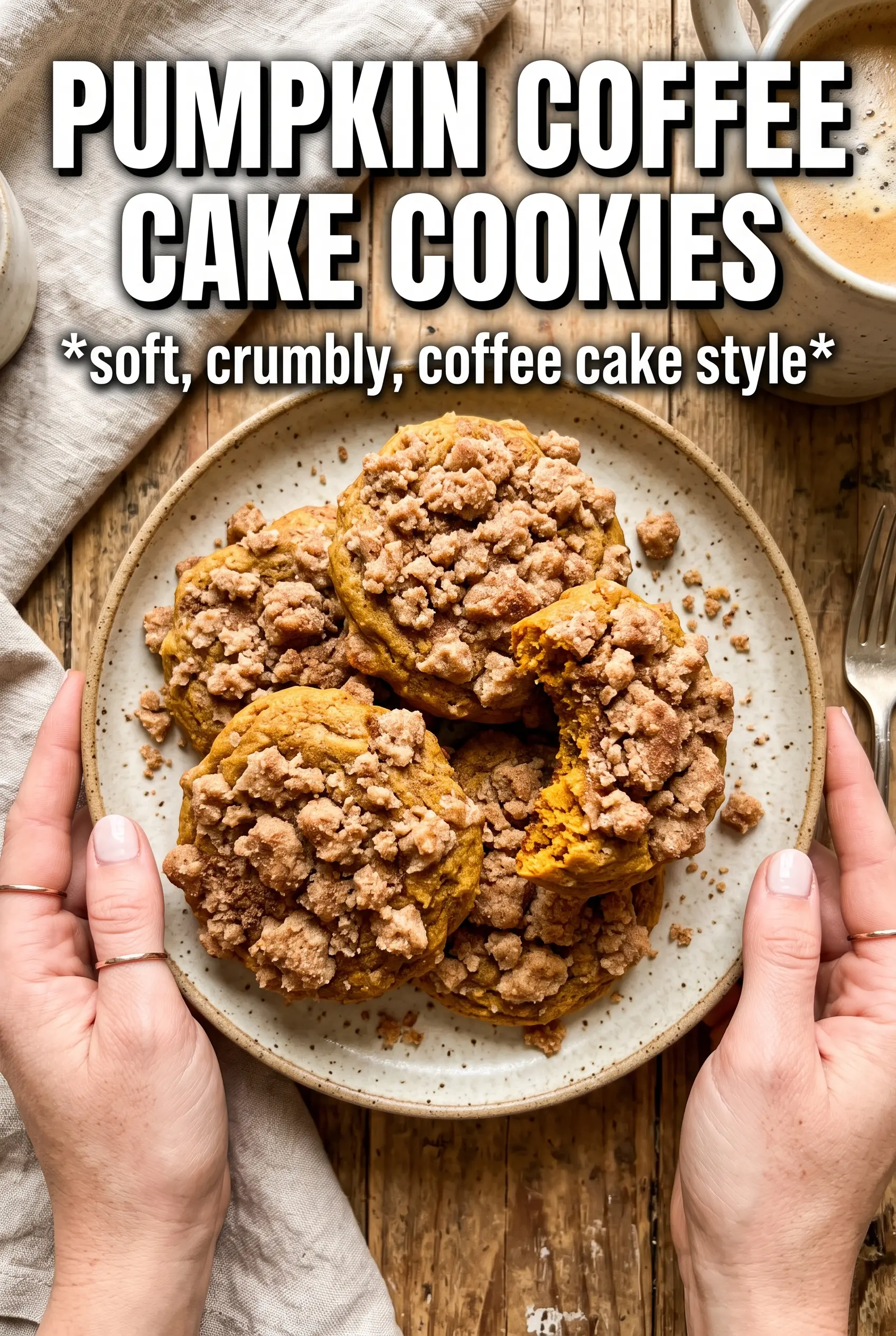
These pumpkin coffee cake cookies bake up with soft, cakey centers, crisp edges, and a thick buttery streusel that stays craggy instead of melting into the dough. The cream cheese glaze finishes them with just enough tang to balance the brown sugar and pumpkin spice, so every bite tastes like a bakery cookie with a little extra something on top.
The part that matters most here is moisture control. Pumpkin brings flavor and softness, but too much of it makes the cookies spread and bake up gummy, so blotting it dry earns its place in the method. Chilling the streusel before baking keeps the crumbs distinct, and pressing it onto the dough instead of just sprinkling it helps it cling through the oven.
Below, I’ll walk through the one step people usually skip with pumpkin cookies, plus the small timing details that keep the glaze looking neat instead of sliding off.
The cookies stayed soft for days and the streusel actually held its crunch. I used the blotted pumpkin trick and the dough baked up thick instead of spreading flat.
Save these pumpkin coffee cake cookies for when you want a soft pumpkin cookie with a crunchy streusel top and a cream cheese drizzle.
The Trick to Keeping the Streusel Crumbly Instead of Melting In
Pumpkin coffee cake cookies can go wrong fast if the topping turns sandy and disappears into the dough. The fix is cold butter and a cold chill time before baking. When the butter stays in little pieces, it melts slowly in the oven and leaves behind those crisp, craggy bits that taste like coffee cake instead of a plain pumpkin cookie with sugar on top.
The other thing that matters is how you handle the streusel once it’s mixed. You want pea-sized crumbs, not a paste. If you overwork it, the flour absorbs the butter and the topping bakes into a flat layer. Keeping it in the fridge while you mix the dough gives the flour time to hydrate just enough without losing that rough, crumbly texture.
What the Pumpkin, Brown Sugar, and Cream Cheese Are Each Doing Here

- Pumpkin — Use just a third of a cup, then blot it dry. That step keeps the cookies thick and prevents the dough from turning loose and cakey in the wrong way. Canned pumpkin works best here; fresh pumpkin usually holds more water and makes the texture less predictable.
- Brown sugar — This is doing double duty: sweetness and moisture. It gives the cookies that soft, chewy center and helps the streusel brown deeply. Light or dark brown sugar both work, but dark brown sugar will push the flavor a little deeper and molasses-heavy.
- Butter — You need real butter for both the dough and the streusel. There isn’t a substitute that gives quite the same flavor or texture in the topping, especially if you want those crisp, sandy crumbs. If the butter for the streusel is too warm, the topping will smear instead of crumble.
- Cream cheese — The glaze needs the tang. It cuts through the spice and keeps the finish from tasting like straight powdered sugar. Soften it first, or you’ll end up with little lumps that don’t fully melt into the milk.
Building Pumpkin Coffee Cake Cookies Without Losing the Crumb
Mix the Streusel First and Chill It
Start with the streusel so it has time to firm up while you make the dough. Rub the flour, brown sugar, cinnamon, and cold butter together until you get uneven crumbs with some bigger pieces mixed in. Those larger bits bake into the best topping because they stay visible and crisp. If the mixture looks pasty, it’s too warm; pop it into the fridge until it feels firm and rubbly.
Blot the Pumpkin Before It Touches the Dough
Spread the pumpkin on a paper towel and press another towel over the top to remove excess moisture. This sounds fussy, but it’s the difference between thick cookies and cookies that spread before the centers set. Beat the butter and brown sugar until fluffy, then add the pumpkin, egg yolk, and vanilla. Once the dry ingredients go in, stop mixing as soon as the flour disappears so the dough stays tender.
Press the Streusel Onto the Scoops
Scoop the dough into 2-tablespoon rounds, then press a generous pinch of streusel directly onto each mound. Don’t just sprinkle it from above. Pressing helps the crumb attach to the soft dough so it doesn’t tumble off on the baking sheet. Bake until the edges are golden and the centers look just set; if you wait for the tops to look completely dry, the cookies will overbake and lose that soft middle.
Cool Before the Glaze Goes On
Let the cookies cool all the way before drizzling the glaze. If they’re even slightly warm, the cream cheese glaze thins out and disappears into the streusel instead of sitting in clean ribbons. Whisk the glaze until smooth and spoon it over the tops with a light hand. A thick drizzle looks better than a heavy flood and keeps the cookie texture intact.
How to Adapt These Cookies Without Losing What Makes Them Work
Dairy-Free Pumpkin Coffee Cake Cookies
Use a plant-based butter that bakes well and a dairy-free cream cheese for the glaze. The cookies will still be soft and spiced, but the streusel won’t taste quite as rich as the butter version. Keep the butter substitute cold for the topping so it still crumbles instead of smearing.
Gluten-Free Version
Swap in a 1:1 gluten-free baking flour that already contains xanthan gum. The dough should still scoop cleanly, but it may spread a little more, so keep the scoops tall and don’t skip the chill on the streusel. If the dough feels soft, give it 15 minutes in the fridge before baking.
Extra-Spiced Coffee Cake Cookies
If you want a stronger spice note, add a little extra cinnamon or a pinch of ginger to the dough. That gives the cookie more bakery-style warmth without changing the texture. Don’t push the spice too far or it will crowd out the pumpkin and make the glaze taste flat by comparison.
Storage and Reheating
- Refrigerator: Store in an airtight container for up to 4 days. The glaze will stay set, and the streusel softens a little after the first day.
- Freezer: Freeze the baked cookies without glaze for up to 2 months. Thaw at room temperature, then glaze after they’ve fully defrosted for the best texture.
- Reheating: Warm unglazed cookies for a few seconds in the microwave if you want them softer. Don’t reheat glazed cookies for long or the glaze will melt and slide off.