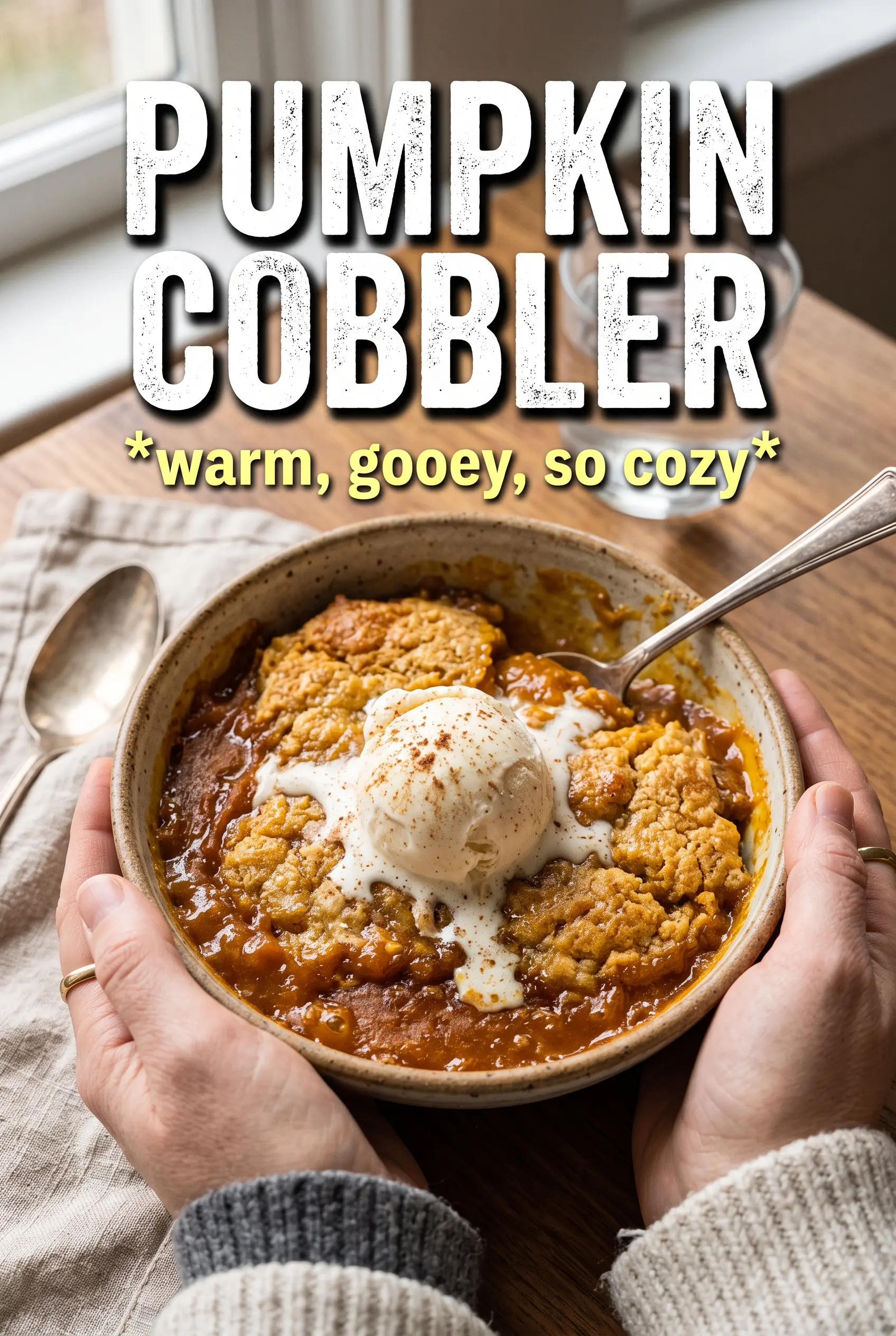
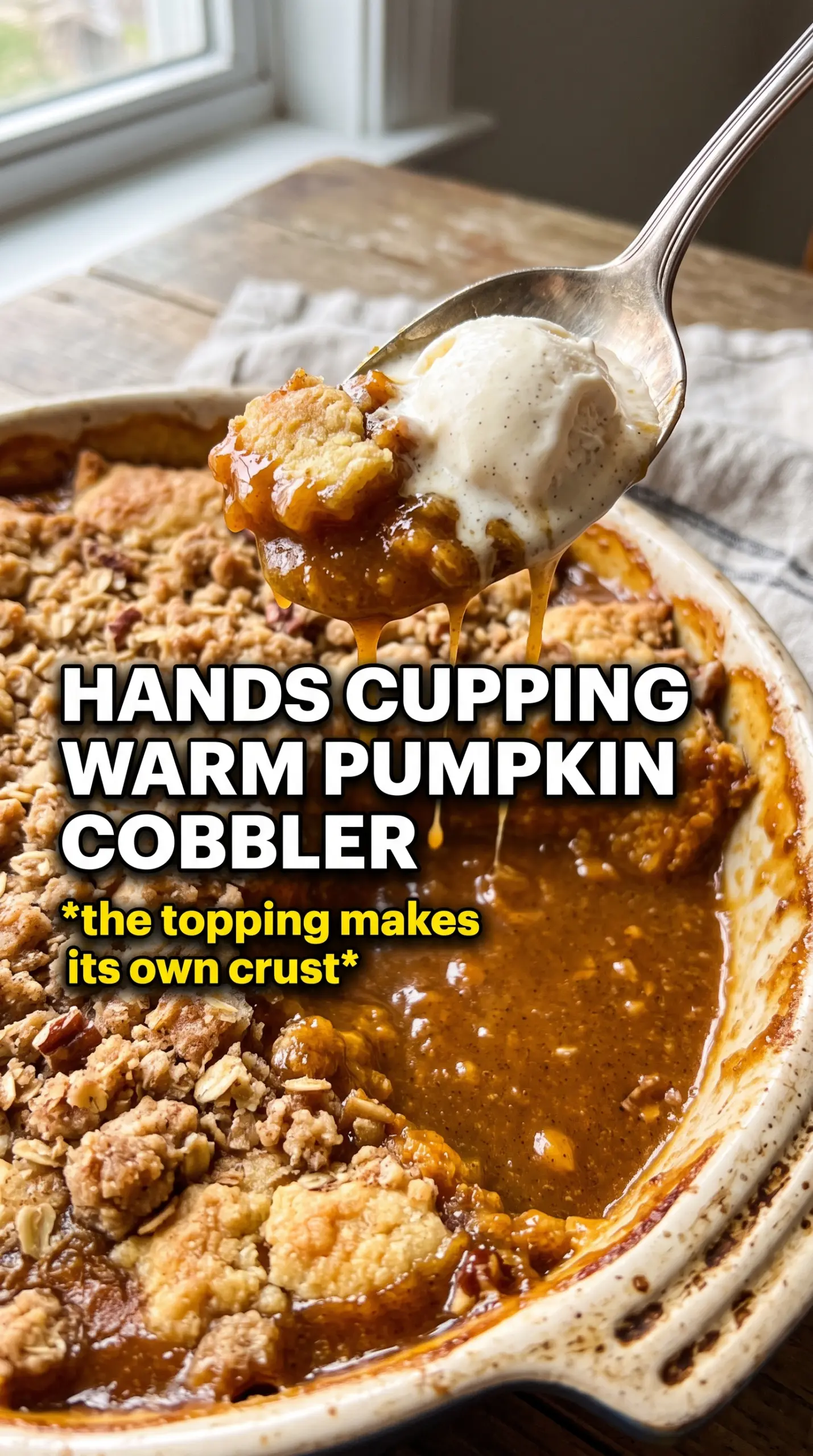
Pumpkin cobbler bakes into something you don’t usually expect from a dessert with this little fuss: a soft, spice-scented cake on top and a warm caramel-pumpkin sauce underneath. The first spoonful gives you both at once, with buttery pecans on top for crunch and vanilla ice cream melting into every pocket of sauce.
The trick is leaving the layers alone once they’re in the pan. The batter is thick enough to spread, the sugar gets sprinkled over it, and the hot water goes on last without stirring. That odd-looking setup is what creates the saucy bottom while the top bakes into a tender crumb. If you stir or use lukewarm water, you lose the contrast that makes this dessert worth repeating.
Below, I’ll walk through the part that matters most: how the topping turns into sauce instead of sinking into a muddy layer, plus a few smart swaps if you need to adjust the nuts or dairy.
The sauce formed underneath exactly like you said, and the top stayed light instead of soggy. I served it warm with ice cream, and everybody kept going back for the corner pieces with the most pecans.
Save this pumpkin cobbler for the nights when you want a soft spice cake on top and a buttery sauce waiting underneath.
The Part That Makes the Sauce Happen
The sauce in this dessert doesn’t come from extra liquid cooked separately on the stove. It forms in the oven because the batter sits under a sugar layer and gets flooded with hot water at the end. That water carries the sugar down through the batter as the oven sets the top, which is why the dessert ends up with a soft cake layer instead of a dense, pudding-like mash.
The most common mistake is stirring after the water goes in. Once the layers are built, leave them alone. The other thing that matters is oven heat: if the oven runs too cool, the center takes forever to set and the bottom can turn overly loose. A steady 350°F gives the top enough structure while the sauce thickens underneath.
- Pumpkin puree — This gives the cobbler its pumpkin backbone and keeps the crumb moist. Use plain pumpkin puree, not pumpkin pie filling, which already contains sugar and spices and throws off the balance.
- Pumpkin pie spice and cinnamon — These season the batter and the sugar topping so the flavor runs through the whole dish instead of sitting on top. If your spice blend is old, the dessert tastes flat fast.
- Hot water — This is the engine of the sauce. It has to be very hot when it hits the pan so the sugar starts dissolving and moving through the batter right away.
- Pecans — They add crunch and keep the top from tasting soft all the way through. Chop them fairly evenly so they toast at the same pace.
What Each Ingredient Is Actually Doing in This Recipe
- Primary ingredient (the star) — Quality matters most. Choose the best you can find.
- Cooking medium (oil, butter, or broth) — This carries flavors and prevents dryness.
- Seasonings (salt, pepper, spices, herbs) — Layer flavors so nothing overpowers. Build depth gradually.
- Aromatics (garlic, onion, herbs) — Cook with fat to bloom flavors. Become the foundation.
- Supporting ingredients — Complement the main ingredient without overpowering it.
- Sauce or liquid (if applicable) — Brings flavors together. Balance richness with acid.
- Acid (lemon, vinegar, wine, or other) — Brightens and prevents flat-tasting results.
- Final finish (garnish, glaze, or sauce) — Prevents one-dimensional taste and adds visual appeal.
How to Build the Layers Without Losing the Sauce
Mix the Batter Just Until It Comes Together
Whisk the dry ingredients first, then add the pumpkin puree, melted butter, milk, and vanilla. The batter should be thick and spreadable, not pourable like cake batter. If you beat it hard, you’ll develop too much structure and the top bakes up tougher than it should. Spread it evenly in the buttered 9×13 dish so the dessert bakes consistently from edge to center.
Let the Sugar and Water Do Their Work
Scatter the pecans over the batter, then mix the brown sugar, granulated sugar, cinnamon, and pumpkin pie spice and sprinkle that over the top. Pour the very hot water slowly over everything without stirring; the surface will look strange and that’s exactly right. Stirring breaks the layers that create the sauce, and cooler water won’t dissolve the sugar quickly enough to pull that syrupy layer downward.
Bake Until the Center Sets With a Soft Jiggle
Bake for 40 to 45 minutes until the top looks set and the center no longer sloshes. You want a spoonable cobbler, not a wet pudding, so look for a gently firm top with bubbling sauce around the edges. Let it sit for 10 to 15 minutes before serving so the sauce settles and the portions hold together better when you scoop them.
Make It Without Pecans
Leave the pecans out if you need a nut-free dessert. The cobbler still bakes with the same sauce underneath, but the top will be a little softer and less textured. If you want a bit of crunch back, add a handful of rolled oats to the topping instead.
Dairy-Free Version
Use a neutral plant-based milk and replace the butter with melted vegan butter or refined coconut oil. The texture stays close, though coconut oil adds a faint coconut note. If you use coconut oil, melt it fully and let it cool slightly before mixing so it doesn’t seize when it hits the cold pumpkin puree.
Gluten-Free Swap
A 1:1 gluten-free flour blend works well here because the batter doesn’t need much chew. Look for a blend that includes xanthan gum or a similar binder, or the top can bake up fragile. The sauce underneath stays the same, but the crumb may be a touch more tender.
Storage and Reheating
- Refrigerator: Store covered for up to 4 days. The sauce thickens as it chills, so the texture becomes more spoonable and less pourable.
- Freezer: It freezes fairly well for up to 2 months, though the sauce layer won’t be quite as silky after thawing. Freeze in portions and wrap them tightly so the topping doesn’t dry out.
- Reheating: Warm individual servings in the microwave or reheat the whole dish covered in a 325°F oven. Add a splash of milk only if it looks dry; too much liquid turns the sauce muddy instead of glossy.