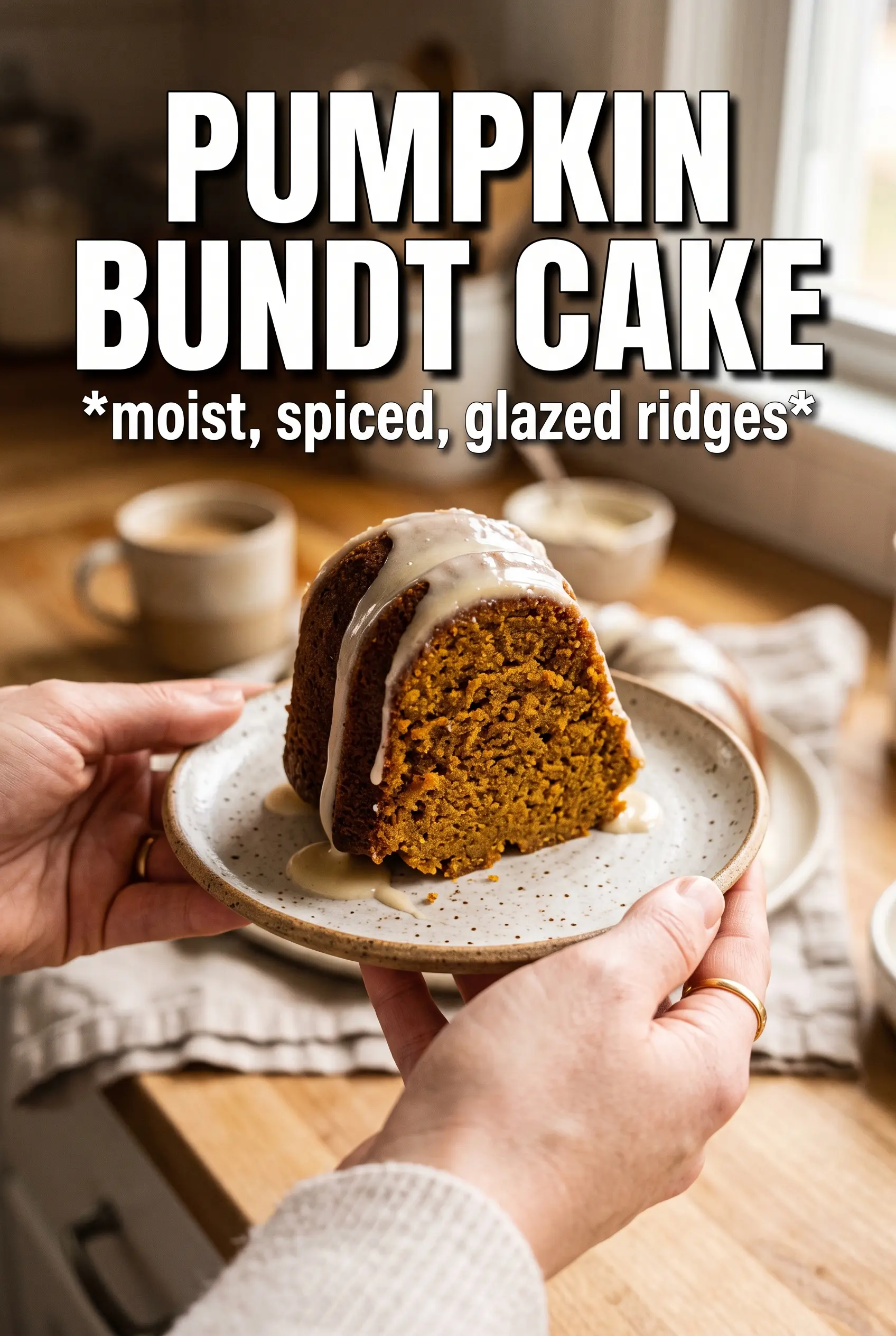
Pumpkin bundt cake earns its place on the counter when the crumb comes out soft and fine, the edges turn a deep golden brown, and the glaze slides into every ridge without drowning the cake. This version has the kind of texture that slices cleanly but still feels tender on the fork, with warm spice all the way through and enough pumpkin to keep every bite moist for days.
The balance matters here. Butter and sugar are beaten until pale so the cake has lift, then sour cream steps in to keep the crumb plush without making it heavy. Pumpkin puree brings moisture, but the batter still needs a solid creaming step and the right pan prep, because bundt cakes punish shortcuts more than layer cakes do. Grease every groove, flour the pan well, and give the cake time to cool before you turn it out.
Below, I’m walking through the part that keeps the cake from sticking, the reason the glaze sets up the way it does, and a few swaps that still keep the texture intact.
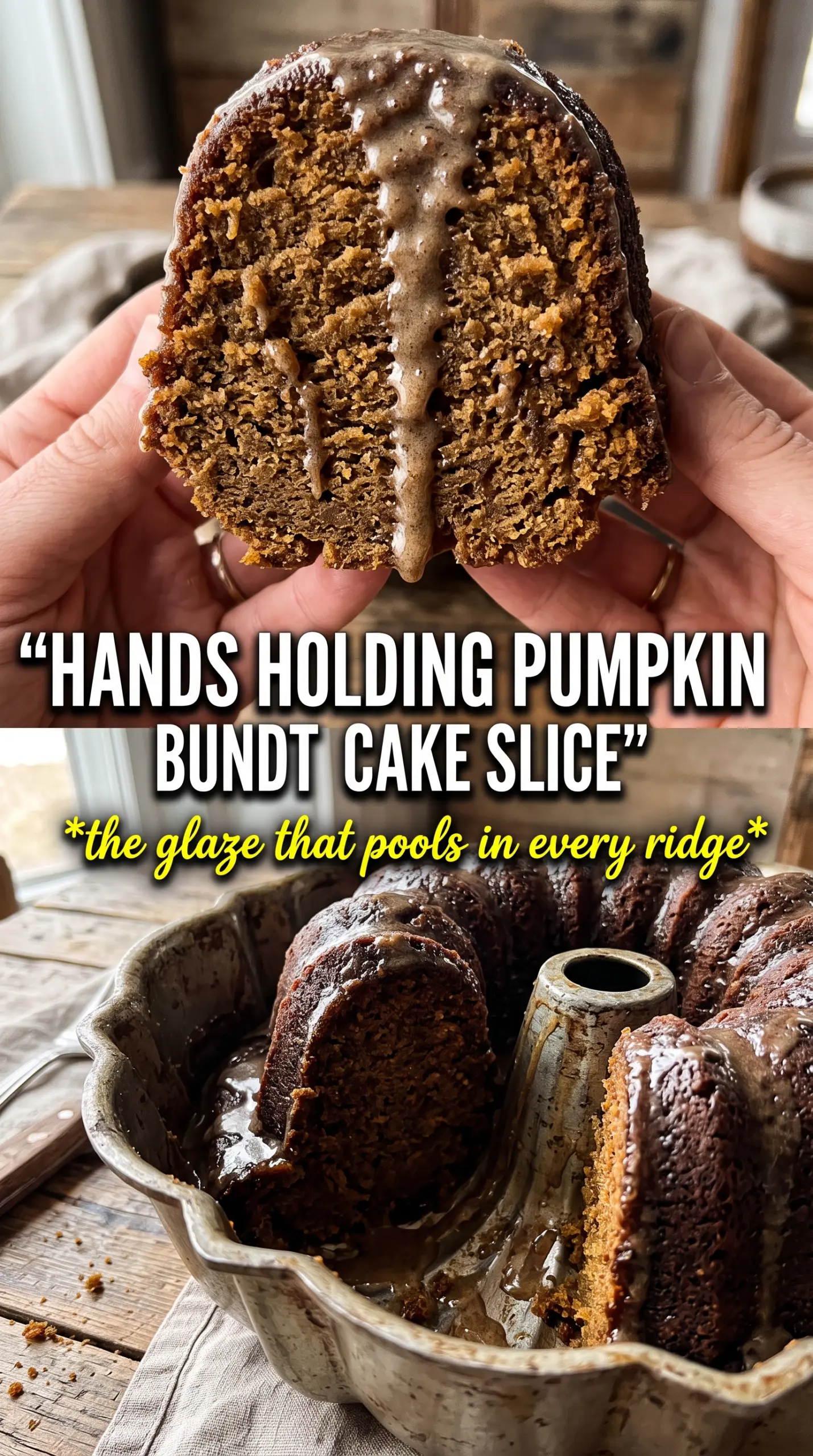
The cake released from the pan cleanly and the crumb was unbelievably soft. I followed the cooling time exactly, and the cream cheese glaze pooled in all the ridges just like in the photo.
Like this pumpkin bundt cake? Save it to Pinterest for the soft, spiced crumb and that thick cream cheese glaze.
The Pan Prep That Decides Whether This Bundt Comes Out Clean
A bundt cake can look finished and still cling stubbornly to the pan if the ridges aren’t coated all the way into the corners. That’s the failure point most bakers run into. The cake batter is rich enough to set around tiny missed spots, and once it cools, those spots hold on like glue.
Greasing and flouring a bundt pan is not the place to rush. Butter or baking spray with flour works, but you still need to get into every curve, then tap out the excess flour so you don’t end up with white patches on the crust. The other key piece is cooling: 20 minutes in the pan gives the cake enough structure to release without tearing, but leaving it longer lets steam soften the crust and increases sticking.
What Each Ingredient Is Doing in This Cake
- All-purpose flour — This gives the cake enough body to hold the bundt shape without turning dry. Cake flour would make it softer, but it can also make the crumb too delicate for a dense pan like this.
- Pumpkin puree — Use plain pumpkin puree, not pumpkin pie filling. Pie filling already has sugar and spice added, which throws off the balance and can make the cake overly sweet and muddy.
- Sour cream — This is what keeps the cake plush and tender. If you need a swap, plain full-fat Greek yogurt works best, but the cake will be a little tangier and slightly less rich.
- Butter and sugar — Creaming these until light is what gives the cake its lift. If the butter is too cold, the mixture stays grainy and the cake bakes up heavy.
- Cream cheese glaze — The glaze needs softened cream cheese and enough milk to become pourable, not runny. If it’s too thick, it will sit on top of the cake; if it’s too thin, it disappears into the ridges instead of coating them.
Building the Batter So the Cake Stays Tender, Not Dense
Creaming the Butter and Sugar
Beat the butter and sugar until the mixture looks pale and fluffy, not just combined. That extra air is what helps the cake rise in a heavy pan like a bundt. If the mixture still looks sandy, keep going a few more minutes, because under-creamed butter is one of the fastest ways to get a tight crumb.
Adding the Pumpkin Without Collapsing the Mixture
Add the eggs one at a time, then mix in the pumpkin, sour cream, and vanilla. The batter may look a little loose at this stage, and that’s normal. What you don’t want is a broken or curdled look from cold ingredients, so let the eggs, sour cream, and butter come to room temperature first.
Finishing the Flour Mixture Gently
Once the dry ingredients go in, mix only until the flour disappears. Overmixing develops gluten and turns the cake rubbery, especially with all the moisture from the pumpkin. A few streaks are fine right before the batter goes into the pan; they’ll finish blending as you spread it in.
Baking Until the Center Is Set
Bake at 325F until a toothpick comes out clean or with a few moist crumbs, usually 60 to 70 minutes. If the top is browning too fast before the center is done, keep baking and cover it loosely with foil near the end. Pulling it too early gives you a gummy middle that looks set from the outside but collapses when sliced.
Glazing the Fully Cooled Cake
Beat the cream cheese glaze until smooth, then drizzle it over a completely cooled cake. If the cake is even a little warm, the glaze thins out and runs off instead of clinging to the ridges. A thick drizzle gives you those glossy trails that settle into the bundt shape and make each slice look bakery-made.
How to Adapt This Pumpkin Bundt Cake for Different Kitchens
Dairy-Free Version
Use plant-based butter, unsweetened dairy-free yogurt, and a dairy-free cream cheese for the glaze. The cake will still be moist, but the glaze may be a little softer and less tangy than the original.
Glaze It Less Sweet
If you want a less sugary finish, cut the powdered sugar back slightly and add the milk a teaspoon at a time. The glaze will be thinner and more cream-cheese-forward, which works well if you like the spice in the cake to stand out more.
Add Pecans on Top
A handful of toasted pecan halves on the glaze adds crunch and gives the cake a little contrast against the soft crumb. Add them after glazing so they stick in place instead of sinking into the cake.
Make It Ahead
This cake holds up beautifully overnight, and the spice settles in even more by the next day. Bake and cool it completely, then glaze it close to serving time for the cleanest look.
Storage and Reheating
- Refrigerator: Store covered for up to 5 days. The crumb stays moist, though the glaze will firm up in the fridge.
- Freezer: Freeze the unglazed cake tightly wrapped for up to 2 months. Thaw overnight in the refrigerator, then glaze after it comes to room temperature.
- Reheating: Warm individual slices for 10 to 15 seconds in the microwave if you want the cake soft again. Don’t overheat it or the glaze will melt off and the crumb will turn rubbery.