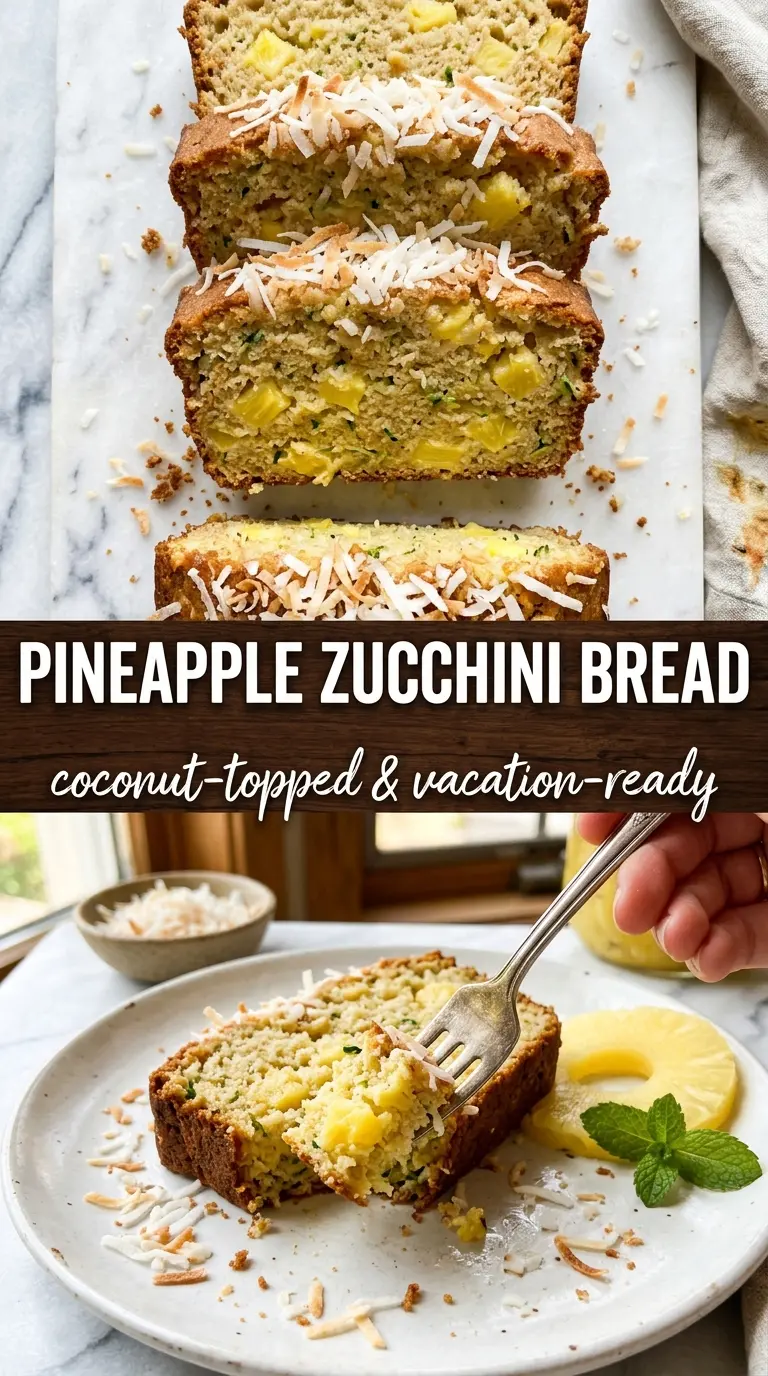
Golden, moist, and full of tiny pops of pineapple, this pineapple zucchini bread lands somewhere between a quick breakfast loaf and a tender snack cake. The crumb stays soft for days, the top bakes into a light crust, and the glaze adds just enough tang to keep the sweetness from feeling flat. It’s the kind of loaf that disappears slice by slice because it tastes even better than it looks.
The trick here is keeping the zucchini dry and the pineapple drained. Both ingredients bring moisture, and if either one goes in wet, the center turns heavy before the edges finish baking. The batter itself stays simple: a standard quick bread base, a little cinnamon for warmth, and a small amount of oil for that plush texture that butter can’t quite match in this style of loaf.
Below, I’ve included the one thing that matters most for a clean slice, plus a few smart swaps if you want to make this loaf with coconut or without the glaze.
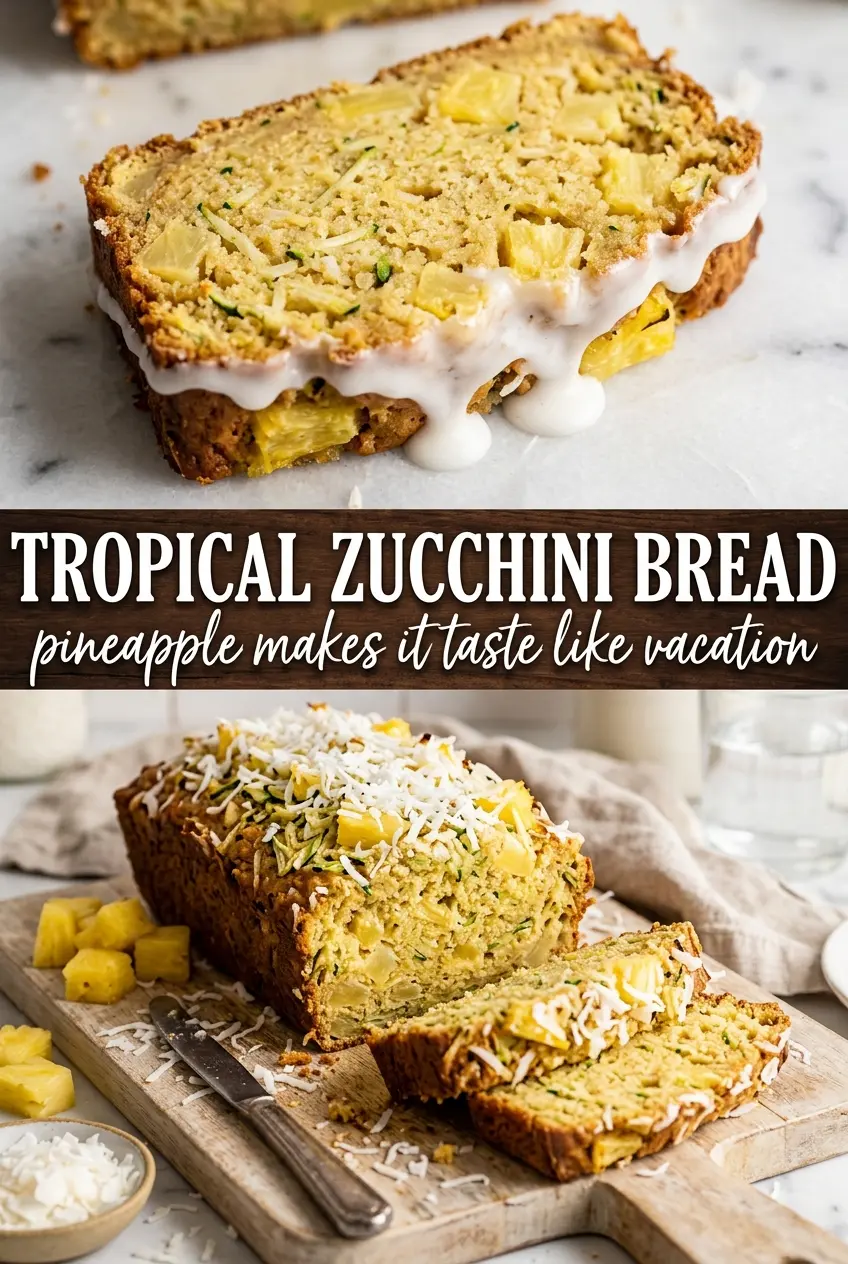
The loaf baked up perfectly moist without being gummy, and the pineapple glaze on top set just enough that it dripped down the sides instead of soaking in. My kids asked for another slice before it had even cooled completely.
Save this pineapple zucchini bread for a soft, tropical quick bread with a tender crumb and bright pineapple glaze.
The Part That Keeps This Loaf Moist Instead of Dense
Quick breads like this one usually fail in the same place: too much hidden water. Zucchini sounds harmless, but if it’s grated and left wet, it acts like extra batter. Pineapple does the same thing. That’s why this loaf works best when the zucchini is squeezed dry and the pineapple is well drained before it ever hits the bowl.
The other detail that matters is not overworking the batter. Once the flour goes in, stir only until you no longer see dry streaks. If you keep mixing, the loaf turns tight instead of tender, and all that fruit can’t save the texture. The goal is a batter that looks a little rough, not polished.
- Drained crushed pineapple — This brings sweetness and tiny bursts of fruit without flooding the loaf. Reserve just enough juice for the glaze so you get pineapple flavor in two places.
- Zucchini, squeezed dry — Zucchini disappears into the crumb and keeps the loaf soft, but only if the moisture is removed first. After grating, wrap it in a clean towel and press firmly.
- Vegetable oil — Oil keeps this style of quick bread softer than butter would. It’s a better choice here because the loaf needs lasting moisture more than a pronounced buttery flavor.
- Sweetened coconut — Optional, but it adds chew and a little tropical depth. Skip it if you want a cleaner pineapple-vanilla loaf.
What Each Ingredient Is Doing in the Bowl
- All-purpose flour — Gives the loaf enough structure to hold the fruit without becoming heavy. A higher-protein flour works too, but it makes the crumb a little firmer.
- Baking soda and baking powder — The combination gives the loaf lift and helps it rise evenly. The pineapple adds acidity, so the baking soda has a job here beyond just leavening.
- Cinnamon — It doesn’t make the bread taste spiced. It rounds out the pineapple and keeps the sweetness from reading flat.
- Powdered sugar and reserved pineapple juice — This glaze is thin enough to drizzle and just thick enough to set on the warm loaf. If it looks too loose, add a spoonful more powdered sugar; if it’s too thick, loosen it with a few drops more juice.
Mixing, Baking, and Waiting for the Center to Set
Whisk the dry ingredients first
Start with the flour, baking soda, baking powder, salt, and cinnamon in one bowl. Whisking them together keeps the leaveners evenly distributed, which matters in a loaf like this because the fruit makes the batter dense enough already. If you skip this and dump everything in at once, the bread can rise unevenly or get pockets of salt and baking soda.
Build the wet base until it looks smooth
Beat the sugar, eggs, oil, and vanilla until the mixture looks glossy and a little pale. That step helps dissolve the sugar and gives the loaf a finer crumb. Stir in the pineapple and zucchini next; the batter will look loose and a little speckled, and that’s exactly what you want before the flour goes in.
Fold just until the flour disappears
Add the dry ingredients and fold with a spatula until no dry flour remains. Stop there. If the batter gets beaten smooth, the gluten tightens and the loaf bakes up chewy instead of soft. Fold in the coconut at the very end if you’re using it, so it doesn’t break apart or soak up too much moisture.
Bake until the center springs back
Scrape the batter into a greased 9×5 loaf pan and bake at 350°F for 55 to 65 minutes. The top should be deep golden and a toothpick in the center should come out clean or with a few moist crumbs, not wet batter. If the top browns before the middle sets, tent it loosely with foil for the last 10 to 15 minutes.
Glaze while the loaf is still warm
Let the bread cool for about 15 minutes, then whisk the powdered sugar with the reserved pineapple juice and drizzle it over the top. Warm bread helps the glaze cling without disappearing completely into the crust. If you wait until the loaf is cold, the glaze sits on top more sharply; if you add it too early, it melts straight off the sides.
How to Adapt This Loaf Without Losing the Texture
Make it dairy-free as written
This loaf is already dairy-free if you skip the glaze or use a plant-based powdered sugar glaze made with pineapple juice. The crumb doesn’t depend on milk or butter, so you won’t lose anything by keeping the base exactly the same.
Skip the coconut for a cleaner pineapple loaf
Leaving out the coconut makes the texture a little softer and the pineapple flavor a little brighter. The loaf still bakes up moist; it just leans more toward classic quick bread than tropical bakery loaf.
Turn it into muffins
Divide the batter into a lined muffin tin and bake until the centers spring back, usually around 18 to 22 minutes. Muffins give you more golden edges and less slicing, but they dry out faster than the loaf, so pull them as soon as the centers are set.
Storage and Reheating
- Refrigerator: Store covered for up to 5 days. The crumb stays moist, though the glaze may soften after the first day.
- Freezer: Freeze slices tightly wrapped for up to 3 months. I freeze individual pieces so they thaw fast and don’t need the whole loaf exposed to air.
- Reheating: Warm a slice in the microwave for 10 to 15 seconds or toast it lightly. Don’t overheat it, or the pineapple can make the crumb seem rubbery instead of soft.
Questions I Get Asked About This Recipe
Pineapple Zucchini Bread
Ingredients
Equipment
Method
- Preheat oven to 350°F and grease a 9x5 loaf pan for easy release.
- Whisk all-purpose flour, baking soda, baking powder, salt, and cinnamon together until evenly combined.
- Beat granulated sugar, eggs, vegetable oil, and vanilla extract until smooth.
- Stir in drained crushed pineapple and grated zucchini that has been squeezed dry.
- Fold dry ingredients into the wet mixture until just combined, then fold in shredded sweetened coconut if using.
- Pour batter into the prepared pan and bake 55–65 minutes at 350°F until a toothpick comes out clean.
- Cool for 15 minutes before glazing so the loaf sets slightly.
- Mix powdered sugar with the reserved pineapple juice, then drizzle over the warm loaf before serving.