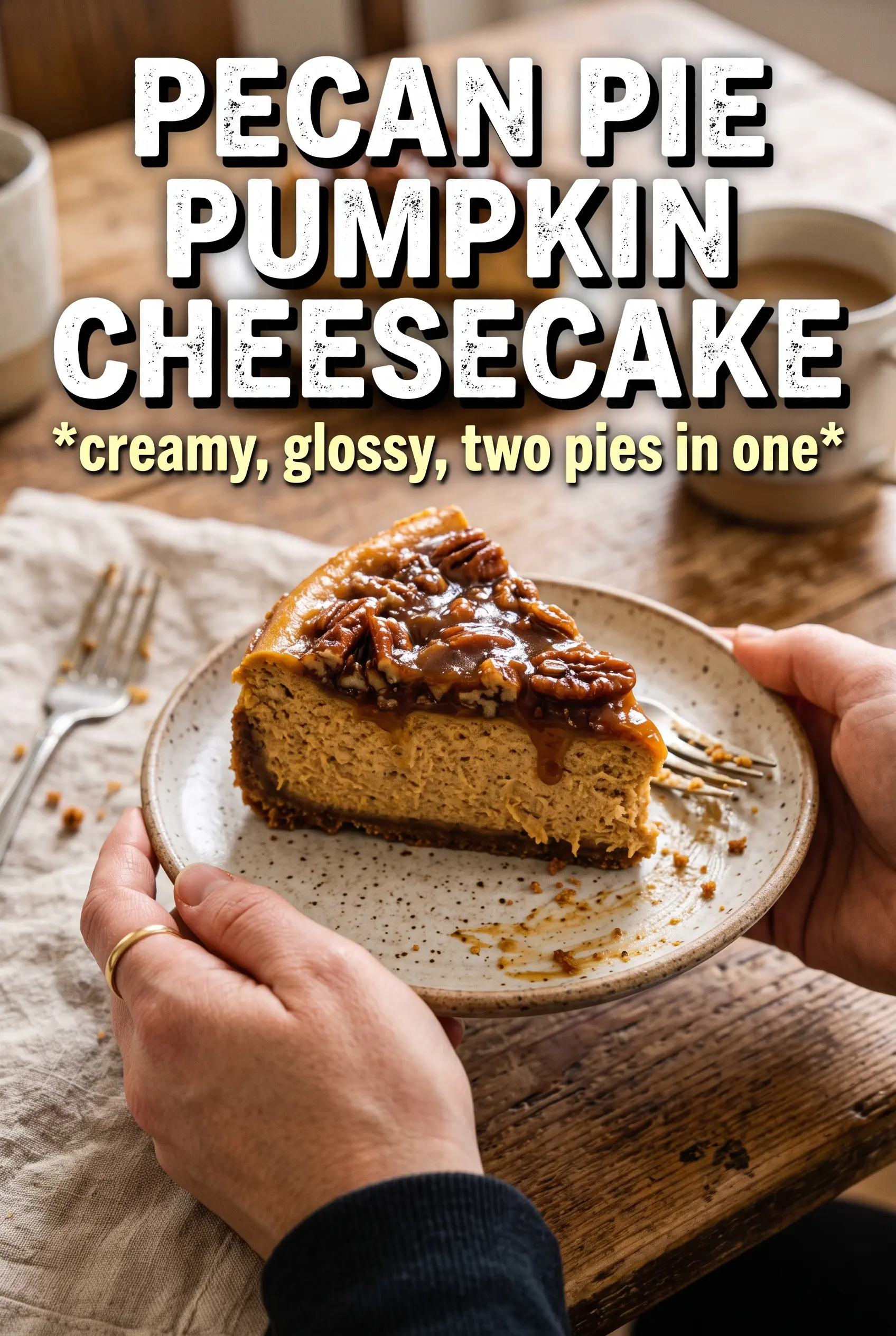
Pecan pie pumpkin cheesecake lands in that perfect middle ground between two desserts people already love. The gingersnap crust brings spice and crunch, the pumpkin layer stays dense and silky, and the pecan topping adds that sticky, glossy finish that makes every slice feel special. It cuts cleanly after chilling, but the topping still gives you that old-fashioned pecan pie pull when the fork goes in.
What makes this version work is balance. Pumpkin can turn a cheesecake loose and watery if it isn’t handled with enough structure, so the filling leans on full-fat cream cheese, sour cream, and a slow bake in a water bath. The pecan topping is cooked separately and spooned on after the cheesecake has chilled, which keeps the nuts crisp enough to hold their shape while the syrup stays glossy instead of soaking into the filling.
If you’ve ever had cheesecake crack, slide, or taste flat under a heavy topping, the notes below will help you avoid all three. The crust timing, the bake cues, and the cooling process matter here, and they’re worth doing right.
The cheesecake came out creamy and set all the way through, and the pecan topping stayed thick instead of running everywhere. I loved the gingersnap crust with the pumpkin filling — it tasted like the best parts of two desserts in one slice.
Save this pecan pie pumpkin cheesecake for the slice that needs a crisp crust, a creamy pumpkin center, and a thick pecan topping.
The Reason Pumpkin Cheesecake Cracks Under Pecan Topping
Most cracks happen when the cheesecake bakes too fast, then cools too quickly. Pumpkin adds moisture and weight, and that combination can turn a smooth batter into one that puffs, then sinks. The water bath matters here because it keeps the oven heat gentler and steadier, which gives the eggs time to set without curdling at the edges.
The other mistake is pouring the topping on before the cheesecake is fully chilled. Warm filling and warm syrup are a bad match; the topping slides, the surface softens, and you lose that clean slice. Chill the cheesecake completely first. It needs that time to firm up enough to carry the topping without giving way.
- Water bath: It cushions the cheesecake from direct heat and helps prevent a dry, split top.
- Resting time: The long chill isn’t optional. It sets the structure so each slice holds.
- Pecan topping timing: Cook it separately and cool it a bit before spooning it on so it stays thick and glossy.
What Each Layer Is Actually Doing Here
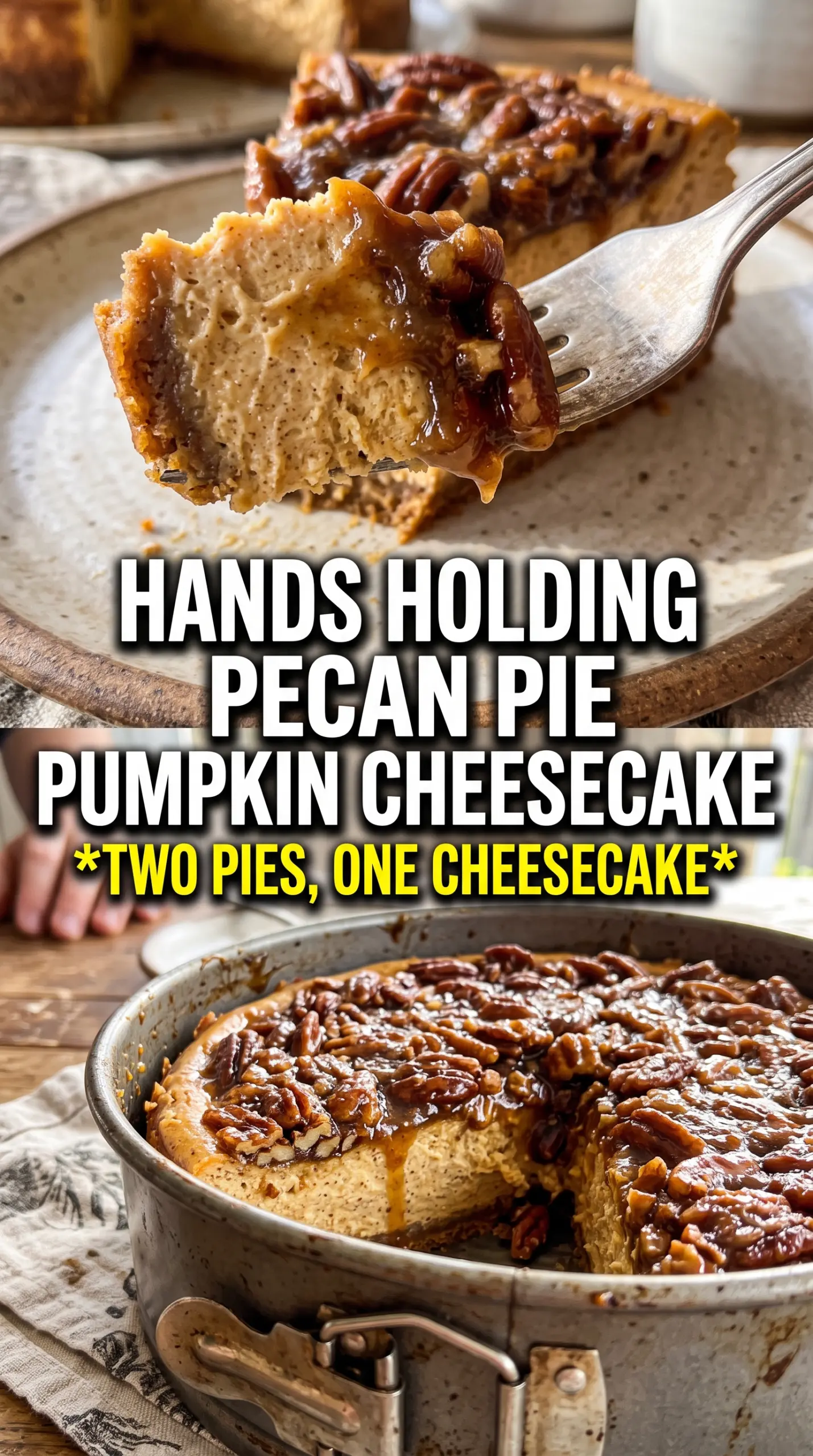
- Gingersnap crumbs: These bring more spice than a plain graham crust and stand up to the dense filling. If you only have graham crackers, they work, but the crust will taste milder and less warm.
- Cream cheese: Use full-fat blocks, not tub cream cheese. The lower-water versions can make the filling loose and less creamy.
- Pumpkin puree: Use plain pumpkin puree, not pumpkin pie filling. Pie filling already contains sugar and spice, which throws off the texture and balance.
- Sour cream: This adds a slight tang and keeps the filling from tasting heavy. Full-fat Greek yogurt can work in a pinch, but the filling will be a little less lush.
- Pecans: Halves give you that classic pie look and a better bite than chopped nuts. If you chop them, the topping spreads a little more evenly but loses some of that dramatic finish.
- Corn syrup: It isn’t there for sweetness alone. It keeps the topping glossy and helps the sauce stay pourable without turning grainy.
Building the Cheesecake So It Sets Smoothly
Pressing and Baking the Crust
Mix the gingersnap crumbs, sugar, and melted butter until every crumb looks evenly moistened, then press the mixture firmly into the springform pan. A loose crust falls apart when you slice it, so use the bottom of a measuring cup to pack it tight and even. Bake it for the full 10 minutes so the butter sets and the crust doesn’t turn soggy under the filling.
Mixing the Filling Without Whipping in Trouble
Beat the cream cheese until it’s completely smooth before anything else goes in. If there are lumps now, they will still be there after baking, and no topping can hide them. Add the sugar, then the eggs one at a time, mixing just until each one disappears. Overbeating adds air, and that air expands in the oven and can make the cheesecake puff and crack.
Knowing When the Bake Is Done
Pour the filling over the crust and bake until the edges are set but the center still has a slight wobble when you nudge the pan. It should look like it needs a little more time, not like it is liquid. If the whole surface is firm in the oven, it is already overbaked. Pull it out, let it cool slowly, and trust the carryover heat to finish the center.
Cooking the Pecan Topping to the Right Stage
Melt the butter with the brown sugar, cream, and corn syrup, then let it simmer for about 3 minutes. You want it to thicken slightly and look glossy, not boil hard and turn sticky or grainy. Stir in the pecans, vanilla, and salt off the heat, then let the topping cool for 15 minutes so it lands on the cheesecake in a thick layer instead of running down the sides.
Make It Gluten-Free With One Simple Crust Swap
Use certified gluten-free gingersnap crumbs or swap in gluten-free graham-style crumbs. The filling and topping are naturally gluten-free, so the crust is the only place that needs attention. The texture stays the same as long as the crumbs are fine and you still press them tightly into the pan.
If You Want a Stronger Pumpkin Spice Finish
Add an extra 1/4 teaspoon cinnamon or a pinch more pumpkin pie spice. That pushes the spice forward without making the filling taste sharp. I wouldn’t go much heavier than that, since the pecan topping already brings a lot of sweetness and richness.
For a Less Sweet Slice
Reduce the sugar in the crust slightly or serve thinner slices with extra plain whipped cream on the side. The topping is still the sweetest part, so the balance comes from keeping the cheesecake itself tangy and not overbaking it. Don’t cut the brown sugar too far in the topping or it will lose the pecan pie character.
Storage and Reheating
- Refrigerator: Store covered for up to 5 days. The crust softens a little over time, but the filling stays creamy and the topping holds up well.
- Freezer: Freeze the cheesecake without the pecan topping for best results. Wrap slices tightly and freeze for up to 2 months, then thaw overnight in the fridge and add fresh topping before serving if possible.
- Reheating: Don’t reheat the cheesecake itself. Serve it cold or let a slice sit at room temperature for 15 to 20 minutes so the filling loosens slightly. The pecan topping is meant to stay glossy, not hot.