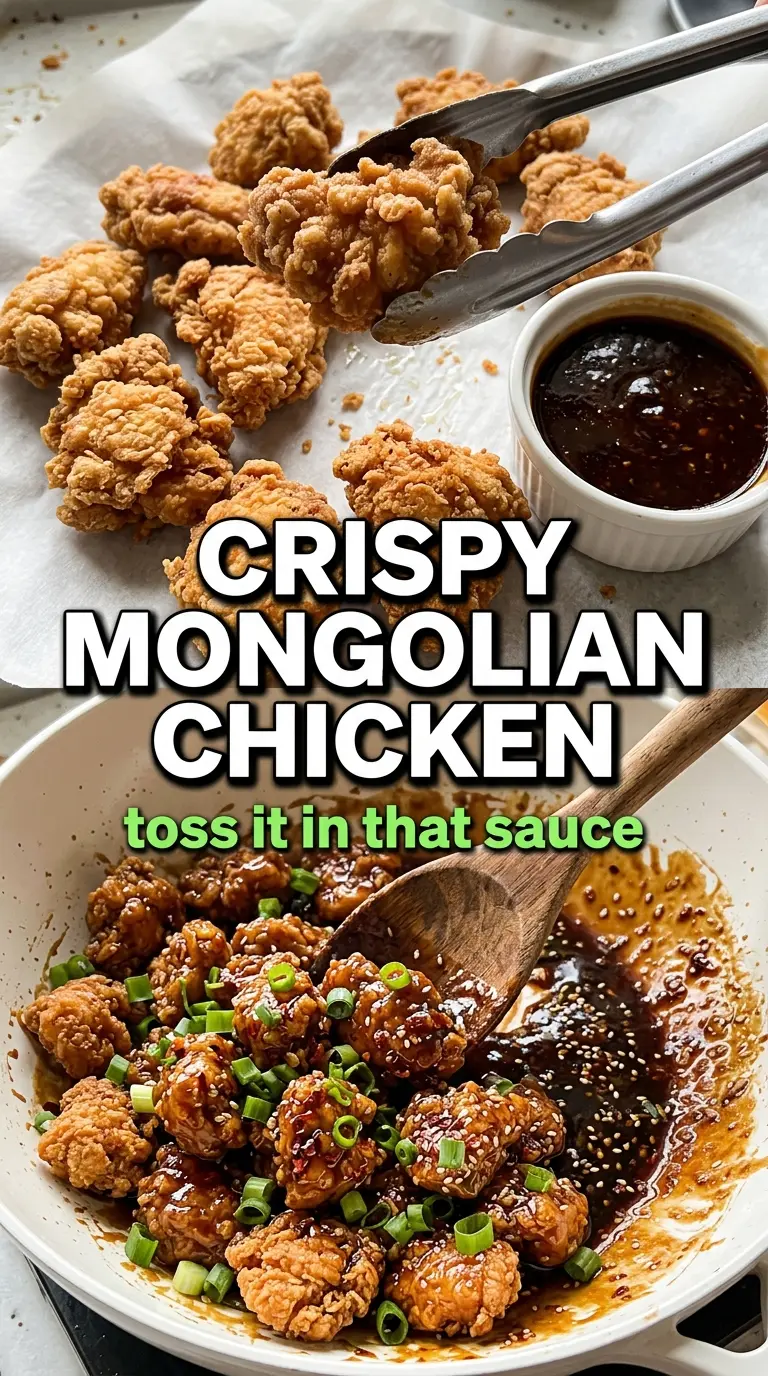
Crispy-edged Mongolian chicken is one of those dinners that disappears fast because it hits the exact balance people want from takeout at home: juicy chicken, a glossy sauce that clings instead of pooling, and enough garlic-ginger bite to keep the sweetness in check. The best version isn’t heavy or cloying. It’s sticky, savory, and just charred enough around the edges to taste like it came out of a screaming-hot wok.
What makes this version work is the cornstarch on the chicken before it hits the pan. That coating gives you a thin, crackly crust and helps the sauce grab on later. The sauce itself is built with soy sauce, brown sugar, hoisin, and a little sesame oil, then thickened at the end with a slurry so it turns lacquered instead of watery. Green onions go in near the finish so they keep some bite and pick up a little char without going limp.
Below, I’ve included the little details that matter most: how hot the pan needs to be, why thin chicken slices cook better here, and the swaps I’d use when I want to lighten it up or work around what’s in the pantry.
The chicken got that crisp edge even after it went back in the sauce, and the glaze thickened up exactly like the takeout version my husband orders. I used extra green onions and they stayed bright instead of getting soggy.
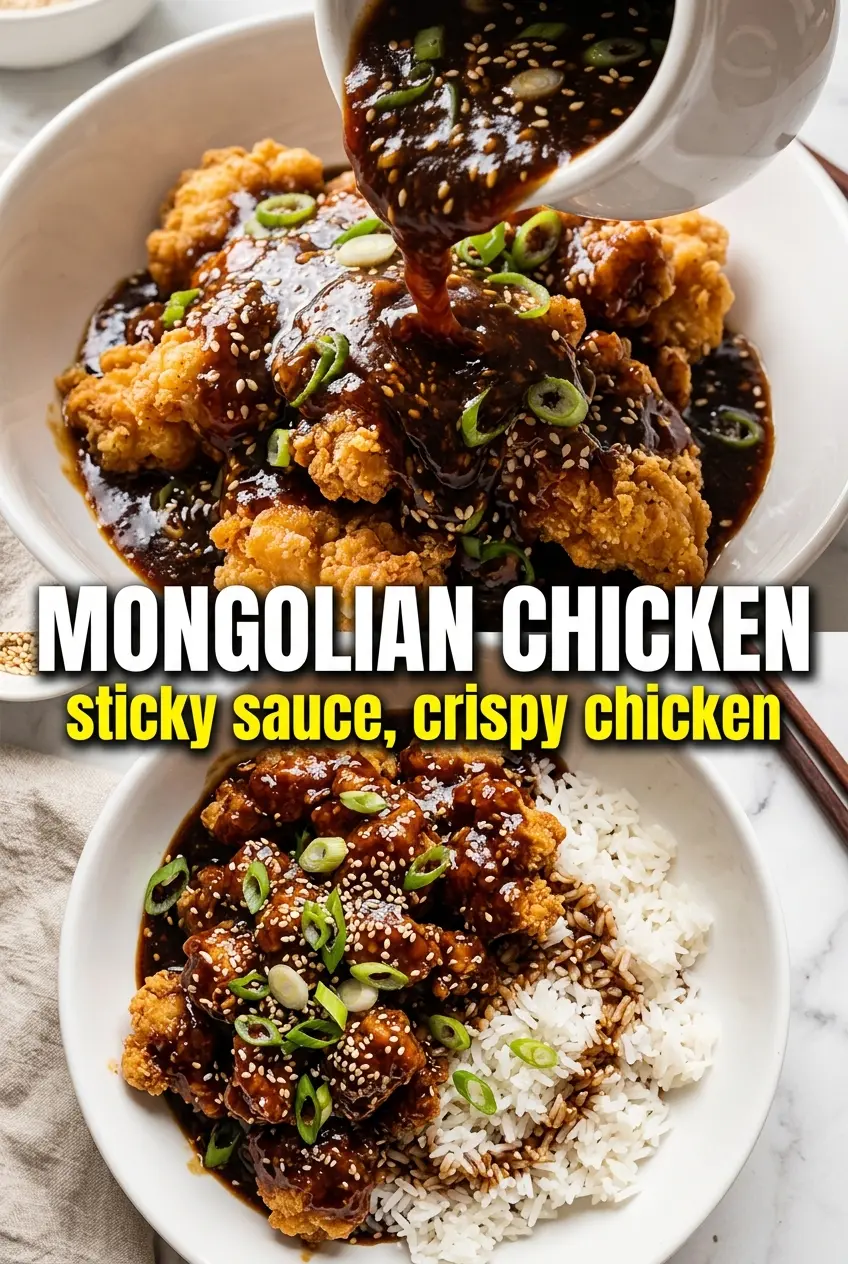
Save this sticky Mongolian chicken for the nights when you want crisp chicken, glossy sauce, and rice that soaks up every last drop.
The Part Most Mongolian Chicken Gets Wrong: Soggy Chicken
The mistake usually happens when the pan isn’t hot enough or the chicken goes in wet. You want the cornstarch coating to hit the oil and immediately start forming a light crust. That crust helps the chicken stay tender inside while giving the sauce something to cling to later.
If you crowd the pan, the chicken steams and the coating turns pasty instead of crisp. Cook in batches if needed. The goal is deep golden edges, not pale pieces that have only just lost their raw color.
- Thin-sliced chicken breasts — Thin pieces cook fast and brown evenly. If the slices are thick, they stay juicy in the center but the coating burns before the inside catches up.
- Cornstarch — This is what gives the chicken that lightly crisp exterior and also thickens the sauce at the end. Flour won’t give the same clean, glossy finish.
- Hoisin sauce — It adds body and a little fermented depth that plain soy sauce can’t replace. If you’re out, use a small spoonful of oyster sauce or extra brown sugar, but the sauce will taste less rounded.
- Fresh ginger and garlic — These need only a short blast in the pan. If they brown too hard, they turn bitter fast, so they go in after the chicken comes out and before the sauce.
What Each Ingredient Is Actually Doing in This Recipe
- Primary ingredient (the star) — Quality matters most. Choose the best you can find.
- Cooking medium (oil, butter, or broth) — This carries flavors and prevents dryness.
- Seasonings (salt, pepper, spices, herbs) — Layer flavors so nothing overpowers. Build depth gradually.
- Aromatics (garlic, onion, herbs) — Cook with fat to bloom flavors. Become the foundation.
- Supporting ingredients — Complement the main ingredient without overpowering it.
- Sauce or liquid (if applicable) — Brings flavors together. Balance richness with acid.
- Acid (lemon, vinegar, wine, or other) — Brightens and prevents flat-tasting results.
- Final finish (garnish, glaze, or sauce) — Prevents one-dimensional taste and adds visual appeal.
Building the Sticky Sauce Without Burning the Sugar
Coating the Chicken First
Toss the sliced chicken with cornstarch, salt, and pepper until every piece looks lightly dusted rather than clumpy. That thin coating is enough. If you dump in too much cornstarch, it falls off in the pan and the sauce turns muddy. The coating should look dry to the touch, not paste-like.
Hard Sear, Fast Cook
Heat the oil until it shimmers before the chicken goes in. You should hear an immediate sizzle. Leave the pieces alone long enough to develop a deep golden crust, then turn them and finish cooking through. If the pan is too cool, the chicken releases moisture and you lose the crisp edges that make this dish work.
Thickening the Sauce at the End
Once the garlic and ginger are fragrant, pour in the sauce and bring it to a boil before adding the slurry. The boiling step matters because the cornstarch needs heat to activate. Stir until the sauce turns glossy and coats the back of a spoon, then return the chicken and green onions just long enough to glaze everything without softening the crust completely.
How I’d Adapt This for a Different Pantry or Diet
For a gluten-free version
Use a certified gluten-free soy sauce or tamari and check the hoisin label, since some brands contain wheat. The texture stays the same because the cornstarch does the crisping work here, not the soy sauce.
For chicken thighs instead of breasts
Boneless thighs give you a richer, juicier bite and handle high heat a little better. Slice them thinly so they still cook quickly, and expect a slightly silkier texture with the same sticky glaze.
For less sweetness
Cut the brown sugar back by a tablespoon and add a splash more soy sauce or a tiny bit of rice vinegar. That keeps the sauce from tasting candy-like while preserving the sticky finish.
Storage and Reheating
- Refrigerator: Store in an airtight container for up to 4 days. The chicken softens a bit as it sits, but the flavor holds up well.
- Freezer: It freezes fairly well for up to 2 months, though the cornstarch coating won’t stay crisp. Freeze in portions, then thaw overnight in the fridge before reheating.
- Reheating: Reheat in a skillet over medium-low heat with a splash of water until the sauce loosens and the chicken is hot through. The common mistake is blasting it on high heat, which tightens the chicken and scorches the sugar in the glaze.
Questions I Get Asked About This Recipe
Mongolian Chicken
Ingredients
Equipment
Method
- Toss the thinly sliced chicken with cornstarch, salt, and pepper until every piece looks evenly coated and lightly dry.
- Set the coated chicken aside while you mix the sauce so the coating has time to cling.
- Whisk together soy sauce, brown sugar, water, hoisin sauce, sesame oil, and red pepper flakes until the sugar dissolves and the mixture turns uniform.
- Heat the vegetable oil in a large skillet or wok over high heat, then cook the chicken for 3-4 minutes per side until deeply golden and cooked through; remove to a plate.
- Add the garlic and grated ginger to the same pan and stir-fry for 30 seconds until fragrant, scraping up any browned bits.
- Pour in the sauce mixture and bring it to a boil so it looks glossy and gently bubbling across the surface.
- Stir in the cornstarch slurry and cook for 1-2 minutes until the sauce thickens and becomes shiny and clingy.
- Return the chicken to the pan with the green onions and toss until the sauce coats the chicken and the onions look lightly charred and glossy.
- Serve the sticky Mongolian chicken over steamed rice with sesame seeds on top so every bite is glazed.