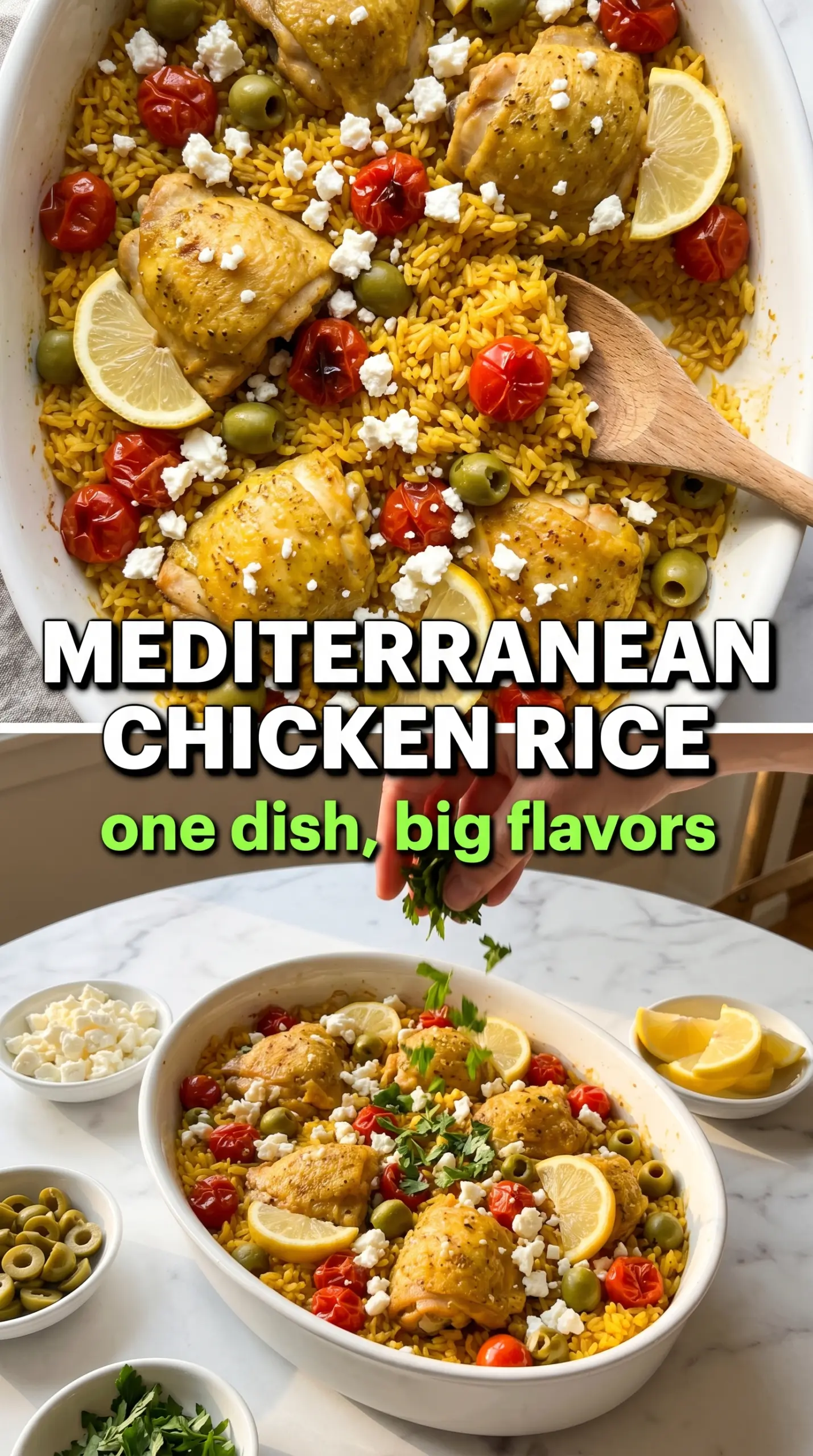
Golden chicken thighs tucked into lemony rice make one of those pan dinners that looks far more involved than it is. The chicken roasts on top while the rice cooks underneath, soaking up the broth, garlic, oregano, and drippings until every grain tastes seasoned from the inside out. When it comes out right, you get crisp skin, fluffy rice, bursts of sweet tomato, briny olives, and little pockets of feta that soften into the pan.
What makes this version work is the order. The rice goes into the baking dish before the chicken, and the broth turns it into its own little cooking vessel instead of leaving it dry or uneven. The short marinade is enough to season the chicken without needing hours, and the foil cover gives the rice time to steam before the skin finishes browning uncovered.
Below you’ll find the timing that keeps the rice tender, the small detail that keeps the chicken juicy, and a few ways to adapt the pan for different diets and leftovers.
The rice came out fluffy and the bottom had all those lemony pan juices mixed in. I usually struggle with baked rice drying out, but this was tender all the way through and the chicken skin stayed crisp.
Save this Mediterranean Chicken and Rice for the nights when you want crisp chicken skin, lemony rice, and one pan doing all the work.
The One Thing That Keeps the Rice from Turning Gummy
The biggest mistake with baked chicken and rice is crowding too much moisture into the pan and then checking it too soon. The rice needs a tight cover for the first stretch of baking so it can steam evenly, and the chicken needs to sit skin-side up the whole time so the top can dry and brown instead of stewing in the broth.
That foil cover does more than keep steam in. It protects the rice from evaporating before the grains have absorbed enough liquid. If you lift it early, the top layer can dry out while the center stays hard. If the chicken is pushed too deeply into the rice, the skin loses its chance to crisp, so nestle it just enough to anchor it without burying it.
- Long-grain white rice — This is the best choice because it stays separate and fluffy. Short-grain rice turns softer and stickier, and brown rice needs more liquid and a longer bake, which would throw off the chicken.
- Bone-in, skin-on chicken thighs — They stay juicy through the full bake and give you the best flavor on top of the rice. Boneless thighs cook faster, but they don’t protect the rice the same way and the skinless version loses that crisp finish.
- Chicken broth — Use a broth you’d actually drink on its own. It seasons the rice from the inside, and water just leaves the whole dish flatter unless you compensate with more salt and herbs.
- Feta, olives, and lemon — These are the sharp, salty elements that keep the dish from tasting heavy. The feta should go on after baking so it softens without disappearing, and the lemon wedges at the table wake everything up.
What Each Ingredient Is Actually Doing in This Recipe
- Primary ingredient (the star) — Quality matters most. Choose the best you can find.
- Cooking medium (oil, butter, or broth) — This carries flavors and prevents dryness.
- Seasonings (salt, pepper, spices, herbs) — Layer flavors so nothing overpowers. Build depth gradually.
- Aromatics (garlic, onion, herbs) — Cook with fat to bloom flavors. Become the foundation.
- Supporting ingredients — Complement the main ingredient without overpowering it.
- Sauce or liquid (if applicable) — Brings flavors together. Balance richness with acid.
- Acid (lemon, vinegar, wine, or other) — Brightens and prevents flat-tasting results.
- Final finish (garnish, glaze, or sauce) — Prevents one-dimensional taste and adds visual appeal.
Building the Pan So the Chicken and Rice Finish Together
Marinating the Chicken
Whisk the olive oil, lemon juice, lemon zest, garlic, oregano, salt, and pepper into a loose marinade, then coat the chicken thighs and let them sit for 20 minutes. That short rest is long enough to season the surface and start pulling the garlic and herbs into the skin without making the chicken taste overly acidic. If the marinade looks separated, that’s normal; it just needs another whisk before you use it with the rice.
Setting Up the Rice
Spread the rice in a 9×13 baking dish and pour the broth over it, then stir in a pinch of salt and a little of the remaining marinade. The rice should sit in an even layer so it cooks at the same rate across the dish. If you mound it unevenly, the edges dry out before the center softens.
Roasting Under Cover
Place the chicken skin-side up on top of the rice, scatter the tomatoes and olives around it, and cover the dish tightly with foil. Bake until the rice has had time to steam and the chicken is mostly cooked through. If your foil isn’t sealed well, the broth evaporates too fast and you end up with rice that is tough in spots, so press the edges firmly around the dish.
Finishing for Color and Texture
Remove the foil and return the pan to the oven until the chicken skin turns deep golden and the rice finishes tender. This last uncovered stretch is what gives you texture on top without drying out the grains below. If the skin isn’t browning, give it a few more minutes rather than cranking the heat, which can scorch the rice before the chicken is ready.
As soon as the pan comes out, crumble the feta over the hot rice so it softens into the steam instead of melting away completely. Finish with parsley and lemon wedges. That last hit of freshness matters here because the dish is rich enough to need something bright at the end.
How to Change This Pan Dinner Without Losing What Makes It Work
Dairy-Free Version
Skip the feta and finish with extra parsley, lemon zest, and a handful of toasted pine nuts if you want another layer of texture. You lose the salty creaminess feta brings, so add a little more salt at the table after baking.
Using Boneless Chicken Thighs
Boneless thighs work, but they cook faster and won’t shield the rice as well from direct heat. Start checking a few minutes early, and pull the pan once the chicken is just cooked through so it doesn’t dry out while you wait for the rice to finish.
Swapping the Rice
You can use jasmine rice for a softer, more fragrant result, but skip quick-cooking or parboiled rice here because it can go mushy before the chicken browns. Brown rice needs a different liquid amount and a longer bake, so it’s not a straight swap.
Storage and Reheating
- Refrigerator: Store leftovers in an airtight container for up to 4 days. The rice will firm up a little as it chills, but it stays flavorful.
- Freezer: This freezes well, especially if you portion the rice and chicken together. Wrap tightly and freeze for up to 2 months, then thaw overnight in the fridge.
- Reheating: Warm covered in the oven at 325°F with a splash of broth or water to loosen the rice. The common mistake is blasting it in the microwave until the chicken dries out and the rice turns chewy.
Questions I Get Asked About This Recipe
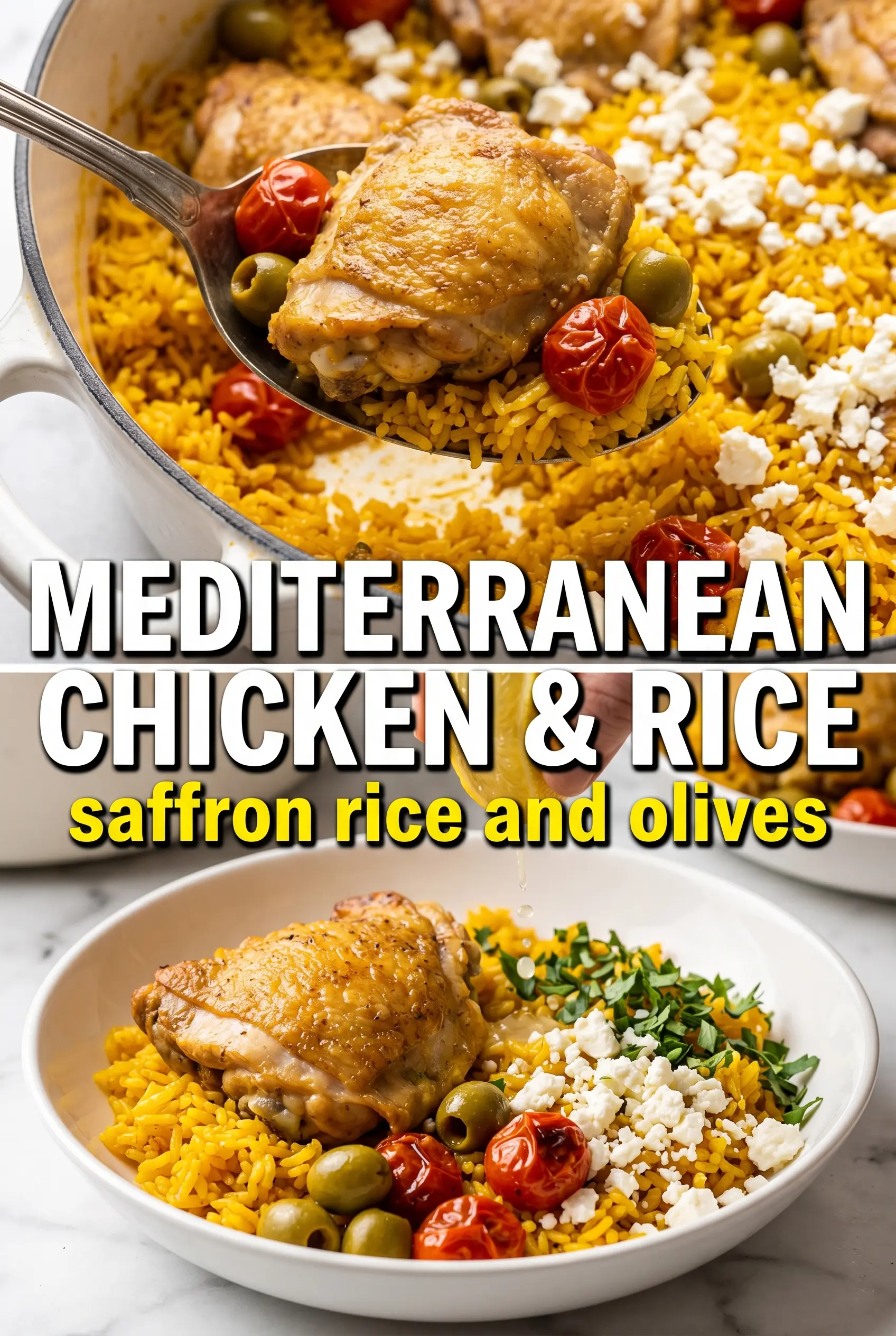
Mediterranean Chicken and Rice
Ingredients
Equipment
Method
- Whisk together olive oil, lemon juice, lemon zest, garlic, oregano, salt, and pepper. Marinate the chicken for 20 minutes so the flavors cling to the skin.
- Preheat the oven to 375°F. Spread the rice in a 9x13 baking dish and pour chicken broth over the rice.
- Stir in a pinch of salt and the remaining marinade. Nestle the chicken skin-side up into the rice so the thighs are partially surrounded.
- Scatter cherry tomatoes and olives around the chicken. Cover tightly with foil and bake for 30 minutes, until the rice is steaming and the chicken edges begin to color.
- Remove the foil and bake for 15 more minutes at 375°F until the skin is golden and the rice is cooked. The grains should look tender and the dish should be bubbling at the edges.
- Immediately crumble feta over the hot dish. Let it soften into the rice for a few moments so you see creamy flecks throughout the grains.
- Garnish with fresh parsley and serve with lemon wedges. The top should look bright with herbs, tomatoes, and golden chicken skin.