Thin, shattering chicken cutlets with a Romano crust are the kind of dinner that disappears fast. The breading turns crisp and deeply savory in the pan, and the lemon-butter sauce cuts through all that richness with just enough brightness to keep every bite lively. Capers add little bursts of salt and tang that make the whole dish taste finished, not fussy.
What makes this version work is the balance between the coating and the sauce. Romano cheese brings a sharper, saltier edge than plain Parmesan, and mixing it with panko keeps the crust from turning dense or greasy. I also like the chicken pounded or cut into thin cutlets because they cook quickly and evenly, which is what keeps the breading golden instead of overcooked.
Below, you’ll find the little details that matter most: how to keep the crust crisp, when to add the butter so the sauce stays glossy, and the substitutions that still give you a dinner worth repeating.
The Romano crust stayed crisp even under the lemon butter sauce, and the capers kept every bite from tasting heavy. I served it with pasta, and my husband went back for seconds before I’d even sat down.
Like the crisp Romano crust and lemon-caper butter sauce? Save Lemon Chicken Romano for the nights when you want a fast Italian-American chicken dinner that still tastes special.
The Crisp Coating Needs Direct Heat, Not a Crowded Pan
The biggest mistake with chicken Romano is overcrowding the skillet. When the cutlets are packed in too tightly, the moisture they release turns the coating soft before it can brown, and you end up with a pale crust instead of that deep golden crunch. Give each piece space and let the pan do the work.
Another thing that matters here is the order of the breading. Flour gives the egg something to cling to, and the egg gives the Romano-panko layer a real grip. If you skip the flour or rush the coating, the crust can slide off in the pan. Press the chicken firmly into the cheese mixture so every edge is sealed before it hits the oil.
What the Romano, Panko, and Lemon Are Each Doing Here
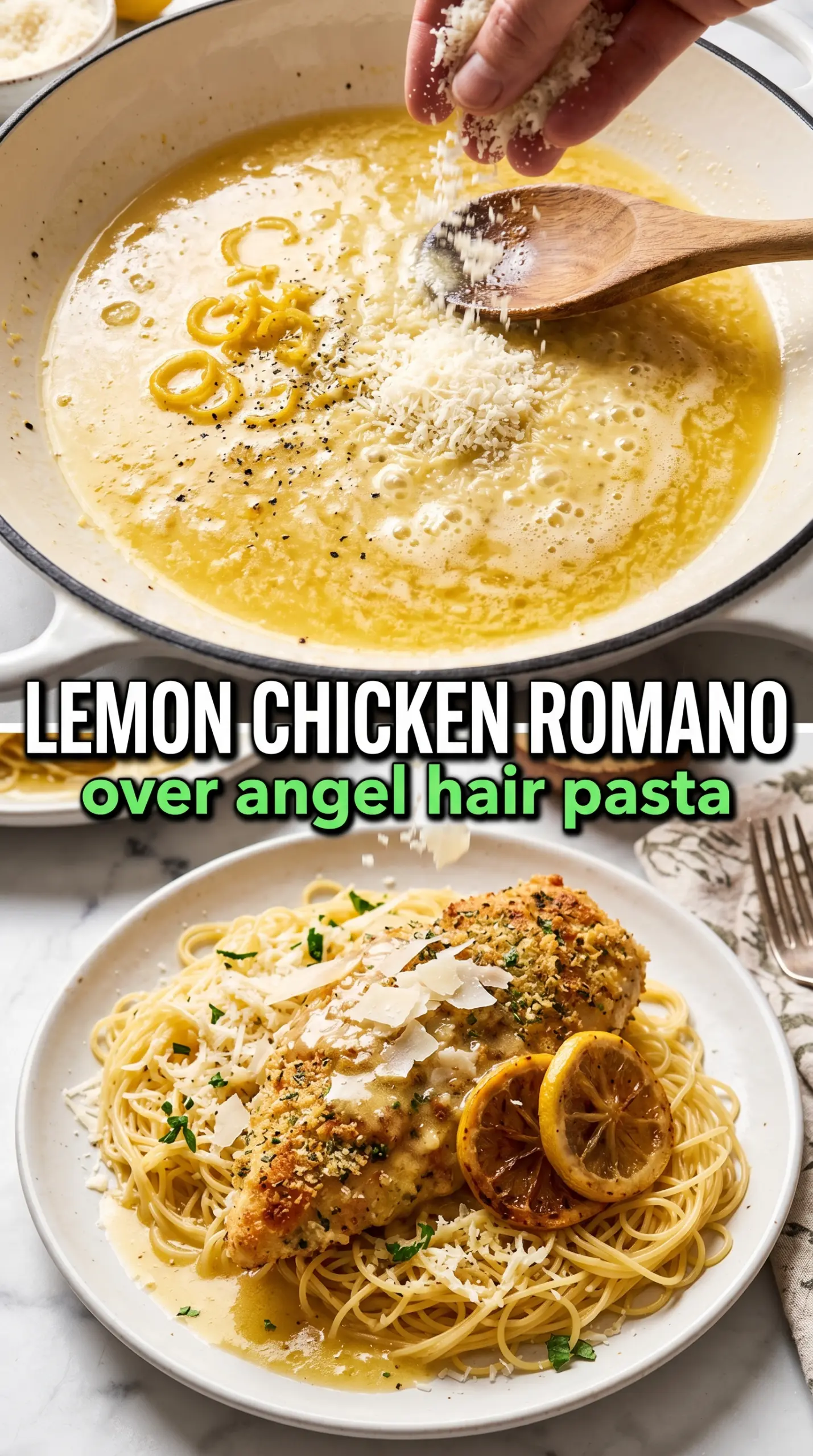
The cheese is the real backbone of the crust. Pecorino Romano is saltier and sharper than a milder grating cheese, so you get more punch in every bite. If all you have is Parmesan, it will still work, but the result will be softer and a little less assertive.
- Pecorino Romano — Use the finely grated kind so it melts into the crumbs and browns evenly. Coarsely grated cheese can leave gaps in the coating and patchy color on the chicken.
- Panko breadcrumbs — These lighten the cheese crust and keep it from turning heavy. Regular breadcrumbs work in a pinch, but the texture won’t stay as crisp.
- Dry white wine — This gives the sauce a clean base and lifts the brown bits from the pan without making the lemon taste sharp. If you don’t cook with wine, use chicken broth plus a teaspoon of extra lemon juice.
- Capers — They bring the salty, briny pop that keeps the sauce from feeling one-note. Rinse them if yours are packed very aggressively in brine.
- Butter — Two tablespoons finish the sauce off the heat for gloss. Add it cold and stir until the pan sauce looks silky; if it boils after the butter goes in, the sauce can turn oily.
Frying the Cutlets, Then Building the Sauce in the Same Pan
Coating the Chicken Evenly
Season the cutlets first so the flavor is inside the meat, not just on the crust. Dredge in flour, dip in egg, then press into the Romano-panko mixture until the surface looks fully covered and a little shaggy. That shaggy layer is what fries up crisp. If the coating feels damp and pasty, it usually means the chicken wasn’t patted dry enough before breading.
Frying to a Deep Golden Crust
Cook the cutlets in olive oil and butter over medium-high heat until the coating is deep golden and the chicken is just cooked through, about 3 to 4 minutes per side. The butter gives you better color, while the oil keeps it from burning too quickly. If the pan smokes hard, the heat is too high; if the crust looks blond after several minutes, it needs more heat. Move the cooked cutlets to a plate and don’t cover them tightly or the steam will soften the crust.
Making the Lemon-Caper Sauce
Use the same pan. That leftover browned coating in the skillet is the flavor you want in the sauce. Cook the garlic just long enough to smell it, then add the wine to loosen everything from the bottom. Let it simmer until it loses the raw alcohol edge, then stir in the lemon juice and capers. Finish with cold butter off the heat so the sauce turns glossy instead of separating.
Bringing It to the Plate
Spoon the sauce over the chicken right before serving. You want the crust to stay crisp at the edges while the top picks up just enough sauce to taste rich and bright. Parsley goes on last for color and freshness. If the sauce thickens more than you like, loosen it with a splash of water or broth, not more butter.
How to Adapt Lemon Chicken Romano Without Losing the Crunch
Gluten-Free Version
Swap the all-purpose flour for a gluten-free flour blend and use gluten-free panko. The crust still gets crisp, but it may brown a little faster, so keep an eye on the skillet and lower the heat slightly if needed.
No-Wine Sauce
Replace the white wine with low-sodium chicken broth and a teaspoon of extra lemon juice. You lose a little acidity and depth, but the sauce still loosens the browned bits and keeps that bright, buttery finish.
Extra-Crunchy Cutlets
Add an extra 1/4 cup panko to the Romano mixture and press it in firmly. The crust gets thicker and more textured, which is great if you want more crunch, but the coating will taste a little less cheesy.
Dairy-Free Adaptation
This one needs a bigger change because the Romano and butter both matter. For a dairy-free version, use a seasoned breadcrumb coating with nutritional yeast for some savory depth, then finish the sauce with olive oil instead of butter. The result is lighter and less rich, but the lemon-caper pan sauce still carries the dish.
Storage and Reheating
- Refrigerator: Store leftovers for up to 3 days. The crust softens in the sauce, but the flavor stays good.
- Freezer: Freeze the cooked cutlets without sauce for up to 2 months. The sauce is better made fresh, since butter and lemon can separate after thawing.
- Reheating: Reheat the chicken on a rack in a 375°F oven until hot, then warm the sauce separately and spoon it over just before serving. The common mistake is microwaving everything together, which turns the coating soggy.
Answers to the Questions Worth Asking
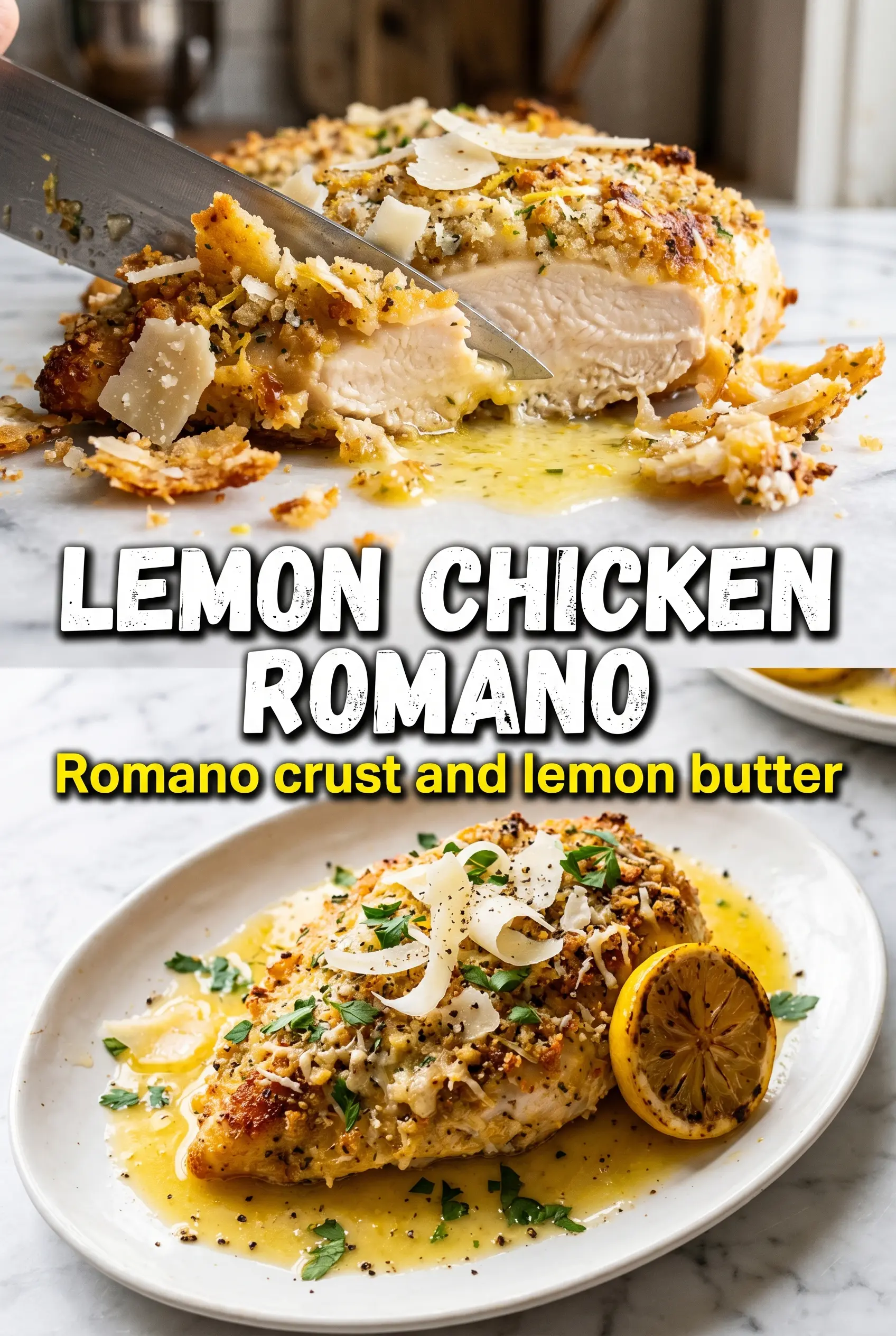
Lemon Chicken Romano
Ingredients
Equipment
Method
- Halve chicken breasts horizontally into 8 thin cutlets, then season both sides with salt and pepper.
- Set up a breading station with flour, beaten eggs, and a mix of Pecorino Romano cheese with panko breadcrumbs.
- Dredge each cutlet in flour, dip into egg, then press firmly into the Romano-panko coating so it adheres.
- Heat olive oil and 2 tablespoons butter in a skillet over medium-high heat until shimmering, then pan-fry cutlets for 3-4 minutes per side until deeply golden.
- Remove cutlets to a sheet pan and let them rest while you make the sauce.
- In the same pan, cook minced garlic for 30 seconds until fragrant, then deglaze with the dry white wine.
- Add fresh lemon juice and capers, then simmer for 3 minutes until slightly reduced.
- Swirl in the remaining 2 tablespoons cold butter until the sauce looks glossy.
- Plate the cutlets and pour lemon-caper butter sauce over each one so it pools around the crispy crust, then garnish with fresh parsley.