Creamy, lightly sweet Korean potato salad has that soft, comforting texture that keeps pulling people back for another spoonful. The potatoes stay a little rustic instead of turning into a smooth mash, so every bite lands somewhere between fluffy, chunky, and rich with just enough crunch from the cucumber and carrot to keep it interesting.
What makes this version work is the balance. Russet potatoes break down beautifully and soak up the dressing, while rice vinegar keeps the sweetness from feeling heavy. Chilling matters here, too. The salad tastes fine right after mixing, but after a couple of hours in the fridge the flavors settle in and the texture gets closer to the classic gamja salad people expect.
The potatoes stayed fluffy instead of turning gluey, and after chilling the dressing soaked in perfectly. I loved the little pops from the corn and cucumber, and my kids kept sneaking spoonfuls before dinner.
Creamy Korean potato salad with crunchy cucumber and sweet corn is even better after a good chill.
The Reason This Potato Salad Stays Creamy Instead of Watery
The biggest mistake with Korean potato salad is letting too much moisture into the bowl before the potatoes have a chance to cool and settle. Hot potatoes absorb dressing differently than warm ones, and cucumber can turn the whole salad loose if it hasn’t been seeded well. This version avoids both problems by mashing the potatoes while they’re still warm, then folding in the vegetables once they’ve been drained and cooled enough to hold their shape.
The other thing that matters is texture. You want the potatoes roughly mashed, not whipped smooth. A few small lumps give the dressing something to cling to, and that’s what makes the salad taste rich instead of pasty.
What the Potatoes, Vinegar, and Sugar Are Each Doing Here
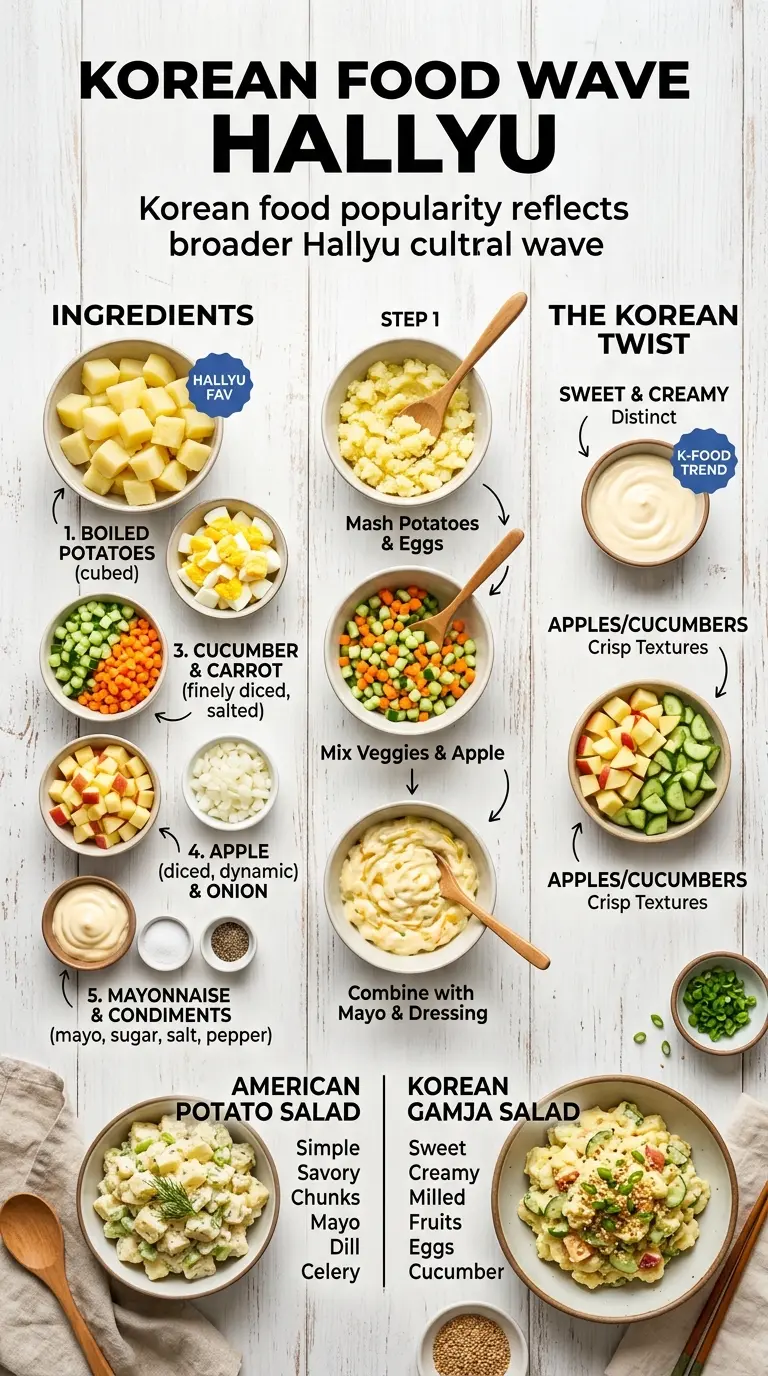
- Russet potatoes — These are the right choice because they break down softly and soak up the dressing instead of staying waxy. Yukon Golds work in a pinch, but the salad will be denser and a little less fluffy.
- Mayonnaise — This carries the dressing and gives the salad its classic creamy body. Use a brand you like eating straight from the spoon, because the flavor shows up plainly here.
- Rice vinegar — This keeps the sugar from taking over and gives the salad that gentle tang that makes another bite feel necessary. White vinegar works, but it tastes sharper and less rounded.
- Cucumber — Seed it before dicing or the salad can get watery after chilling. If your cucumber is especially large, even a brief salt-and-drain step helps keep the bowl from loosening up.
- Corn and carrots — These bring sweetness, color, and a little bite. Fresh or frozen corn both work; just thaw and drain frozen kernels first so they don’t carry extra water into the dressing.
Building the Bowl So the Texture Stays Light
Cooking the Potatoes Until They Collapse Easily
Boil the potatoes until a fork slides through with no resistance and the cubes are starting to fray at the edges. That softness matters because undercooked potatoes stay firm in the finished salad and resist the dressing instead of soaking it in. Drain them well, then let the steam escape for a minute or two before mashing, or the extra moisture will thin the mayo mixture later.
Mixing in the Vegetables Without Turning Them Mushy
Blanch the carrots just enough to take the raw edge off, then drain them and let them cool. Seed the cucumber and dice it small so it folds through without dumping water into the bowl. Add the eggs, corn, carrots, and cucumber after the potatoes have been mashed roughly; if you stir too aggressively, the eggs disappear and the salad loses the varied texture that makes it good.
Finishing With the Dressing and the Chill
Stir the mayo, sugar, rice vinegar, salt, and pepper together before folding it into the potatoes. That helps the sugar dissolve instead of staying grainy in pockets. The salad needs at least two hours in the fridge, and longer is fine. If you serve it too early, the dressing tastes sharp and the texture feels loose; after chilling, it tightens up and tastes fully blended.
How to Adjust It Without Losing the Character of the Salad
Make it dairy-free or egg-free
The salad is already dairy-free as written, so the main adjustment is for egg-free eating. Leave out the hard-boiled eggs and add a little more cucumber or corn for bulk. You’ll lose some richness, so use a mayonnaise with a fuller flavor to keep the dressing from tasting flat.
Swap in a less sweet version
If you like gamja salad with a sharper edge, cut the sugar back to 1 tablespoon and add a little more vinegar. The salad will taste brighter and less like a picnic-style potato salad, but it still stays creamy. Don’t remove the sugar completely unless you want a noticeably tangier result.
Make it ahead for a crowd
This holds well for a day in the fridge, which makes it a good side dish for a gathering. If you’re making it a full day ahead, save a spoonful of dressing and stir it in just before serving if the potatoes have absorbed more than you expected. That keeps the salad creamy without turning it soupy.
Storage and Reheating
- Refrigerator: Store covered for up to 3 days. The cucumber softens a little, but the flavor stays good.
- Freezer: Don’t freeze this one. The mayo breaks and the potatoes turn grainy after thawing.
- Reheating: This salad is meant to be served cold. If it sits too long out of the fridge, just stir it and chill it again before serving; warming it changes the texture in a bad way.
Answers to the Questions Worth Asking
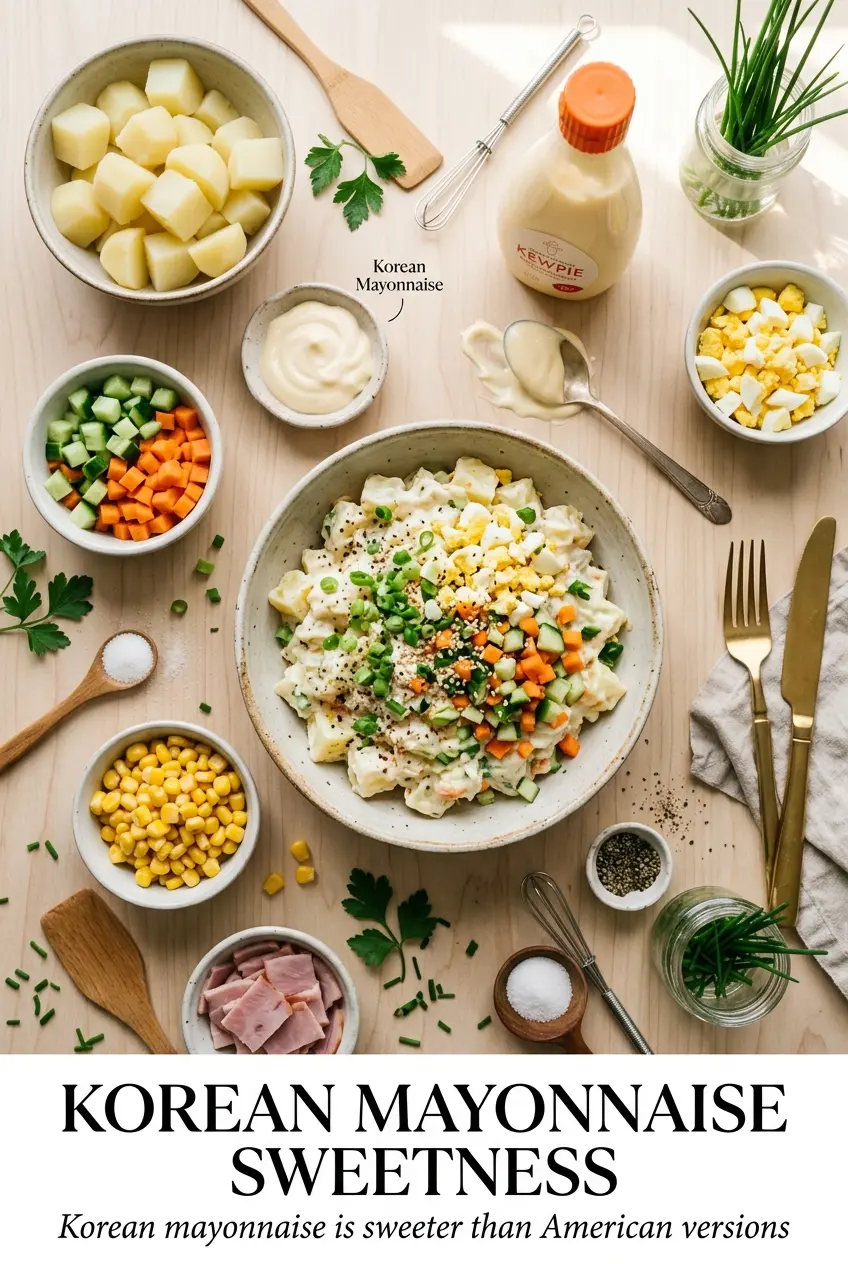
Korean Potato Salad (Gamja Salad)
Ingredients
Equipment
Method
- Bring a large pot of water to a boil at 212°F/100°C, then add the peeled and cubed russet potatoes. Boil until very tender, then drain.
- Mash the drained potatoes roughly (not completely smooth) to create a thick base for the salad. Keep some texture so the salad stays chunky.
- In the same boiling water, blanch the diced small carrots for 2 minutes at 212°F/100°C. Drain well.
- Combine the mashed potatoes, blanched carrots, seeded and diced cucumber, corn kernels, and chopped hard-boiled eggs in one bowl. Stir until evenly distributed.
- Mix mayonnaise, sugar, rice vinegar, salt, and pepper until the dressing is smooth and glossy. Taste and adjust salt and pepper as needed.
- Fold the dressing into the potato mixture until everything is coated and creamy. Stop mixing once no dry potato remains.
- Cover and refrigerate the Korean potato salad for at least 2 hours. Chill until set and cold before serving.