Japanese zucchini lands in that sweet spot between crisp and tender, with a glossy soy-butter glaze that clings to every round instead of pooling in the pan. The edges go deeply golden, the centers stay just soft enough, and the finish tastes savory, a little sweet, and unmistakably buttery.
The trick is giving the zucchini real contact with the skillet before the sauce goes in. If you stir too soon, it steams and turns soft; if you wait for that first side to brown, you get the caramelized flavor that makes this side dish worth repeating. A quick hit of garlic and ginger at the end keeps the aromatics bright, and the mirin or honey balances the soy without making the glaze heavy.
Below you’ll find the small details that matter most: how to keep the zucchini from going watery, what to swap if you don’t have mirin, and the one timing cue that tells you the glaze is ready to come off the heat.
The zucchini browned instead of steaming, and the soy-butter glaze coated every slice without turning soggy. I served it with rice and my husband kept sneaking bites from the pan.
Like this soy-butter Japanese zucchini? Save it to Pinterest for the nights when you want a fast hibachi-style side with a glossy glaze and crisp-tender edges.
The Trick to Getting Zucchini Golden Instead of Watery
The biggest mistake with zucchini is crowding the pan and moving it around too soon. Zucchini holds a lot of water, and if the slices sit on top of each other, that moisture releases fast and turns the skillet into a steamer. A wide skillet and a true single layer are what give you those browned bottoms and the light bite that makes this dish work.
Butter adds flavor, but the heat has to be controlled. You want the butter foaming, not smoking, when the zucchini goes in. That gives you enough heat to color the slices before they collapse. The sauce also goes in at the end, after the garlic and ginger have had just enough time to perfume the pan, because those aromatics burn fast and turn bitter if they sit in the heat too long.
What Each Ingredient Is Doing in the Pan
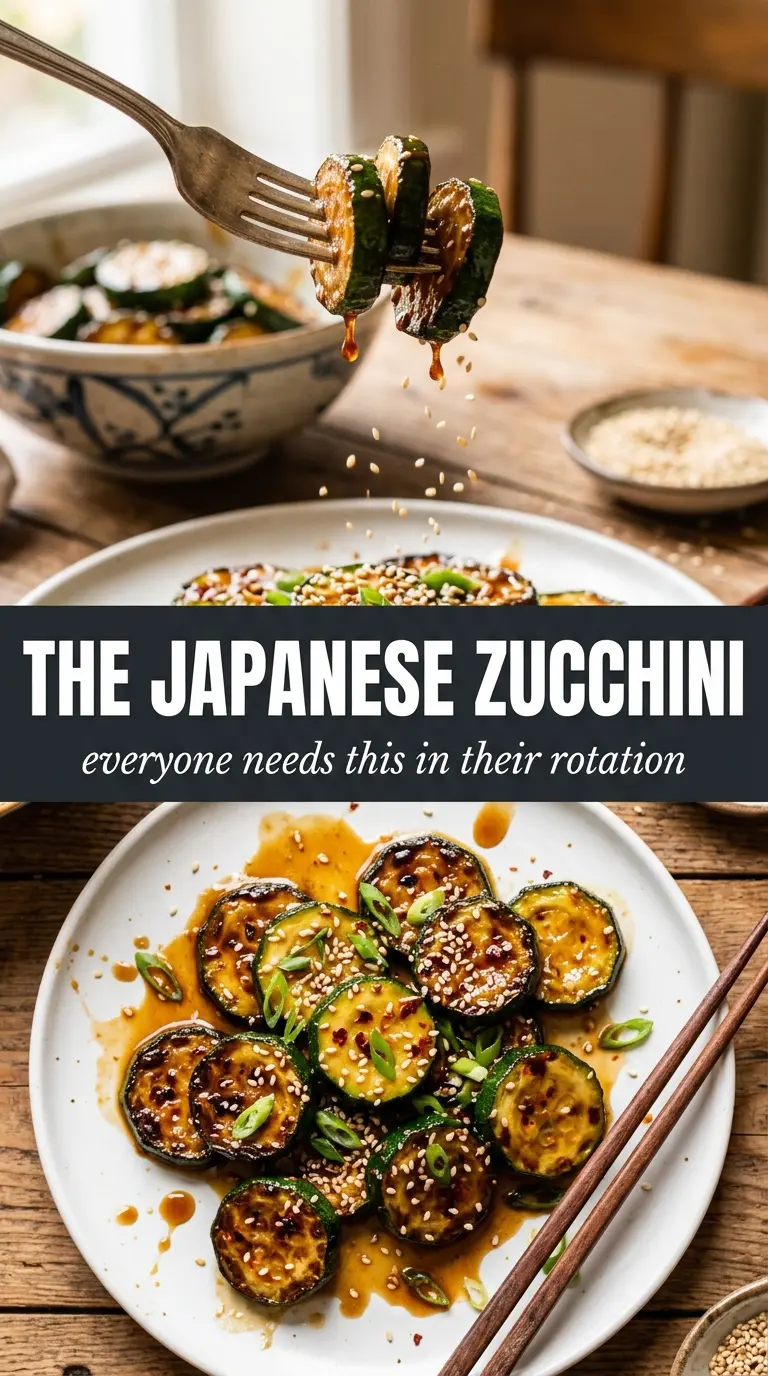
- Zucchini — Medium zucchini gives you the best balance of surface area and structure. Smaller zucchini are firmer and less watery, while oversized ones can get spongy and seedier inside.
- Butter — This is the backbone of the glaze. It helps the zucchini brown and gives the soy-mirin mixture a silky finish that oil alone won’t fully copy.
- Soy sauce — Use a regular all-purpose soy sauce for the cleanest savory base. Low-sodium works if that’s what you keep, but the glaze may need an extra pinch of salt at the end.
- Mirin or honey — Mirin gives a gentle sweetness and a little gloss; honey works when that’s what you have, though it tastes slightly fuller and heavier. If you use honey, whisk it with the soy sauce before it hits the pan so it dissolves smoothly.
- Sesame oil — This is a finishing note, not the cooking fat. A small amount gives the dish its toasted aroma; too much makes the glaze taste flat and dominant.
- Garlic and ginger — Fresh is worth it here. The dish tastes sharper and brighter with minced garlic and grated ginger than it does with dried versions, which can disappear under the glaze.
- Sesame seeds and green onions — These are the final contrast. The seeds add a little crunch, and the scallions keep the finished dish from tasting too one-note and buttery.
Building the Glaze Without Softening the Zucchini
Start With a Hot Pan and a Single Layer
Heat the butter until it foams, then add the zucchini in one layer without stirring. The first three minutes matter most because that’s when the cut sides can brown instead of releasing all their moisture. If the pan looks crowded, cook in two batches. A crowded skillet gives you pale, soft zucchini and leaves no room for the glaze to reduce later.
Let the First Side Color Before You Flip
After three minutes, check the bottoms. You want deep golden patches, not just a light tan. Flip the rounds and cook two minutes on the second side, just long enough to soften the centers a little. If the zucchini starts to slump before it browns, the heat is too low or the pieces are cut too thin.
Finish Fast Once the Sauce Goes In
Add the garlic and ginger and stir for only 30 seconds, then pour in the soy, mirin, and sesame oil mixture. Toss quickly so every piece gets coated, and keep the pan moving until the glaze turns shiny and lightly syrupy. If you cook it too long, the zucchini will soften and the sauce will turn sticky instead of glossy. Pull it off the heat as soon as the glaze clings.
How to Adapt This Japanese Zucchini for Different Pans and Palates
Use honey when you don’t have mirin
Honey stands in well for mirin and gives the glaze the same gentle sweetness and shine. Whisk it with the soy sauce before adding it to the pan so it dissolves evenly. The finished dish will taste a little fuller and less delicate than the mirin version.
Make it dairy-free
Swap the butter for a neutral oil or a plant-based butter that browns well. You’ll lose some of the rich roundness, but the soy, sesame, garlic, and ginger still carry the dish. Watch the pan a little more closely, since oil won’t give you the same foamy cue butter does.
Turn it into a hibachi-style vegetable side
Add sliced mushrooms or onions in the last few minutes and cook them until their edges brown. That makes the pan feel more like a restaurant-style vegetable mix and gives you a little more volume without changing the core flavor. Keep the zucchini in front so it doesn’t overcook while the other vegetables soften.
Storage and Reheating
- Refrigerator: Store leftovers in an airtight container for up to 3 days. The zucchini softens as it sits, but the flavor stays good.
- Freezer: I don’t recommend freezing it. Zucchini turns mushy after thawing, and the glaze separates instead of staying glossy.
- Reheating: Warm it in a skillet over medium heat just until hot. The microwave makes the zucchini collapse faster and can make the glaze watery, so the stovetop is the better choice.
Answers to the Questions Worth Asking
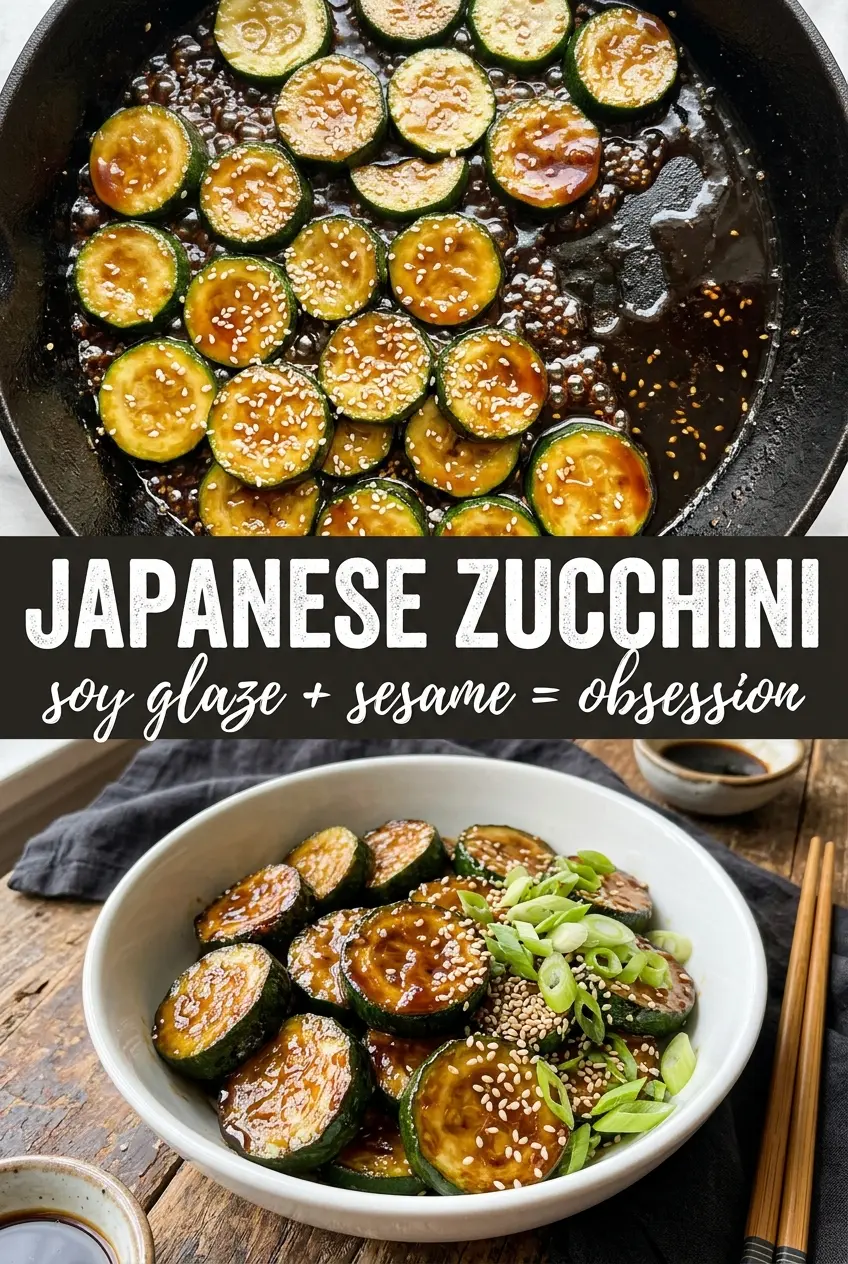
Japanese Zucchini
Ingredients
Equipment
Method
- Heat butter in a large skillet over medium-high heat until foamy, then season zucchini with salt and pepper.
- Add zucchini rounds in a single layer and cook undisturbed for 3 minutes, until deeply golden on the bottom.
- Flip and cook for 2 more minutes, until the second side is also golden.
- Add garlic and ginger and cook for 30 seconds, just until fragrant.
- Whisk soy sauce, mirin (or honey), and sesame oil together, then pour over the zucchini and toss to coat.
- Cook for 1–2 minutes until the glaze reduces and clings to every piece with a shiny look.
- Remove from heat, sprinkle with sesame seeds and green onions, and serve immediately.