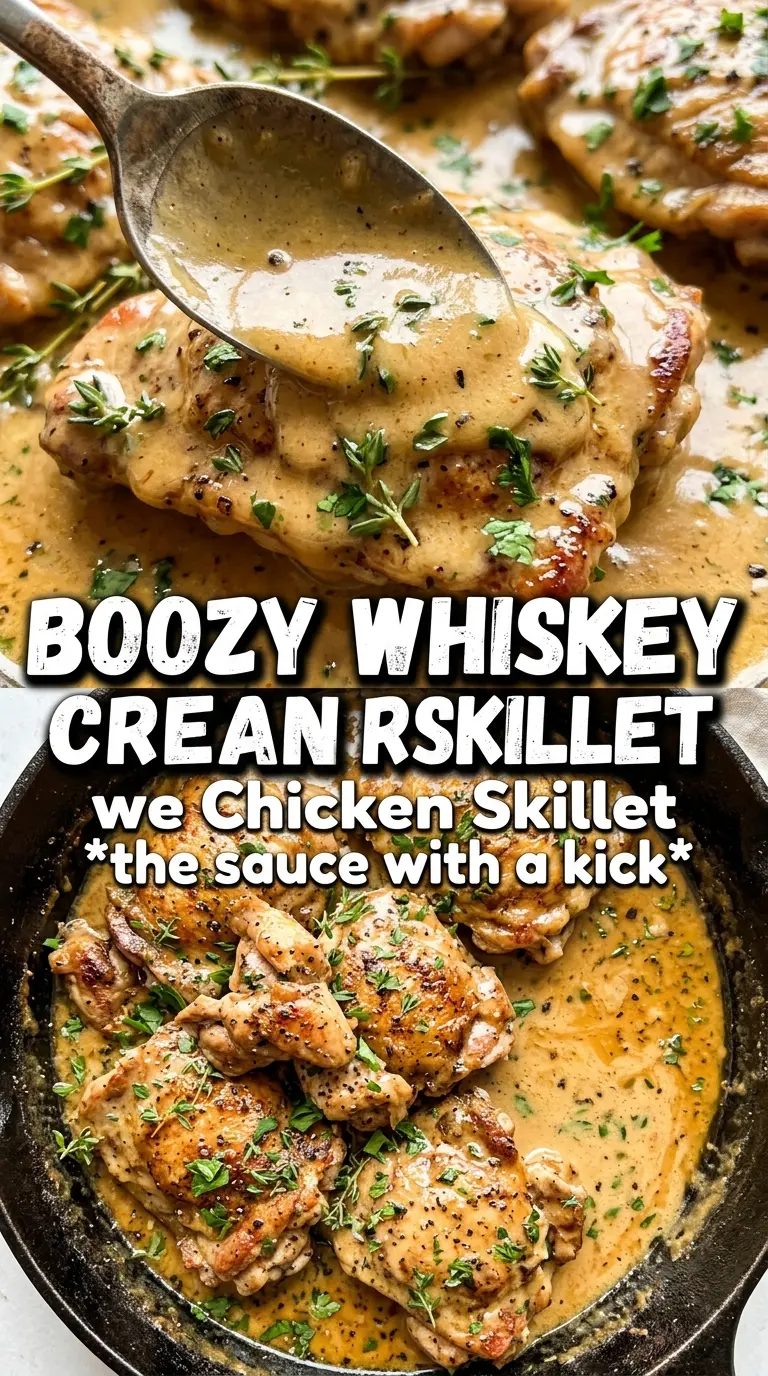
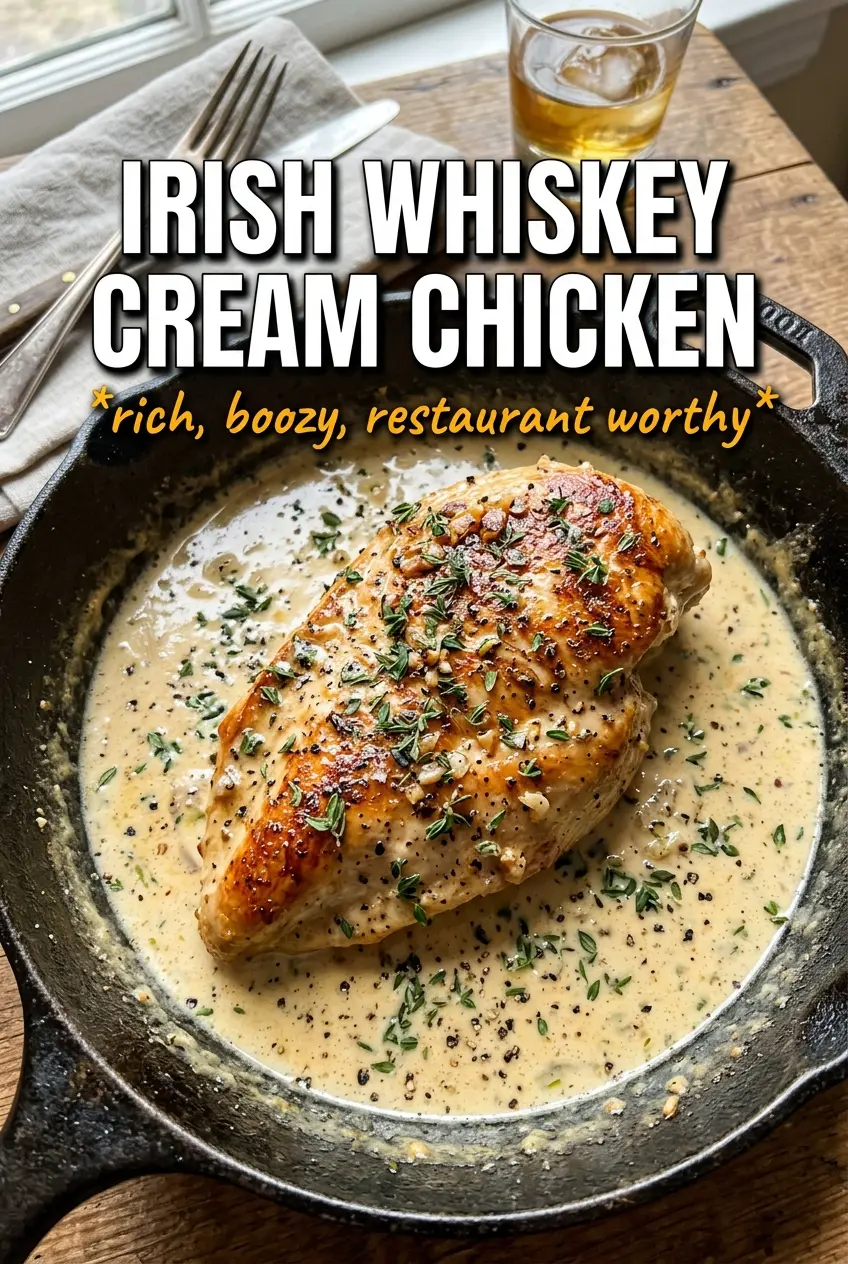
Golden seared chicken breasts finished in a whiskey cream sauce are the kind of dinner that looks restaurant-fancy but eats like comfort food. The chicken stays juicy, the mushrooms and shallots bring a deep savory base, and the sauce turns silky and amber without tasting heavy. What makes this version worth keeping is the balance: enough Irish whiskey to add warmth and character, enough cream to soften it, and enough Dijon to keep the whole pan from leaning flat.
The trick is building the sauce in the same skillet you used for the chicken. Those browned bits on the bottom are where the flavor lives, and the mushrooms need time to cook down before the liquid goes in. If you rush that part, the sauce can taste thin or watery instead of rich and glossy. I also like to add the whiskey off the heat first so it doesn’t flare up and so the alcohol cooks off cleanly before the cream goes in.
Below, you’ll find the timing that keeps the chicken tender, the one ingredient swap that still gives you a good sauce, and the reheating method that keeps the cream from separating.
The sauce thickened up beautifully and coated the chicken instead of pooling around it. I let the mushrooms get properly golden first, and that made all the difference.
Save this Irish Chicken in Whiskey Cream Sauce for a skillet dinner with seared chicken, mushrooms, and a glossy amber cream sauce.
The Step Most People Rush Before the Sauce Ever Starts
The biggest mistake in a whiskey cream sauce is treating the pan like a race. If the chicken doesn’t get a deep golden sear, you miss the fond that gives the sauce its backbone. If the mushrooms only steam, they dump water into the pan and the sauce takes longer to thicken, which is how you end up with a pale, thin finish instead of something that clings to the chicken.
This dish works because each layer gets a little time. The chicken cooks first and leaves flavor behind. The shallots and mushrooms cook in the same fat, then the whiskey goes in after the pan comes off the heat so it can bubble up safely before the cream and broth mellow everything out.
- Chicken breasts — Boneless, skinless breasts work best here because they sear quickly and slice cleanly under the sauce. If yours are thick, pound them to an even thickness so the centers finish when the outside is golden.
- Irish whiskey — This is the flavor that gives the sauce its warm edge. A standard bottle like Jameson is fine; don’t use a smoky whiskey, because it can overpower the cream and mushrooms.
- Heavy cream — This is what gives the sauce its body and keeps it from breaking when the whiskey is added. Half-and-half will work in a pinch, but it won’t thicken as smoothly and the sauce will feel lighter.
- Cremini mushrooms — These bring earthiness and help the sauce taste layered instead of just creamy. White button mushrooms work too, but they’re a little milder and less savory.
- Dijon mustard — Just enough to sharpen the sauce and keep the cream from tasting flat. It doesn’t make the sauce taste mustardy; it just gives the finish more shape.
What Each Ingredient Is Actually Doing in This Recipe
- Primary ingredient (the star) — Quality matters most. Choose the best you can find.
- Cooking medium (oil, butter, or broth) — This carries flavors and prevents dryness.
- Seasonings (salt, pepper, spices, herbs) — Layer flavors so nothing overpowers. Build depth gradually.
- Aromatics (garlic, onion, herbs) — Cook with fat to bloom flavors. Become the foundation.
- Supporting ingredients — Complement the main ingredient without overpowering it.
- Sauce or liquid (if applicable) — Brings flavors together. Balance richness with acid.
- Acid (lemon, vinegar, wine, or other) — Brightens and prevents flat-tasting results.
- Final finish (garnish, glaze, or sauce) — Prevents one-dimensional taste and adds visual appeal.
Building the Sauce in the Same Pan Without Breaking It
Getting the Chicken Properly Seared
Season the chicken well before it hits the pan so the surface has some help forming color. Heat the olive oil until it shimmers, then lay the chicken in and leave it alone long enough for the first side to turn deep gold. If you move it too early, it sticks and tears; if the heat is too low, it releases moisture and steams instead of searing. Pull it once it’s cooked through to 165°F, then set it aside on a plate so it stays juicy while you build the sauce.
Cooking the Mushrooms Until They Taste Concentrated
Melt the butter in the same skillet and add the shallots and mushrooms together. At first the pan may look crowded and wet, but keep going and the moisture will cook off, leaving the mushrooms browned at the edges and the shallots soft and sweet. That browning matters. If the pan still looks damp when you add the garlic, the garlic can’t fry properly and the sauce loses depth.
Adding the Whiskey the Safe Way
Take the skillet off the heat before pouring in the whiskey. It stops the pan from flaring and gives you a cleaner reduction. Once the whiskey is in, return the pan to medium heat and let it bubble for a minute or two so the sharp alcohol smell fades and what’s left tastes warm and rounded. You want the liquid reduced a touch, not boiled down to nothing.
Finishing With Cream and Pulling the Sauce Together
Stir in the cream, broth, Dijon, and thyme, then let the sauce simmer gently until it coats the back of a spoon. Gentle matters here. Hard boiling can make the cream look grainy or oily, especially if the heat is too high after the whiskey goes in. Return the chicken to the pan at the end and spoon the sauce over it so the meat warms through without overcooking.
Make it dairy-free with coconut cream
Use full-fat coconut cream in place of the heavy cream. The sauce will be a little sweeter and the whiskey will taste more pronounced, so keep the Dijon in the mix to balance it. It won’t taste traditional, but it does stay rich and spoonable.
Turn it into a gluten-free skillet dinner
This recipe is naturally gluten-free as written, as long as your chicken broth and Dijon mustard are certified gluten-free. That’s the only place a hidden thickener can sneak in.
Use chicken thighs for a richer result
Boneless thighs bring more flavor and stay forgiving if you’re nervous about overcooking. They take a few extra minutes to sear, but the sauce clings to them beautifully and the finished dish feels a little more rustic.
Make it for a crowd without losing the sauce
Double the sauce ingredients if you’re serving more than four people. The chicken can be seared in batches, but the sauce needs enough volume to simmer without evaporating too quickly, or it will reduce into something too salty and tight.
Storage and Reheating
- Refrigerator: Store leftovers in an airtight container for up to 3 days. The sauce may thicken as it chills, which is normal.
- Freezer: I don’t recommend freezing this one. Cream sauces can separate after thawing, and the mushrooms turn a little soft.
- Reheating: Warm it gently in a skillet over low heat with a splash of broth or cream. High heat is the thing that breaks the sauce, so keep it slow and stir often until the chicken is heated through.
Questions I Get Asked About This Recipe
Irish Chicken in Whiskey Cream Sauce
Ingredients
Equipment
Method
- Pat chicken breasts dry and season all over with salt, pepper, garlic powder, and dried thyme to taste.
- Heat olive oil in a large skillet over medium-high heat until shimmering, then add chicken and sear for 5-6 minutes per side until golden and cooked through to 165°F; remove to a plate.
- Melt butter in the same pan, then add shallots and cremini mushrooms and cook for 5-6 minutes until golden.
- Add minced garlic and cook for 1 minute, stirring to prevent burning.
- Remove the pan from the heat and carefully pour in Irish whiskey, then return to medium heat.
- Let the alcohol cook off for 1-2 minutes until the bubbling reduces.
- Stir in heavy cream, chicken broth, Dijon mustard, and fresh thyme leaves, then simmer for 5-6 minutes until the sauce thickens.
- Return chicken breasts to the pan and spoon whiskey cream sauce over each breast.
- Garnish with fresh thyme sprigs and serve while hot.