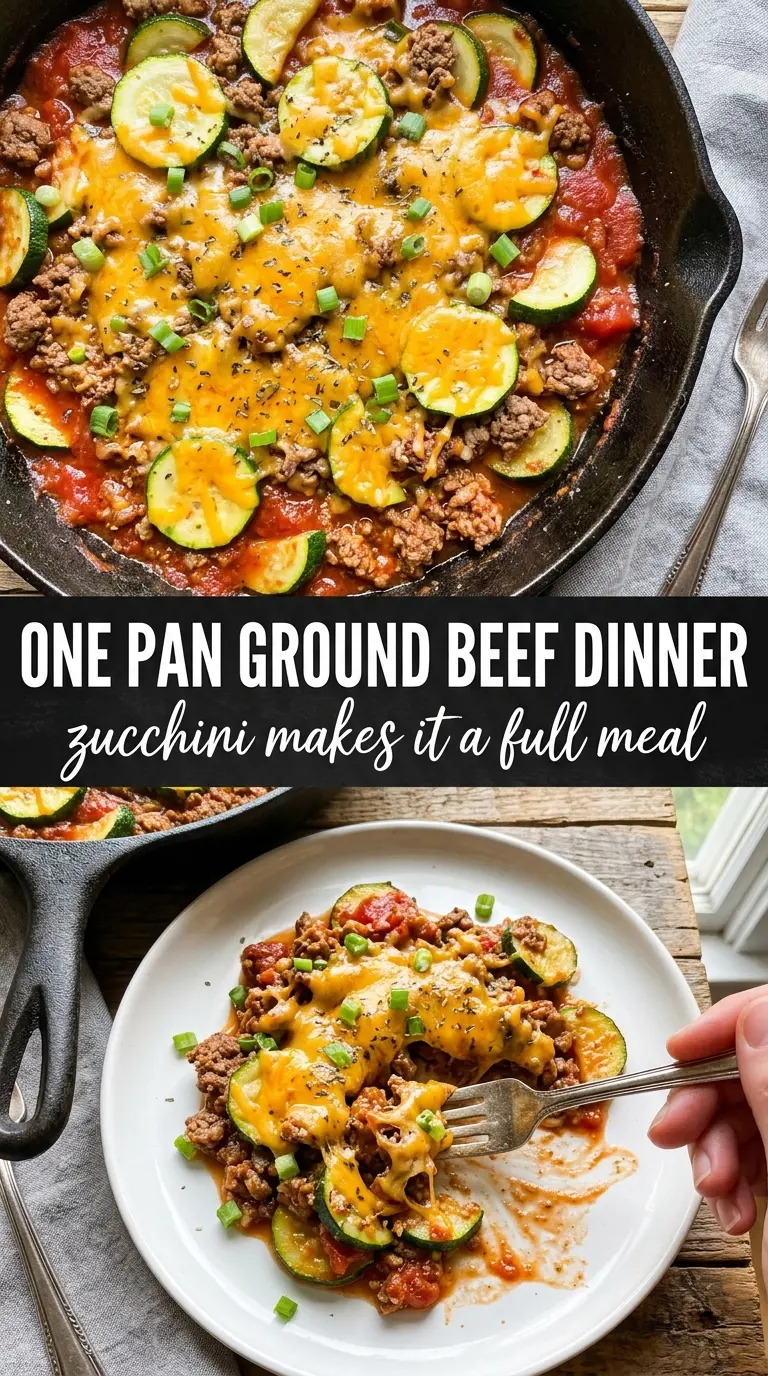
Golden zucchini coins, savory ground beef, and a tomato-herb sauce make this hamburger and zucchini skillet the kind of dinner that disappears fast. The zucchini stays tender without turning watery, the beef brings enough richness to carry the whole pan, and the melted cheddar on top ties everything together into a true one-skillet meal.
What makes this version work is the order. The beef, onion, and bell pepper cook first so the pan builds flavor before the zucchini goes in, and the tomatoes simmer uncovered just long enough to thicken instead of slipping into a soupy mess. Worcestershire adds depth without making the dish taste like a steak sauce shortcut, and the cheese melts best when the heat is low and the lid stays on just long enough to do its job.
Below, you’ll find the timing that keeps the zucchini from going mushy, the ingredient swaps that still give you a good skillet dinner, and a few practical answers for making it ahead or stretching it to feed more people.
The zucchini kept its shape and the sauce thickened right up, which never seems to happen when I make skillet meals. My husband went back for seconds and asked if I could put this on the weekly rotation.
Save this hamburger and zucchini skillet for a fast one-pan dinner with browned beef, tender zucchini, and melted cheddar.
The Trick to Keeping the Zucchini Tender Instead of Watery
Zucchini gives this skillet its bulk, but it also brings the one thing that can wreck the pan: excess moisture. If you add it too early or cover the skillet too soon, it steams into softness and waters down the sauce. The fix is simple. Let the beef mixture get seasoned first, then cook the zucchini uncovered so the liquid can cook off while the slices stay intact.
The diced tomatoes help create a built-in sauce, but they need room to reduce. Crowding the pan or rushing the final simmer leaves you with a loose skillet instead of a glossy, spoon-coating one. If your pan looks dry before the zucchini is tender, that’s a sign your heat is too high; lower it and let the vegetables release and reabsorb flavor at a steady pace.
What Each Ingredient Is Actually Doing in This Zucchini or Squash Dish
- Zucchini or squash (the star vegetable) — Fresh produce is best. Cut uniformly so pieces cook at the same rate.
- Oil or butter (the cooking medium) — This carries flavors and browses the vegetables. High-heat oil is essential.
- Seasonings (salt, pepper, spices, herbs) — Layer flavors boldly since zucchini is mild. Build depth gradually.
- Aromatics (garlic, onion, peppers) — Cook with fat to bloom flavors. They become the foundation of the dish.
- Cheese (if using) — This adds umami and richness. Fresh cheese melts better than pre-shredded.
- Optional protein (sausage, ground meat, or bacon) — This adds substance and richness. Cook until done before combining.
- Acid (vinegar, lemon, or tomato) — This brightens and prevents flat-tasting results.
- Fresh garnish (herbs, green onion, or cheese) — These add color and fresh flavor. Add right before serving.
What Each Ingredient Is Actually Doing in This Skillet
- Ground beef — This is the backbone of the dish, so use beef with enough fat for flavor. If you use very lean beef, the skillet can taste flat unless you season more aggressively and keep an eye on moisture.
- Zucchini — Slice it into coins so it softens evenly without collapsing. Bigger chunks stay firmer, while thin slices disappear into the sauce faster.
- Onion and green bell pepper — These build the savory base and keep the skillet from tasting one-note. Dice them small so they soften at the same rate as the beef browns.
- Diced tomatoes — They bring acidity and enough liquid to form the sauce. If you use fire-roasted tomatoes, you’ll get a deeper flavor without changing the method.
- Cheddar cheese — Sharp cheddar is worth it here because it stands up to the beef and tomatoes. Pre-shredded cheese works, but freshly shredded melts smoother and faster.
- Worcestershire sauce — This adds depth and a little savory punch that makes the beef taste fuller. There isn’t a clean substitute that gives the same result, but soy sauce can fill part of the gap in a pinch.
Building the Skillet in the Right Order
Brown the Beef First
Start with the ground beef, onion, and bell pepper in a large skillet over medium-high heat. Let the meat sit long enough to brown before stirring too often, because that browned surface is where the flavor comes from. Once the beef is cooked through, drain the fat if there’s more than a thin coating left in the pan. Too much grease keeps the zucchini from browning and makes the final dish feel heavy.
Wake Up the Garlic and Seasoning
Add the garlic, Italian seasoning, and Worcestershire sauce after the beef has browned. Garlic burns fast, so one minute is enough to lose the raw edge without turning bitter. You’ll smell the herbs bloom almost immediately, and that’s your cue to move on. If the pan is scorching hot at this stage, pull it off the burner for a few seconds before adding the garlic.
Cook the Zucchini Until It Just Gives
Stir in the zucchini and diced tomatoes, then season with salt and pepper. Keep the skillet uncovered and stir occasionally so the liquid can reduce instead of trapping steam. You’re looking for zucchini that’s tender at the edges but still holds its shape, with a sauce that clings to the beef instead of pooling at the bottom. If the tomatoes still look soupy after 10 minutes, give them a couple more minutes uncovered.
Finish with the Cheese and Serve Right Away
Scatter the cheddar over the top, cover the skillet, and let it sit just until melted. Don’t leave it on the heat too long or the cheese can turn greasy and separate. Finish with parsley for a little freshness, then serve straight from the skillet while the sauce is still glossy and the cheese is soft.
How to Adapt This Hamburger and Zucchini Skillet
Make It Dairy-Free
Leave off the cheddar or use a dairy-free shred that melts well. The skillet still works because the beef, tomatoes, and seasoning carry the flavor, but you’ll lose the creamy finish that makes the top layer feel complete.
Use Ground Turkey Instead of Beef
Ground turkey works well if you want a lighter skillet, but it needs a little help. Add an extra pinch of salt and don’t skip the Worcestershire, because turkey won’t bring the same deep savory flavor on its own.
Make It Low-Carb Without Changing the Dinner
This recipe is already naturally low in carbs, so the only thing to watch is the tomatoes. Use a no-sugar-added diced tomato if that matters for your diet, and keep the zucchini slices thick enough that they don’t break down into a soft mash.
Stretch It for More People
Add an extra zucchini and another half can of tomatoes if you want to serve more than four. That gives you a little more sauce without making the skillet taste diluted, but you may need an extra minute or two of uncovered simmering to get the texture back where it should be.
Storage and Reheating
- Refrigerator: Store leftovers in an airtight container for up to 4 days. The zucchini softens a bit, but the flavor stays good.
- Freezer: Freeze if you need to, though the zucchini will be softer after thawing. Pack it in a freezer-safe container for up to 2 months.
- Reheating: Reheat gently in a skillet over medium-low heat with a splash of water if the sauce has tightened up. The biggest mistake is blasting it in the microwave, which can make the cheese oily and the zucchini limp.
Answers to the Questions Worth Asking

Hamburger and Zucchini Skillet
Ingredients
Equipment
Method
- Brown ground beef with onion and bell pepper in a large skillet over medium-high heat, stirring often, until the beef is browned; drain fat.
- Add garlic, Italian seasoning, and Worcestershire sauce and cook for 1 minute, stirring until fragrant and evenly combined (about 1 minute, medium heat).
- Stir in zucchini and diced tomatoes, then season with salt and black pepper to taste; mix so the zucchini is coated in the sauce.
- Cook uncovered for 8–10 minutes over medium-high heat, stirring occasionally, until zucchini is tender and the sauce thickens slightly (watch for a glossy, reduced tomato base).
- Top with shredded cheddar cheese in an even layer so it covers the skillet; the cheese should sit on top of the hot sauce.
- Cover the skillet for 2 minutes over medium-high heat until the cheddar is melted and lightly bubbling at the edges (visual cue: cheese fully melted).
- Garnish with fresh parsley and serve directly from the skillet.