Greek potato salad lands with the kind of bright, salty, lemony bite that keeps people hovering near the bowl for “just one more spoonful.” The potatoes stay tender but intact, the feta softens into the dressing, and the olives bring enough briny punch to keep the whole dish from tasting heavy. It eats like a proper side dish, not a mayo-coated afterthought.
What makes this version work is the balance. Red potatoes hold their shape after boiling, so they soak up the dressing without collapsing. Lemon juice and red wine vinegar give the dressing lift, while the oregano and olive oil round it out. Chilling matters here, because the flavor settles in and the potatoes absorb everything instead of tasting separate from the dressing.
Below you’ll find the small details that make a big difference, from how long to cool the potatoes before dressing them to the best way to keep the feta from breaking apart too much. There are also a few smart swaps if you need to adjust the recipe without losing the Greek-style character.
The dressing soaked into the potatoes after chilling, and the feta stayed in little creamy crumbles instead of disappearing. I served it after two hours in the fridge and the flavors were spot on.
Save this Greek potato salad for the nights when you want something crisp, briny, and lemony without turning on the oven.
The Trick Is Cooling the Potatoes Before the Dressing Goes On
The biggest mistake with potato salad is dressing the potatoes while they’re still steaming hot. That can make the feta melt too much, soften the onions into mush, and water down the dressing before it has a chance to cling. Let the potatoes drain well, then cool them until they’re warm, not hot. They should still be able to take in flavor, but not so hot that they steam everything else in the bowl.
Red potatoes are the right choice because they hold their shape and give you clean, distinct pieces after tossing. You want cubes that are close in size so they finish cooking at the same time. If the potatoes are falling apart in the pot, they were boiled too hard or too long. Gentle simmering keeps the edges intact.
What Each Ingredient Is Actually Doing in This Dish
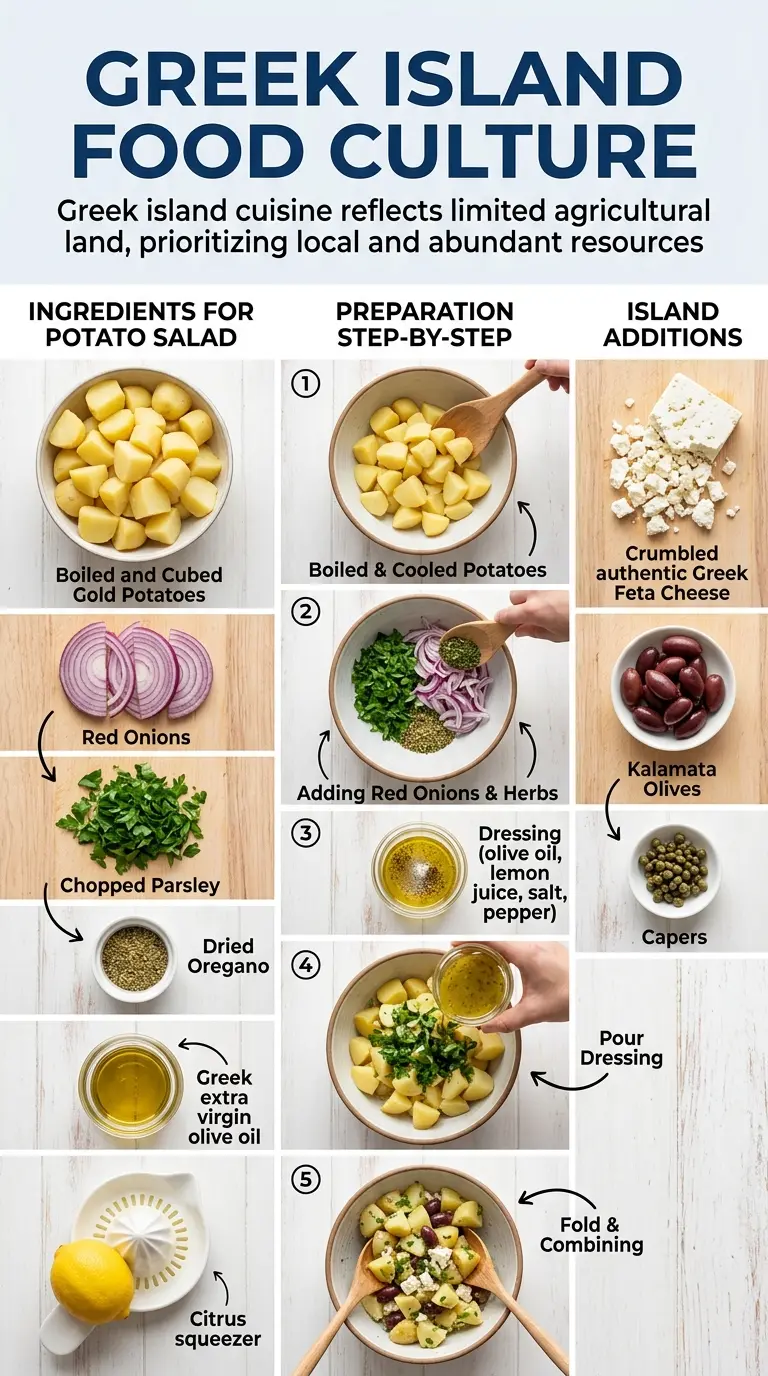
- Red potatoes — These are sturdy enough to hold together after boiling, which matters because this salad gets tossed with a sharp dressing and chilled. Yukon golds also work, but they soften a little more and give a creamier bite.
- Feta cheese — Use a block if you can and crumble it yourself. Pre-crumbled feta is drier and can taste more muted. The cheese adds salt and creaminess, and it should stay in visible pieces instead of dissolving into the dressing.
- Kalamata olives — These bring the briny depth that makes the salad taste Greek instead of just dressed potatoes. Black olives won’t give the same punch, so use them only if that’s what you have.
- Lemon juice and red wine vinegar — The lemon gives freshness, and the vinegar keeps the dressing from tasting flat. If you need to swap, use all lemon juice and add a little more salt to sharpen the flavor.
- Olive oil — This carries the oregano and rounds out the acidity. A good extra-virgin olive oil matters here because it’s one of the main flavors, not just a cooking fat.
- Fresh parsley — Add it at the end so it stays bright. Dried parsley won’t do the same job.
Building the Salad So It Tastes Better After the Chill
Boiling the Potatoes Evenly
Start the potatoes in salted water and boil them until a knife slips in without resistance, but the cubes still hold their edges. If you cook them past that point, they’ll break apart when you toss them with the dressing. Drain them well and let the steam escape for a few minutes so the dressing doesn’t slide off a wet surface.
Mixing the Dressing While the Potatoes Cool
Whisk the olive oil, lemon juice, vinegar, oregano, salt, and pepper in a small bowl until it looks slightly cloudy and unified. That little bit of emulsion helps the dressing coat the potatoes instead of pooling at the bottom. Taste it now, before it hits the salad, because once it chills the lemon will mellow.
Tossing Without Turning It to Mash
Add the potatoes, feta, olives, tomatoes, and red onion to a large bowl, then pour the dressing over the top. Fold it gently with a spatula instead of stirring hard. The goal is coated pieces with some structure left, not a crushed bowl of mixed fillings. Fold in the parsley at the end, then chill the salad for at least 2 hours so the flavors settle into the potatoes.
How to Adapt This for Different Tables and Dietary Needs
Make It Dairy-Free
Leave out the feta and add an extra handful of olives plus a little more salt. You lose the creamy-salty crumble, but the salad stays bright and satisfying, especially if you use a good olive oil and let it chill long enough to absorb the dressing.
Add Cucumbers for a More Salad-Like Bite
Seed and dice an English cucumber, then fold it in just before serving so it stays crisp. It lightens the texture, but it also adds water, so don’t mix it in too early or the dressing will thin out.
Swap the Tomatoes for Roasted Red Peppers
If your tomatoes aren’t great, use chopped roasted red peppers instead. They keep the sweet note without adding extra moisture, and they make the salad feel a little more savory and pantry-friendly.
Storage and Reheating
- Refrigerator: Keep covered for up to 3 days. The potatoes will absorb more dressing as it sits, so the salad tastes even bolder on day two.
- Freezer: Don’t freeze it. The potatoes turn grainy and the tomatoes and feta lose their texture.
- Reheating: This salad is meant to be served cold or cool from the fridge. If you want to take the chill off, let it sit at room temperature for 15 to 20 minutes. Microwaving changes the texture and makes the feta oily.
Answers to the Questions Worth Asking

Greek Potato Salad
Ingredients
Equipment
Method
- Bring a Dutch oven of salted water to a boil over high heat, then add the red potatoes and cook until tender, about 10–15 minutes. You should be able to pierce a cube easily with a fork.
- Drain the potatoes in a colander and spread them on a sheet pan to cool, about 10 minutes. The surface should look dry and steam should stop coming off.
- In a large mixing area, combine the cooled potatoes with the feta cheese, Kalamata olives, cherry tomatoes, and red onion. Toss until the add-ins are evenly distributed through the potatoes.
- Whisk the olive oil, lemon juice, red wine vinegar, dried oregano, salt, and pepper in a bowl until the dressing looks combined. The oregano should be suspended throughout, not clumped at the bottom.
- Pour the dressing over the potato mixture and toss gently to coat everything. Use a light hand so the tomatoes stay intact.
- Add the chopped parsley and toss once more to mix it through. The salad should look bright and speckled with green herbs.
- Refrigerate the salad for 2 hours before serving. It should be cold, lightly saucy, and the onions should taste mellow.