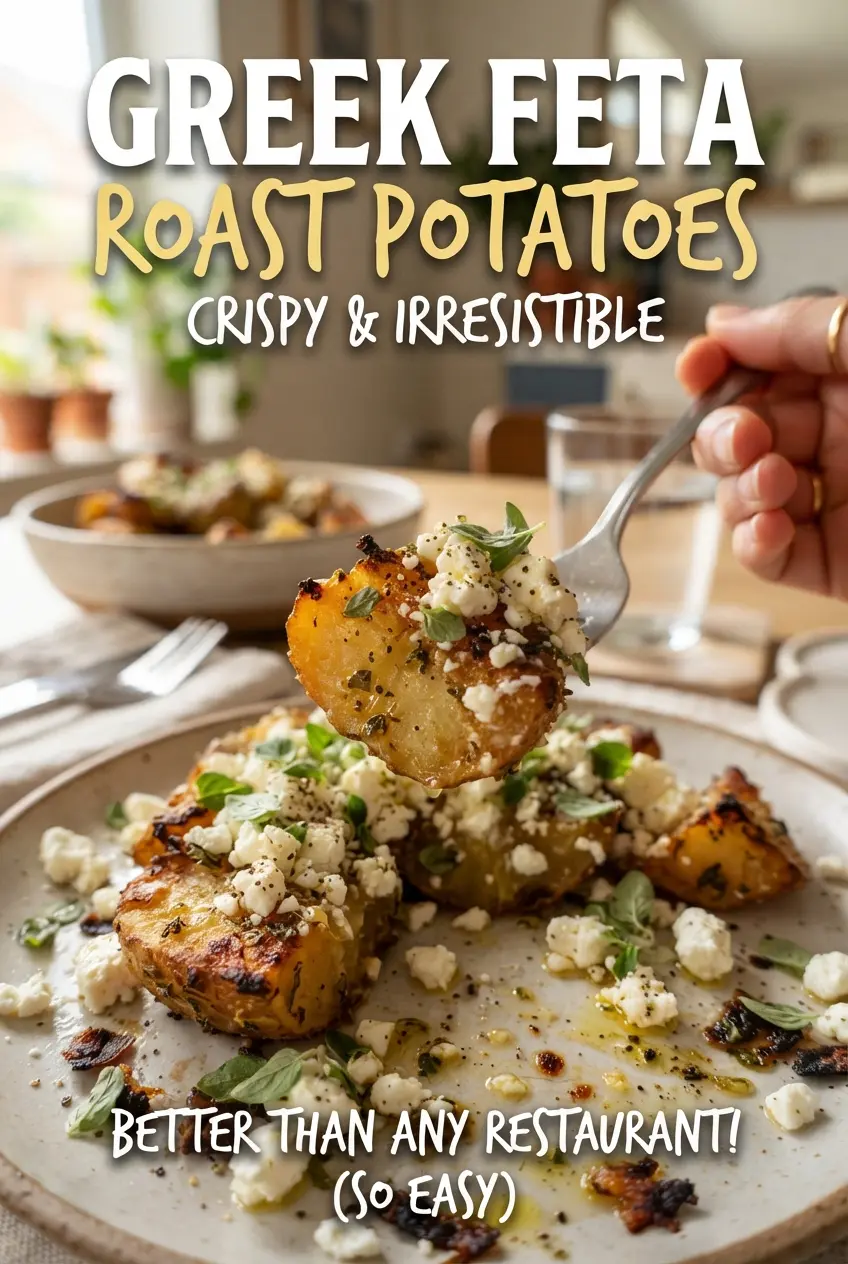
Crispy Greek feta roast potatoes hit that sweet spot between bright, savory, and deeply satisfying. The wedges roast up with browned edges and tender centers, then the lemony pan juices reduce into a glossy coating that clings to every piece. A final shower of feta and herbs gives each bite a salty, creamy finish that keeps you going back for one more forkful.
What makes this version work is the order of operations. The potatoes roast directly with lemon juice, broth, garlic, and oregano, so they absorb flavor while the liquid cooks off instead of steaming the potatoes at the start. Yukon golds hold their shape without turning waxy, and their buttery texture gives you a soft middle once the edges crisp. Feta goes on at the end, not during roasting, so it stays crumbly instead of melting away.
If you’ve ever had roast potatoes that came out soggy or bland, the notes below will help you avoid both problems. I’ve included the best pan choice, the one swap that keeps the flavor sharp if you’re out of lemon, and a few variations that still keep the Greek-style character intact.
The potatoes came out crisp on the edges and the lemon-garlic juices reduced instead of pooling, which made the whole pan taste amazing. I added the feta right at the end like you said and it stayed perfectly crumbly.
Like these Greek feta roast potatoes? Save them to Pinterest for the nights when you want crispy lemon-oregano wedges with feta and herbs.
The Trick to Crispy Roast Potatoes Is Letting the Liquid Disappear
The biggest mistake with roast potatoes like these is treating the pan like a sauce from the start. If too much liquid stays around while the potatoes are trying to brown, you get soft edges and a steamed texture instead of crisp wedges. Here, the lemon juice and broth season the potatoes early, then evaporate in the oven so the fat and dry heat can do the crisping.
Flipping halfway through matters more than it seems. It exposes a new side to the hot pan and keeps the potatoes from sticking in one wet layer. You’re looking for the moment when the liquid is gone, the bottoms are deeply golden, and the edges look slightly wrinkled and blistered.
- Don’t crowd the pan — a single layer gives the wedges space to roast instead of trap steam.
- Use a roasting pan or large metal baking dish — glass holds heat differently and can slow browning.
- Watch the last 10 minutes closely — once the liquid disappears, the potatoes can go from golden to too dark fast.
What Each Ingredient Is Actually Doing in This Dish

- Yukon gold potatoes — These give you creamy centers and hold their shape better than russets. If you swap them, use another waxy or all-purpose potato so the wedges don’t collapse before the edges crisp.
- Olive oil — This is what helps the potato surfaces brown once the liquid cooks off. A good everyday olive oil is fine here; save the expensive finishing oil for the table.
- Fresh lemon juice — Bottled lemon juice will work in a pinch, but fresh juice tastes sharper and cleaner once it reduces in the oven. It keeps the potatoes bright instead of flat.
- Chicken broth — This seasons the pan and gives the lemon something to mellow against. Vegetable broth works too, but keep it well seasoned so the potatoes don’t taste thin.
- Garlic and dried oregano — Garlic adds depth as it softens in the hot pan, and oregano gives the whole dish its Greek backbone. Dried oregano is the right call here; fresh oregano can get lost under the lemon.
- Feta — Add it after roasting so it stays crumbly and salty instead of melting into the pan. A block of feta crumbled by hand has a better texture than the pre-crumbled kind, which is often drier and coated to prevent sticking.
- Fresh dill or parsley — Dill leans more Greek and adds a cool, grassy finish. Parsley is the easier swap if that’s what you have, and it still keeps the top of the dish fresh.
How to Roast Them So the Edges Turn Crisp, Not Soft
Coating the Potatoes Evenly
Toss the wedges right in the roasting pan so every cut surface gets a thin coat of oil, lemon, broth, and seasonings. You want the potatoes slick but not swimming. If the pan looks flooded, they’ll braise longer than they roast, so use a large enough pan that the wedges sit in a shallow layer.
Roasting Until the Liquid Is Gone
Slide the pan into a hot 425F oven and leave it alone for the first half of cooking. The liquid should shrink down and the potatoes should start to turn golden at the edges. If there’s still a lot of liquid near the end, the pan is too crowded or the potatoes were cut too small, and you’ll need a few extra minutes for the moisture to cook off.
Flipping for Better Browning
Turn the wedges halfway through so the second side gets direct contact with the hot pan. Don’t rush this by stirring aggressively; rough handling can break the potatoes and smear the starch into the pan. A spatula slide and turn keeps the wedges intact and gives you those browned, crusty sides.
Finishing with Feta and Herbs
Scatter the feta and herbs over the potatoes as soon as they come out of the oven. The residual heat softens the cheese just enough without melting it into nothing. If you add the feta before roasting, it dries out and loses that salty, milky pop that makes the dish special.
Ways to Change This Without Losing the Greek Character
Dairy-Free Version
Leave off the feta and finish with extra dill or parsley plus a few chopped olives if you want more saltiness. You’ll lose the creamy-salty contrast, but the potatoes themselves stay bold and bright.
Vegetarian Swap
Use vegetable broth instead of chicken broth. Choose one with good seasoning, because this recipe depends on the pan liquid for flavor before it roasts away.
Extra Crispy Edges
After the liquid has mostly cooked off, let the potatoes go for 5 to 8 minutes longer until the bottoms look deeply browned. The tradeoff is a slightly more rustic finish, but you gain that crackly edge that holds up well next to the feta.
Storage and Reheating
- Refrigerator: Store leftovers in an airtight container for up to 4 days. The potatoes soften a bit, but the flavor holds up well.
- Freezer: These freeze poorly once roasted because the texture turns mealy after thawing. I don’t recommend freezing them.
- Reheating: Reheat on a sheet pan in a 400F oven until hot and the edges wake back up, usually 10 to 15 minutes. The microwave makes them soft and damp, so skip it if you want any crispness left.