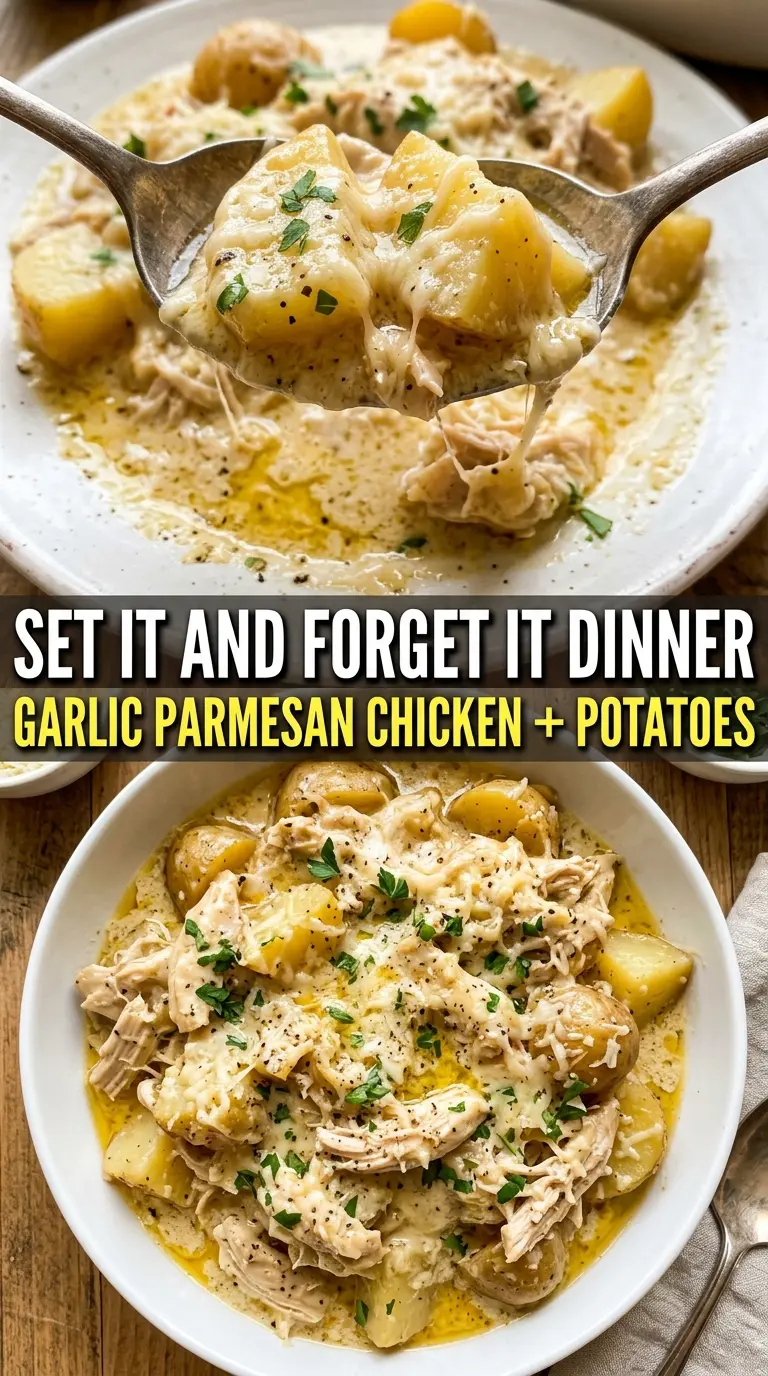
Fall-apart chicken thighs, tender baby potatoes, and a glossy garlic Parmesan sauce make this the kind of slow cooker dinner that earns repeat status fast. The chicken turns rich and savory as it cooks, and the potatoes soak up every bit of the buttery broth underneath them. By the time it’s done, the sauce clings to the chicken instead of pooling at the bottom, which is exactly what you want from a crockpot meal that’s meant to feel complete on its own.
Bone-in, skin-on thighs bring more flavor than boneless chicken ever could here, and the skin helps protect the meat during the long cook. The potatoes go in first so they sit in the broth and butter long enough to turn creamy inside, not dry or chalky. The real finish comes at the end: cream and Parmesan get stirred into the hot liquid after the chicken comes out, which keeps the sauce smooth instead of grainy.
Below, I’ve included the timing cues that matter most, what to swap if you need a shortcut, and the one reheating trick that keeps the sauce from breaking the next day.
The sauce thickened beautifully once I stirred in the Parmesan at the end, and the potatoes were buttery all the way through. My husband went back for seconds before I even got the parsley on top.
Save this Garlic Parmesan Crockpot Chicken and Potatoes for a set-and-forget dinner with creamy sauce and tender potatoes.
The Part That Keeps the Sauce Creamy Instead of Grainy
The biggest mistake with crockpot Parmesan sauces is rushing the dairy. If you add the cream and cheese too early, they sit in the slow cooker for hours and the sauce can turn greasy or gritty by the time dinner is ready. The better move is to let the chicken and potatoes cook in the broth, then stir in the cream and Parmesan at the end while the liquid is hot but not boiling.
That last-minute finish does two things at once: it thickens the liquid and keeps the cheese from seizing. It also gives you a better texture on the potatoes, because they stay intact instead of collapsing into the sauce. The result is a coating sauce, not a soup.
- Chicken thighs — Bone-in, skin-on thighs stay juicy through the long cook and bring the kind of richness lean chicken breasts can’t match. If you swap in breasts, use large ones and cut the cook time down or they’ll dry out.
- Baby potatoes — These hold their shape and turn creamy in the center without falling apart. Halving them helps them cook through evenly and gives the sauce more surface to cling to.
- Butter and broth — The broth keeps the potatoes from scorching on the bottom, while the butter gives the finished sauce body. You need both; broth alone tastes thin, and butter alone can turn heavy.
- Parmesan — Grated Parmesan melts into the sauce cleanly if it’s added off the heat or on the lowest setting. Pre-shredded cheese often has anti-caking starches that can make the sauce less smooth.
- Heavy cream — This is what turns the cooking liquid into an actual sauce. Half-and-half can work in a pinch, but it won’t give you the same velvety finish.
What Each Ingredient Is Actually Doing in This Recipe
- Primary ingredient (the star) — Quality matters most. Choose the best you can find.
- Cooking medium (oil, butter, or broth) — This carries flavors and prevents dryness.
- Seasonings (salt, pepper, spices, herbs) — Layer flavors so nothing overpowers. Build depth gradually.
- Aromatics (garlic, onion, herbs) — Cook with fat to bloom flavors. Become the foundation.
- Supporting ingredients — Complement the main ingredient without overpowering it.
- Sauce or liquid (if applicable) — Brings flavors together. Balance richness with acid.
- Acid (lemon, vinegar, wine, or other) — Brightens and prevents flat-tasting results.
- Final finish (garnish, glaze, or sauce) — Prevents one-dimensional taste and adds visual appeal.
How to Build the Slow Cooker in the Right Order
Season the Chicken First
Coat the chicken thighs generously with salt, pepper, garlic powder, onion powder, and Italian seasoning before they go into the slow cooker. That seasoning needs direct contact with the meat to matter. If you season only the liquid, the flavor stays diluted and the chicken tastes flat. The thighs should look evenly coated, not dusty.
Set the Potatoes Under the Chicken
Put the halved baby potatoes in the bottom so they sit in the broth and catch the butter and garlic as they melt. Scatter the minced garlic and butter over the potatoes, then pour in the broth. If the potatoes are piled too high or left too dry on top, they’ll cook unevenly. The chicken goes skin-side up over everything so the skin has a chance to stay intact.
Cook Until the Meat Gives Easily
Cover and cook on LOW for 6 to 7 hours or HIGH for 3 to 4 hours. The chicken is ready when it pulls apart easily with a fork and the potatoes are tender all the way through. If the potatoes are done but the chicken still feels tight, leave it covered for another 20 to 30 minutes; slow cookers vary more than people expect. Don’t keep lifting the lid, or you’ll stretch the cook time.
Finish the Sauce at the End
Move the chicken to a plate, then stir the cream and Parmesan into the hot liquid in the slow cooker. The sauce should turn smooth and glossy within a minute or two. If it looks broken at first, keep stirring gently and let the heat do the work. Put the chicken back in and spoon the sauce over every piece so the skin and potatoes both get coated.
Small Changes That Still Give You a Real Dinner
Use chicken breasts instead of thighs
Boneless chicken breasts work, but they need less time and more attention. Add them only if you can shorten the cook, because breasts dry out faster than thighs and don’t give the sauce the same depth.
Make it gluten-free without changing the texture
This recipe is naturally gluten-free as written, as long as your broth and Parmesan are certified gluten-free. That means you don’t need a thickener or flour to get a creamy sauce.
Go lighter with half-and-half
Half-and-half will work if that’s what you have, but the sauce will be a little thinner and less rich. Stir it in at the very end and keep the heat low so it doesn’t split.
Add vegetables without watering it down
Carrots or green beans can go in, but add them with enough structure to handle the cook time. Soft vegetables like zucchini won’t hold up and will turn the sauce loose.
Storage and Reheating
- Refrigerator: Store leftovers in an airtight container for up to 4 days. The sauce thickens as it chills, and the potatoes soften a bit more.
- Freezer: It freezes, but the cream sauce may separate slightly when thawed. For the best texture, freeze only if you don’t mind stirring it back together after reheating.
- Reheating: Warm gently on the stove or in the microwave at medium power with a splash of broth or cream. High heat is what makes the sauce break, so reheat slowly and stir between bursts.
Questions I Get Asked About This Recipe
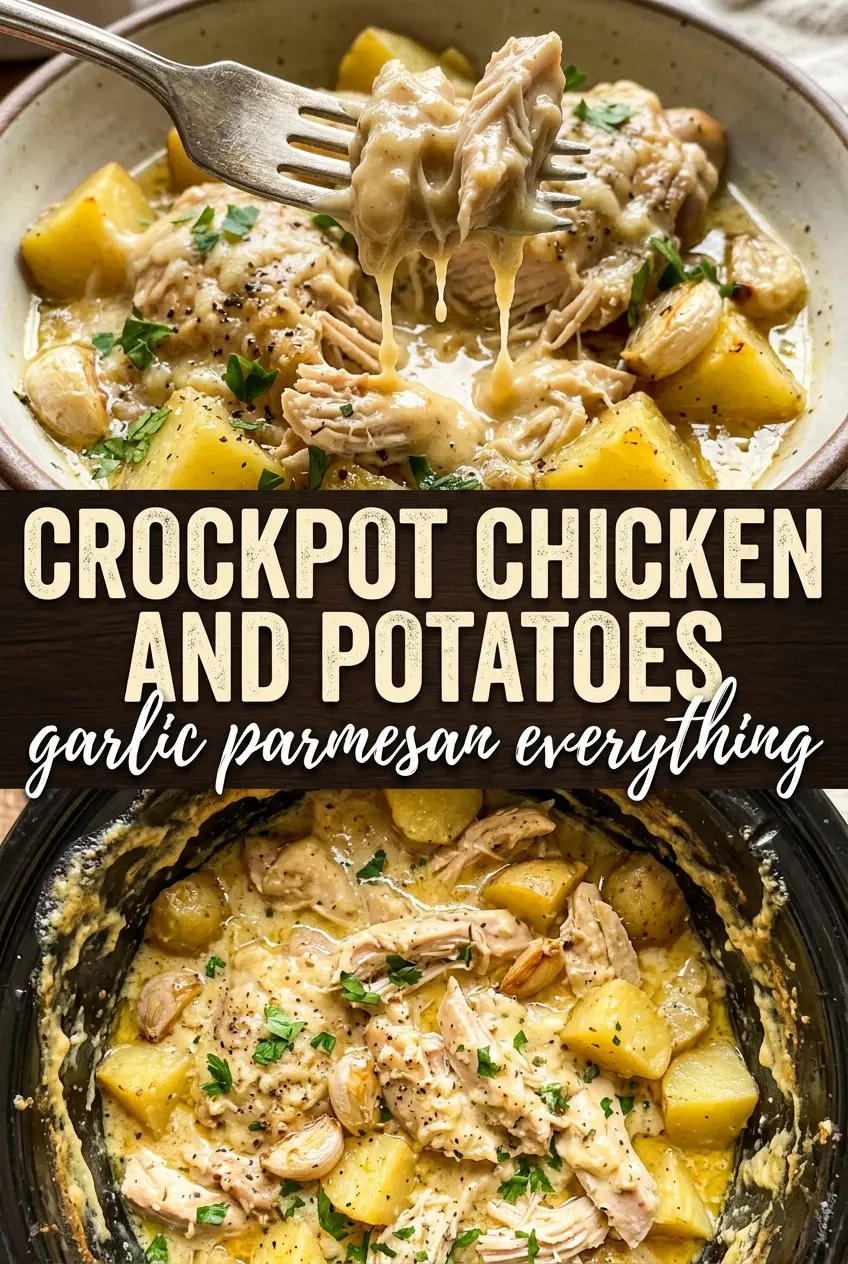
Garlic Parmesan Crockpot Chicken and Potatoes
Ingredients
Equipment
Method
- Season chicken thighs generously with salt, pepper, garlic powder, onion powder, and Italian seasoning. Make sure the seasoning is evenly applied so the flavor shows on every bite.
- Place halved baby potatoes in the bottom of the slow cooker. Scatter minced garlic and cubed butter over the potatoes for a creamy base.
- Pour chicken broth over the potatoes. Arrange the seasoned chicken thighs skin-side up on top so they steam and stay juicy.
- Cover and cook on LOW for 6-7 hours, until chicken and potatoes are tender. The chicken should look relaxed and the potatoes should be easily pierced.
- Alternatively, cover and cook on HIGH for 3-4 hours, until chicken and potatoes are tender. Look for soft potatoes and thighs that pull apart with light pressure.
- Transfer the chicken to a plate. Leave the cooking liquid in the slow cooker so you can thicken it into a glossy sauce.
- Stir heavy cream and grated Parmesan into the cooking liquid until a creamy sauce forms. Watch for a smooth, thickened look that coats the spoon.
- Return the chicken to the slow cooker and coat everything in the Parmesan sauce. Make sure the potatoes get covered too for maximum creamy coverage.
- Garnish with fresh parsley. Scatter it on top just before serving for a fresh green finish and visual contrast.