Garlic Parmesan chicken skewers come off the grill with charred edges, juicy centers, and a coating that tastes like the best parts of garlic bread and grilled chicken meeting on one stick. The Parmesan clings to the chicken as it cooks, the garlic softens just enough to turn sweet, and the finish of melted butter pulls everything together without drowning the grill flavor.
The trick is in the marinade and the order of the finish. A little lemon juice loosens the richness from the cheese, olive oil helps the chicken brown instead of drying out, and the chicken needs that short marinating time to pick up flavor without getting mushy. Grilling over medium-high heat gives you color fast, which matters because these pieces cook quickly and you want the outside to pick up those caramelized spots before the inside overcooks.
Below, I’ll show you how to keep the cheese from scorching, why the skewer size matters, and what to change if you want to make these on a grill pan or broiler instead.
The chicken stayed juicy and the Parmesan formed that crisp, golden crust on the grill instead of falling off. I was nervous about the garlic burning, but it turned sweet and the lemon butter at the end made it taste restaurant-worthy.
Save these garlic Parmesan chicken skewers for the nights when you want juicy grilled chicken with a cheesy crust and almost no cleanup.
The Part That Keeps the Parmesan From Burning Off
Parmesan on grilled chicken can go one of two ways: a savory crust, or a dry, bitter layer that falls into the grates. The difference is heat control and when the cheese gets the chance to melt into the surface. Here, most of the Parmesan goes into the marinade, where it clings to the oil and garlic and starts seasoning the chicken from the outside in. The rest gets added after grilling, when the skewers are hot enough to soften it but not so hot that it scorches.
Another detail that matters: the chicken pieces need to be cut evenly. If some cubes are much larger than others, the small ones dry out before the bigger ones are done. Keep them around 1.5 inches so they cook at the same pace and stay juicy under that salty, garlicky crust.
What Each Ingredient Is Actually Doing Here

- Chicken breasts — Breasts give you a clean, lean base that picks up the marinade fast and grills beautifully in skewer form. Chicken thighs work too if you want a little more richness, but they’ll need a minute or two longer and won’t firm up quite the same way on the stick.
- Olive oil — This carries the garlic and herbs across the chicken and helps the surface brown instead of sticking to the grill. A good everyday olive oil is fine here; save the fancy finishing bottle for the table.
- Garlic — Fresh minced garlic gives these skewers their backbone. Garlic powder won’t give you the same sweet, roasted edge after grilling, and jarred minced garlic can taste duller, so fresh is worth it here.
- Parmesan — Freshly grated Parmesan melts into the marinade and leaves those salty little browned bits on the chicken. Pre-shredded cheese usually has anti-caking agents, which makes it less willing to melt and cling.
- Lemon juice — The acid wakes everything up and keeps the cheese and butter from tasting heavy. Don’t add much more than this unless you want the chicken texture to start changing before it hits the grill.
- Italian seasoning and basil — These add the herb note that makes the skewers taste finished, not just garlicky. If your Italian seasoning is old and dusty, it’ll taste flat, so check the jar before you start.
- Butter — The melted butter goes on at the end, not before grilling, because it gives you shine and richness without causing flare-ups. It also helps the remaining Parmesan stick to the hot chicken.
Getting the Grill Marks Before the Cheese Gets Bitter
Building the Marinade
Whisk the olive oil, garlic, Parmesan, lemon juice, herbs, salt, and pepper until the mixture looks thick and loose rather than separated. The cheese won’t dissolve completely, and that’s fine; it should coat the chicken in a rough, savory paste. Toss the chicken until every piece is lightly covered, then let it sit for 30 minutes. Much longer and the lemon starts working too hard on the surface, which can turn the texture soft instead of juicy.
Threading the Skewers
If you’re using wooden skewers, soak them long enough that they don’t dry out and scorch on the grill. Thread the chicken with a little space between pieces so the heat can move around them instead of steaming the sides that touch. Packed-together skewers stay pale in spots and take longer to cook through, which is how the outside ends up overdone before the center is safe.
Grilling to a Deep Golden Finish
Oil the grates, then lay the skewers down and leave them alone long enough to get color. If they stick when you try to turn them, they’re not ready to flip yet. Cook over medium-high heat until the edges are deeply golden and the center reaches 165°F, usually 4 to 6 minutes per side depending on the size of your cubes and your grill. Pull them off as soon as they hit temp; chicken breasts go dry fast once they’re overcooked.
Finishing While the Chicken Is Hot
Drizzle the melted butter over the skewers as soon as they come off the grill, then scatter the remaining Parmesan on top. The heat from the chicken helps the cheese melt into the surface and cling instead of sliding off. Finish with parsley and lemon wedges. That last hit of fresh lemon keeps the buttery coating from tasting heavy.
Three Ways to Adjust These Skewers Without Losing What Makes Them Good
Make it gluten-free without changing the method
This recipe is naturally gluten-free as written, so there’s nothing tricky to swap. Just check your seasoning blends if you’re using a store-bought Italian seasoning mix, since a few brands add anti-caking agents or fillers.
Use chicken thighs for a richer, juicier bite
Boneless skinless thighs bring more fat and stay tender even if your grill runs hot, which makes them forgiving. They’ll taste a little deeper and less lean than breasts, and they may need a couple more minutes on the grill because they’re usually a bit thicker.
Swap the grill for a broiler on a busy night
Set the skewers on a foil-lined sheet pan and broil them close to the heat source, turning once for even color. You’ll still get browning and caramelized edges, but the smoky grill note will be lighter and you’ll need to watch closely because the cheese can go from golden to bitter fast under a broiler.
Add a little heat without overpowering the garlic
A pinch of red pepper flakes in the marinade gives the skewers a gentle back-of-the-throat heat. Keep it light, because the garlic and Parmesan already bring plenty of flavor, and too much heat will crowd out the buttery finish.
Storage and Reheating
- Refrigerator: Store leftovers in an airtight container for up to 3 days. The coating softens a little as it sits, but the flavor holds up well.
- Freezer: These freeze well after cooking. Freeze the cooled skewers in a single layer, then transfer to a freezer bag for up to 2 months.
- Reheating: Reheat in a 350°F oven or air fryer until warmed through. The biggest mistake is blasting them in the microwave, which turns the chicken rubbery and dulls the Parmesan crust.
Answers to the Questions Worth Asking
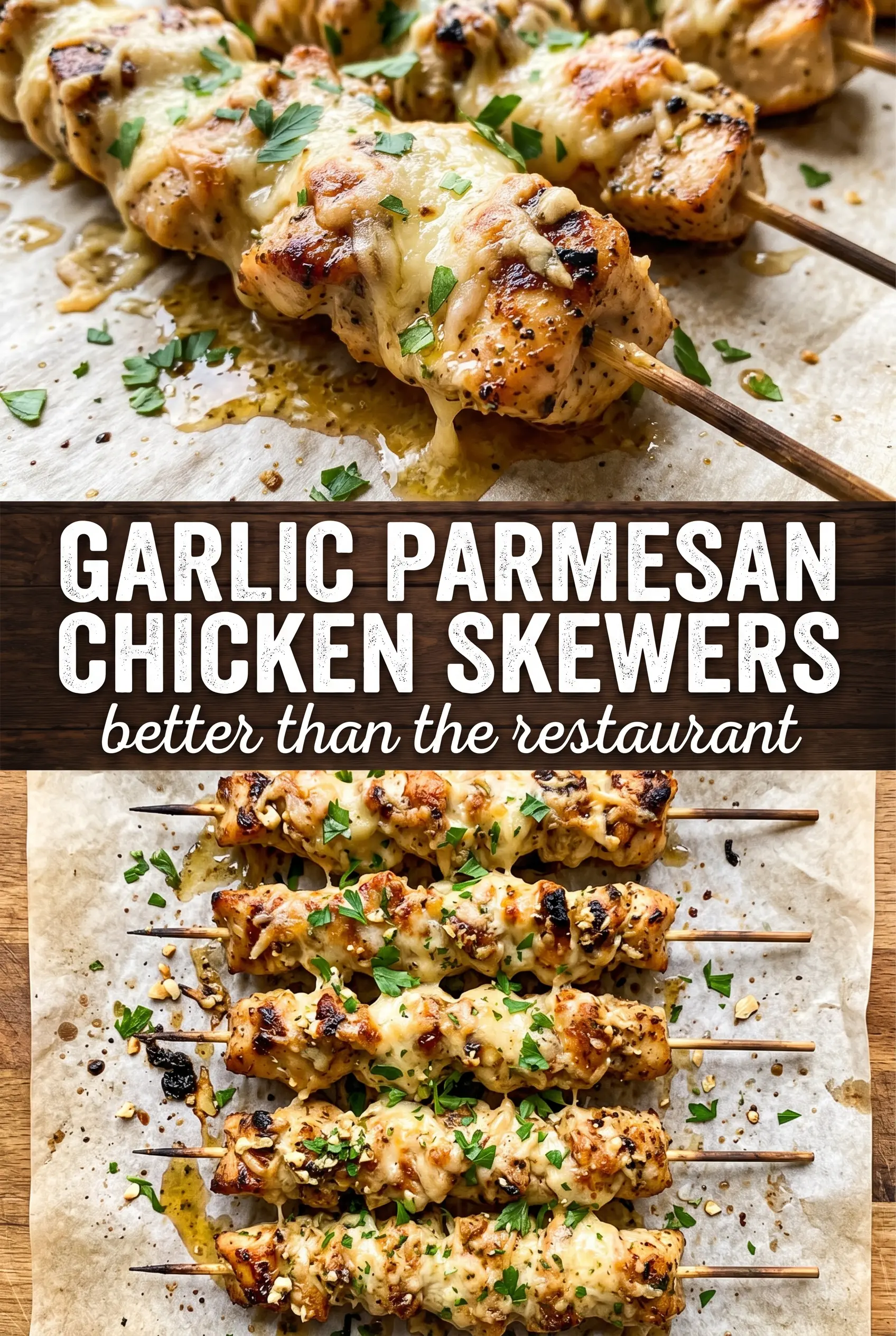
Garlic Parmesan Chicken Skewers
Ingredients
Equipment
Method
- Whisk olive oil, minced garlic, 1/4 cup Parmesan, lemon juice, Italian seasoning, dried basil, salt, and cracked black pepper until combined. Add chicken cubes and toss to coat evenly.
- Cover and marinate for 30 minutes so the chicken absorbs the garlic-Parmesan flavor.
- Soak wooden skewers in water for 30 minutes to help prevent burning.
- Thread the marinated chicken onto the skewers, leaving small gaps for even grilling.
- Preheat the grill to medium-high heat and lightly oil the grates.
- Grill the skewers for 4-6 minutes per side, until deeply golden with visible char marks and the internal temperature reaches 165°F.
- Remove the skewers from the grill and drizzle with melted butter while hot.
- Scatter the remaining Parmesan over the hot skewers so it melts into a crust-like layer.
- Garnish with fresh parsley and serve with lemon wedges.