Golden garlic butter chicken thighs over creamy Parmesan rice hit that rare sweet spot where the pan sauce, the rice, and the chicken all taste like they were made for each other. The chicken stays juicy from a hard sear and a quick finish, while the rice soaks up every bit of the buttery garlic drippings and turns rich without getting heavy. It’s the kind of skillet dinner that feels comfort-driven but still looks like you put real thought into it.
What makes this version work is the order. The chicken sears first, then the same pan builds the rice base so none of that browned flavor gets left behind. The garlic only cooks for a minute before the liquid goes in, which keeps it fragrant instead of bitter, and the Parmesan gets stirred in at the end so the rice turns creamy instead of clumpy. That last detail matters more than people think.
Below, I’ll walk through the one pan move that gives the chicken its color, the best way to keep the rice soft and saucy, and a few smart swaps if you need to stretch what’s in the pantry.
The chicken got this deep golden crust and the rice came out creamy without being mushy. I loved that the garlic stayed mellow and didn’t overpower the Parmesan.
Save this garlic butter chicken with Parmesan rice for the nights when you want one skillet, a glossy pan sauce, and dinner on the table fast.
The Pan Sauce Starts With the Chicken Fond, Not the Butter
Most skillet chicken dinners go flat because the pan gets wiped clean before the rice starts. Don’t do that here. The browned bits left behind after searing the thighs are the backbone of the whole dish, and the butter plus garlic loosen them into the rice instead of throwing that flavor away.
The other mistake is rushing the sear. If the chicken sticks the second it hits the pan, leave it alone for another minute or two; it’ll release when the crust sets. Pull it once it reaches 165°F and let it rest while the rice cooks so the juices stay in the meat instead of running out the second you cut in.
- Chicken thighs — Thighs stay juicier than breasts in a dish like this and tolerate the longer cook time without drying out. If you use chicken breasts, pound them to an even thickness and watch the clock closely.
- Long-grain white rice — This is the best rice for keeping separate grains under a creamy finish. Short-grain rice gets too soft here, and brown rice needs a different liquid ratio and much more time.
- Parmesan — Freshly grated Parmesan melts into the rice smoothly and gives you that savory finish. Pre-grated cheese can work, but it won’t melt as cleanly and may make the rice grainy.
- Heavy cream — This is what turns the rice from garlicky and buttery into silky. Half-and-half can work in a pinch, but the sauce will be thinner and a little less lush.
What Each Ingredient Is Actually Doing in This Recipe

- Primary ingredient (the star) — Quality matters most. Choose the best you can find.
- Cooking medium (oil, butter, or broth) — This carries flavors and prevents dryness.
- Seasonings (salt, pepper, spices, herbs) — Layer flavors so nothing overpowers. Build depth gradually.
- Aromatics (garlic, onion, herbs) — Cook with fat to bloom flavors. Become the foundation.
- Supporting ingredients — Complement the main ingredient without overpowering it.
- Sauce or liquid (if applicable) — Brings flavors together. Balance richness with acid.
- Acid (lemon, vinegar, wine, or other) — Brightens and prevents flat-tasting results.
- Final finish (garnish, glaze, or sauce) — Prevents one-dimensional taste and adds visual appeal.
Getting the Rice Creamy Without Turning It Gluey
Seasoned chicken, rice, and cream all want attention at different times, and that’s where this dish can go sideways if you rush. The chicken needs a real sear first, the rice needs a brief toast in the butter and garlic, and the Parmesan goes in at the end so it melts into the hot rice instead of clumping at the bottom of the pan. If your rice ever turns gummy, it’s usually because it was stirred too much while cooking or the lid came off too early.
Building the Crust on the Chicken
Season the thighs all over, then lay them into hot oil and leave them alone until the underside turns deep gold. A good sear should sound steady, not frantic, and the meat should release without tearing when the crust is ready. If the heat is too low, the chicken steams and you lose that browned flavor that carries through the whole skillet.
Toasting the Garlic and Rice
After the chicken comes out, add the butter and garlic and keep the garlic moving for about a minute until it smells sharp and sweet. Add the rice next and stir it through the butter so every grain gets coated before the broth goes in. That quick toast gives the rice a little structure, which helps it stay creamy instead of collapsing.
Finishing the Rice and Bringing It Together
Once the broth comes to a boil, cover the pan and drop the heat low enough that you hear only the faintest simmer. Lift the lid too often and the rice cooks unevenly because the steam escapes. When it’s tender, stir in the Parmesan, cream, and thyme until the texture loosens into a saucy finish, then nestle the chicken back in so it warms through without overcooking.
What to Change When You Need a Different Version of the Same Skillet Dinner
Use chicken breasts instead of thighs
Chicken breasts work, but they dry out faster, so pound them to an even thickness and start checking temperature early. You’ll lose a little richness, but the rice still carries the dish.
Make it dairy-free
Use a plant-based butter and a creamy unsweetened oat or cashew product instead of the heavy cream, then skip the Parmesan or use a dairy-free Parmesan-style alternative. The dish will be a little less savory and less glossy, but it still works as a one-pan chicken and rice dinner.
Swap the rice for what you have
Jasmine rice will stay soft and aromatic, while arborio rice makes the whole pan even creamier. Brown rice isn’t a straight swap because it needs more liquid and a longer simmer, so the chicken timing would need to change too.
Add vegetables without watering it down
Stir in a handful of baby spinach at the end or sauté mushrooms after the chicken comes out. Wet vegetables added too early can throw off the broth ratio and leave the rice looser than you want.
Storage and Reheating
- Refrigerator: Store leftovers in an airtight container for up to 3 days. The rice thickens as it sits, so expect it to set up a little more.
- Freezer: It freezes, but the cream in the rice can separate slightly when thawed. For best texture, freeze the chicken and rice together only if you don’t mind a softer finish.
- Reheating: Reheat gently on the stove or in the microwave with a splash of broth or water. High heat dries out the chicken and turns the rice stiff before the center warms through.
Answers to the Questions Worth Asking
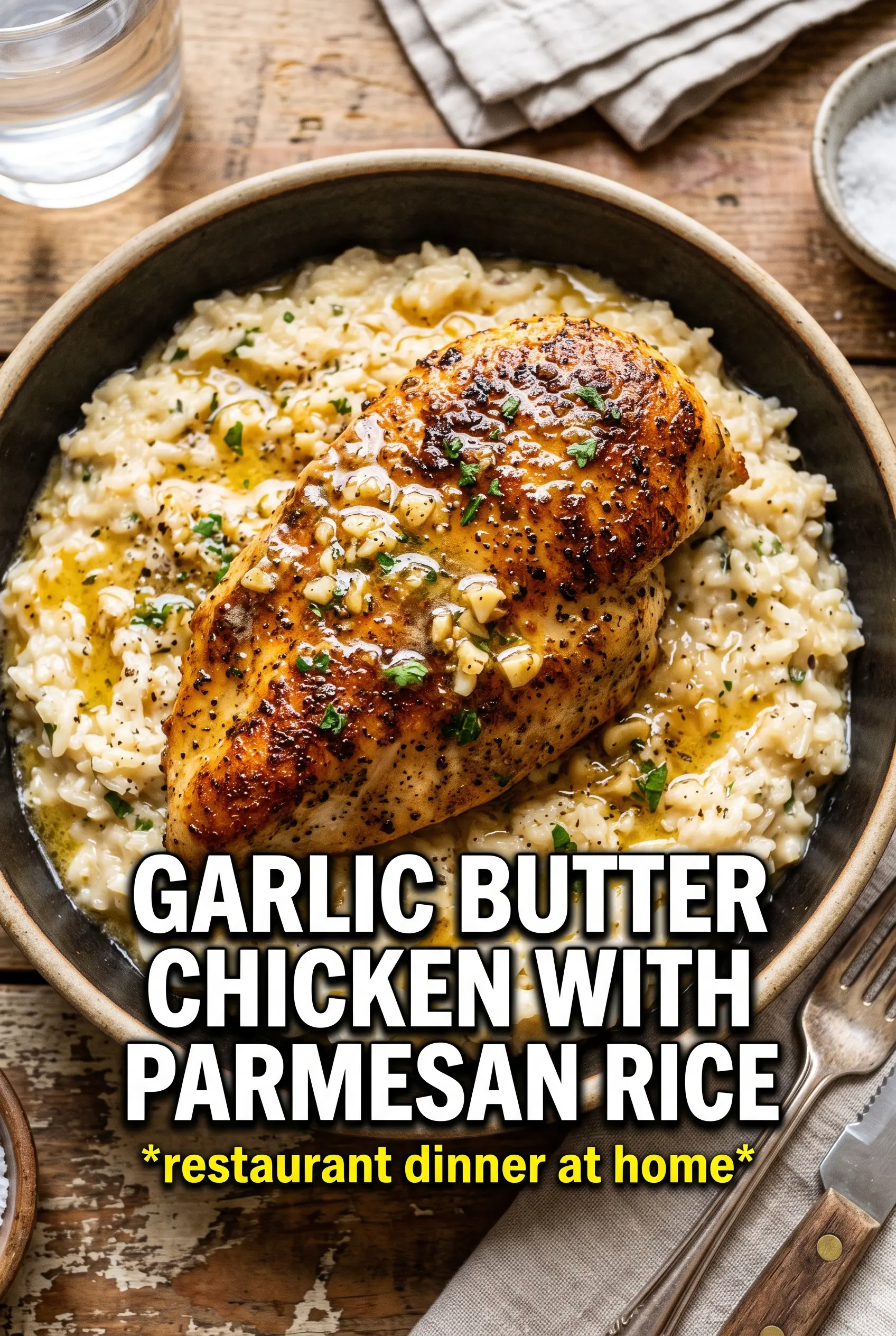
Garlic Butter Chicken with Parmesan Rice
Ingredients
Equipment
Method
- Season the chicken thighs with salt, pepper, garlic powder, and smoked paprika to taste. Heat olive oil in a large skillet over medium-high heat until shimmering, then sear the chicken for 5-6 minutes per side until golden and cooked through to 165°F, and remove to a plate.
- Melt butter in the same skillet over medium heat. Cook minced garlic for 1 minute, then add long-grain white rice and toast for 2 minutes, stirring to coat and lightly toast.
- Pour in chicken broth and bring it to a boil over high heat. Cover, reduce to low, and simmer for 18 minutes until the rice is tender.
- Stir in Parmesan cheese, heavy cream, and dried thyme until the rice becomes creamy and saucy. Return the seared chicken thighs to the pan, nestling them into the Parmesan rice.
- Garnish with fresh parsley and serve immediately, spooning creamy rice around the chicken for a rich finish.