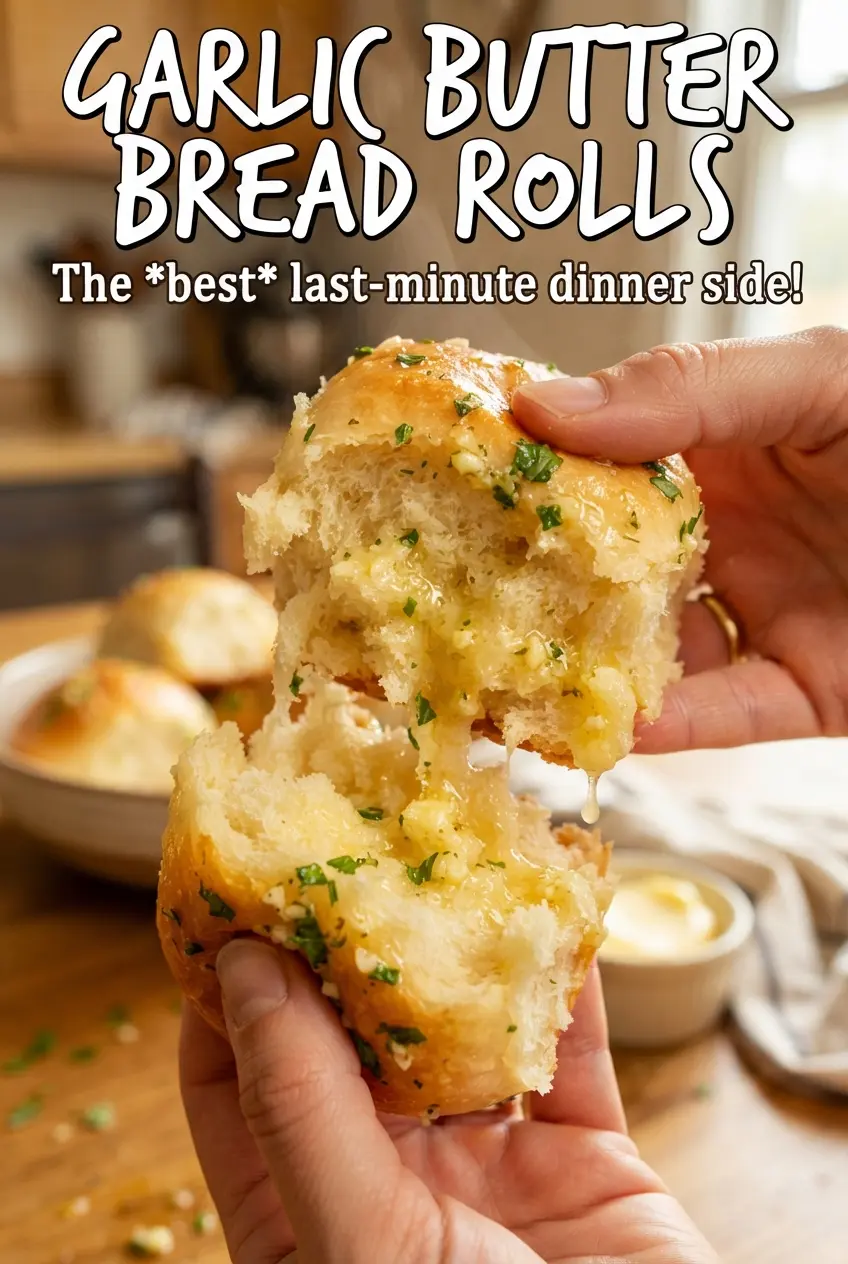
Garlic butter bread rolls come out soft, pull-apart tender, and shiny with melted butter that soaks into every crack and seam. The tops bake up golden, the centers stay fluffy, and the garlic parsley butter hits the rolls while they’re still hot enough to drink it in. That’s what makes them disappear fast.
The dough is simple, but the timing matters. Warm milk wakes up the yeast without rushing it, and the first rise gives the rolls enough structure to bake up light instead of dense. I also like baking them close together in a 9×13-inch pan, because that crowding helps them rise upward and keeps the sides soft.
Below, I’ll walk through the small choices that keep the dough smooth and the topping bold. There’s also a smart way to judge when the rolls are ready for the oven, which matters more than the clock once your kitchen is warm.
The rolls baked up light and fluffy, and the garlic butter soaked into the tops without making them greasy. I loved that the edges stayed soft since they were packed in the pan.
Save these garlic butter bread rolls for the next pasta night, holiday spread, or dinner when you want a soft, pull-apart side with real garlic flavor.
The Reason These Rolls Stay Soft Instead of Drying Out
The biggest mistake with dinner rolls is baking them as loose balls on a sheet pan and expecting the same tender texture you get from a pan-baked roll. Space matters here. Nestling the dough balls into a greased 9×13-inch pan lets them rise into each other, which protects the sides from overbrowning and keeps the crumb soft all around.
The second place people go wrong is adding too much flour during kneading. This dough should feel smooth and slightly tacky before the first rise. If it turns stiff and dry early on, the baked rolls will eat that way too. Stop kneading when the dough is elastic and springs back slowly when pressed.
- Instant yeast — It moves fast and gives dependable rise without needing to be proofed separately. If you only have active dry yeast, bloom it in the warm milk with the sugar for a few extra minutes before mixing the dough.
- Warm milk — Milk adds tenderness and a richer crumb than water would. Keep it around 110F; anything hot enough to feel uncomfortable on your finger can slow or kill the yeast.
- Butter in the dough and on top — The butter inside the dough keeps the rolls soft, while the butter brushed on after baking carries the garlic and parsley into the surface. Don’t swap the finishing butter for oil if you want the same glossy, savory finish.
What Each Ingredient Is Actually Doing in These Garlic Butter Rolls

- All-purpose flour — This gives you enough structure for the rolls to hold their shape without becoming chewy. Bread flour works too, but the rolls will be a little firmer and less tender.
- Sugar — It feeds the yeast and lightly softens the crumb. You don’t taste sweetness in the finished rolls, but it helps them brown and rise more evenly.
- Garlic and parsley — Fresh garlic gives the topping its sharp, savory punch, and parsley keeps it from tasting heavy. Garlic powder can work in a pinch, but it won’t taste as bright or fresh.
- Flaky sea salt — That last sprinkle gives the tops a little crunch and makes the butter taste deeper. Fine salt dissolves too fast and won’t give the same finish.
Building the Dough and Topping Them While They’re Hot
Waking Up the Yeast
Whisk the warm milk, yeast, and sugar together and wait until the surface looks foamy. That foam tells you the yeast is alive and active. If the mixture stays flat after five minutes, the milk was probably too hot or the yeast is old, and the rolls won’t rise properly.
Kneading to the Right Texture
Add the egg, melted butter, salt, and flour, then knead until the dough turns smooth and elastic, about 6 to 8 minutes. It should feel soft and a little tacky, but not sticky enough to smear all over your hands. If you keep adding flour just to clean up the bowl, the rolls will bake up heavy instead of pillowy.
Shaping and Second Rise
Divide the dough into 12 even pieces and roll them into tight balls before arranging them in a greased 9×13-inch pan. Tight shaping helps them rise upward instead of spreading sideways. During the second rise, they should look puffy and touch each other slightly; if they still look small and tight, give them more time before baking.
Baking and Buttering
Bake until the tops are deeply golden and the rolls sound a little hollow when tapped. The moment they come out, stir together the melted butter, garlic, and parsley, then brush it on generously while the rolls are still hot. That’s when the butter sinks in instead of sliding off, which is what makes the tops taste like garlic bread.
Make Them Cheese-Topped
Add a light sprinkle of finely grated Parmesan over the rolls during the last 3 minutes of baking, or right after the garlic butter goes on. The cheese adds a salty, nutty edge and gives the tops a little extra crust. Keep it light so the rolls still stay soft and pull apart cleanly.
Dairy-Free Version
Use an unsweetened non-dairy milk and a plant-based butter that melts well. The rolls will still rise and bake up soft, but the flavor will be a little less rich and the topping won’t have quite the same silky finish. Choose a non-dairy milk without a strong coconut flavor so it doesn’t compete with the garlic.
Freezer-Friendly Make Ahead
Bake the rolls, cool them completely, and freeze them in a sealed bag. Thaw at room temperature, then warm them in a low oven and brush with a little fresh garlic butter if you want that just-baked finish back. Freezing before baking is trickier here because the dough can overproof if the timing gets off.
Storage and Reheating
- Refrigerator: Store in an airtight container for up to 3 days. The rolls will lose a little softness in the fridge, but the texture comes back once they’re warmed.
- Freezer: Freeze baked rolls for up to 2 months. Wrap them well so they don’t dry out, and thaw before reheating for the best texture.
- Reheating: Warm covered in a 300F oven for 8 to 10 minutes. Don’t use high heat or the tops will dry out before the centers heat through.
Answers to the Questions Worth Asking
Garlic Butter Bread Rolls
Ingredients
Equipment
Method
- Whisk warm milk, instant yeast, and sugar, then let sit 5 minutes until foamy. Look for bubbles across the surface before you continue.
- Add the large egg, melted butter, salt, and all-purpose flour, then knead 6-8 minutes until smooth and elastic. The dough should feel stretchy and cohesive.
- Cover the dough and let rise 1 hour until doubled in size. It should look puffy and lighter when pressed gently.
- Divide into 12 balls, place in a greased 9x13-inch pan, cover, and rise 30 minutes until puffy. The rolls should expand and touch slightly in the pan.
- Preheat the oven to 375F, then bake the rolls 18-20 minutes until golden brown. Watch for an even color and set tops.
- Stir melted butter with garlic and parsley, then brush generously over the hot rolls. Use a heavy hand so the tops look glossy as the butter melts in.
- Sprinkle flaky sea salt over the garlic butter, then serve warm. Finish with a visible flecked crust on top.