Garlic butter baked chicken breast comes out with a glossy, savory coating and tender slices that stay juicy instead of drying out in the oven. The butter pools around the chicken, picks up the garlic and herbs, and turns into the kind of pan sauce you’ll want to spoon over everything on the plate.
The trick is simple: season the chicken first, then pour the garlic herb butter over the top so it can baste as it bakes. A hot oven helps the outside pick up color fast, while the butter and a short rest keep the meat from turning stringy. Lemon at the end sharpens the richness and keeps the whole dish from tasting heavy.
Below, I’ll walk through the one baking step that matters most, why fresh herbs make a difference here, and a few easy ways to adapt this dinner when you need to work with what’s in the kitchen.
The butter sauce turned out silky and clung to the chicken instead of sliding off, and the breasts stayed juicy all the way through. I basted at the halfway point like you said and the garlic didn’t burn at all.
Save this garlic butter baked chicken breast for nights when you want juicy chicken, a golden herb butter glaze, and one pan to clean.
The Mistake That Dries Out Baked Chicken Breast
Chicken breast gets blamed for being boring, but most of the time the problem is the oven treatment, not the meat. If you bake it uncovered without enough fat, it loses moisture fast and the surface turns chalky before the center is done. The garlic butter in this recipe changes that by coating the chicken early, which helps the exterior cook more evenly and gives the drippings something worth saving.
The other piece that matters is temperature. A hot oven gives the chicken a head start on color, but it also means you need to pay attention near the end instead of walking away for the full timer. Pull it when the thickest part hits 165°F, then let it rest so the juices settle back into the meat instead of running across the cutting board.
What the Garlic, Herbs, and Lemon Each Bring to the Pan

- Chicken breasts — Use evenly sized pieces so they finish at the same time. If one breast is much thicker than the others, pound the thick end lightly or slice it open a bit so the whole batch bakes evenly instead of giving you one dry piece and three perfect ones.
- Butter — This is the base of the pan sauce and the reason the chicken stays glossy in the oven. Salted or unsalted both work; just taste the pan juices at the end and adjust if you used salted butter plus a heavy hand with seasoning.
- Garlic — Fresh minced garlic gives the dish its backbone. Jarred garlic works in a pinch, but it tastes flatter and can turn harsh faster in the oven, so fresh is worth it here.
- Parsley, thyme, and rosemary — These herbs give the butter enough lift to taste savory instead of just rich. If you need one swap, use Italian seasoning for the dried version, but add a little less because dried herbs concentrate as they bake.
- Lemon juice — A small amount cuts through the butter and keeps the sauce from feeling heavy. Fresh lemon matters more than bottled here because you want bright acidity, not a flat citrus note.
Getting the Butter Baste to Coat Instead of Burn
Season the Chicken First
Start by coating both sides of the chicken with salt, pepper, garlic powder, and smoked paprika. This gives the meat flavor all the way through, not just on the surface. If you skip this step and rely only on the butter, the seasoning stays on top and the chicken tastes underdone even when it’s fully cooked.
Build the Herb Butter
Melt the butter and stir in the garlic, parsley, thyme, rosemary, and lemon juice. The goal is a loose, fragrant mixture that looks speckled with herbs, not a thick paste. If the butter sits for too long and starts to firm up, warm it just enough to pour again so it can spread across the chicken evenly.
Bake and Baste at the Right Moment
Pour the butter over the chicken, then bake at 425°F. Halfway through, spoon the pan juices back over the top so the garlic and herbs stay in motion instead of drying out on the surface. If the garlic on top starts browning too fast, the oven is a touch hot for your baking dish, so pull the pan a few minutes early and lean on the thermometer rather than the clock.
Rest Before Serving
Let the chicken sit for five minutes before cutting into it. That short rest makes a bigger difference than people expect because the juices redistribute and the slices hold together instead of flooding the plate. Spoon the pan butter over the top right before serving, then finish with lemon wedges so each bite can have a fresh squeeze.
Ways to Adjust This Chicken Without Losing the Good Part
Use chicken thighs for a richer result
Boneless skinless thighs work well if you want darker, juicier meat with a little more forgiveness in the oven. They usually need a few extra minutes, but the butter sauce behaves the same way and the herbs still come through clearly.
Make it dairy-free
Use a good plant-based butter that melts cleanly and has a neutral flavor. The chicken will still brown, but the sauce will taste a little less rich and a bit more delicate, so don’t skip the lemon at the end.
Swap in dried herbs when fresh isn’t available
Use about one-third the amount of dried thyme and rosemary because dried herbs are more concentrated. The flavor will be a little less bright and a bit more rustic, which still works nicely in the butter as long as you don’t overdo it.
Storage and Reheating
- Refrigerator: Store in an airtight container for up to 4 days. The butter will firm up, but the chicken stays moist if it wasn’t overcooked the first time.
- Freezer: Freeze the cooked chicken for up to 2 months, wrapped well with a little of the pan juices. The texture is best when thawed overnight in the refrigerator before reheating.
- Reheating: Warm gently in a covered skillet over low heat or in a 300°F oven with a spoonful of the pan juices. High heat is the mistake here; it tightens the meat and pushes out the moisture you worked to keep.
Questions I Get Asked About This Recipe
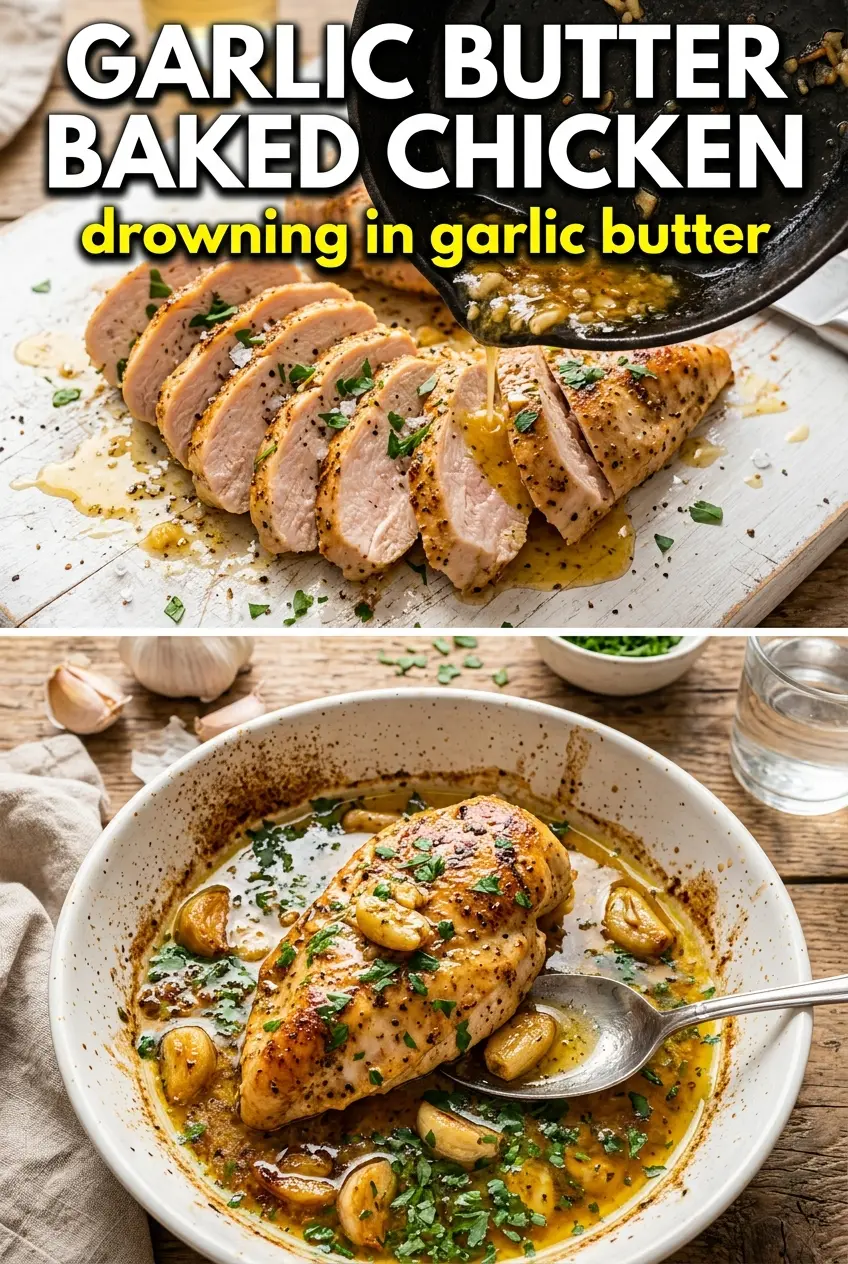
Garlic Butter Baked Chicken Breast
Ingredients
Equipment
Method
- Preheat the oven to 425°F and lightly grease a baking dish.
- Season the chicken breasts on both sides with salt, pepper, garlic powder, and smoked paprika.
- Melt the butter and stir in the garlic, parsley, thyme, rosemary, and lemon juice until combined.
- Place the chicken in the prepared dish and pour the garlic herb butter over each breast, coating thoroughly.
- Bake for 20-25 minutes, basting with the pan juices once at the halfway point, until the internal temperature reaches 165°F.
- Rest the chicken for 5 minutes.
- Serve with the pan juices spooned over and lemon wedges alongside.