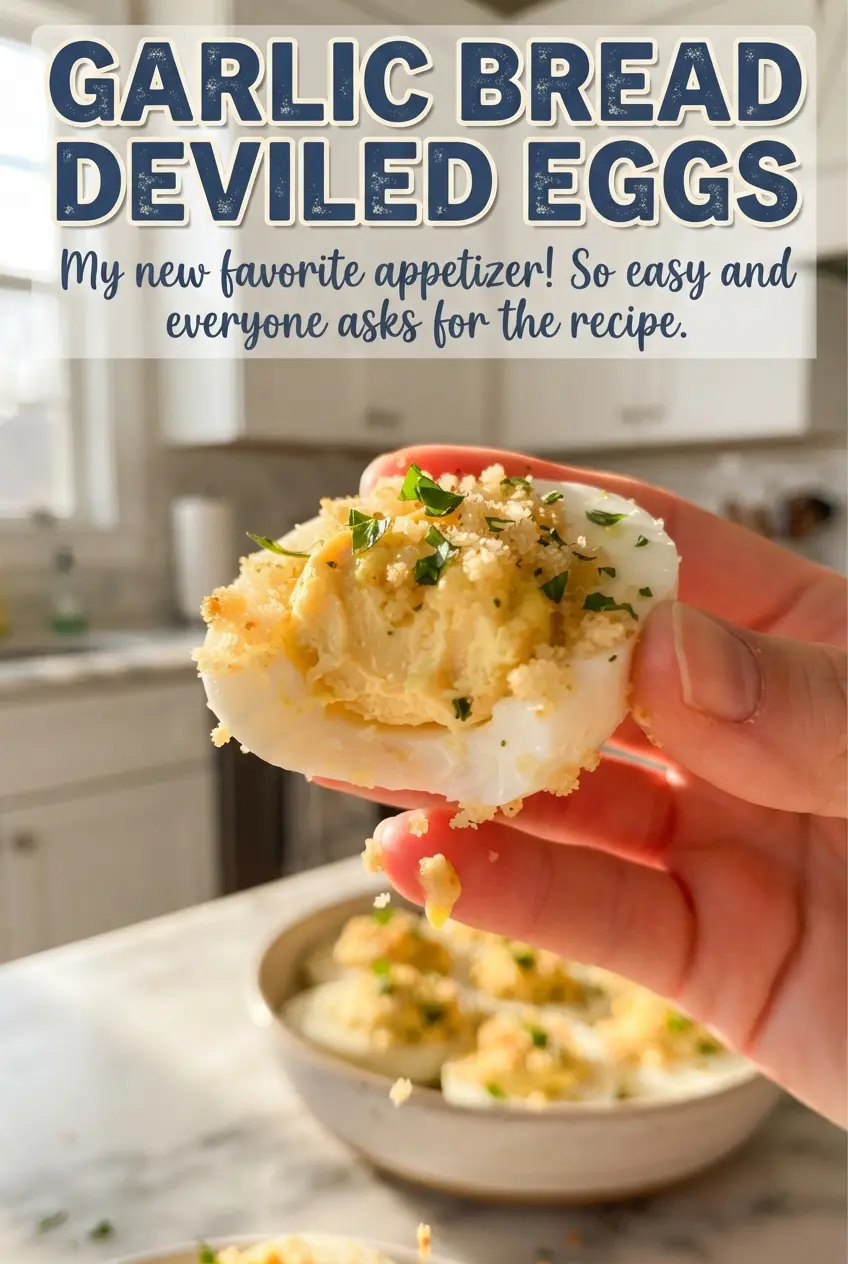
Garlic Bread Deviled Eggs bring the best parts of garlic bread into one of the easiest party appetizers on the table. You get creamy yolk filling, a sharp hit of Parmesan, and that buttery garlic breadcrumb topping that stays crisp for just long enough to disappear fast. They taste familiar in the best way, but the crunch on top gives them a little extra edge that keeps people reaching for another one.
The key is treating the breadcrumb topping like its own little garnish, not something you throw on early and hope for the best. The garlic cooks just long enough to lose its raw bite, the panko turns deeply golden, and the parsley goes in at the end so it stays bright. In the filling, grated garlic blends more cleanly than minced, which keeps the yolks smooth instead of stringy or harsh.
Below, I’ll walk through the part that matters most: how to keep the eggs easy to peel, how to make the filling silky, and when to add the topping so it still has that garlic bread crunch when the platter hits the table.
The filling was smooth and the garlic breadcrumb topping stayed crunchy until the last deviled egg was gone. I added the crumbs right before serving like you said, and it made a huge difference.
Save these Garlic Bread Deviled Eggs for the appetizer tray when you want a creamy filling and crunchy Parmesan-garlic topping.
Why the Garlic Butter Crumb Topping Has to Go on Last
The mistake with deviled eggs like these is building everything too early. Once the panko sits on the moist filling, it softens fast and loses the whole point of adding it. The topping needs to be hot, golden, and dry when it hits the eggs, then served before the steam has time to work on it.
The other thing that matters is balance. Garlic bread flavor comes from butter, garlic, and toastiness, but if you push the garlic too hard, the topping turns sharp instead of savory. Thirty seconds in the butter is enough for the minced garlic to perfume the crumbs without burning.
- Panko breadcrumbs — These are worth using because they toast light and crisp instead of dense. Regular breadcrumbs work in a pinch, but they won’t give you the same airy crunch.
- Butter — This carries the garlic flavor and helps the crumbs brown evenly. Salted or unsalted both work; if you use salted butter, keep the filling seasoning modest.
- Parsley — Add it after the crumbs come off the heat so it stays green and fresh. Dried parsley won’t give you the same lift, but it’s acceptable if that’s what you have.
- Grated garlic in the filling — This disappears into the yolks better than chopped garlic and keeps every bite smooth. If raw garlic hits you too hard, grate half a clove first and taste before adding the rest.
What Each Ingredient Is Actually Doing in These Eggs

- Eggs — Older eggs peel a little more easily than brand-new ones, which matters here because the whites need to stay smooth for a neat platter. If your eggs are very fresh, an ice bath and a longer chill help.
- Mayonnaise — This is what makes the yolk mixture creamy enough to pipe. If you swap in all yogurt, the filling turns looser and tangier; half mayo, half Greek yogurt is the best compromise.
- Parmesan — It adds salt, body, and that savory cheese note that makes the filling taste like garlic bread rather than plain deviled eggs. Finely grated Parmesan blends best; coarse shreds can leave the filling grainy.
- Dijon mustard — This sharpens the yolks and keeps the filling from tasting flat. It doesn’t read as mustardy, but it cuts through the richness.
- Garlic — Grated garlic goes into the filling, minced garlic goes into the buttered crumbs, and that split is what makes the flavor layered instead of harsh. Use a microplane if you want the smoothest result.
Getting the Filling Smooth and the Topping Crisp
Boiling the Eggs Cleanly
Start the eggs in cold water, bring them up to a boil, then cover and pull the pot off the heat. That gentle finish keeps the whites tender and makes the yolks cook through without getting chalky green edges. The eggs need a full chill before peeling; if you rush that part, the shells cling and tear up the whites.
Making the Yolk Mixture Silky
Mash the yolks first, then work in the mayo, Parmesan, Dijon, grated garlic, and salt until the mixture looks smooth and spreadable. If it feels stiff, add a little more mayonnaise, not water, because water weakens the flavor and can make the filling slide around inside the whites. Taste before piping; the cheese adds salt, and the filling should taste a little more seasoned than you expect on its own.
Toasting the Garlic Crumbs
Melt the butter, add the minced garlic, and stir for about 30 seconds until fragrant. The second the garlic starts to color, add the panko and keep it moving so the crumbs toast evenly instead of burning in patches. When they turn golden and smell nutty, pull them off the heat and stir in the parsley.
Finishing the Platter
Pipe or spoon the filling into the egg whites, then spoon the crumbs over the top right before serving. The extra Parmesan goes on last so it clings to the warm crumbs and adds a salty finish. If the eggs sit for a while after topping, the crumbs soften, so hold that final step until the end.
How to Adapt These for Different Crowds and Diets
Dairy-Free Version
Use a dairy-free mayonnaise and skip the Parmesan in the filling and topping. You’ll lose some of the savory depth, so add a small pinch more salt and a little extra Dijon to keep the filling tasting full.
Gluten-Free Crunch
Swap the panko for crushed gluten-free breadcrumbs or finely crushed gluten-free crackers. The texture will be a little more delicate, but you’ll still get that buttery crunch on top.
Make-Ahead Party Platter
You can cook, chill, peel, and fill the eggs a day ahead, then cover and refrigerate them without the crumbs. Toast the topping separately and add it right before serving so it stays crisp.
Sharper Garlic Flavor
If you want the garlic to stand out more, add a tiny pinch of garlic powder to the filling along with the grated fresh garlic. That gives you a longer-lasting garlic note without making the texture gritty.
Storage and Reheating
- Refrigerator: Filled eggs keep for up to 2 days, but the topping will soften. Store the crumbs separately if you want the best texture.
- Freezer: Don’t freeze the assembled eggs. The whites turn rubbery and the filling gets watery after thawing.
- Reheating: These aren’t meant to be reheated. If the crumb topping was made ahead, warm it in a skillet for a minute or two to bring back the crunch, then add it to chilled eggs.
Answers to the Questions Worth Asking
Garlic Bread Deviled Eggs
Ingredients
Equipment
Method
- Melt butter in a skillet over medium heat. Cook the minced garlic for 30 seconds, stirring until fragrant and lightly sizzling.
- Add panko breadcrumbs and stir to coat in the garlic butter. Toast for 3-4 minutes, until golden, then immediately remove from heat and stir in the chopped parsley for even distribution.
- Place eggs in a pot and cover with cold water. Bring to a boil, then cover the pot and remove from heat.
- Let the eggs stand covered for 12 minutes to set the yolks. Transfer to a bowl and chill, then peel the eggs and halve them lengthwise.
- Mash the yolks with mayonnaise, Parmesan, Dijon mustard, grated garlic, and salt until smooth. Stop when the mixture looks glossy and pipeable.
- Pipe or spoon the filling into the egg white halves. Fill each cavity level with the top of the whites for a neat finish.
- Sprinkle generously with the garlic breadcrumbs just before serving so they stay crunchy. Finish with extra Parmesan on top for a savory garnish.