Warm potatoes soaked in a sharp Dijon vinaigrette have a different kind of appeal than the heavy mayo-based version most people expect. The potatoes stay intact, the dressing gets absorbed while they’re still steaming, and the whole bowl tastes bright, herbaceous, and clean instead of weighted down. It’s the kind of side dish that quietly steals the plate.
What makes this version work is timing. The potatoes get dressed while they’re warm, which helps them drink in the white wine vinegar, broth, and mustard instead of sitting there coated on the outside only. A little shallot softens in the dressing, the olive oil rounds out the acid, and the fresh tarragon goes in at the end so it stays fragrant instead of dull.
If you’ve ever made potato salad that tasted flat after chilling, this method fixes that problem. Below, I’ve included the small details that keep the potatoes from breaking apart, plus a few smart swaps and storage notes for making it ahead.
The potatoes held their shape and soaked up the vinaigrette beautifully. I let it sit for an hour like the recipe said, and the flavor was even better at room temperature.
Save this French potato salad for the days when you want a bright Dijon vinaigrette, tender potatoes, and fresh herbs served at room temperature.
The Part Most Potato Salads Get Wrong: Dressing Too Late
The biggest difference between a good French potato salad and a forgettable one is when the dressing goes on. Warm potatoes have open, receptive surfaces. They absorb the vinaigrette instead of shrugging it off, which gives you seasoned potatoes all the way through instead of a slick coating on the outside.
This is also why the salad tastes better after the rest. The vinegar and mustard mellow a little, the shallot softens, and the olive oil carries the herbs without making the whole dish heavy. If the potatoes are cold before you dress them, the flavor mostly sits on the surface and the salad never really comes together.
- Warm potatoes — Slice them while they’re still warm enough to release steam, but not so hot that they fall apart. That’s the sweet spot for absorption.
- Dijon mustard — It helps the vinaigrette emulsify and gives the dressing backbone. Yellow mustard won’t give you the same depth.
- White wine vinegar — This keeps the salad bright. If you swap in a harsher vinegar, start with a little less and taste as you go.
- Shallots — They soften in the warm dressing and lose their bite. Red onion can work in a pinch, but it stays sharper and more aggressive.
What Each Ingredient Is Actually Doing in the Bowl
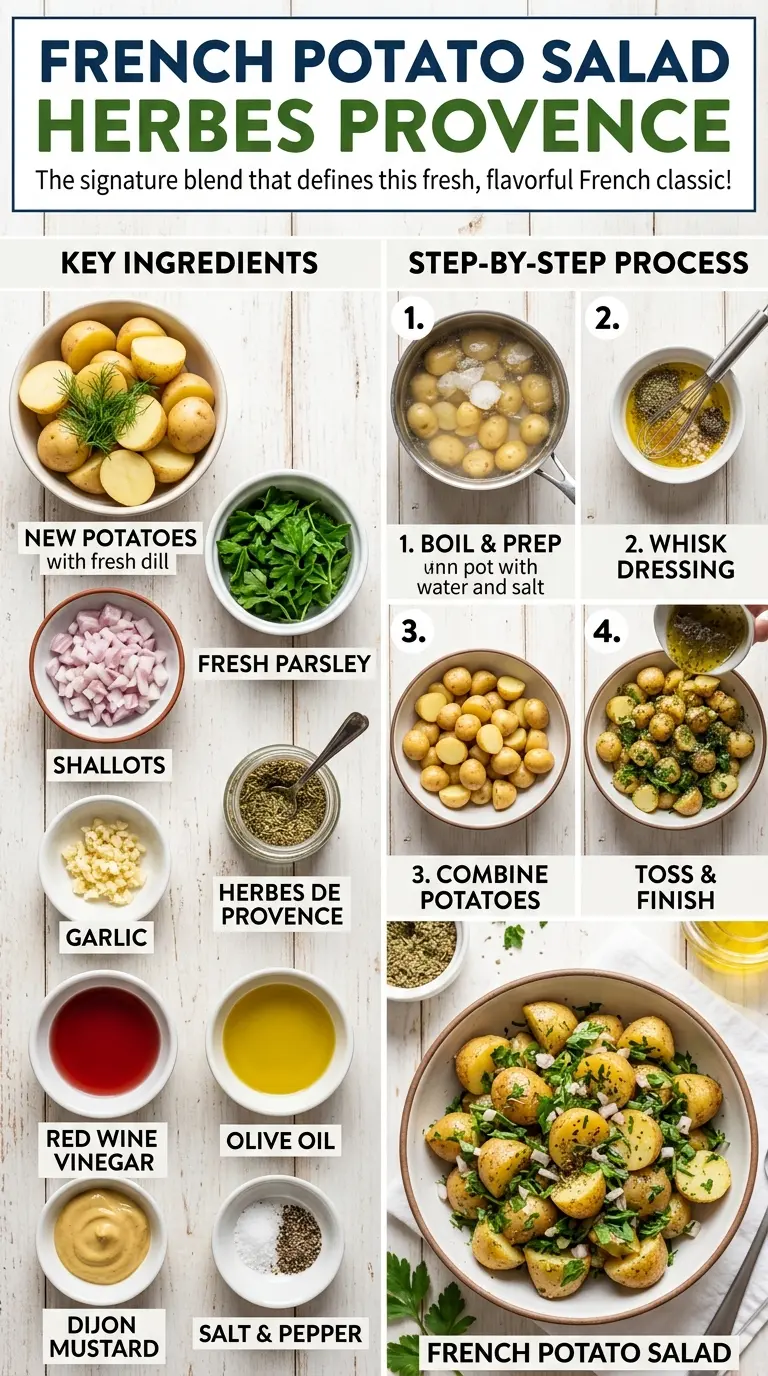
- Fingerling or baby potatoes — These hold their shape better than russets or large baking potatoes. Waxy potatoes give you clean slices and a salad that stays elegant, not mashed.
- White wine and chicken broth — These add a subtle savory base to the dressing. The broth gives the vinaigrette more body than vinegar alone, and the wine adds a little roundness. If you want to keep it vegetarian, use vegetable broth.
- Olive oil — Use a good one here because you’ll taste it. This is what softens the vinegar and gives the salad its silkiness.
- Fresh tarragon and parsley — Parsley brings freshness, but tarragon is what makes this taste French. Don’t swap it out if you want that classic anise-like note; if you must, use a mix of chives and extra parsley.
Getting the Potatoes to Absorb the Dressing Without Falling Apart
Boiling Until Just Tender
Start the potatoes in salted water and cook them until a knife slips in without resistance. If they’re undercooked, they won’t absorb the dressing well; if they’re overcooked, they’ll split when you slice them. Drain them promptly and let the steam escape for a minute so the surface isn’t waterlogged.
Slicing While They’re Still Warm
Slice the potatoes after draining, while they’re still warm enough to release a little steam. That warmth matters more than people think. Cold potatoes don’t take in the vinaigrette the same way, and you lose the whole point of the salad.
Pouring on the Vinaigrette Right Away
Whisk the wine, broth, vinegar, mustard, shallots, salt, pepper, and olive oil together until the dressing looks fully blended, then pour it over the potatoes while they’re still warm. Toss gently with a spatula or large spoon so the slices stay intact. If you stir aggressively, the edges break down and the salad turns cloudy instead of glossy.
Letting the Salad Rest Before the Herbs Go In
Give the dressed potatoes at least an hour at room temperature. That rest gives the vinegar time to settle into the potatoes and the shallot time to mellow. Add the parsley and tarragon right before serving so they stay bright and don’t sink into the dressing.
Three Ways to Make This French Potato Salad Fit Your Table
Make It Vegetarian
Swap the chicken broth for vegetable broth and keep everything else the same. You’ll still get that savory background, though the finish will be a touch lighter and less rounded. Choose a broth you’d actually drink, because bland broth makes a bland dressing.
Make It Dairy-Free and Naturally Gluten-Free
This recipe already fits both needs as written, which is part of why it’s such a good side dish for a crowd. Just double-check that your broth and Dijon mustard are labeled gluten-free if you’re serving someone who needs strict avoidance.
Make It More Herby and Sharp
Add a little extra parsley and a small handful of chopped chives if you want a greener, fresher finish. Keep the tarragon in the mix, though, or you lose the signature flavor that makes the salad taste distinctly French.
Storage and Reheating
- Refrigerator: Store covered for up to 3 days. The potatoes will firm up a little as they chill, but the flavor stays excellent.
- Freezer: Don’t freeze this salad. The potatoes turn mealy and the vinaigrette separates after thawing.
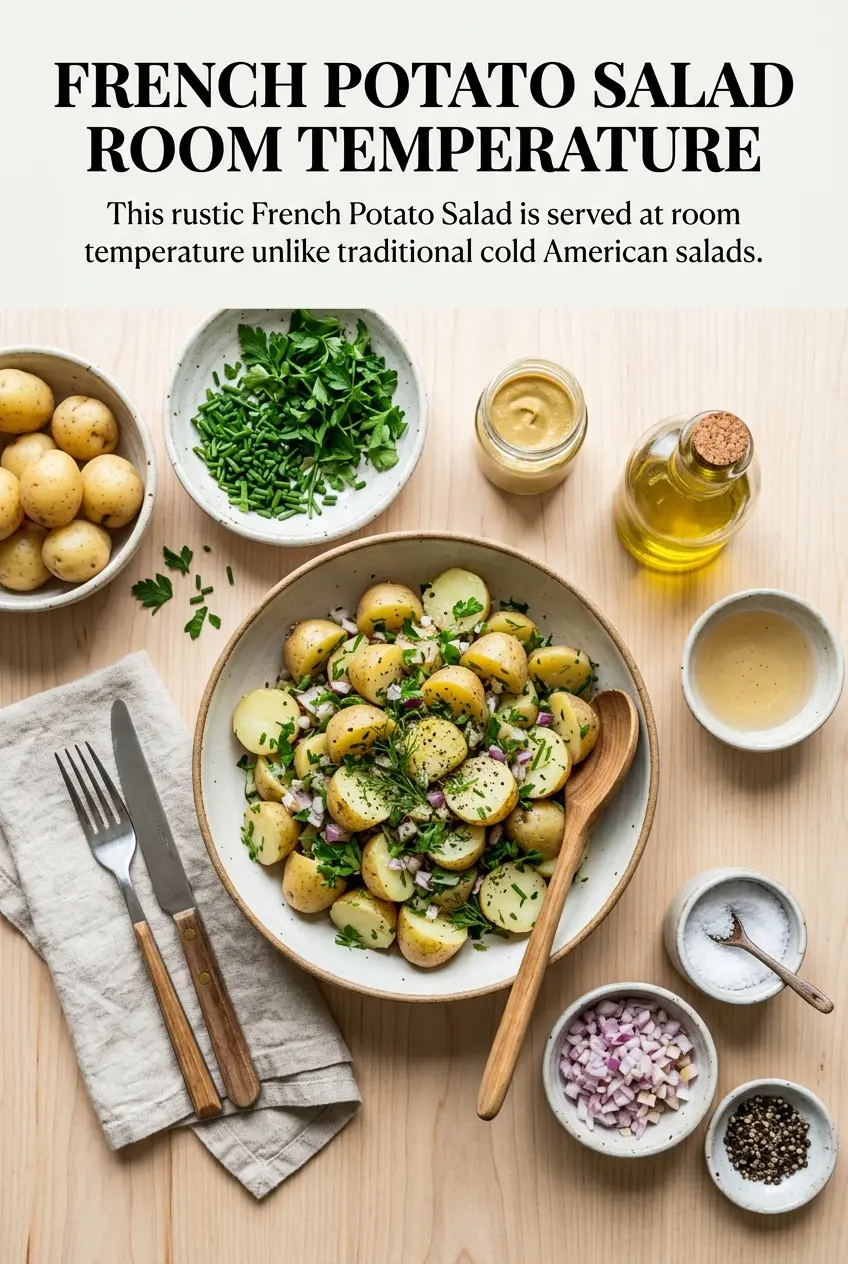
- Reheating: This salad is best served at room temperature. If it’s been refrigerated, let it sit out for 30 to 45 minutes and stir once before serving. Microwaving makes the potatoes soft and breaks the texture.
Answers to the Questions Worth Asking
Easy French Potato Salad
Ingredients
Method
- Boil the whole fingerling or baby potatoes in simmering water until tender, about 20 minutes, until a knife slides in easily. You’ll see the skins loosen slightly as they finish cooking.
- Drain the potatoes and slice them while still warm. The cut surfaces should look glossy and slightly steamy for better dressing absorption.
- Whisk together the white wine, chicken broth, white wine vinegar, olive oil, Dijon mustard, minced shallots, and salt and pepper. Keep whisking until the mixture turns smooth and slightly emulsified.
- Pour the dressing over the warm potatoes and toss gently. The potatoes should be evenly coated without crushing.
- Let the potato salad marinate at room temperature for 1 hour. It should look more glossy as the vinaigrette soaks in.
- Add the fresh parsley and fresh tarragon just before serving. The top should look bright green and fragrant against the pale potatoes.
- Serve at room temperature. The salad should hold together with a light, tangy sheen from the Dijon vinaigrette.