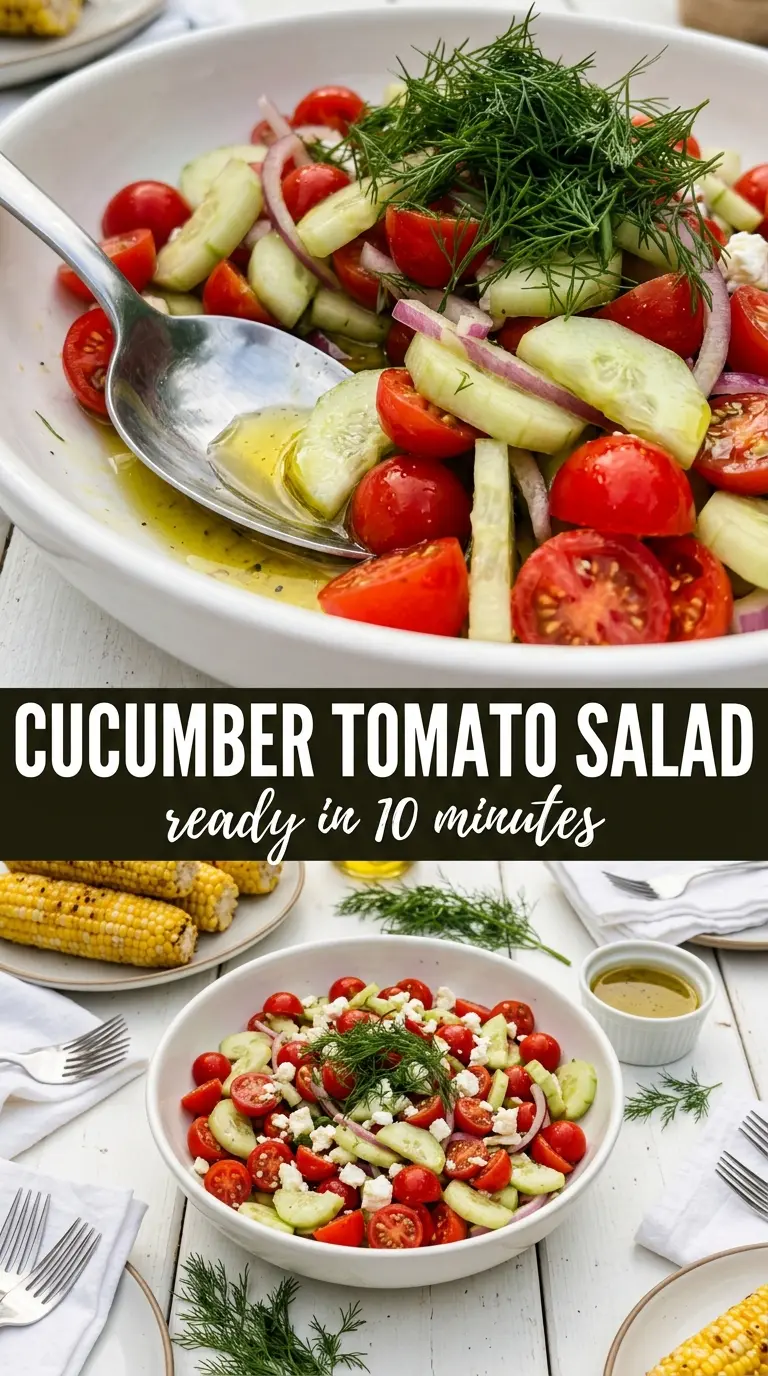
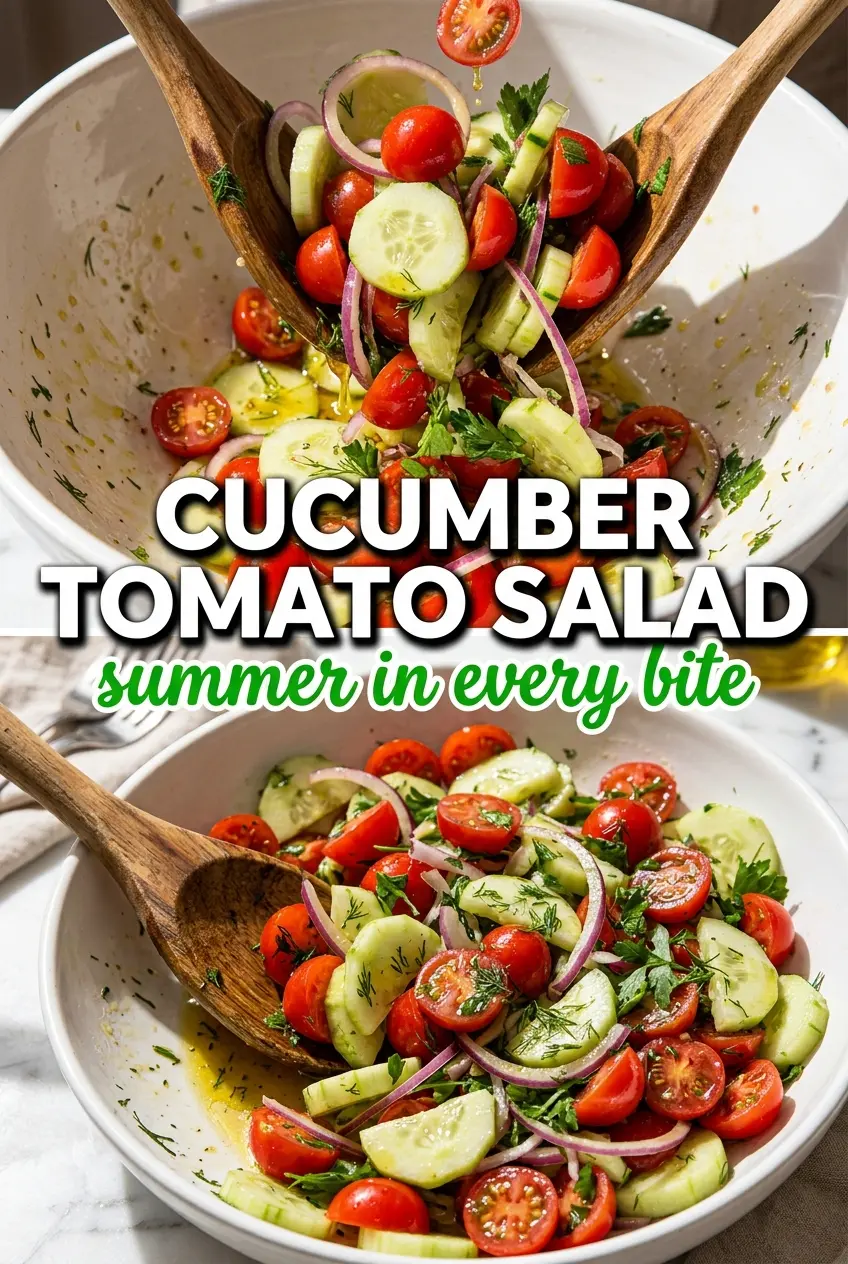
Glossy cucumber rounds, juicy cherry tomatoes, and sharp ribbons of red onion come together in a salad that stays crisp at first and then turns lightly saucy as it rests. That short marinating time is what makes this bowl worth repeating: the vegetables keep their bite, but the dressing pulls out just enough juice to coat every piece without drowning it.
The balance matters here. Red wine vinegar gives the salad its clean edge, honey rounds the sharpness, and a little garlic powder spreads evenly through the dressing without the raw bite fresh garlic can bring. Fresh dill and parsley go in at the end so they stay bright instead of sinking into the vinaigrette and fading away.
Below, I’ve included the small details that make this salad taste fresh instead of watery, plus a few simple ways to adapt it when you want to change the herbs or hold it a little longer before serving.
I salted the cucumbers lightly while I sliced the tomatoes, and the dressing clung so much better after the 15-minute rest. The dill stayed bright and the onions softened just enough without losing their crunch.
Save this cucumber tomato salad for an easy no-cook side with crisp vegetables and a tangy herb dressing.
The Trick to Keeping the Cucumbers Crisp Instead of Watery
The biggest mistake with cucumber tomato salad is dressing it too early and walking away. Cucumbers and tomatoes both release liquid fast, and if the bowl sits around in the vinaigrette for too long, you end up with a diluted dressing and soft vegetables. A short 15-minute rest is enough here. It lets the salt and vinegar season the vegetables without pulling out so much moisture that the salad turns soggy.
English cucumbers help a lot because their thinner skins and smaller seed cores hold their shape better than standard slicing cucumbers. The red onion also benefits from that short marinating window; it softens just enough to lose the raw edge without going limp. If your tomatoes are very ripe, cut them after the cucumbers are in the bowl so they don’t shed juice onto your cutting board and lose more moisture than needed.
What Each Ingredient Is Actually Doing in This Recipe
- Primary ingredient (the star) — Quality matters most. Choose the best you can find.
- Cooking medium (oil, butter, or broth) — This carries flavors and prevents dryness.
- Seasonings (salt, pepper, spices, herbs) — Layer flavors so nothing overpowers. Build depth gradually.
- Aromatics (garlic, onion, herbs) — Cook with fat to bloom flavors. Become the foundation.
- Supporting ingredients — Complement the main ingredient without overpowering it.
- Sauce or liquid (if applicable) — Brings flavors together. Balance richness with acid.
- Acid (lemon, vinegar, wine, or other) — Brightens and prevents flat-tasting results.
- Final finish (garnish, glaze, or sauce) — Prevents one-dimensional taste and adds visual appeal.
What the Dressing Is Doing to Every Bite
- English cucumbers — These stay firm and clean-tasting, which matters in a salad like this. Standard cucumbers work too, but if the skins are thick or bitter, peel them in stripes or fully peel them so the salad doesn’t taste rough.
- Cherry tomatoes — Their small size and natural sweetness give you concentrated tomato flavor without turning the bowl into sauce. Halve them so the dressing gets into the cut side and seasons the inside, not just the skin.
- Red onion — Thin slices add bite and color. If yours tastes too sharp, soak the slices in cold water for 10 minutes, then drain well; that softens the edge without killing the crunch.
- Red wine vinegar and honey — This is the balance that keeps the salad bright instead of harsh. The honey doesn’t make it sweet; it rounds the acidity so the cucumbers taste fresher and the tomatoes taste more tomatoey.
- Fresh dill and parsley — Use fresh herbs here. Dried herbs disappear into the dressing and leave behind a dull, grassy note, while the fresh herbs give the salad its clean finish right before serving.
Getting the Dressing to Coat Without Weighing the Salad Down
Whisk the vinaigrette until it looks unified
Start by whisking the olive oil, vinegar, honey, garlic powder, salt, and pepper until the honey disappears and the dressing looks slightly glossy. If it separates right away, keep whisking for a few more seconds; that small bit of emulsification helps the seasoning cling to the vegetables instead of slipping to the bottom of the bowl.
Toss while the vegetables still have room
Use a large bowl, not a cramped one. Cucumbers and tomatoes need space so the dressing can move around and coat the surfaces evenly. Toss well, then let the salad sit at room temperature for 15 minutes; that short rest is where the flavor develops, and it’s long enough to matter without draining the vegetables dry.
Finish after the rest, not before
Taste again after marinating because the salt and vinegar will have changed the balance. This is the moment to add a pinch more salt, another crack of pepper, or a splash of vinegar if the tomatoes are especially sweet. Fold in the dill and parsley at the end so the herbs stay vivid and the salad smells fresh when it hits the table.
How to Adapt This Salad for Different Tables and Timing
Make it dairy-free and gluten-free without changing a thing
This salad is naturally both dairy-free and gluten-free, which makes it an easy side for mixed menus. The only thing that can trip people up is seasoning; if you’re serving it alongside richer mains, don’t be shy with the salt and pepper because the fresh vegetables need that lift.
Swap the herbs based on what’s in the fridge
If you don’t have dill, use extra parsley plus a little basil for a softer, greener finish. Cilantro changes the salad’s personality completely and works best if you want a brighter, more assertive edge. Don’t use dried herbs as a 1:1 stand-in here; they won’t give the same fresh finish.
Hold it a little longer before serving
If you need to make it ahead, keep the dressing separate and combine everything 15 to 30 minutes before serving. That keeps the cucumbers crisp and the tomatoes from collapsing into the bowl. Once dressed, it still tastes good later the same day, but the texture gets softer as time goes on.
Add feta if you want a heartier side
A handful of crumbled feta brings salt and creaminess that play well with the vinegar and tomatoes. Add it at the very end so it stays in visible pieces instead of breaking down into the dressing. This turns the salad into something closer to a full picnic side without making it heavy.
Storage and Reheating
- Refrigerator: Store covered for up to 2 days. The cucumbers soften and the dressing becomes looser, but the flavor still holds up.
- Freezer: Don’t freeze this salad. The vegetables lose their crunch and turn watery once thawed.
- Reheating: No reheating needed. If it’s been chilled, let it sit at room temperature for 10 to 15 minutes and toss again before serving so the dressing tastes balanced.
Answers to the Questions Worth Asking
Cucumber Tomato Salad
Ingredients
Method
- In a large bowl, combine the cucumber rounds, halved cherry tomatoes, and thinly sliced red onion. Toss gently so the vegetables are evenly distributed.
- In a small bowl, whisk together olive oil, red wine vinegar, honey, garlic powder, salt, and black pepper until the honey dissolves. The mixture should look smooth and slightly glossy.
- Pour the vinaigrette over the vegetables and toss well to coat every slice. You should see the cucumbers glistening and the tomatoes turning glossy.
- Let the salad marinate at room temperature for 15 minutes to allow flavors to develop. Pause when the bowl looks more juicy with a lightly red-tinted dressing pooling at the bottom.
- Toss again, taste, and adjust seasoning if needed, then top with chopped fresh dill and fresh parsley before serving. Finish when herbs are scattered on top and the salad looks fresh and bright.