Crispy smashed potato salad lands in that perfect middle ground between a warm roasted potato side and a chilled picnic salad. You get shattering edges, soft centers, and a creamy dressing that clings to every craggy bit instead of sliding off the bowl. The bacon, herbs, and Dijon keep it from tasting heavy, so every bite still has a little snap and brightness.
The trick is in the contrast. The potatoes need enough boil time to go tender all the way through, but they also need a full rest after roasting so the dressing doesn’t turn thin and greasy when it hits the pan. Smashing them after boiling gives you more surface area, which means more of those browned, crispy corners that make the whole salad work.
Below, I’ve included the timing that keeps the potatoes crisp, the ingredient swaps that still give you a good texture, and the storage note I rely on when I’m making this ahead for a crowd.
The potatoes got those salty crunchy edges I was hoping for, and letting them cool before tossing kept the dressing thick instead of runny. My husband kept sneaking forkfuls straight from the bowl.
Save this crispy smashed potato salad for the nights when you want crunchy edges, creamy dressing, and a side dish that never sits untouched.
The Key to Crispy Edges Without Dry Centers
The biggest mistake with smashed potatoes is rushing the boil or smashing them too hard. If they’re undercooked, the centers stay waxy and the outside burns before the inside softens. If you press them too flat, they turn fragile and lose the thick, craggy pieces that catch oil and brown properly.
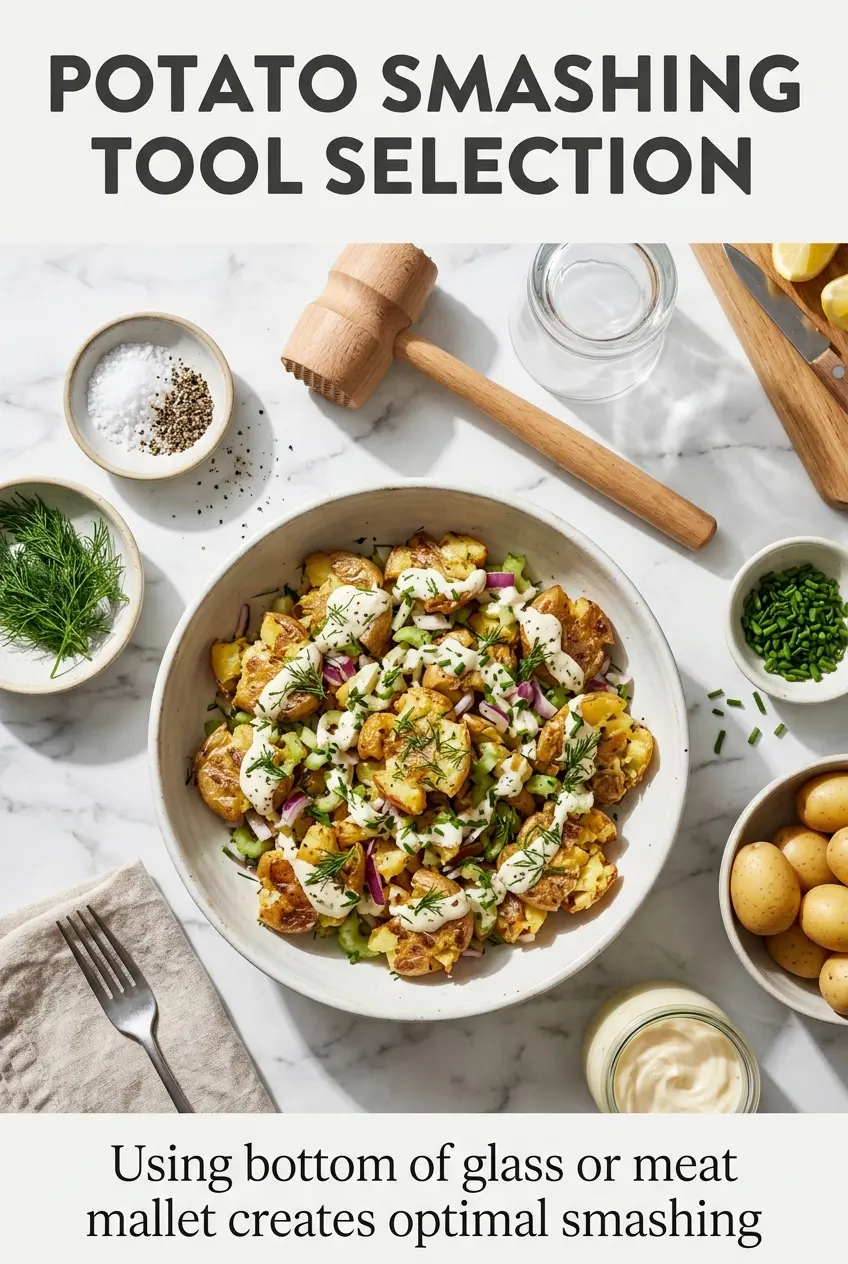
What you want is tender potatoes that still hold together when you smash them. A glass or measuring cup works better than your palm because it gives you control, and leaving the skins on helps the potatoes keep their shape. The high oven temperature matters here too. Low heat gives you pale potatoes with no crunch, and this salad depends on that contrast between the crisp shell and the creamy dressing.
- Boil until the potatoes pierce easily. A knife should slide in without resistance, but the potatoes shouldn’t be falling apart in the pot.
- Let steam escape before roasting. Wet potatoes steam instead of crisp, so a quick drain and a minute or two in the colander helps a lot.
- Roast with space between them. Crowding traps moisture and softens the bottoms.
- Cool before dressing. Warm potatoes absorb the sauce unevenly and can make the dressing look greasy.
What the Dressing and Herbs Are Doing Here
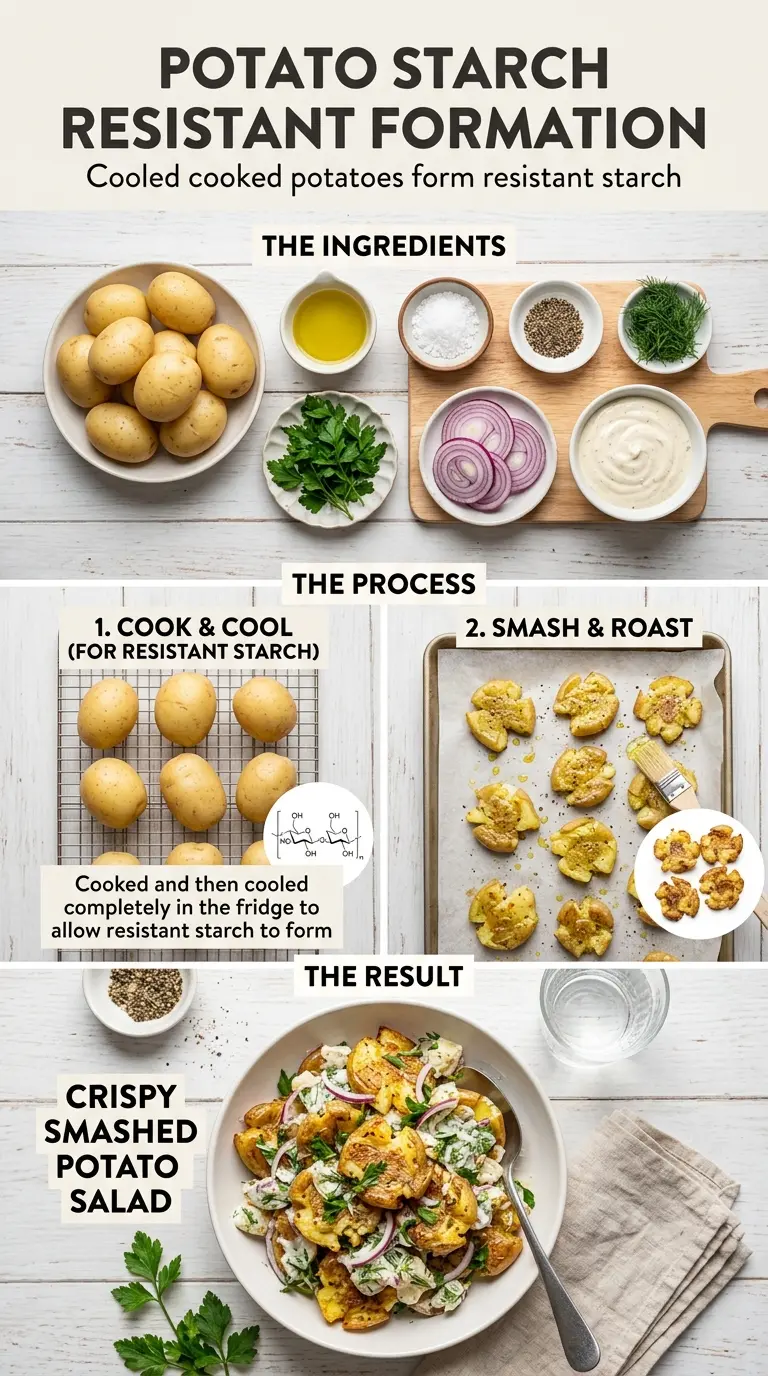
- Baby potatoes — These are the right size for smashing because they cook evenly and give you lots of surface area for browning. Waxy varieties hold their shape best; starchy potatoes can work, but they’re more likely to crumble.
- Olive oil — This is what turns the edges crisp and golden in the oven. Don’t swap it for a lower-quality oil if it tastes dull, because the potatoes pick up the flavor fast.
- Mayonnaise and sour cream — Mayo gives body and cling, while sour cream adds tang and keeps the dressing from tasting heavy. Full-fat versions make the best texture here; light dairy tends to get loose once it’s tossed with warm potatoes.
- Dijon mustard — This sharpens the dressing and cuts through the richness. Yellow mustard won’t give the same depth, and grainy mustard changes the texture more than I want in this salad.
- Fresh chives and dill — These herbs lift the whole dish and keep it from tasting like a baked potato platter. Fresh matters here; dried dill tastes dusty in a salad like this.
- Bacon — It adds salt, crunch, and a smoky finish that works against the creamy dressing. If you skip it, add extra salt and a little more Dijon so the salad doesn’t taste flat.
Roasting First, Dressing Last, and Why That Order Matters
Cooking the Potatoes Until They’re Tender
Start the potatoes in well-salted water and cook them until a knife slips in cleanly. That softness is what lets them smash without turning into crumbs. Drain them well and let the surface moisture fade before they go onto the pan, because wet potatoes fight the oven.
Smashing for More Surface Area
Set the potatoes on a sheet pan and press each one until it flattens but still holds together. You want rough edges and little cracks, not a paper-thin round. Those uneven bits are what turn deeply golden and crisp.
Roasting Until the Edges Darken
Drizzle with oil, season, and roast at high heat until the bottoms are browned and the ridges look crisp. If the potatoes stick when you lift one, give them another few minutes; they should release with a little help, not force. Pull them when they’re deeply golden, not just lightly colored, because that’s where the crunch lives.
Cooling Before the Toss
This step matters more than people think. Warm potatoes can soften the dressing and wash out the herbs, while fully cooled potatoes keep the coating thick and clingy. Thirty minutes is the sweet spot: enough time for steam to leave, not so long that the potatoes turn room temperature-stale.
Finishing With the Dressing and Bacon
Mix the dressing in a bowl first so the mustard and dairy are fully blended before they hit the potatoes. Toss gently so you coat the crispy surfaces without breaking them apart. Add the bacon at the end so it stays crunchy instead of going soft in the dressing.
How to Adapt This Salad Without Losing the Crunch
Make it vegetarian
Leave out the bacon and add a little extra salt plus a handful of chopped scallions or capers for bite. You’ll lose the smoky note, but the salad still works because the crispy potatoes and tangy dressing carry the dish.
Make it dairy-free
Use a dairy-free mayo and swap the sour cream for an unsweetened plant-based version with a thick texture. The dressing will be a little lighter, so taste it before tossing and add a touch more Dijon if it needs sharpness.
Make it gluten-free
The base recipe is naturally gluten-free as long as your mustard and bacon are labeled gluten-free. That’s worth checking, because some condiments sneak in additives that don’t belong in a simple dish like this.
Serve it warm instead of chilled
Toss the potatoes with the dressing while they’re just slightly warm for a more rustic side dish. The salad won’t be as firm, but the flavors blend faster and the potatoes soak up more of the dressing.
Storage and Reheating
- Refrigerator: Store leftovers for up to 3 days. The potatoes soften a bit, but the flavor holds up well.
- Freezer: I don’t recommend freezing this salad. The dressing separates and the potatoes turn mealy after thawing.
- Reheating: For the best texture, re-crisp the potatoes on a sheet pan in a hot oven before adding the dressing again. Microwaving right after mixing will make the crispy edges soggy fast.
Answers to the Questions Worth Asking
Crispy Smashed Potato Salad
Ingredients
Equipment
Method
- Boil the baby potatoes in salted water until tender, then drain well.
- Preheat the oven to 450°F.
- Place the drained potatoes on a baking sheet and smash each using the bottom of a glass.
- Drizzle with olive oil and season with salt and pepper.
- Roast for 25-30 minutes at 450°F until crispy and golden.
- Let the roasted potatoes cool for 30 minutes so the edges stay crisp.
- Mix mayonnaise, sour cream, and Dijon mustard until smooth.
- Stir in fresh chives and fresh dill.
- Toss the crispy smashed potatoes with the dressing until evenly coated.
- Top with the bacon, cooked and crumbled, and serve.