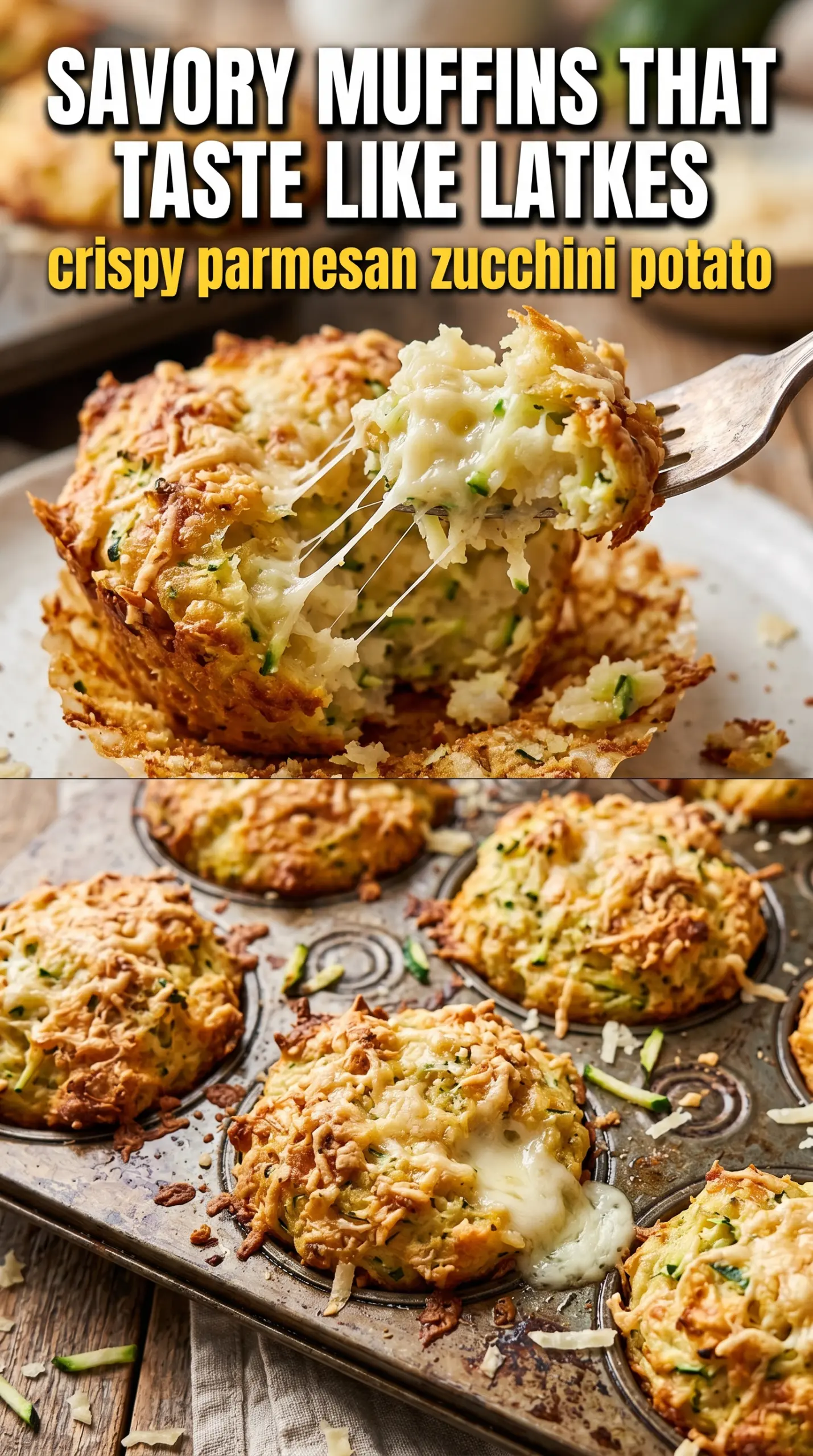
Golden, crisp-edged savory muffins with a shatteringly crunchy parmesan top and a soft, tender middle have a way of disappearing before they’ve even cooled. The zucchini keeps them light, the potato gives them a little more body, and the parmesan does the heavy lifting on flavor and texture. They land somewhere between a snack, a side, and a grab-and-go breakfast, which is exactly why they keep sneaking back into the rotation.
The key here is moisture control. Zucchini and potato both carry a lot of water, and if they go into the batter wet, the muffins bake up dense instead of crisp. Squeezing them dry before mixing is what keeps the crumb from turning soggy and lets the tops brown properly in a hot oven. The other thing that matters is the muffin tin itself: grease it well and skip the liners, because the exposed edges are what turn deeply golden.
Below, I’ve laid out the part that matters most for getting that crunchy parmesan crust and the little timing details that keep the centers soft without underbaking the middle. There are also a few smart swaps if you need to adjust for what’s in your kitchen.
The edges came out crisp and the middle stayed tender instead of getting watery. I squeezed the zucchini and potato like you said, and the parmesan topping baked into the best crunchy crust.
These crispy Parmesan zucchini potato muffins are the kind you’ll want on hand for breakfast, lunchboxes, and that last salty bite at the end of the day.
The Moisture Trap Behind Mushy Vegetable Muffins
The mistake most savory vegetable muffins make is baking the water right into the crumb. Zucchini and potato sound sturdy, but once they hit the oven, all that hidden moisture turns into steam and leaves you with a soft, heavy center instead of a muffin that holds its shape. Drying both vegetables before they go into the batter changes everything.
The other thing working in your favor here is the fat-to-flour balance. Sour cream and olive oil keep the muffins tender, but the batter still needs enough structure to support the vegetables and cheese. That’s why you stir only until the dry ingredients disappear. Overmixing builds too much gluten, and these muffins go from light and crisp to rubbery fast.
- Zucchini — Grate it on the large holes, then squeeze it in a clean towel until it feels almost dry. That step matters more than any seasoning in the recipe.
- Russet potato — Russets give you a fluffy interior and enough starch to help the muffins set. Waxy potatoes hold more moisture and stay denser.
- Parmesan — Finely grated parmesan melts into the batter and also forms the crunchy top. Use the real stuff here; the pre-shredded kind won’t brown or melt the same way.
- Sour cream — This keeps the crumb moist without thinning the batter too much. Plain Greek yogurt works in a pinch, but the muffins will bake up a little tangier and slightly firmer.
What Each Ingredient Is Doing in These Savory Muffins
- Flour — Gives the muffins enough structure to hold the zucchini and potato together. All-purpose flour is the right middle ground; it stays tender without collapsing.
- Baking powder and baking soda — The two leaveners work together to lift the batter and encourage browning. If your muffins seem flat, it’s usually old baking powder or vegetables that weren’t squeezed dry enough.
- Eggs — They bind the batter and set the crumb so the muffins slice cleanly once cooled. Room-temperature eggs mix in faster and help the batter come together smoothly.
- Olive oil — Adds richness and keeps the edges from drying out in the oven. Neutral oil works too, but olive oil brings a better savory note.
- Chives — They cut through the cheese and starch with a fresh oniony bite. If you don’t have them, thinly sliced green onion is the closest swap.
Getting the Batter Into the Tin So the Tops Turn Crisp
Whisking the Dry Base
Start by whisking the flour, leaveners, spices, salt, and pepper in a large bowl until everything looks evenly combined. You want the seasoning distributed now so you’re not trying to fix uneven flavor once the batter is already wet. If you see little pockets of baking soda or clumps of flour later, they’ll show up as bitter spots or streaks in the finished muffins.
Mixing the Wet Ingredients
Beat the eggs, sour cream, and olive oil together until smooth and glossy. This mixture should look fully emulsified, not streaky. If the sour cream is still cold and lumpy, let it sit out for a few minutes before mixing so it blends without forcing you to overwork the batter later.
Folding in the Vegetables and Cheese
Add the wet mixture to the dry ingredients and stir just until the flour disappears. Then fold in the zucchini, potato, half of the parmesan, and the chives. The batter will look thick and packed with vegetables, which is exactly what you want; if it looks loose, the vegetables probably still held too much water.
Baking for a Deep Golden Finish
Spoon the batter into a well-greased muffin tin and top each cup with the remaining parmesan. Pressing a little cheese onto the surface helps build that crisp lid. Bake until the tops are deeply golden and the edges pull slightly from the pan; if you take them out when they just look set, the centers stay wet and the bottoms never crisp properly.
Make Them Gluten-Free With a 1:1 Flour Blend
Swap the all-purpose flour for a good 1:1 gluten-free baking blend that contains xanthan gum. The muffins will still hold together, but the crumb usually comes out a touch more tender and less chewy. Keep the vegetables especially dry, because gluten-free batters don’t forgive extra moisture as well.
Dairy-Free Version With a Different Kind of Tang
Use unsweetened dairy-free yogurt in place of the sour cream and a firm dairy-free parmesan-style topping. The texture stays close, but you lose some of the sharp, salty finish that real parmesan gives, so the seasoning may need a small extra pinch of salt. The crust will brown, but it won’t get quite as shattery.
Turn Them Into Smaller Snack Bites
Bake the batter in mini muffin tins for about 12 to 15 minutes. The smaller size gives you more crispy edges and a higher parmesan-to-crumb ratio, which makes them especially good for snacking or serving with soup. Watch the first batch closely; mini muffins go from golden to overdone fast.
Storage and Reheating
- Refrigerator: Store in an airtight container for up to 4 days. The crust softens a little in the fridge, but the centers stay nicely tender.
- Freezer: These freeze well. Cool completely, wrap tightly, and freeze for up to 2 months. Freeze them in a single layer first if you want to keep the tops from sticking together.
- Reheating: Warm in a 375°F oven or toaster oven for 8 to 10 minutes until the edges crisp again. The common mistake is microwaving them, which steams the crust and makes the muffins go soft.
The Things That Trip People Up With This Dish
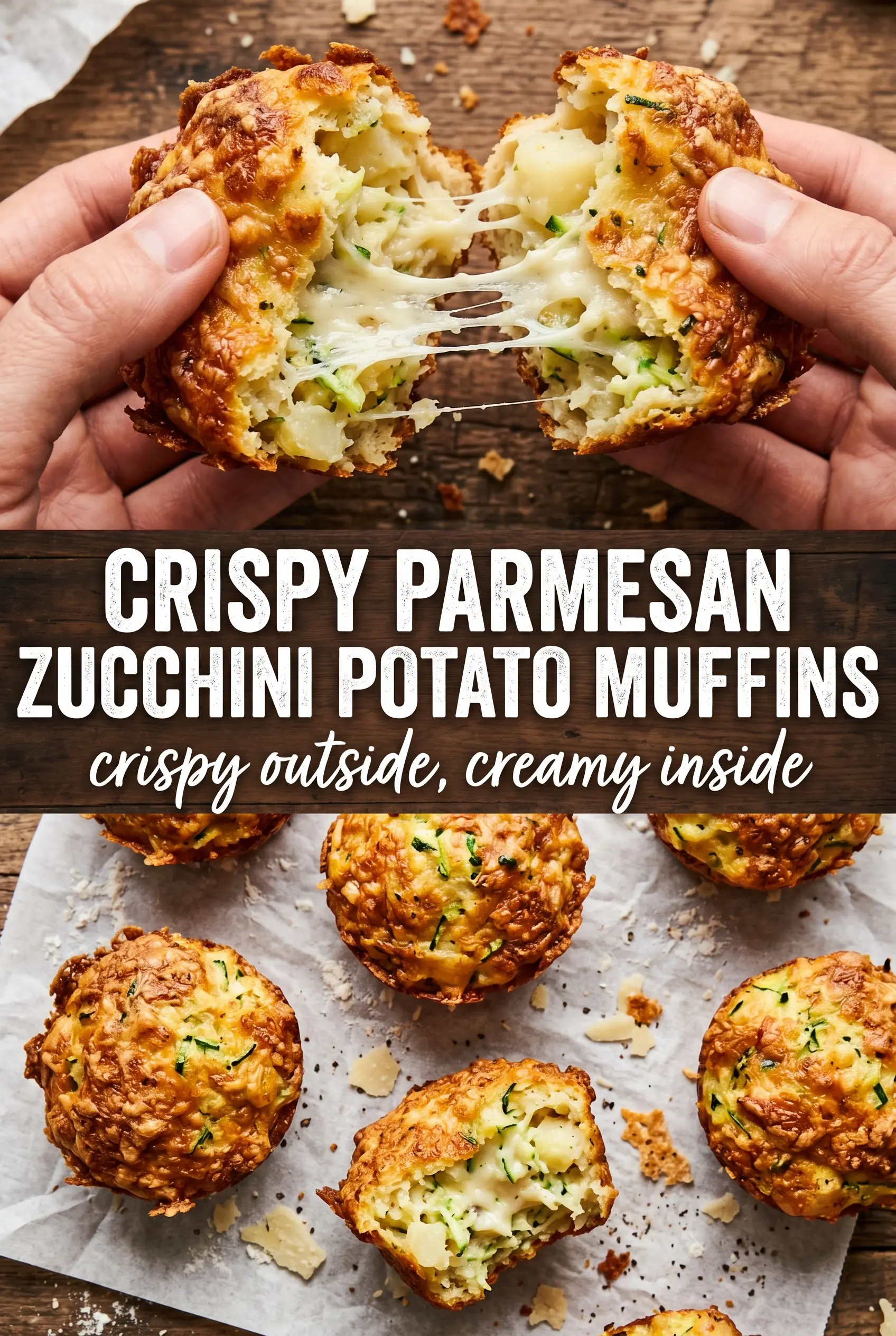
Crispy Parmesan Zucchini Potato Muffins
Ingredients
Equipment
Method
- Preheat the oven to 400°F and grease a 12-cup muffin tin well with oil or cooking spray—do not use liners.
- Set the tin aside so it’s ready for the batter as soon as it’s mixed.
- Whisk the all-purpose flour, baking powder, baking soda, garlic powder, onion powder, black pepper, and salt in a large bowl.
- Beat the eggs, sour cream, and olive oil together in a separate bowl until smooth.
- Add the wet mixture to the dry and stir until just combined.
- Fold in the grated zucchini, grated russet potato, 1/2 cup of the parmesan cheese, and the fresh chives.
- Stir just until the vegetables and cheese are evenly distributed, with no dry pockets.
- Divide the batter evenly among the muffin cups and top each with the remaining parmesan cheese.
- Bake for 22–25 minutes at 400°F until the tops and edges are deeply golden and crispy.
- Cool in the pan for 5 minutes.
- Run a knife around the edges before removing the muffins to help them release cleanly.