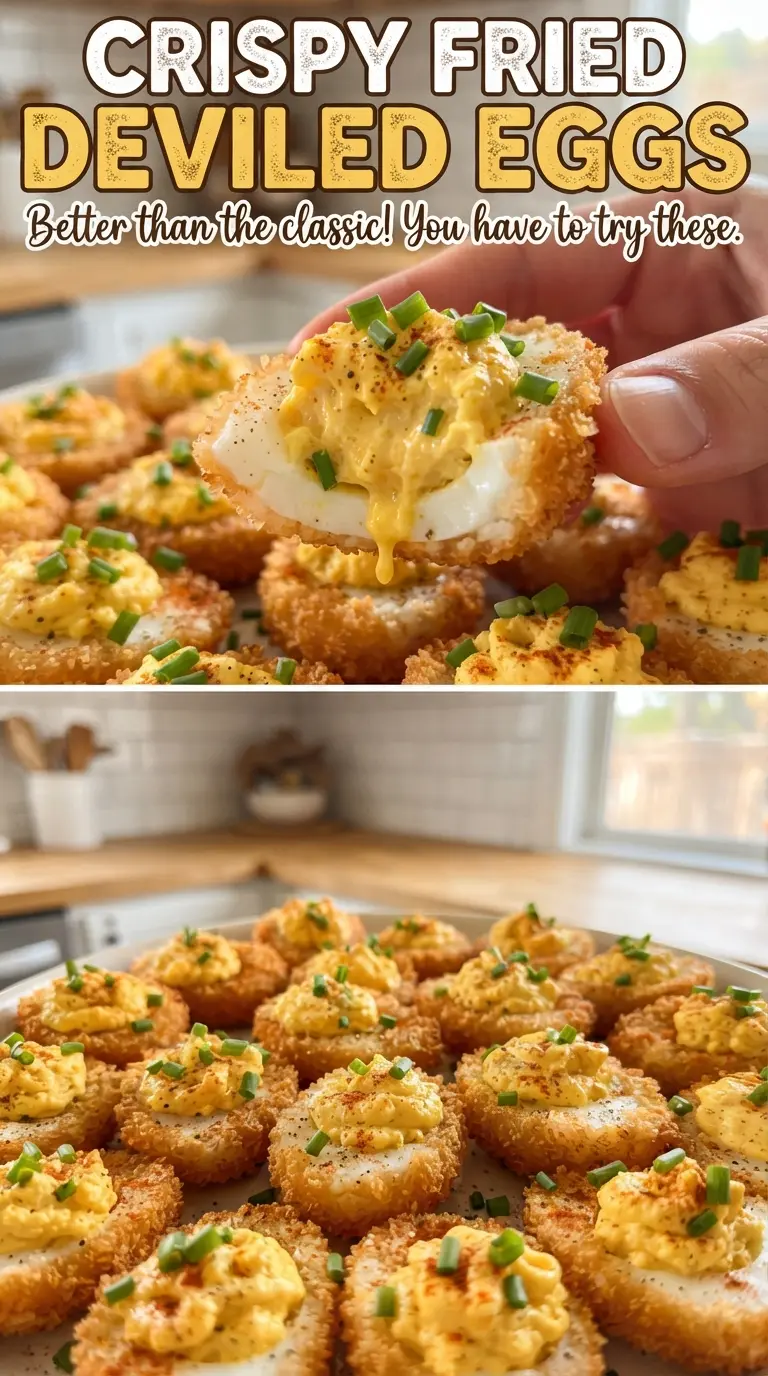
Crispy fried deviled eggs turn a familiar party platter into something with real contrast: crackly, golden shells around a cold, creamy filling that holds its shape when you bite in. The fried egg white halves stay light instead of heavy, and the panko crust gives each one a clean crunch that stands up to the yolk mixture instead of disappearing under it.
The trick is treating the egg whites like a breaded cutlet, not a soft boiled egg that happens to be fried. A dry flour layer, a full egg wash, and panko mixed with garlic powder build a crust that browns quickly at 350°F without soaking up too much oil. Chilling the yolk filling before piping also matters, because warm filling can soften the shell before you get them to the table.
Below, I’ve included the one part that keeps these crisp longer, plus a few smart swaps if you want to change up the filling without losing the Southern-style feel.
The panko crust stayed crunchy even after I piped the filling, and the sweet pickle relish gave the yolks that classic deviled egg flavor my dad kept going back for.
Like these crispy fried deviled eggs? Save them to Pinterest for your next party platter with a golden panko crust and creamy chilled filling.
The Crunch That Keeps Deviled Eggs From Going Soggy
Most deviled eggs lose their appeal after the first few minutes because the filling and the egg white start to merge into one soft bite. Frying only the whites changes that completely. The crust creates a barrier, and because the filling goes in after the whites have cooled, the coating stays crisp instead of steam-softening under warm yolk mixture.
The other piece people miss is moisture control. After boiling, chilling, and peeling, the egg whites need to be dry before they hit the flour. If there’s water clinging to the surface, the flour turns gummy and the panko slides off in the oil.
- Panko breadcrumbs — These are what give you the light, brittle crunch. Regular breadcrumbs work in a pinch, but they brown denser and don’t give the same shattering texture.
- Sweet pickle relish — This brings the classic deviled egg tang and a little sweetness. Finely chopped dill pickles can work, but the result is sharper and less old-school.
- Dijon mustard — Dijon keeps the filling balanced and cuts through the mayonnaise. Yellow mustard will work, but it tastes more basic and less rounded.
- Mayonnaise — Use a good one here, because it carries the yolk mixture. A thinner mayo can make the filling loose, so add it gradually until the yolks are creamy but still pipeable.
What Each Ingredient Is Actually Doing in This Recipe
- Primary ingredient (the star) — Quality matters most. Choose the best you can find.
- Cooking medium (oil, butter, or broth) — This carries flavors and prevents dryness.
- Seasonings (salt, pepper, spices, herbs) — Layer flavors so nothing overpowers. Build depth gradually.
- Aromatics (garlic, onion, herbs) — Cook with fat to bloom flavors. Become the foundation.
- Supporting ingredients — Complement the main ingredient without overpowering it.
- Sauce or liquid (if applicable) — Brings flavors together. Balance richness with acid.
- Acid (lemon, vinegar, wine, or other) — Brightens and prevents flat-tasting results.
- Final finish (garnish, glaze, or sauce) — Prevents one-dimensional taste and adds visual appeal.
Building the Crust and Filling in the Right Order
Cooking the Eggs Until the Yolks Set Cleanly
Put the eggs in cold water, bring the pot up to a boil, then cover it, take it off the heat, and let it stand for 12 minutes. That gentler finish gives you yolks that are fully set without turning chalky and gray around the edges. As soon as they’re done, chill them fast in cold water so they peel more cleanly and stop cooking.
Mashing the Yolks Until They Pipe Smoothly
Scoop out the yolks and mash them with the mayonnaise, relish, Dijon, and salt until the mixture is completely smooth. If you leave little lumps here, they clog the piping bag and make the filling look rough instead of tidy. Chill the filling before you bread the whites so it firms up and holds its shape on top of the crust.
Breading the Whites for a Real Fried Finish
Coat each egg white half in flour first, then beaten egg, then the panko mixed with garlic powder. The flour gives the egg wash something to grab, and the egg wash is what locks the panko in place. Press the crumbs on gently but firmly; if you skip that step, the coating falls off as soon as it hits the oil.
Frying Fast, Then Filling at the Last Minute
Heat about 1 inch of oil to 350°F and fry the whites in batches for 1 to 2 minutes, just until they’re deep golden. If the oil runs too cool, the coating gets greasy before it crisps; if it’s too hot, the panko darkens before the white interior warms through. Drain them on paper towels, let them cool for about 5 minutes, then pipe in the yolk mixture and finish with paprika and chives.
Bacon and chive deviled eggs
Fold finely crumbled bacon into the yolk mixture and swap the garnish to extra chives. The bacon adds salt and smoke, but it also loosens the filling a little, so hold back a teaspoon of mayonnaise if the mixture starts looking soft.
Gluten-free version
Use a 1:1 gluten-free flour blend for the first coat and gluten-free panko for the crust. The texture stays close to the original as long as you fry the eggs right away after breading, before the coating can absorb moisture.
Dairy-free by default
This recipe is already dairy-free as written if your mayonnaise is dairy-free, which most are. Check the label if you’re serving someone with an allergy, since some specialty mayos include milk-based ingredients.
Make-ahead party platter strategy
You can hard-boil the eggs and make the filling a day ahead, but bread and fry the whites close to serving time. The crust is at its best within the first hour, and waiting to pipe the filling keeps the exterior from softening.
Storage and Reheating
- Refrigerator: Store the fried whites and filling separately for up to 2 days. Once assembled, the coating softens fast.
- Freezer: Don’t freeze these. The eggs turn rubbery and the filling splits after thawing.
- Reheating: Re-crisp the fried whites in a 375°F oven for a few minutes, then cool slightly before piping. Microwaving softens the crust and defeats the whole point.
Questions I Get Asked About This Recipe

Crispy Fried Deviled Eggs
Ingredients
Equipment
Method
- Place the eggs in a pot, cover with cold water, and bring to a boil. Cover, remove from heat, and let stand 12 minutes.
- Chill the eggs, peel them, and halve them lengthwise. Separate the yolks from the whites so you have 24 halves.
- Mash the yolks with mayonnaise, sweet pickle relish, Dijon mustard, and salt until smooth. Transfer to a piping bag and chill until firm.
- Coat each egg white half in flour. Dip into the beaten eggs.
- Roll the coated whites in panko mixed with garlic powder. Shake off excess breadcrumbs so the coating stays even.
- Heat 1 inch of oil to 350F in a Dutch oven. Fry the whites in batches for 1-2 minutes until golden.
- Drain the fried whites on paper towels after each batch. Let them cool 5 minutes so the crust stays crisp.
- Pipe the yolk filling into the crispy egg white halves. Dust with paprika and chives for garnish and serve right away.