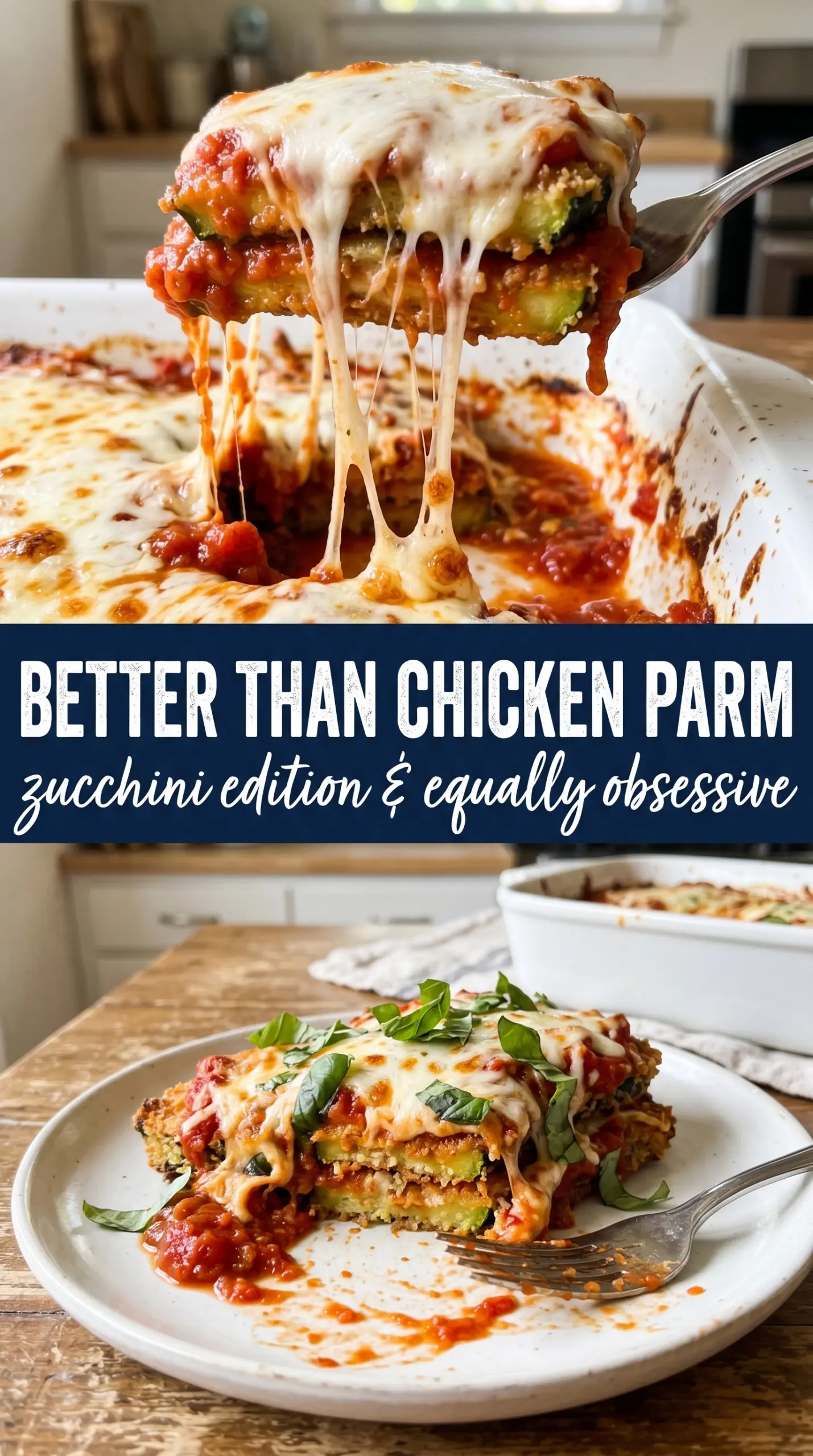
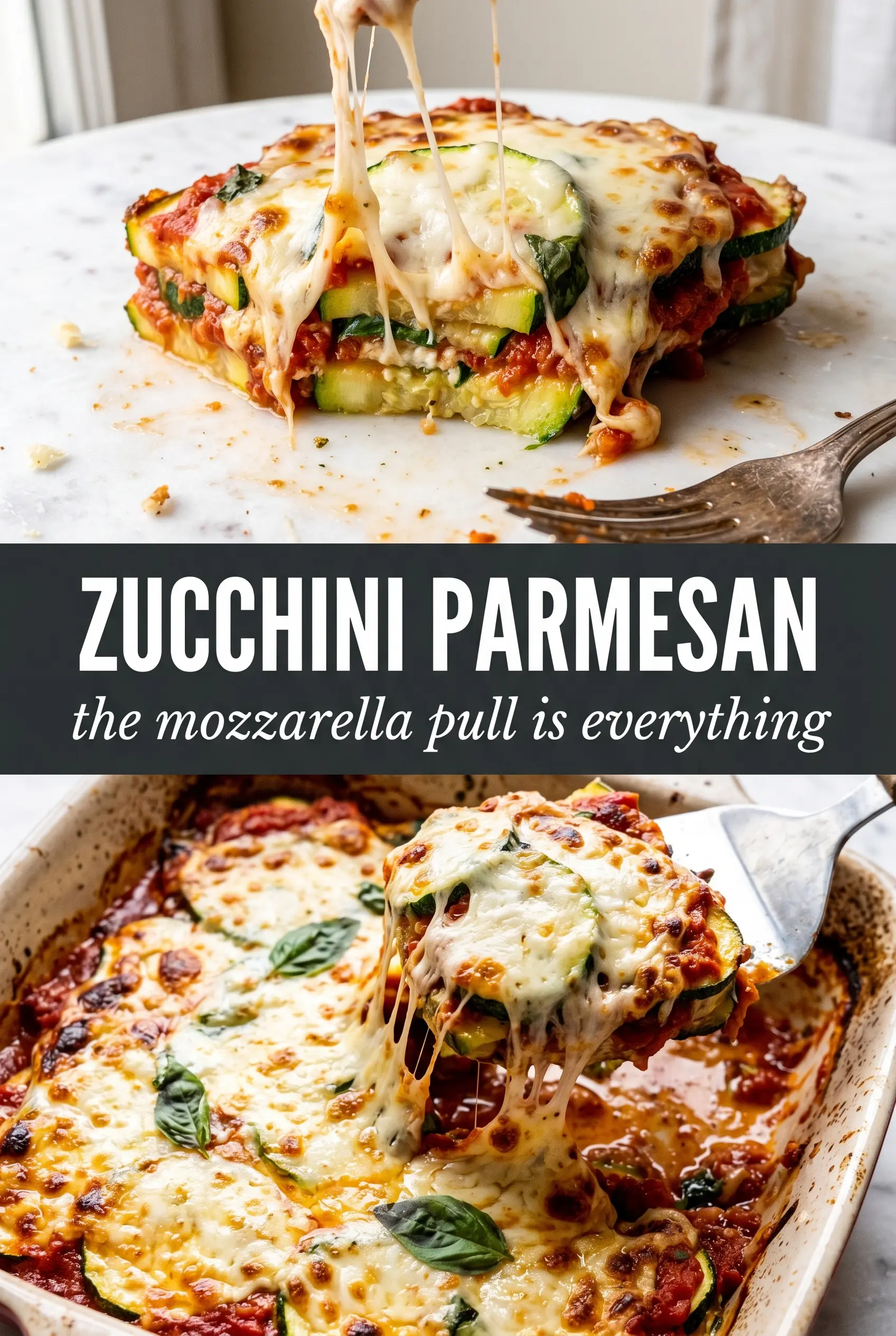
Golden zucchini parmesan lands on the table with crisp edges, a bubbling marinara center, and a blanket of mozzarella that stretches the moment you lift a slice. The zucchini stays tender without turning watery, and the breading keeps enough crunch to stand up to the sauce instead of dissolving into it. It eats like a lighter, vegetable-forward version of classic chicken parm, but it still gives you that same comforting, cheesy casserole feel.
The trick is treating the zucchini before it ever hits the breading. Salt pulls out moisture, which keeps the slices from steaming in the oven and sliding into a soft layer under the sauce. A short fry gives the best crust, but a hot oven works too if you want to keep things simple. Either way, the breadcrumbs need to be pressed on firmly so they actually stay put once the marinara goes on.
Below you’ll find the method that keeps the zucchini from going soggy, plus a few smart swaps and storage notes for making this fit the way you cook.
The zucchini slices stayed crisp under the sauce, and the cheesy top browned beautifully in just the time it took to make the sides.
Like this baked zucchini parmesan? Save it to Pinterest for a crisp-edged, cheesy vegetarian dinner that feels like classic parm without the heaviness.
The Difference Between Crisp Coating and Soggy Zucchini
Zucchini holds a lot of water, and that’s the reason baked versions of this dish often collapse into a loose, saucy pile. Salting the slices first pulls moisture out of the vegetable before breading, which gives you a drier surface and a better crust. If you skip that resting time, the breadcrumbs hydrate too fast and the whole layer softens under the marinara.
The other thing that matters is the thickness of the slices. Quarter-inch rounds are thin enough to cook through but sturdy enough to stay intact when layered and baked. Thicker slices can turn floppy before the coating browns, and thinner slices cook too fast and disappear into the sauce.
- Salt and drying time — Fifteen minutes is enough to draw out a noticeable amount of moisture. Pat the zucchini dry until the surface feels tacky, not wet.
- Even slicing — Uniform rounds brown at the same rate, which keeps you from pulling half the batch early and overcooking the rest.
- Hot enough cooking surface — Whether you fry or bake, the coating needs immediate heat to set before the zucchini gives up more liquid.
What Each Ingredient Is Actually Doing in This Dish
- Zucchini — This is the base, so choose firm, medium-to-large squash with tight skin and minimal seeds. Smaller zucchini are less watery and usually give you the cleanest slices.
- Italian breadcrumbs — These create the crust and bring seasoning in one step. Plain breadcrumbs work if that’s what you have, but add a little extra Italian seasoning and parmesan so the coating doesn’t taste flat.
- Parmesan — Some goes into the breading for a nutty, salty edge, and the rest finishes the top with a sharper, more savory crust. Freshly grated parmesan melts and browns better than the dusty shelf-stable kind.
- Marinara — Use a sauce you’d actually eat on pasta. If it’s thin, simmer it for a few minutes first so it doesn’t pool in the dish and loosen the breading.
- Mozzarella — Shredded low-moisture mozzarella melts into that stretchy top layer without flooding the pan. Fresh mozzarella tastes great, but it releases more water and makes the dish softer.
Building the Layers So the Crust Survives the Sauce
Getting the Zucchini Dry
Lay the salted zucchini slices on a towel or paper towels and let them sit the full 15 minutes. You’ll see beads of moisture on the surface, and that’s what you want to remove before breading. If the slices still look wet when you start dredging, the flour turns gummy and the crumbs won’t cling cleanly.
Setting Up a Clean Breading Station
Keep the flour, egg, and breadcrumb mixture in separate shallow bowls so each slice moves quickly from one to the next. Dust off excess flour before the egg, then press the crumbs on firmly with your fingertips. That pressure matters; loose crumbs fall off in the pan and leave bald spots once the dish bakes.
Frying or Baking the Coating
Pan-frying gives the deepest color and the crispiest edges in about two minutes per side. If you bake instead, spray the pan generously and give the slices enough space so steam can escape. Crowding the pan is the fastest way to end up with pale, soft zucchini instead of a crisp base.
Layering and Finishing in the Oven
Spread a thin layer of marinara in the baking dish first, then build the zucchini in a single layer before adding the rest of the sauce and cheese. The sauce underneath keeps the bottom from drying out, but too much sauce anywhere in the dish will soften the coating. Bake just until the cheese melts and the top takes on golden spots, then let it sit for a few minutes so the layers settle before serving.
Three Ways to Make This Fit What’s in Your Kitchen
Gluten-Free Zucchini Parmesan
Swap the flour for a gluten-free all-purpose blend and use gluten-free breadcrumbs. The texture stays close to the original as long as you still press the coating on firmly and cook the slices on a hot surface so the crust sets quickly.
Dairy-Free Version
Use a dairy-free parmesan alternative in the breading and a meltable plant-based mozzarella on top. You’ll lose a little of the sharp, salty finish that real parmesan gives, so choose a marinara with good depth and season the breadcrumb mixture well.
Extra-Crispy Pan-Fried Version
Pan-fry the zucchini instead of baking it before assembling the casserole. This adds a deeper golden crust and better texture under the sauce, but it does take a little more oil and attention at the stove.
Storage and Reheating
- Refrigerator: Store leftovers covered for up to 3 days. The coating softens as it sits, but the flavor stays solid.
- Freezer: It freezes, but the zucchini softens quite a bit after thawing, so I don’t recommend it unless texture is secondary.
- Reheating: Warm leftovers in a 375°F oven until the cheese is hot and the edges are bubbling again. The microwave works in a pinch, but it turns the breading soggy fast.
Answers to the Questions Worth Asking
Zucchini Parmesan
Ingredients
Equipment
Method
- Salt the zucchini slices and let sit for 15 minutes, then pat dry thoroughly with paper towels to remove excess moisture.
- Preheat the oven to 400°F so it’s ready for baking and melting the cheese.
- Mix the all-purpose flour, beaten eggs, and Italian breadcrumbs with half the parmesan and Italian seasoning to create an even breading coating.
- Dredge each zucchini slice in flour, then egg, then breadcrumbs, pressing firmly so the crumbs adhere.
- Pan-fry the breaded zucchini in olive oil over medium-high heat for 2 minutes per side, or bake on a sprayed sheet pan at 425°F for 15 minutes until the coating turns golden.
- Spread half the marinara in a baking dish, layer the breaded zucchini over it, then add the remaining marinara.
- Top with the mozzarella cheese and sprinkle over the remaining parmesan for a browned, bubbly finish.
- Bake for 15–20 minutes at 400°F until the cheese is melted and golden, then garnish with fresh basil.