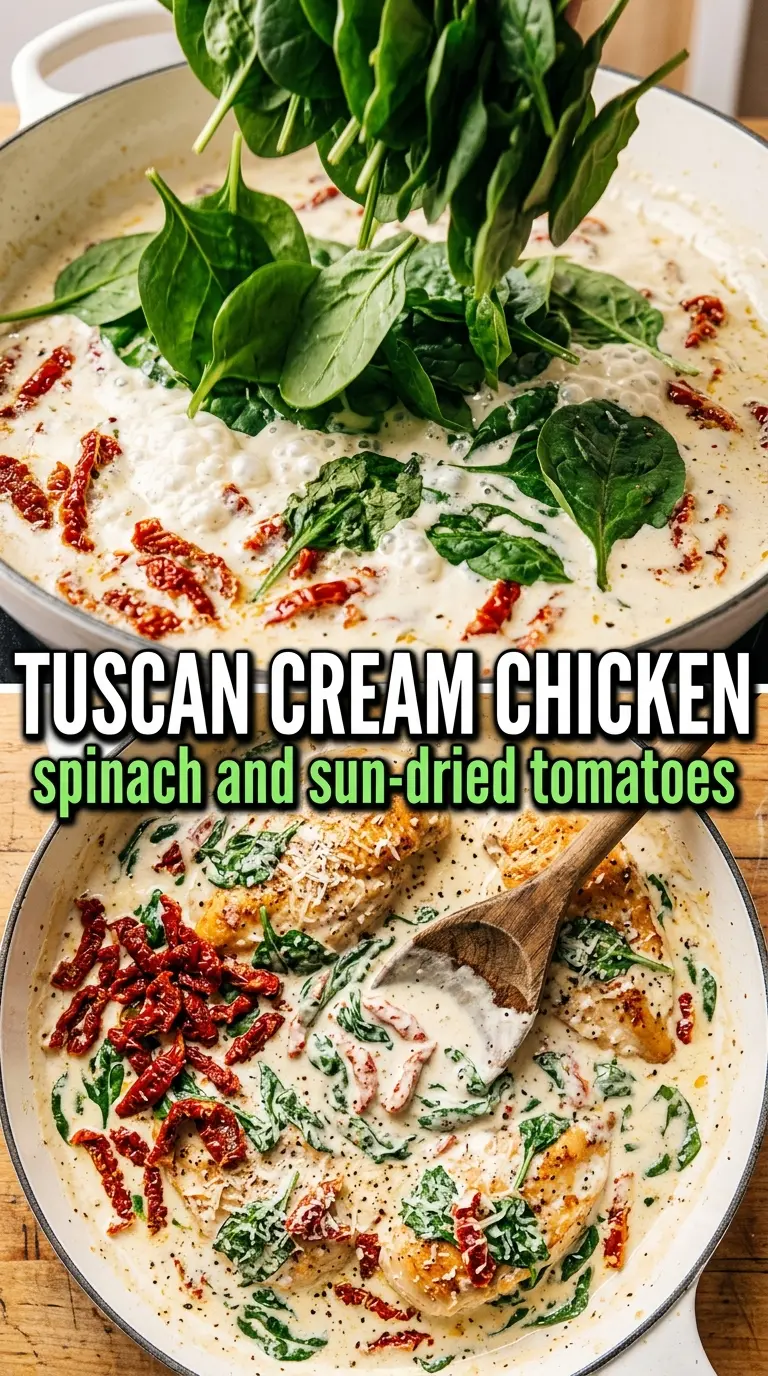
Golden seared chicken breasts in a silky sun-dried tomato and spinach cream sauce earn their place in the regular dinner rotation because the sauce clings instead of puddling. The chicken stays juicy, the tomatoes bring a sweet-tart punch, and the spinach softens into the cream without turning the whole skillet heavy. It tastes like the kind of dinner that came from a restaurant line, but it lands on the table in about half an hour.
The part that makes this version work is the order. The chicken gets a hard sear first, which builds flavor in the pan and gives you those browned bits that turn into the base of the sauce. The cream goes in after the broth has loosened the pan, and the Parmesan melts in over a gentle simmer instead of a hard boil, which keeps the sauce smooth instead of grainy. Fresh basil at the end lifts everything so the dish tastes rich without feeling flat.
Below, I’ve laid out the small details that matter here: how to keep the sauce glossy, what to do if it thickens too fast, and a few variations that still keep the skillet dinner on track.
The sauce thickened up beautifully and stayed silky even after I added the spinach. I used the whole pan with pasta and my husband asked if we could put this on repeat.
Creamy Tuscan Chicken with silky sauce and golden seared chicken is a keeper for busy nights.
The Trick That Keeps the Sauce Silky Instead of Broken
The most common mistake with creamy skillet chicken is rushing the dairy over heat that’s too high. Parmesan can go from smooth to stringy fast if the pan is boiling, and heavy cream loses its polished texture when it’s forced. This recipe works because the pan gets deglazed first, then the sauce simmers gently until it thickens enough to coat a spoon. That’s the point where it’s ready for spinach and chicken again.
The other thing that matters is not crowding the skillet. The chicken needs room to sear, not steam, or you’ll lose the browned crust that gives the sauce its backbone. If the pan looks dry after the chicken comes out, that’s fine; the garlic, broth, and cream will pick up everything left behind.
What Each Ingredient Is Actually Doing in This Skillet
- Chicken breasts — Boneless, skinless breasts cook quickly and slice cleanly through the sauce. Pound thicker ends if yours are uneven so the middle finishes at the same time as the edges.
- Sun-dried tomatoes in oil — These carry more depth than dried tomatoes packed plain, and the oil they’re packed in adds flavor if you use a little of it in the skillet. Drain them first so the sauce doesn’t turn greasy, then slice them so they distribute well.
- Heavy cream — This is what gives the sauce its body and that glossy finish. Half-and-half will work in a pinch, but the sauce won’t be as stable or as rich, and it’s easier to curdle if the heat runs high.
- Parmesan — Freshly grated melts more smoothly than the pre-shredded stuff. Bagged Parmesan often has anti-caking agents that can leave the sauce grainy, so grate it yourself if you can.
- Chicken broth — The broth loosens the pan and keeps the sauce from becoming heavy before the cream goes in. If you skip it, the sauce can feel dense and the browned bits at the bottom won’t dissolve as cleanly.
- Fresh spinach — Baby spinach wilts fast and disappears into the sauce without needing a separate cook time. Mature spinach works too, but it needs to be chopped and will leave a tougher bite.
How to Build the Sauce in the Same Pan Without Losing the Sear
Seasoning and Searing the Chicken
Season the chicken generously before it hits the pan. You want a dry surface and a hot skillet so the exterior browns instead of turning pale and soft. Five to six minutes per side is usually enough for average breasts, but the real marker is color and temperature: deep golden outside, 165°F in the center. Pull the chicken out when it’s done and let it rest on a plate while you build the sauce.
Softening the Garlic and Tomatoes
Garlic only needs about 30 seconds in the hot pan, just until it smells sharp and fragrant. If it starts to brown hard, the sauce will taste bitter, so move fast once it goes in. The sun-dried tomatoes follow right after, and that short cook wakes up their sweetness before you add liquid.
Deglazing Into the Cream Sauce
Pour in the broth and scrape the bottom of the skillet well. Those browned bits are concentrated flavor, and they should dissolve into the liquid within a few seconds. Once the cream, Parmesan, Italian seasoning, and red pepper flakes go in, lower the heat and let the sauce simmer gently until it looks slightly thickened and glossy. If it boils hard, the cheese can clump and the texture turns grainy.
Finishing With Spinach and Chicken
Stir in the spinach last so it wilts into the sauce without overcooking. It will look like a lot at first, then collapse quickly. Return the chicken to the skillet and spoon the sauce over the top for a minute or two so everything warms through and the flavor settles together. Finish with basil right before serving so it stays bright.
How to Adapt This for Different Nights and Different Eaters
Dairy-Free With Coconut Cream
Use full-fat coconut cream in place of heavy cream and skip the Parmesan, then add a little extra salt and a spoonful of nutritional yeast if you want more savoriness. The sauce will taste a little sweeter and the flavor moves away from classic Tuscan chicken, but it still turns rich and spoon-coating.
Gluten-Free and Naturally Thick
This recipe is already gluten-free as written if your broth and Parmesan are certified gluten-free. Don’t add flour unless the sauce truly needs help, because the cream and cheese already give it enough body.
Chicken Thighs for Extra Juiciness
Boneless, skinless thighs work well if you want a little more richness and a little more forgiveness on cook time. They take a few minutes longer than breasts, but they stay tender even if the pan runs hot for a moment.
Storage and Reheating
- Refrigerator: Store leftovers in an airtight container for up to 3 days. The sauce will thicken as it chills, and the spinach will soften a bit more.
- Freezer: It freezes, but the cream sauce can separate a little on thawing. If you do freeze it, cool completely first and rewarm slowly with a splash of broth or cream.
- Reheating: Warm it gently in a skillet over low heat, not high heat in the microwave if you can help it. The biggest mistake is boiling the sauce on reheating, which can make the cheese grainy and dry out the chicken.
The Things That Trip People Up With This Dish

Creamy Tuscan Chicken
Ingredients
Equipment
Method
- Season the chicken breasts generously with salt, pepper, garlic powder, Italian seasoning, and smoked paprika. Heat olive oil in a large cast iron skillet over medium-high and sear for 5-6 minutes per side until golden and the internal temperature reaches 165°F, then remove the chicken.
- In the same pan, cook the minced garlic for 30 seconds until fragrant. Add the sun-dried tomatoes and cook for 1 minute, stirring to coat in the pan drippings.
- Pour in the chicken broth and deglaze, scraping up the browned bits. Stir in the heavy cream, grated Parmesan, 1 teaspoon Italian seasoning, and red pepper flakes, then simmer for 4-5 minutes until thickened with a spoon-coating consistency.
- Stir the fresh baby spinach into the sauce until wilted, keeping the sauce glossy and cohesive. Return the chicken to the pan and spoon the sauce over each breast.
- Garnish with fresh basil and serve immediately while the sauce is hot and creamy.