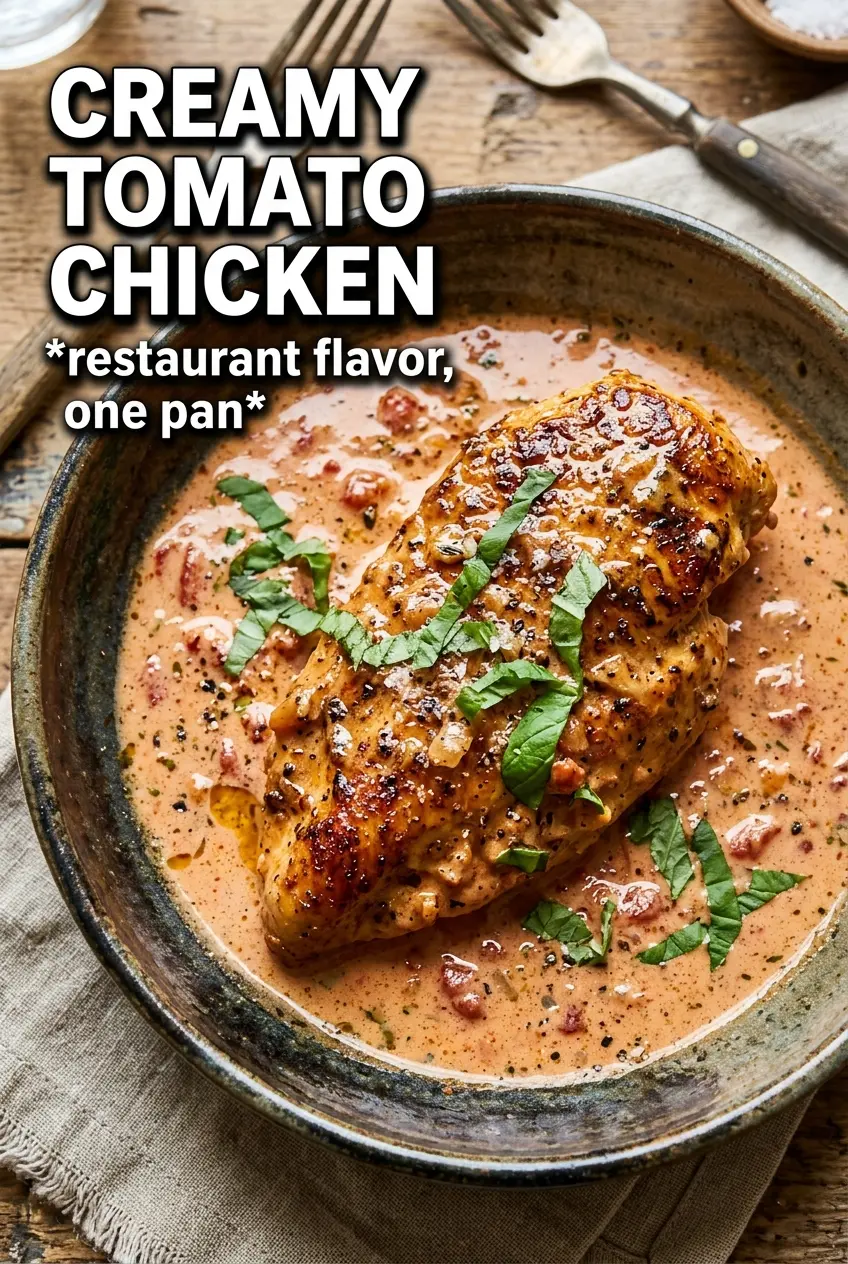
Golden seared chicken breasts bathed in a silky tomato cream sauce are one of those dinners that land on the table fast and still feel like you paid attention. The sauce turns a deep rosy pink, clings to every slice, and gets its backbone from crushed tomatoes instead of leaning only on cream, so it tastes balanced instead of heavy. Fresh basil at the end wakes everything up and keeps the dish from feeling flat.
What makes this version work is the order. The chicken gets real color first, which leaves browned bits in the pan for the sauce, and the tomatoes simmer before the cream goes in so they can lose that raw edge. Parmesan thickens the sauce and adds body, but it goes in with low heat so it doesn’t turn grainy. If you’ve ever had a cream sauce separate or taste one-note, the fix is usually this simple: give the tomato time, keep the heat gentle, and finish with butter for a glossy sheen.
Below you’ll find the exact cues I watch for so the chicken stays juicy and the sauce stays smooth. I also included a few smart swaps for when you’re out of wine, want a little heat, or need a lighter version.
The sauce turned this beautiful pink color and thickened enough to coat the chicken without being heavy. I used the wine, and that little bit of acidity made the whole skillet taste restaurant-level.
Love the silky pink sauce and golden chicken? Save this creamy tomato chicken for the nights when you want a skillet dinner that feels rich but still balanced.
The Reason the Sauce Stays Creamy Instead of Turning Muddy
The biggest mistake in tomato cream chicken is rushing the sauce before the tomatoes have a chance to cook down. Crushed tomatoes need a few minutes on their own to lose that sharp canned taste and concentrate a little, or the cream just dulls everything instead of turning the sauce lush. This recipe gives the tomatoes that time, then adds cream after the heat has dropped a bit, which keeps the sauce smooth and rosy instead of splitting or looking dull.
Searing the chicken first matters for more than color. Those browned bits in the pan dissolve into the garlic and wine or broth and become the savory base of the sauce. If the chicken steams instead of sears, you lose that layer of flavor and the whole dish tastes flatter. Keep the heat up when the chicken goes in, then back it down once the dairy enters.
What Each Ingredient Is Actually Doing in This Skillet

- Chicken breasts — Boneless, skinless breasts keep the cook time short and give you a clean surface for searing. If yours are thick on one end, pound them to an even thickness so they cook at the same rate and stay juicy.
- Crushed tomatoes — This is the backbone of the sauce, and canned crushed tomatoes are the right choice because they break down quickly and create that smooth, spoonable texture. Diced tomatoes stay chunkier and don’t blend into the cream the same way.
- Heavy cream — This softens the acidity and turns the tomatoes into a proper sauce, not just a tomato pan sauce with a splash of dairy. Half-and-half can work in a pinch, but it gives you a thinner finish and is more likely to curdle if the pan is too hot.
- Parmesan — The cheese adds salt, body, and a little nuttiness. Grate it finely so it melts cleanly; pre-shredded cheese often has anti-caking agents that can leave the sauce a little grainy.
- White wine or chicken broth — Wine brings a brighter edge and helps lift the browned bits from the pan, while broth gives you a milder, safer swap if you don’t cook with wine. Either one should go in before the tomatoes so the pan gets fully deglazed.
- Fresh basil — Basil isn’t just garnish here. It cuts through the richness and gives the finished dish that fresh Italian-American finish the sauce needs.
The 20 Minutes That Turn Into Dinner
Getting a Deep Sear on the Chicken
Season the chicken well on both sides, then lay it into olive oil over medium-high heat and leave it alone long enough to pick up color. You’re looking for a deep golden crust that releases from the pan without sticking, not pale chicken with a few brown freckles. If the pan is crowded, the chicken will steam and the sauce will never get the savory base it needs, so sear in batches if you have to.
Building the Tomato Base
Once the chicken is out, add the garlic and cook it just until fragrant, about 30 seconds. Garlic goes from fragrant to bitter fast, especially in a hot skillet, so don’t walk away. Deglaze with the wine or broth and scrape up every brown bit, then stir in the tomatoes and Italian seasoning and let that simmer until the sauce darkens slightly and the raw tomato smell softens.
Finishing With Cream and Parmesan
Lower the heat before the cream and Parmesan go in. This is the part that keeps the sauce smooth; high heat can make the dairy look broken or a little gritty. Stir until the sauce turns that rosy pink color and coats the back of a spoon, then add the butter off to the side of the heat for a glossy finish.
Returning the Chicken Without Overcooking It
Slide the chicken back into the skillet and spoon sauce over the top so it warms through gently. The chicken is already cooked, so you’re just bringing everything back to serving temperature and letting the sauce settle into the meat a little. If you simmer it hard at this point, the chicken can dry out and the sauce can tighten too much.
How to Change the Skillet Without Losing the Point of the Dish
Dairy-Free Version With Coconut Cream
Use full-fat coconut cream in place of the heavy cream and skip the Parmesan. The sauce will still turn silky, but it will lean a little sweeter and less savory, so add a pinch more salt and a touch more Italian seasoning to keep the flavor balanced.
Gluten-Free, Naturally
This recipe is already gluten-free as written if your broth and Parmesan are gluten-free. Serve it over polenta, mashed potatoes, or gluten-free pasta, and you’ll still get the same creamy skillet result without changing the sauce.
Make It Spicier
Increase the red pepper flakes or add a little Calabrian chili paste with the garlic. That gives the cream sauce a slower, warmer heat instead of a sharp burn, and it plays well with the tomato acidity.
Storage and Reheating
- Refrigerator: Store leftovers in an airtight container for up to 3 days. The sauce may thicken as it sits, which is normal.
- Freezer: You can freeze it, but the cream sauce may separate a little on thawing. For the best texture, freeze the chicken and sauce in a shallow container for up to 2 months and thaw overnight in the fridge.
- Reheating: Rewarm gently on the stove over low heat with a splash of broth or water. The common mistake is blasting it in the microwave or over high heat, which can make the sauce break and dry out the chicken.
Answers to the Questions Worth Asking
Creamy Tomato Chicken
Ingredients
Equipment
Method
- Season the chicken breasts with salt, pepper, garlic powder, and Italian seasoning. Heat 2 tbsp olive oil in a wide skillet over medium-high heat until shimmering, then add chicken.
- Sear the chicken for 5-6 minutes per side until golden and the center reaches 165°F. Remove chicken to a plate and keep warm.
- Cook the minced garlic in the same pan for 30 seconds over medium heat until fragrant and lightly golden. Deglaze with dry white wine or chicken broth, scraping up the browned bits.
- Stir in crushed tomatoes and 1 tsp Italian seasoning, then bring to a simmer. Simmer for 5 minutes, stirring occasionally, until the sauce thickens slightly and the tomato flavor deepens.
- Stir in the heavy cream, Parmesan cheese, and red pepper flakes. Simmer for 4-5 minutes until the sauce is thick and rose-colored, with small bubbles coming to the surface.
- Swirl in the butter until fully melted and glossy. Taste and adjust seasoning as needed so the sauce stays balanced.
- Return the chicken breasts to the skillet and spoon the tomato cream sauce over each piece. Simmer just until the chicken is reheated and coated, about 1-2 minutes.
- Garnish with fresh basil and serve immediately over pasta or gnocchi. Spoon extra sauce over the top so it pools thickly.