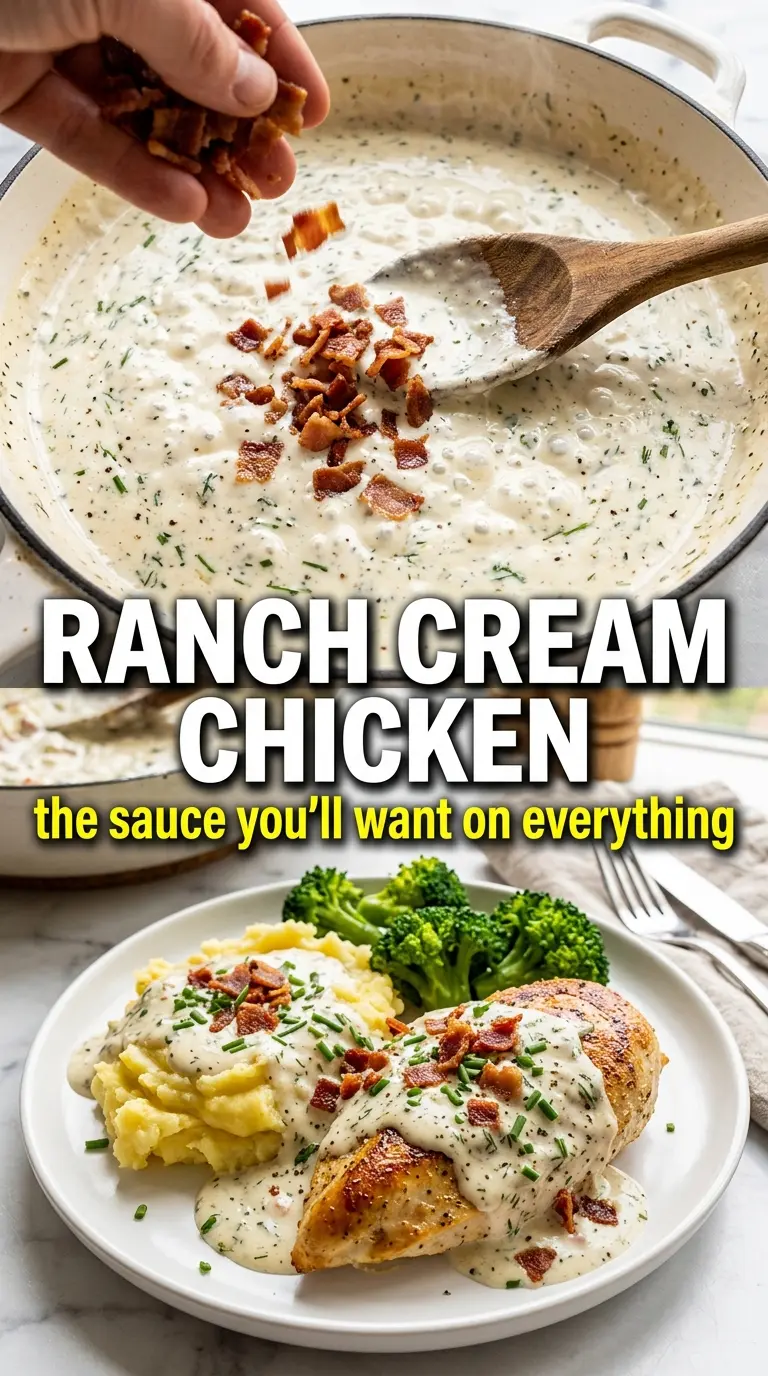
Juicy chicken breasts tucked into a thick ranch cream sauce hit that sweet spot between weeknight simple and a little bit special. The chicken stays tender from a hard sear first, and the sauce turns glossy and spoonable without needing a long simmer or a pile of extra ingredients. What you get is a skillet dinner with enough richness to feel comforting, but enough tang from the ranch seasoning and cream cheese to keep every bite from tasting flat.
The trick is building the sauce in the same pan after the chicken comes out. Those browned bits on the bottom carry a lot of flavor, and the broth lifts them right into the sauce instead of leaving them stuck behind. Cream cheese helps the sauce thicken cleanly, but only if it goes in cubed and over medium-low heat. Rush that part and the sauce can look grainy before it ever gets silky.
Below, I’m walking through the part that matters most: how to keep the chicken juicy, how to get the sauce smooth, and what to do if you want to stretch this into a full meal with pasta, potatoes, or vegetables.
The sauce thickened up perfectly and the ranch flavor was balanced, not salty. I served it over mashed potatoes and my husband went back for seconds before I even sat down.
Creamy ranch chicken with that glossy, tangy skillet sauce is the one to keep handy for busy nights.
The Part That Keeps the Sauce Smooth Instead of Grainy
The most common place this recipe goes wrong is when the cream cheese gets rushed. If the pan is too hot, the dairy tightens up before it melts and you end up chasing little soft lumps around the skillet. Medium-low heat gives the cream cheese time to loosen into the broth and cream, which is what turns the sauce velvety instead of broken.
It also helps to deglaze the pan before the cream goes in. Once the garlic has softened, the broth pulls up all that browned flavor from the chicken, and that base keeps the sauce tasting layered rather than one-note. The dill goes in at the end because it stays fresher and brighter that way.
What Each Ingredient Is Doing in the Skillet
- Chicken breasts — These need a strong sear up front so they keep their shape and stay juicy under the sauce. If yours are thick in the middle, pound them to an even thickness so the skillet finish doesn’t dry out the thinner edges.
- Ranch seasoning mix — This is the backbone of the sauce, and it does more than add salt. It brings herbs, onion, garlic, and tang in one packet, which is hard to fully duplicate with a handful of pantry spices.
- Cream cheese — This is what gives the sauce body without flour. Cubing it before it goes in helps it melt evenly; if you drop in a cold block, the outside softens before the center catches up.
- Chicken broth — The broth loosens the sauce just enough to keep it pourable and also lifts the browned bits from the skillet. Low-sodium broth is the better buy here because the ranch mix already brings plenty of seasoning.
- Heavy cream — This rounds out the sauce and keeps it from tasting sharp. Half-and-half can work in a pinch, but the sauce will be thinner and more likely to look loose around the chicken.
- Dried dill and fresh chives — Dill gives the sauce its clean ranch edge, and chives finish it with a fresh green bite. Don’t skip the garnish if you want the sauce to taste as bright as it looks.
How to Build the Sauce in the Same Pan Without Losing the Sear
Seasoning and Searing the Chicken
Pat the chicken dry before it hits the skillet. That matters more than people think, because wet chicken steams before it browns. Season both sides well, then cook in hot olive oil until you get a deep golden crust and the center reaches 165°F. If the chicken sticks hard when you try to turn it, give it another minute; it will release once the crust sets.
Pulling Flavor from the Pan
Take the chicken out before you start the sauce. The pan should still have browned bits, but not burnt spots, so lower the heat if needed before adding the garlic. Thirty seconds is enough; once garlic goes from fragrant to dark, the sauce starts tasting bitter. Pour in the broth and scrape the skillet clean with a wooden spoon.
Letting the Dairy Melt Slowly
Add the cream, ranch seasoning, and cream cheese once the broth is hot and the pan is at a gentle simmer. Stir until the cream cheese disappears into the sauce instead of floating around in little soft pieces. Keep the heat at medium-low. High heat is what causes the sauce to separate or look oily at the edges.
Finishing the Chicken in the Sauce
Return the chicken and spoon the sauce over the top so every piece gets coated. Let it simmer for a few minutes until the sauce clings to the spoon and the chicken is hot all the way through. The last bit of dill goes in here so the sauce tastes fresh, not cooked out. Chives on top at the end give the skillet that finished look without changing the texture of the sauce.
How to Change It Without Losing the Creamy Ranch Character
For a lighter skillet dinner
Use half-and-half instead of heavy cream if you want the sauce a little lighter, but expect it to be thinner and a bit less luxurious. Don’t try to boil it hard to make it thicken faster; gentle simmering is what keeps it smooth.
For a gluten-free version
This recipe is naturally gluten-free if your ranch seasoning and broth are certified gluten-free. That’s the part worth checking, since packaged seasoning blends are where hidden wheat or starches sometimes show up.
For boneless thighs instead of breasts
Chicken thighs work well here and stay extra juicy, but they usually need a few more minutes in the skillet. Let the sauce cling to them the same way, and cook until the thickest part reaches 165°F.
For serving over pasta or mashed potatoes
If you know you’re serving it over something starchy, hold back a splash of broth so the sauce stays thicker on the plate. The sauce will loosen a little as it sits, and that extra body keeps it from disappearing into noodles or potatoes.
Storage and Reheating
- Refrigerator: Store leftovers in an airtight container for up to 3 days. The sauce will thicken as it chills.
- Freezer: It freezes, but the cream sauce can separate a little on thawing. Freeze only if needed, and expect the texture to be less smooth after reheating.
- Reheating: Warm gently on the stovetop over low heat with a splash of broth or cream. High heat is the fastest way to make the dairy split, so give it time and stir often.
Questions I Get Asked About This Recipe

Creamy Ranch Chicken
Ingredients
Equipment
Method
- Season the chicken breasts with salt, pepper, and garlic powder to taste. Heat olive oil in a large skillet over medium-high heat until shimmering, then sear chicken for 5-6 minutes per side until golden and cooked through to 165°F, removing to a plate afterward.
- In the same skillet, cook minced garlic over medium-high heat for 30 seconds until fragrant. Pour in chicken broth and deglaze, scraping up browned bits from the pan.
- Stir in heavy cream and the ranch seasoning mix, then bring to a simmer over medium-high heat. Reduce to medium-low and add cream cheese cubes, stirring until completely melted and the sauce is smooth.
- Stir in dried dill and return the chicken breasts to the skillet. Spoon sauce over each breast and simmer for 3 minutes until the chicken is reheated and coated.
- Garnish with fresh chives and serve over mashed potatoes or pasta. Spoon extra ranch sauce over the top so it pools around the chicken at the table.