Ultra-creamy potato salad has a way of disappearing long before the main dish gets a turn. The best bowls are soft but not mushy, with potatoes that hold their shape just enough to carry a rich dressing into every bite. This version leans into that classic, spoon-coating texture without turning heavy or gluey, which is exactly why it earns a place at potlucks, cookouts, and Sunday suppers.
The trick is in the balance. Russet potatoes break down a little more than waxy potatoes, which gives the salad that lush, creamy body people expect, but they still need to be cooked just until tender so they don’t collapse into paste. The dressing also matters: mayonnaise brings richness, sour cream adds a little tang and lightness, and a splash of vinegar keeps the whole bowl from tasting flat.
Below, you’ll find the small details that make this salad hold together after chilling, plus a few smart swaps if you need to work with what’s already in your fridge.
The dressing coated every piece without getting watery, and after two hours in the fridge the flavor was even better. My mom asked for the recipe before dinner was over.
Save this creamy potato salad for the next cookout when you want a rich, classic side with a smooth dressing and old-school flavor.
The Trick to Creamy Potato Salad That Still Holds Its Shape
The fastest way to ruin potato salad is to overcook the potatoes and then stir them too hard. Once russets go past tender, they start falling apart as soon as the dressing hits, and you end up with a bowl that looks whipped instead of creamy. The goal here is soft cubes with edges that are just beginning to break down, because that gives the dressing something to cling to without turning the whole salad grainy.
Cooling matters just as much as cooking. Hot potatoes absorb dressing aggressively, which sounds good until the salad turns dry later because the potatoes soaked up the mayo before the chill time was done. Let them cool enough that they’re warm, not steaming, then fold the dressing in gently so you keep some texture in the bowl.
- Russet potatoes — These are the right choice if you want a softer, creamier salad. Waxy potatoes hold their shape better, but they won’t give you the same lush, classic texture.
- Mayonnaise and sour cream — Mayo brings body and richness, while sour cream keeps the dressing from tasting heavy. If you only use mayonnaise, the salad can feel dense.
- Sweet pickle relish — This adds sweetness and a little bite in the background. If you swap in chopped pickles, drain them well or the dressing can turn loose.
What Each Ingredient Is Actually Doing in the Bowl
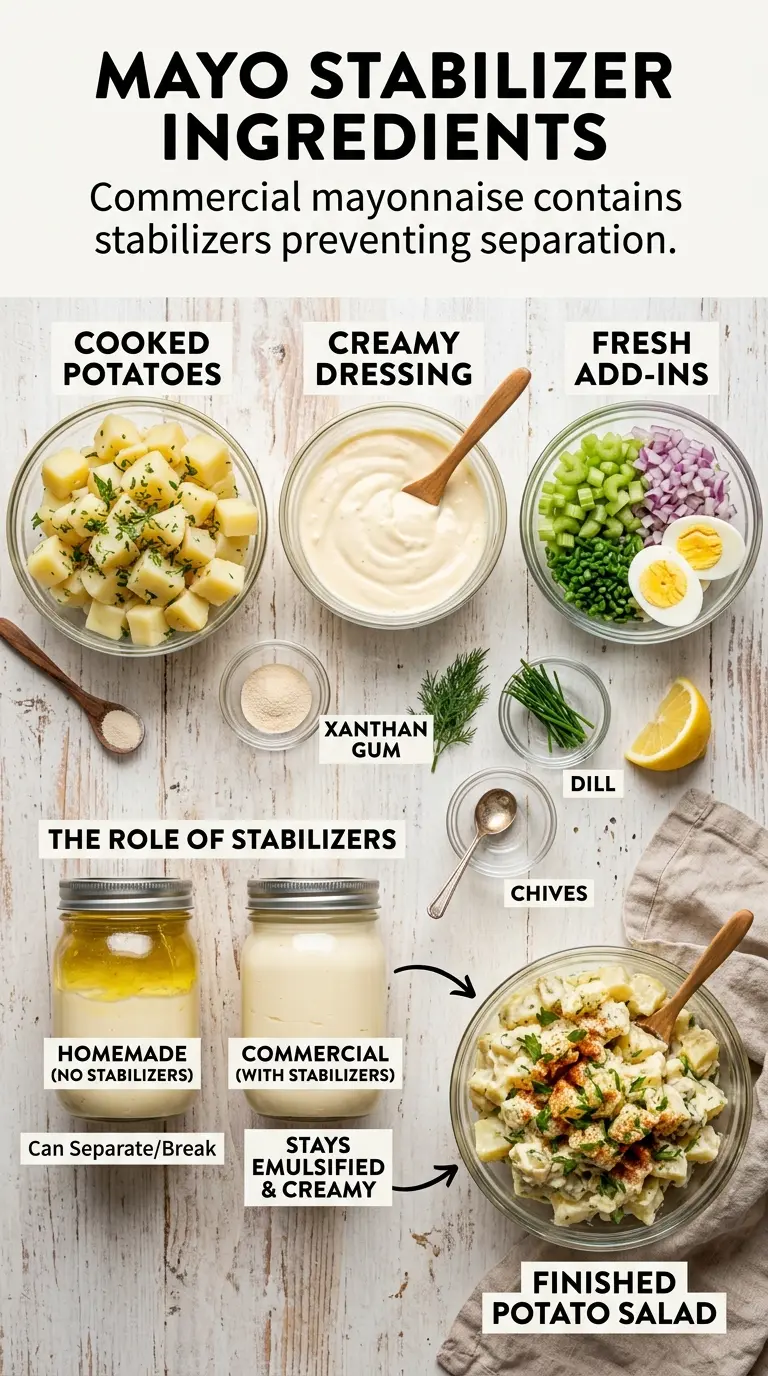
Potatoes are the base and the texture driver. Peel them if you want a smoother, more traditional salad, and cube them evenly so they cook at the same pace. Uneven pieces leave you with some chunks falling apart while others stay firm in the center.
Eggs add richness and a softer, almost custardy bite once they’re folded in. Chop them after they’ve cooled so they don’t smear into the dressing. Celery and onion are there for crunch and bite, and the dice should stay fine so they support the salad instead of taking it over.
Mayonnaise, sour cream, mustard, vinegar, and sugar work together to build the dressing. The mustard sharpens the flavor, the vinegar wakes it up, and the sugar rounds out the tang. If the dressing tastes a little too bold before it goes on the potatoes, that’s fine — chilled potato salad always tastes milder than it does in the mixing bowl.
Folding the Dressing In Without Turning the Salad to Mash
Cooking the potatoes to the right point
Start the potatoes in salted water and cook them until a fork slides in easily but the cubes still hold together when lifted. If they’re crumbling at the edges in the pot, they’re already past the best point for this recipe. Drain them well, then spread them out briefly so excess steam escapes instead of watering down the dressing.
Mixing the dressing first
Stir the mayonnaise, sour cream, mustard, vinegar, sugar, salt, and pepper together before it touches the potatoes. That gives you a smooth, even dressing and keeps you from overmixing later. Taste it now; it should be a touch more seasoned than you want the finished salad, because the potatoes will soften the impact.
Folding everything together
Add the potatoes, eggs, celery, onion, and relish to a large bowl, then spoon the dressing over the top. Fold from the bottom with a spatula instead of stirring in circles, because circular stirring crushes the potatoes and turns the salad heavy. Stop as soon as everything looks coated; a few uneven streaks disappear after chilling.
Chilling until the flavors settle
Refrigerate the salad for at least two hours before serving. That wait lets the dressing thicken and the seasoning move through the potatoes, which is why potato salad always tastes better after resting than it does right after mixing. If it seems a little loose at first, give it time instead of adding more mayonnaise right away.
How to Adjust This Potato Salad for a Different Table
Dairy-Free Version
Swap the sour cream for a dairy-free plain yogurt or an extra few tablespoons of mayonnaise. The salad will still taste creamy, but the tang shifts a little, so taste and adjust the vinegar and mustard after mixing.
Lower-Sugar Classic
Leave out the sugar if you want a sharper, more savory salad. The relish still brings some sweetness, so you won’t lose balance entirely, but the finish will lean more tangy than traditional picnic-salad sweet.
Extra Tangy Potatoes Salad
Add another teaspoon of vinegar and a small spoonful more mustard if you like your potato salad with a brighter edge. This keeps the richness in place but cuts through it, which works well if the salad is going on a heavy barbecue plate.
Storage and Reheating
- Refrigerator: Store covered for up to 4 days. The potatoes will soften a bit more as they sit, but the flavor stays good.
- Freezer: Don’t freeze this salad. Mayo-based dressings separate after thawing, and the potatoes turn watery and mealy.
- Reheating: Serve it cold. If it has been in the fridge a while, let it sit on the counter for 15 to 20 minutes so the dressing loosens slightly and the flavor comes back to life.
Answers to the Questions Worth Asking
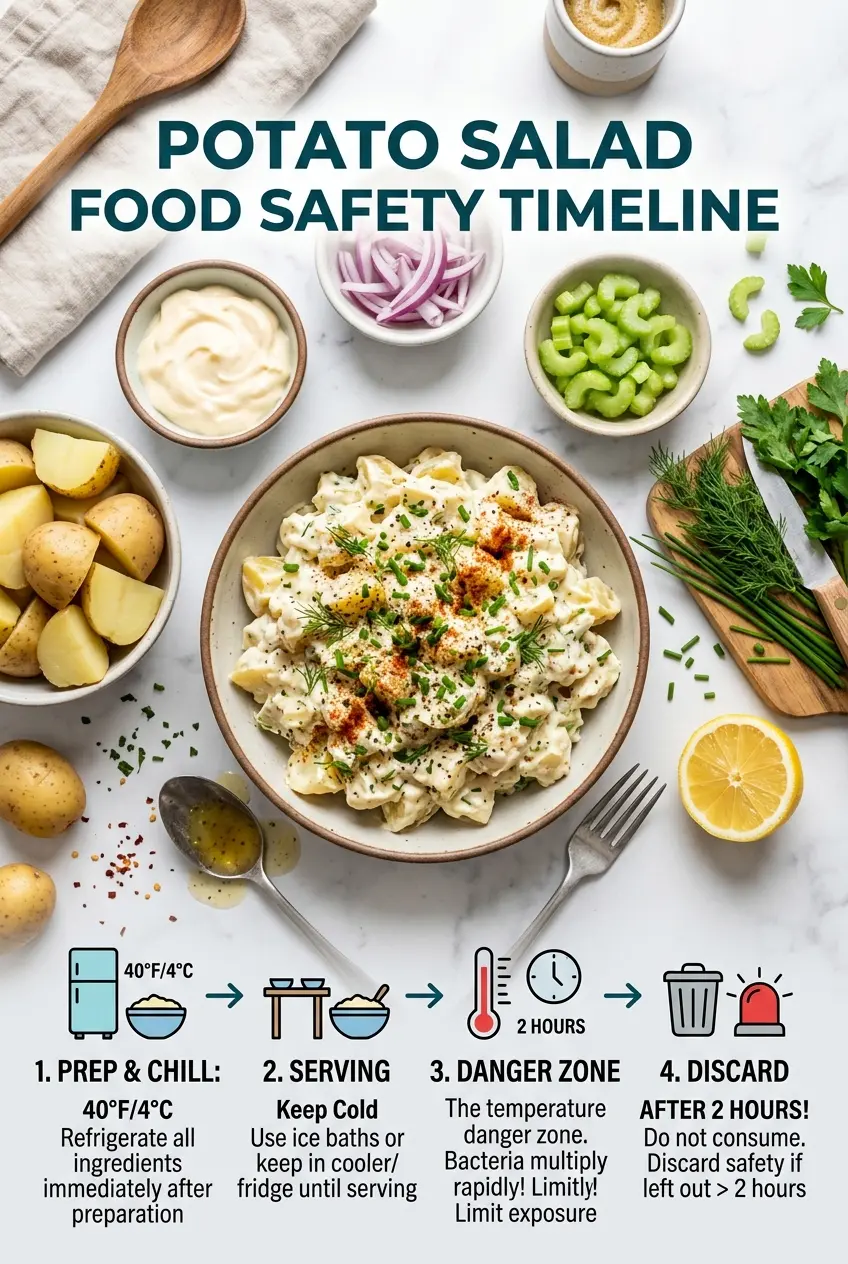
Creamy Potato Salad
Ingredients
Equipment
Method
- Bring a pot of water to a boil, then cook the peeled and cubed russet potatoes until tender, 200-210°F (boiling) for 15-20 minutes, depending on cube size, until a knife slides in easily. Visual cue: the cubes look soft and break slightly at the edges.
- Drain the potatoes and cool them until no longer hot, about 10 minutes at room temperature. Visual cue: the surface looks matte, not steamy.
- Chop the hard-boiled eggs. Visual cue: pieces are small and even for consistent bites.
- Finely dice the celery and finely dice the onion. Visual cue: both are very small so they blend smoothly into the salad.
- Combine the cooled potatoes, chopped eggs, diced celery, diced onion, and sweet pickle relish in a large bowl. Visual cue: the mixture looks evenly speckled with relish and egg.
- Whisk mayonnaise, sour cream, yellow mustard, white vinegar, sugar, salt, and pepper until smooth. Visual cue: the dressing turns creamy and uniform with no mustard streaks.
- Pour the dressing over the potato mixture and fold gently until fully coated and very creamy, 1-2 minutes. Visual cue: the salad becomes pale and thick with a glossy, smooth texture.
- Refrigerate the potato salad for at least 2 hours to thicken and blend flavors, keeping it covered. Visual cue: it looks more set and holds its shape when scooped.