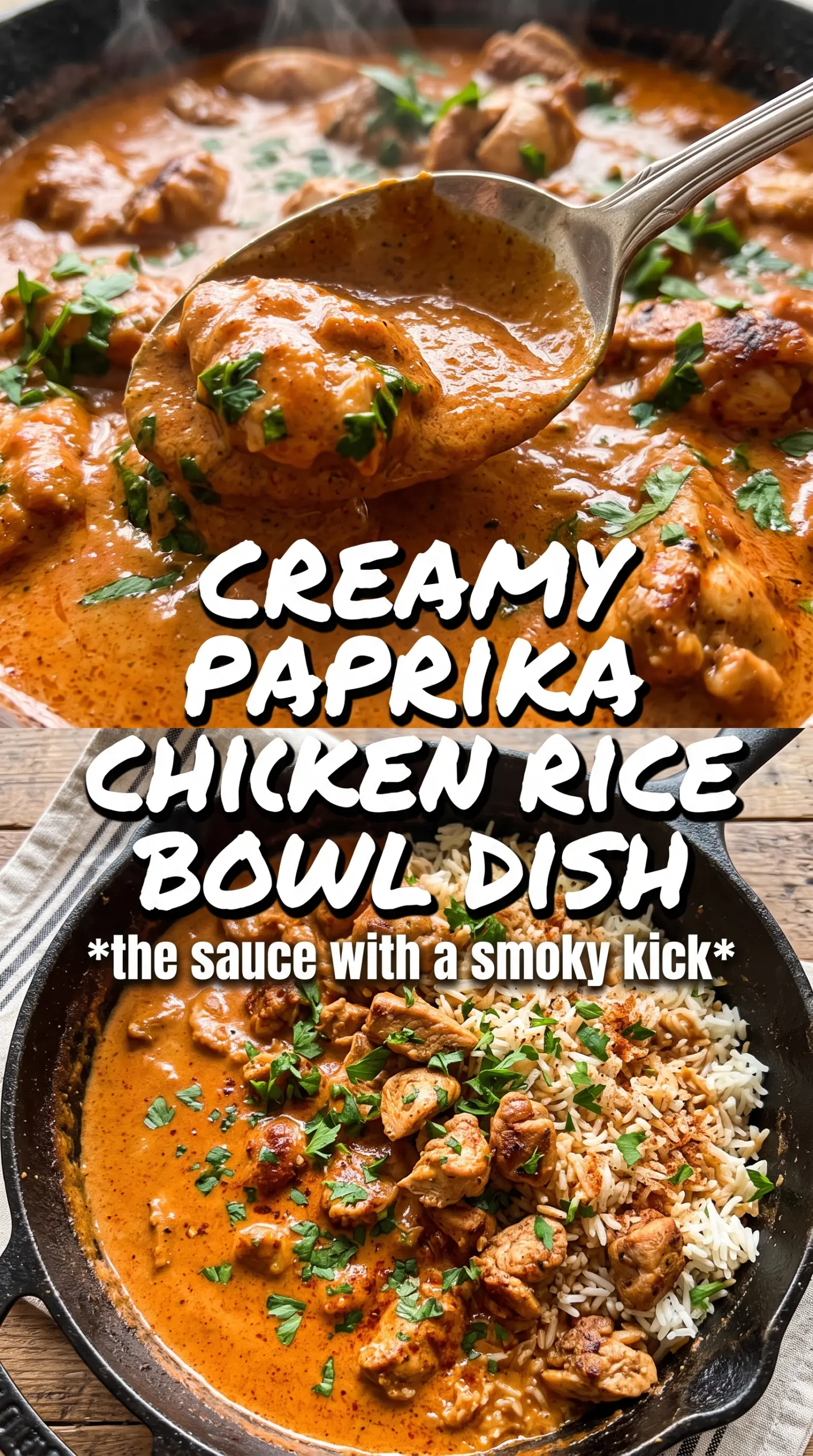
Golden chicken thighs tucked into a red paprika sauce over fluffy rice is the kind of dinner that disappears fast and quietly earns a permanent spot in the rotation. The skin goes deeply browned first, then the sauce turns velvety with sour cream and clings to every bite instead of thinning out into something watery. Served over rice, it’s the kind of meal that feels generous without asking for much more than a single skillet and a little attention at the stove.
What makes this version work is the layering. The chicken gets a proper sear before anything else, which gives the sauce a savory base, and the onions cook down in those drippings so they pick up all that flavor. Sweet Hungarian paprika brings the round, peppery backbone, while a smaller amount of smoked paprika keeps it from tasting flat. The sour cream goes in off the heat at the end, which keeps the sauce smooth instead of grainy or split.
Below, I’ve included the small details that keep the sauce creamy, a few smart swaps, and the one reheating trick that keeps leftovers from turning dull.
The chicken stayed juicy, and the sauce thickened beautifully once I stirred in the sour cream off the heat. I served it over rice, and the whole pan was scraped clean.
Save this creamy paprika chicken with rice for the nights when you want a silky sour cream sauce and one skillet that actually delivers on flavor.
The Sear That Gives Paprika Chicken Its Real Flavor
The biggest mistake with paprika chicken is rushing past the browning. If the thighs don’t get a deep golden crust, the sauce has less to stand on and tastes flatter than it should. That first 6 to 7 minutes on the skin side builds color and leaves the pan with those browned bits that melt into the onion base later.
Keep the heat at medium-high for the sear, then drop down once the onions go in. Paprika can turn bitter if it sits on direct high heat for too long, so it only needs about a minute with the garlic before the tomatoes and broth go in. That quick bloom wakes up the spices without scorching them.
- Skin-on chicken thighs — These stay juicier than breasts during the simmer and give the sauce extra richness from the rendered fat. If you use boneless thighs, cut the simmer time down a few minutes so they don’t go stringy.
- Sweet Hungarian paprika — This is the main flavor here, not garnish. It gives the sauce its deep red color and round, peppery warmth, and the cheap supermarket version can taste dusty if it’s been sitting too long.
- Smoked paprika — Just enough adds depth without making the dish taste like barbecue. If you don’t have it, use more sweet paprika and a pinch of cayenne for heat, but the smokiness won’t be the same.
- Sour cream — Full-fat is worth using because it stays smoother when stirred into the sauce. If yours is very cold, let it sit out while the chicken simmers so it blends in without shocking the sauce.
What Each Ingredient Is Actually Doing in This Recipe
- Primary ingredient (the star) — Quality matters most. Choose the best you can find.
- Cooking medium (oil, butter, or broth) — This carries flavors and prevents dryness.
- Seasonings (salt, pepper, spices, herbs) — Layer flavors so nothing overpowers. Build depth gradually.
- Aromatics (garlic, onion, herbs) — Cook with fat to bloom flavors. Become the foundation.
- Supporting ingredients — Complement the main ingredient without overpowering it.
- Sauce or liquid (if applicable) — Brings flavors together. Balance richness with acid.
- Acid (lemon, vinegar, wine, or other) — Brightens and prevents flat-tasting results.
- Final finish (garnish, glaze, or sauce) — Prevents one-dimensional taste and adds visual appeal.
Building the Sauce So It Stays Creamy Instead of Grainy
Getting the Chicken Deeply Browned
Season the thighs well, then lay them in the hot oil skin-side down and leave them alone until the skin releases easily and looks dark golden, not pale gold. If you keep nudging them, the skin steams and sticks. Flip only after the first side has real color, then sear the second side long enough to give the meat some structure before it goes back into the sauce.
Cooking the Onions in the Good Stuff
Use the same pan without wiping it out. The onions should soften and pick up the browned bits from the chicken as they cook, which is where the sauce starts to taste like it simmered for hours even though it didn’t. Add the garlic and paprika near the end of that stage so the garlic doesn’t burn and the paprika doesn’t turn muddy.
Finishing Without Breaking the Sauce
Once the chicken is cooked through, pull the pan off the heat before stirring in the sour cream. That matters. High heat can make the dairy separate, especially if the sauce is bubbling hard, and then you get tiny flecks instead of a smooth finish. Stir until the sauce turns pale red and silky, then spoon it straight over the rice while it’s still warm.
Make It Without Sour Cream
Plain full-fat Greek yogurt works in a pinch, but it’s a little tangier and can curdle more easily. Take the pan fully off the heat and stir in a few spoonfuls first, then the rest, so the temperature change is gentler. The sauce will still be creamy, just a touch sharper.
Make It Gluten-Free Without Changing the Method
This recipe is naturally gluten-free as long as your chicken broth is certified gluten-free. The sauce gets its body from the tomatoes, the sour cream, and the reduced simmer, not from flour, so you don’t need a thickener.
Swap the Rice for Something Hearty
Egg noodles, mashed potatoes, or buttery spaetzle all work here. Rice keeps the sauce front and center, while potatoes make the dish feel richer and more old-fashioned. Just use something that can catch the sauce instead of sliding around on the plate.
Storage and Reheating
- Refrigerator: Store the chicken and sauce for up to 4 days. The sauce will thicken as it chills, which is normal.
- Freezer: The chicken freezes well, but the sour cream sauce may separate a little after thawing. For the best texture, freeze before adding the sour cream, then stir it in fresh after reheating.
- Reheating: Warm gently on the stove over low heat with a splash of broth or water. Don’t boil it, or the sour cream can break and the chicken can dry out.
Questions I Get Asked About This Recipe
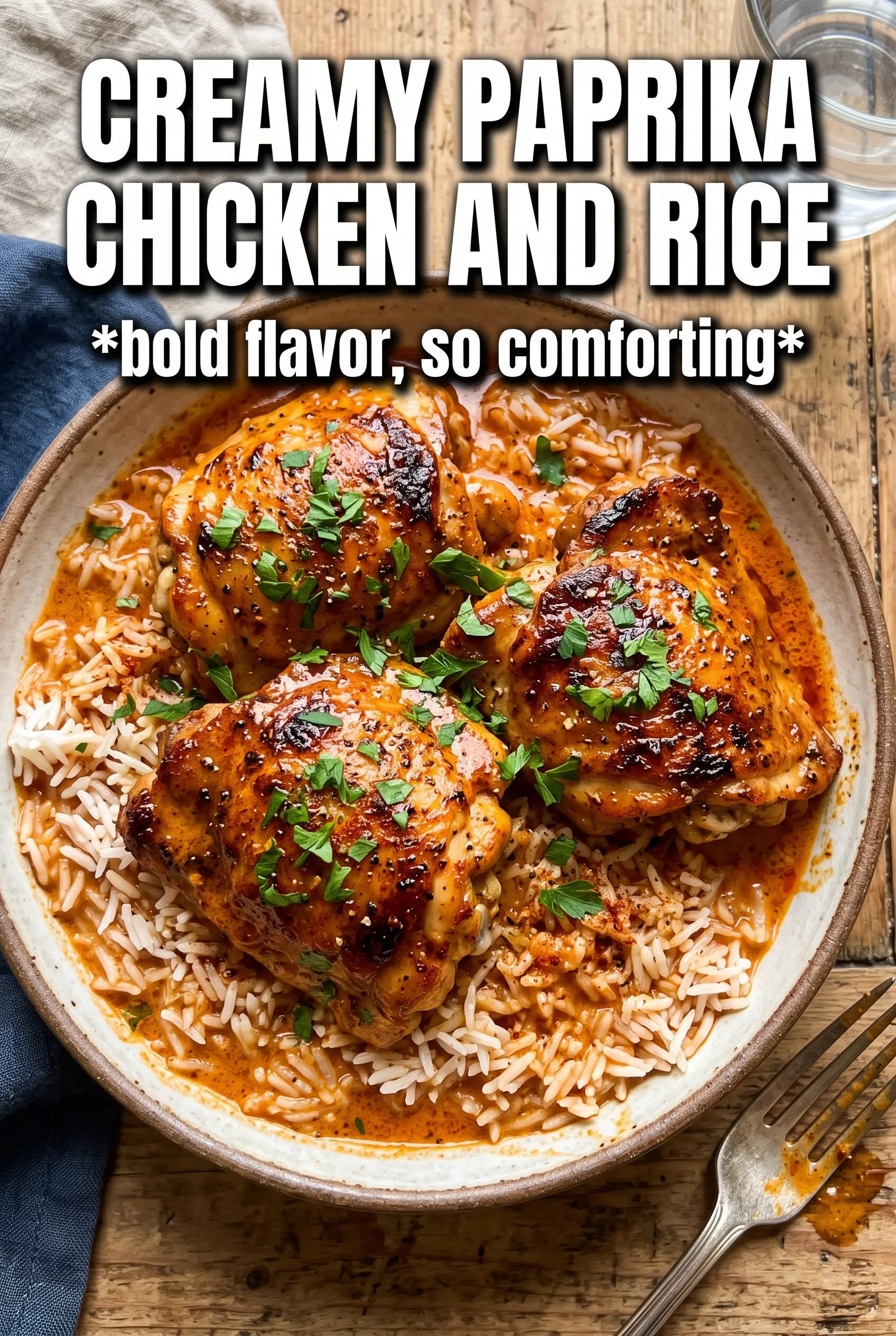
Creamy Paprika Chicken with Rice
Ingredients
Equipment
Method
- Pat the chicken thighs dry and season with salt, pepper, garlic powder, and smoked paprika. Heat vegetable oil in a cast iron skillet over medium-high heat and sear skin-side down for 6-7 minutes until deeply golden, then flip and sear 4 minutes and remove to a plate.
- Return the chicken to the plate while you cook the onions, keeping any fond in the skillet. The chicken should look richly browned at the edges before you continue.
- Add diced onion to the same skillet and cook over medium heat for 5-6 minutes until softened. Stir in minced garlic and both paprikas, then cook 1 minute until fragrant, keeping the mixture vibrant and aromatic.
- Add crushed tomatoes and chicken broth, scraping up any browned bits from the pan. Bring to a simmer so the sauce looks glossy and lightly bubbling.
- Nestle the chicken back in the sauce skin-side up, cover, and simmer for 18-20 minutes until internal temperature reaches 165°F. You should see the sauce thicken slightly as the chicken becomes tender.
- Turn off the heat and stir in sour cream until the sauce is smooth and creamy. Look for visible pale-to-red swirls as the cream fully blends without curdling.
- Spoon creamy paprika chicken over cooked white rice. Garnish with fresh dill so you get a bright green finish against the deep red sauce.