Golden chicken thighs tucked into a pale, fragrant Riesling cream sauce are the kind of dinner that feels a little special without asking for much more than a good skillet and a steady hand. The chicken stays juicy under its crisp skin, the mushrooms soak up the wine and broth, and the sauce finishes with that soft, elegant tang that keeps each bite from feeling heavy.
What makes this version work is the order. The chicken gets a proper sear first, which gives the sauce a deeper base instead of a flat, one-note creaminess. The Riesling goes in before the cream so it has time to reduce and lose the sharp alcohol edge, and the Dijon plus tarragon sharpen everything just enough to keep the sauce lively.
Below, I’ve included the timing that keeps the sauce smooth, the swap that works if you need a non-alcoholic version, and the one mistake that can turn a glossy pan sauce dull and grainy.
The sauce turned silky after the Riesling reduced, and the chicken stayed juicy even after simmering. I added a little extra tarragon at the end and it tasted like a restaurant skillet dinner.
Save this Creamy Chicken Riesling for the nights when you want a skillet dinner with crisp chicken, mushrooms, and a pale wine cream sauce.
The Sear That Gives the Sauce Its Backbone
Chicken Riesling can turn bland fast if the chicken goes straight into the sauce without building a dark, flavorful base first. The skin needs time against the hot pan so it renders, browns, and releases cleanly; that’s where the best flavor starts. If the pan feels crowded or the heat is too low, the chicken steams instead of searing, and the finished sauce tastes thinner no matter how good the wine is.
After the chicken comes out, those browned bits stay in the pan and melt right into the shallots, mushrooms, and wine. That’s what gives this dish its depth. You’re not just making a cream sauce and adding chicken back in. You’re layering the sauce over the exact flavor left by the chicken itself.
What the Wine, Cream, and Tarragon Each Bring to the Pan

- Riesling wine — This is the defining flavor of the dish. A dry or off-dry Riesling gives you fruit and acidity without turning the sauce sweet. Don’t swap in a heavily oaked white; it can make the sauce taste muddy. If you need to skip the alcohol, use extra chicken broth with a small squeeze of lemon, but expect a gentler, less layered finish.
- Heavy cream — This gives the sauce its body and keeps the wine reduction from tasting sharp. Half-and-half can work in a pinch, but it’s more likely to look thin and break if the sauce boils. Keep the heat low once the cream goes in.
- Shallots and mushrooms — Shallots melt into the sauce, while mushrooms add an earthy note that plays well with the wine. Use cremini for the best balance of flavor and price. White mushrooms work, but they’re milder and a little less savory.
- Dijon mustard and tarragon — Dijon sharpens the cream and helps the sauce taste finished instead of flat. Tarragon gives the dish its classic German-American edge; fresh is brightest, dried still works if you use less. If you want the sauce to taste more herbal than anise-like, use a light hand with dried tarragon.
Getting the Chicken Back in Without Breaking the Sauce
Brown the thighs until the skin releases on its own
Set the chicken skin-side down in hot olive oil and let it stay there until the skin is deeply golden and the meat pulls away easily from the pan. If you try to flip it too early, the skin sticks and tears, and you lose the crisp layer that makes this dish feel complete. Once flipped, the second side only needs a few minutes before the chicken comes out.
Let the mushrooms give off their moisture before the wine goes in
After the shallots go soft, the mushrooms need enough time to cook down and take on color. At first they’ll look crowded and wet, then they’ll shrink and start to sizzle instead of steam. That’s the point when the garlic goes in for a short minute; any sooner and it can burn before the pan is ready for the wine.
Reduce the Riesling before the cream joins the pan
Pour in the wine and let it bubble until the sharp alcohol smell softens and the liquid looks slightly syrupy. If you add cream while the wine still smells hot and raw, the sauce can taste thin and unbalanced. The broth, cream, tarragon, and Dijon go in after that reduction, and the sauce should look pale gold and smooth before the chicken returns.
Finish with low heat and a butter swirl
Slide the chicken back in skin-side up so the top stays crisp while it simmers gently in the sauce. Keep the heat low enough that the liquid barely moves; a hard boil can tighten the meat and make the cream look grainy. Once the chicken reaches 165°F, pull it out, whisk in the butter, and let the sauce turn glossy before serving.
How to Adapt Creamy Chicken Riesling Without Losing Its Character
Make it dairy-free with coconut cream
Use full-fat coconut cream in place of heavy cream and add it off the highest heat so it stays smooth. The sauce will be a little richer and slightly sweeter, so keep the Dijon and tarragon in place to balance it. You’ll lose the classic dairy finish, but the sauce still stays plush.
Use chicken breasts for a leaner version
Boneless chicken breasts work, but they need less simmer time than thighs. Sear them well, then simmer only until they reach 165°F so they don’t dry out. The sauce stays the same, but thighs give you more forgiveness and a fuller chicken flavor.
Swap the mushrooms for pearl onions
If you want a more old-world feel, replace the mushrooms with pearl onions or use half and half of each. The onions add sweetness and keep the sauce elegant, while the mushrooms bring earthiness. I like the combination best because it tastes rounded without getting heavy.
Use a dry white if Riesling isn’t on hand
A dry pinot gris or sauvignon blanc can stand in for Riesling, but the sauce will lose some of its gentle fruitiness. If the wine is very sharp, let it reduce a minute longer before adding the cream. That extra reduction keeps the sauce from tasting thin or sour.
Storage and Reheating
- Refrigerator: Store in an airtight container for up to 3 days. The sauce will thicken as it chills.
- Freezer: Not my first choice. Cream sauces can separate after freezing, and the mushrooms lose some texture.
- Reheating: Warm gently on the stove over low heat with a splash of broth or cream. Don’t boil it, or the sauce can split and the chicken can toughen.
Answers to the Questions Worth Asking
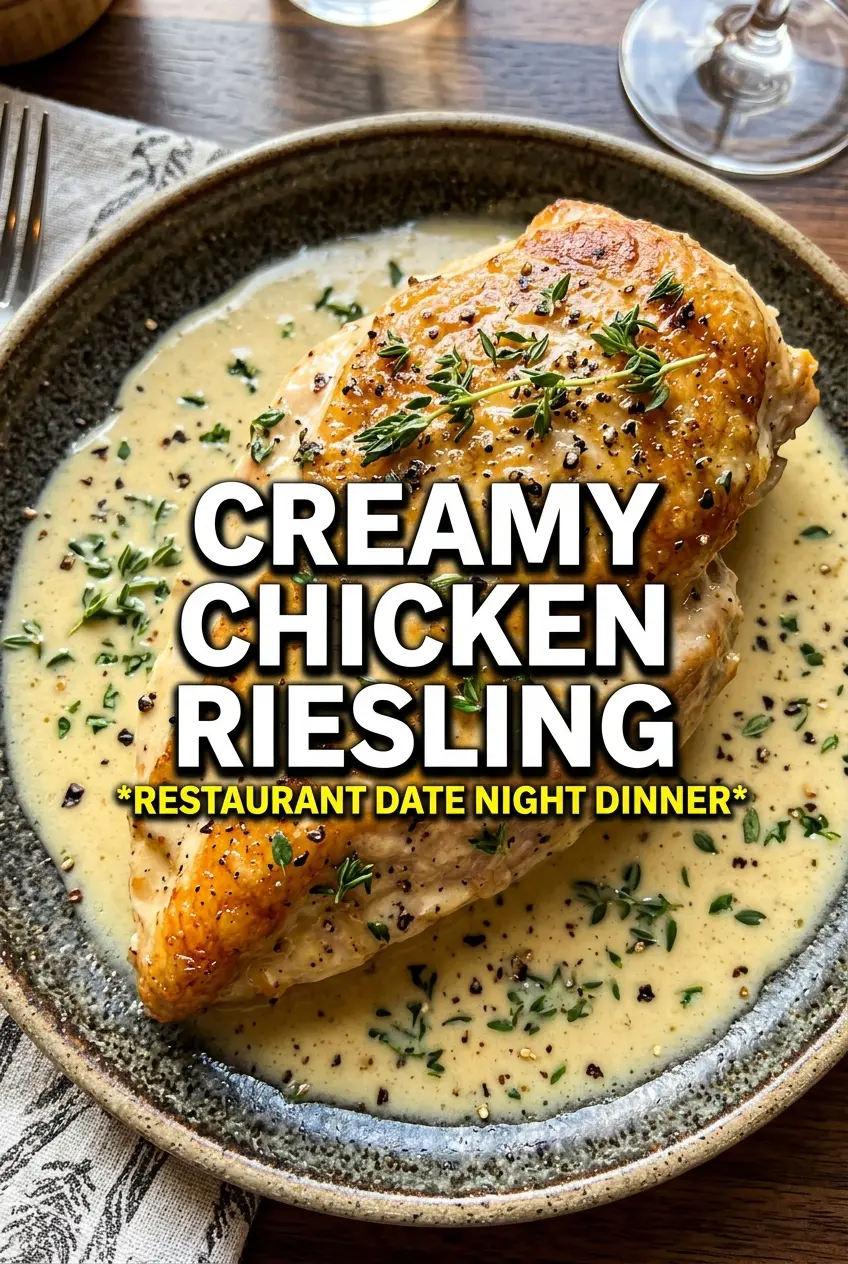
Creamy Chicken Riesling
Ingredients
Equipment
Method
- Season the chicken thighs with salt, pepper, and garlic powder to taste. Pat lightly so the seasoning adheres.
- Heat olive oil in a large skillet over medium-high heat, then place chicken skin-side down and sear for 7-8 minutes until deeply golden. Keep the heat steady so the skin renders and crisps.
- Flip the chicken and sear for 4 minutes, then remove to a plate. The thighs should be well browned before finishing in the sauce.
- In the same skillet, cook minced shallots and sliced mushrooms for 5-6 minutes until golden. Stir occasionally so the mushrooms brown and the shallots soften.
- Add minced garlic and cook for 1 minute. Stir constantly just until fragrant, not browned.
- Pour in Riesling wine and let it cook off for 3 minutes. The bubbling should reduce and smell less like raw alcohol.
- Add heavy cream, chicken broth, fresh tarragon, and Dijon mustard, stirring to combine. Simmer briefly so the sauce starts to look cohesive and pale golden.
- Return the chicken to the skillet skin-side up and cover. Simmer for 15-18 minutes until the internal temperature reaches 165°F.
- Remove the chicken from the skillet and swirl in butter until the sauce turns glossy. Taste and adjust seasoning if needed.
- Return the chicken to the skillet and garnish with fresh tarragon. Serve the thighs with the pale golden sauce pooling over mushrooms and shallots.