Silky, pale ivory, and rich without feeling heavy, creamy cauliflower soup earns its place on the table fast. The texture is what makes it memorable: the cauliflower turns soft enough to blend into a spoon-coating puree, while a small batch of roasted florets on top adds the kind of contrast that keeps each bite interesting. A drizzle of truffle oil and a shower of chives finish it in a way that feels polished without requiring any extra work at the stove.
This version works because it treats cauliflower two ways. Most of it simmers until it falls apart and blends into a smooth base, but a reserved handful gets roasted hard so it brings color, nutty edges, and a little chew. The butter, onion, and garlic build a gentle savory backbone, while a modest amount of nutmeg and white pepper keeps the soup round and clean instead of flat.
Below, I’ve included the small details that matter most: how to keep the soup from tasting watery, when to blend for the silkiest finish, and what to swap if you want it dairy-free or a little lighter.
The soup blended into the smoothest, creamiest texture, and roasting the cauliflower for the top made a big difference. My husband kept going back for another bowl just for the crispy garnish.
Like the idea of silky creamy cauliflower soup with roasted florets and truffle oil? Save this one for the next night you want something cozy, elegant, and easy to blend.
The Trick to Keeping Cauliflower Soup From Turning Thin
The biggest mistake with cauliflower soup is treating it like a vegetable broth with cream added at the end. Cauliflower needs to be cooked until it is genuinely soft enough to break down on its own, or the soup turns grainy and watery instead of velvety. The simmer time matters here because undercooked florets hold onto a slightly chalky texture that shows up even after blending.
The other detail that changes the whole bowl is how you handle the liquid. Start with just enough broth to cook the cauliflower, then blend before deciding whether it needs more. If you pour in too much at the beginning, you end up chasing flavor and thickness at the same time, which usually means a soup that tastes diluted.
- Roasting a portion of the cauliflower gives the garnish real flavor and keeps the top of the bowl from feeling one-note.
- Butter and onion create a soft, savory base that tastes fuller than cauliflower alone.
- White pepper adds gentle heat without the black flecks you’d get from regular pepper.
- Heavy cream rounds out the soup, but it goes in after blending so the texture stays smooth and stable.
What Each Ingredient Is Actually Doing in This Soup

- Cauliflower is the body of the soup, so use fresh florets if you can. Frozen works in a pinch, but it releases more water and won’t roast as well for garnish.
- Onion and garlic build the flavor underneath the creaminess. Cook them until soft and fragrant, not browned, so the soup stays mellow and clean-tasting.
- Broth controls the final thickness. Vegetable broth keeps it vegetarian, while chicken broth gives it a slightly deeper savory edge.
- Heavy cream gives the soup its luxurious finish. Half-and-half will work, but the texture will be a little lighter and less rich.
- Butter and olive oil work together to sauté the aromatics and roast the garnish. The butter adds flavor; the oil helps with browning.
- Nutmeg and white pepper are subtle, but they matter. Nutmeg adds warmth, and white pepper keeps the seasoning present without overpowering the cauliflower.
- Truffle oil, chives, and roasted florets are the finishing touches that make the bowl feel intentional. Use truffle oil sparingly because too much takes over fast.
How to Build the Smoothest Bowl Without Losing the Roasted Garnish
Roasting the Reserved Cauliflower
Spread the reserved florets in a single layer and roast them at 425°F until the edges are deeply golden and a little crisp. That high heat pulls out the nutty side of cauliflower and gives you a garnish with enough texture to stand up against the creamy soup. If the florets are crowded on the pan, they steam instead of roast, and you lose that caramelized finish.
Softening the Onion and Garlic
Cook the onion in butter and olive oil until it turns translucent and soft, then add the garlic for just a minute. Garlic burns quickly, and once it does, the bitterness shows up in every spoonful. You want the kitchen to smell sweet and savory, not sharp.
Simmering Until the Cauliflower Falls Apart
Add the cauliflower and broth, bring everything to a boil, then drop it to a steady simmer until the florets are completely tender. A fork should slide through them with no resistance. If you rush this stage, the blender has to work harder and the soup ends up with tiny bits instead of a smooth, creamy body.
Blending and Finishing
Blend until the soup is fully smooth, then stir in the cream, nutmeg, and white pepper. If you add the cream before blending, it can hide lumps instead of fixing them, so blend first and finish second. Taste at the end and salt it with a light hand, because cauliflower needs enough seasoning to wake up but not so much that it tastes briny.
How to Adapt This for a Lighter Bowl or a Different Diet
Dairy-Free Version
Swap the butter for all olive oil and use full-fat coconut milk or an unsweetened cashew cream in place of heavy cream. Coconut milk gives the soup a slightly sweeter finish, while cashew cream keeps the flavor more neutral.
Vegetarian Base With Deeper Flavor
Use vegetable broth and add an extra pinch of nutmeg or a small splash of soy sauce for more savory depth. Chicken broth tastes rounder, but vegetable broth keeps the soup lighter and still plenty satisfying.
Thicker, More Spoon-Coating Soup
Use a little less broth at the start and blend before deciding whether it needs more liquid. That gives you control over the final texture instead of trying to fix a soup that’s already thin.
No Truffle Oil Needed
Skip the truffle oil and finish with olive oil, chives, and extra roasted cauliflower. The soup will still taste complete; you’ll just lose the earthy aroma that truffle oil adds at the very end.
Storage and Reheating
- Refrigerator: Store in an airtight container for up to 4 days. It may thicken as it chills.
- Freezer: This soup freezes well, but the cream can separate slightly. For the best texture, freeze before adding the cream, then stir the cream in after reheating.
- Reheating: Warm it slowly over low heat, stirring often. A hard boil can make the dairy split and dull the texture, so keep the heat gentle and add a splash of broth if it’s thicker than you want.
Questions I Get Asked About This Recipe
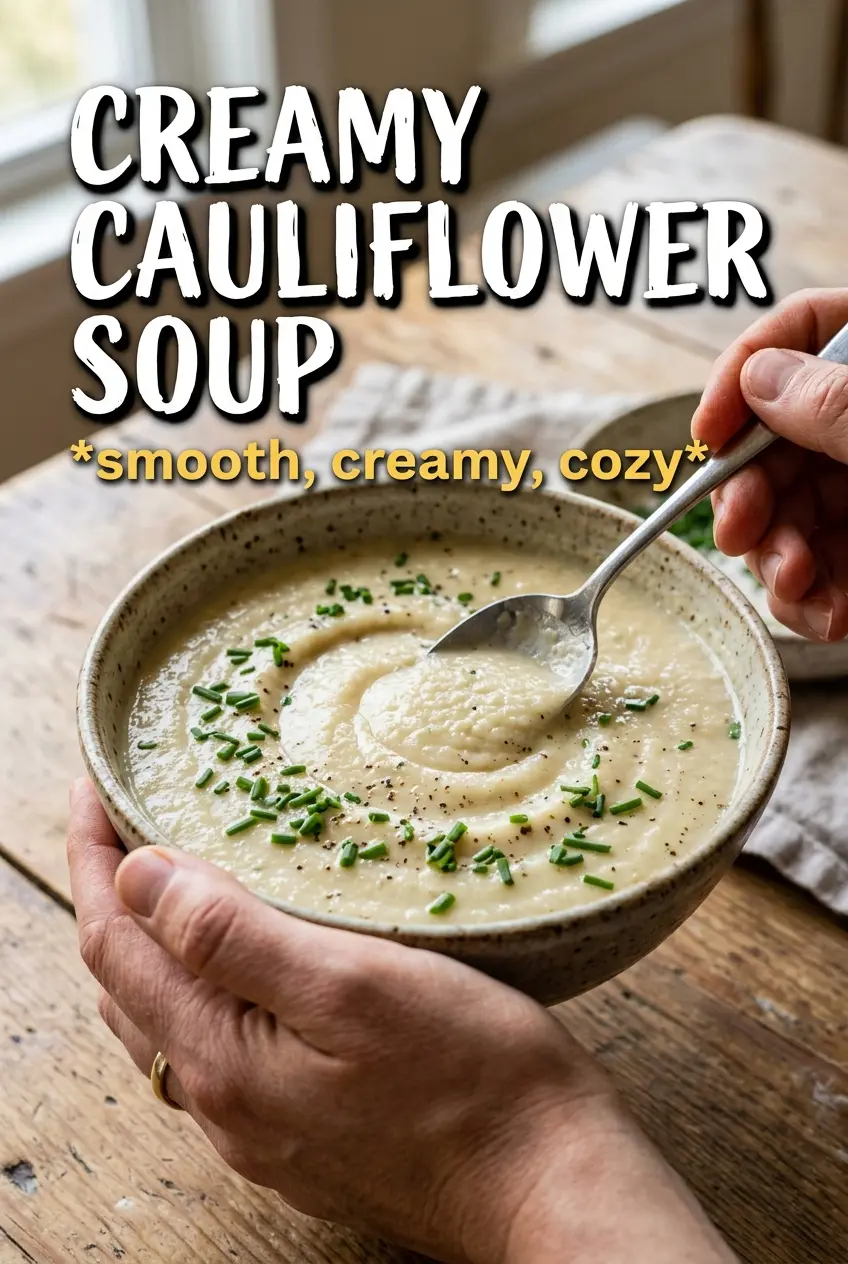
Creamy Cauliflower Soup
Ingredients
Equipment
Method
- Toss reserved cauliflower florets with olive oil, then roast at 425F for 20-25 minutes until golden. Transfer to a plate to cool slightly while you make the soup.
- Melt butter in a large pot over medium heat, then sauté onion for 5 minutes until softened. Add garlic and cook for 1 minute, stirring until fragrant.
- Add remaining cauliflower and broth, bring to a boil, then simmer for 20 minutes until very tender. Keep the pot at a gentle simmer so the cauliflower cooks evenly.
- Blend completely smooth with an immersion blender until the soup looks silky and uniform. Stir in heavy cream, nutmeg, and white pepper until fully combined.
- Season with salt to taste, then serve hot with roasted cauliflower, a truffle oil drizzle, and chives. Garnish right before serving for the best contrast.