Baked chicken breasts can go dry fast, but this version stays tender because the chicken is fully coated in a thick cream sauce before it ever hits the oven. The sauce bubbles up around the edges, the Parmesan turns golden on top, and the whole dish finishes with that spoon-coating richness that makes people keep going back for a little more.
The trick is in the balance of the sauce. Cream of chicken soup gives it body, sour cream brings tang and tenderness, and mayonnaise adds a little extra fat so the sauce doesn’t bake up thin or split. Ranch seasoning does the heavy lifting on flavor, so you don’t need a long ingredient list or any complicated prep to get a dinner that tastes like it took more effort than it did.
Below, I’ll walk through the part that matters most: how to keep the chicken juicy while the sauce turns bubbly and browned. I’ve also included a few variations and the reheating method that keeps the leftovers from drying out.
The sauce baked up thick and creamy instead of running all over the pan, and the chicken stayed so tender that even the thicker pieces were done right on time.
Like this creamy baked chicken breasts dinner? Save it to Pinterest for the nights when you want a bubbly, golden chicken bake with almost no cleanup.
The Part That Keeps Chicken Breasts from Drying Out
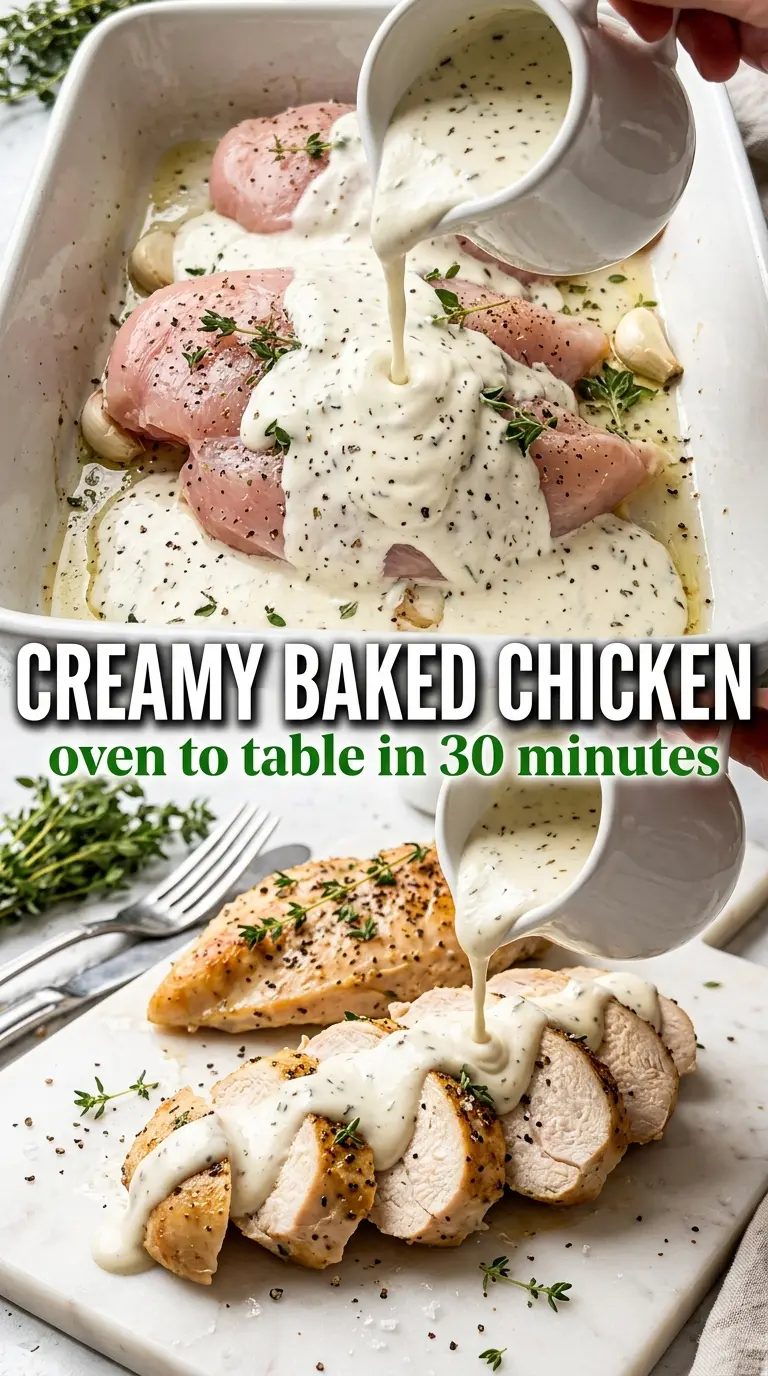
Chicken breasts dry out when they spend too long exposed to direct oven heat. Here, the sauce acts like a shield. It covers the meat from edge to edge, so the chicken steams gently under the topping while the top of the sauce turns golden and a little caramelized.
The other thing that matters is thickness. If the sauce is too loose, it runs to the corners of the pan and leaves the chicken half bare. Whisk it until it looks smooth and spoonable before it goes over the chicken, and don’t skip the Parmesan on top — that’s what gives the dish its browned finish instead of a pale, flat surface.
- Chicken breasts — Use boneless, skinless breasts and keep them close to the same size so they finish together. If one piece is much thicker, pound it lightly or slice it horizontally so the center doesn’t lag behind the rest.
- Cream of chicken soup — This is the backbone of the sauce. A homemade white sauce won’t give you the same thick, baked texture without extra work, and the canned soup is what helps the topping set instead of staying runny.
- Sour cream — This adds tang and body. Full-fat works best here because it stays stable in the oven; low-fat sour cream can work, but the sauce won’t bake up quite as plush.
- Mayonnaise — It keeps the sauce rich and helps it brown a little at the edges. If you don’t love mayo as an ingredient, you can replace it with more sour cream, but the sauce will be a bit less silky.
- Ranch seasoning — This is the flavor shortcut that makes the whole dish taste seasoned all the way through. If you only have a homemade blend, use dried dill, parsley, garlic powder, onion powder, and a little salt.
- Parmesan — Grated Parmesan gives you the best browning. Shredded Parmesan is fine in a pinch, but freshly grated melts and browns more evenly.
What Each Ingredient Is Actually Doing in This Recipe
- Primary ingredient (the star) — Quality matters most. Choose the best you can find.
- Cooking medium (oil, butter, or broth) — This carries flavors and prevents dryness.
- Seasonings (salt, pepper, spices, herbs) — Layer flavors so nothing overpowers. Build depth gradually.
- Aromatics (garlic, onion, herbs) — Cook with fat to bloom flavors. Become the foundation.
- Supporting ingredients — Complement the main ingredient without overpowering it.
- Sauce or liquid (if applicable) — Brings flavors together. Balance richness with acid.
- Acid (lemon, vinegar, wine, or other) — Brightens and prevents flat-tasting results.
- Final finish (garnish, glaze, or sauce) — Prevents one-dimensional taste and adds visual appeal.
Building the Sauce So It Bakes, Not Breaks
Season the Chicken First
Salt, pepper, garlic powder, and onion powder on the chicken give the meat itself some flavor, not just the sauce. Put the breasts in a greased 9×13 dish in a single layer so the heat can move around them evenly. If they’re crowded or stacked, the sauce will stay watery in spots and the chicken won’t brown at all.
Whisk the Sauce Until It’s Completely Smooth
Mix the soup, sour cream, mayonnaise, ranch seasoning, and garlic powder until the texture looks uniform and glossy. Any streaks of sour cream or mayo left in the bowl can show up as uneven pockets after baking. If the mixture seems too thick to pour, loosen it with a tablespoon or two of milk, but only enough to make it spreadable.
Cover Every Bit of the Chicken
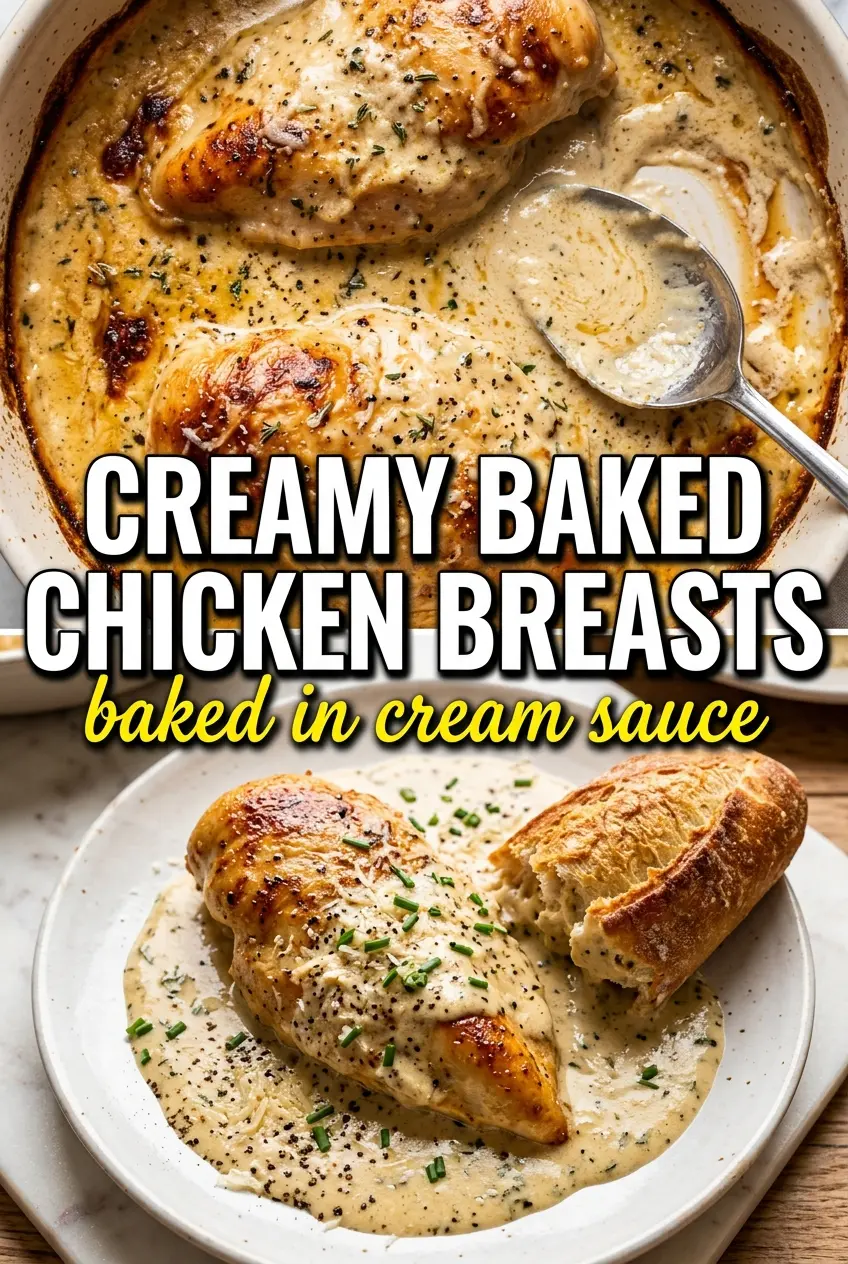
Spoon or pour the sauce over the chicken and nudge it into the corners of the pan so the meat is fully coated. This is what keeps the tops from drying out before the centers are done. Finish with a blanket of Parmesan, and bake until the sauce is bubbling around the edges and the chicken reaches 165°F in the thickest part.
Let It Rest Before Serving
Give the dish five minutes out of the oven before you scoop it onto plates. The sauce settles and thickens slightly as it rests, which makes it easier to serve over pasta or rice. If you cut in immediately, the sauce will look looser than it really is.
How to Make This Chicken Bake Fit Your Table
Dairy-Free Version
Use a dairy-free sour cream and a dairy-free mayo, then swap in a dairy-free cream soup if you can find one with the same thick texture. The sauce will still bake up creamy, but the topping won’t brown the same way, so watch for bubbling around the edges instead of relying on color alone.
Gluten-Free Swaps
Use a certified gluten-free cream soup and check the ranch seasoning label, since some blends include wheat-based fillers. The texture stays the same as long as the soup is still thick enough to coat a spoon.
Make It a Little Lighter
You can swap the mayonnaise for extra sour cream and use a slightly smaller amount of Parmesan. The sauce will still be creamy, but it will bake up a little less rich and won’t brown quite as deeply.
Storage and Reheating
- Refrigerator: Store leftovers in an airtight container for up to 4 days. The sauce will thicken as it chills, which is normal.
- Freezer: This freezes, but the sauce may separate a little when thawed. Freeze in a tightly sealed container for up to 2 months for the best texture.
- Reheating: Warm covered in a 325°F oven until hot, or reheat gently in the microwave at medium power. High heat is the fastest way to dry out the chicken and make the sauce look oily.
Answers to the Questions Worth Asking
Creamy Baked Chicken Breasts
Ingredients
Equipment
Method
- Preheat oven to 375°F and grease a 9x13 baking dish. Keep the dish ready so the chicken goes in as soon as it’s seasoned.
- Season the chicken breasts on both sides with salt, pepper, garlic powder, and onion powder to taste, then place them in the prepared dish. Arrange them in a single layer so they bake evenly.
- Whisk together cream of chicken soup, sour cream, mayonnaise, ranch seasoning mix, and garlic powder until smooth. The mixture should look uniform with no streaks.
- Pour the cream sauce evenly over the chicken, coating completely. Make sure each breast has sauce pooling around it in the baking dish.
- Top with Parmesan cheese and bake at 375°F for 28-32 minutes until the sauce is bubbly and golden and the interior reaches 165°F. Watch for caramelized, browned spots on top and thick bubbling at the edges.
- Garnish with fresh parsley and serve. Serve hot with pasta or rice so the creamy sauce can cling to it.